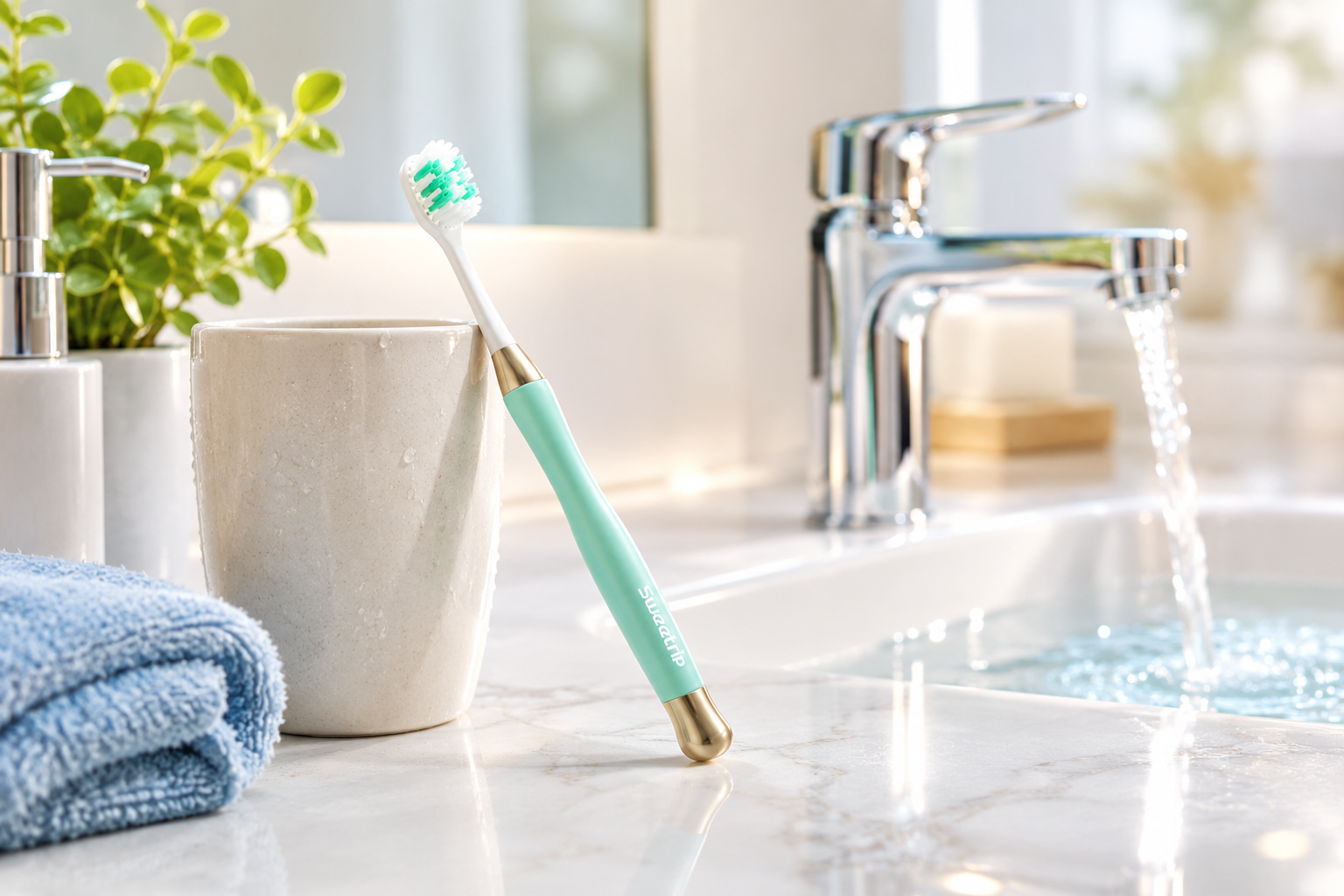
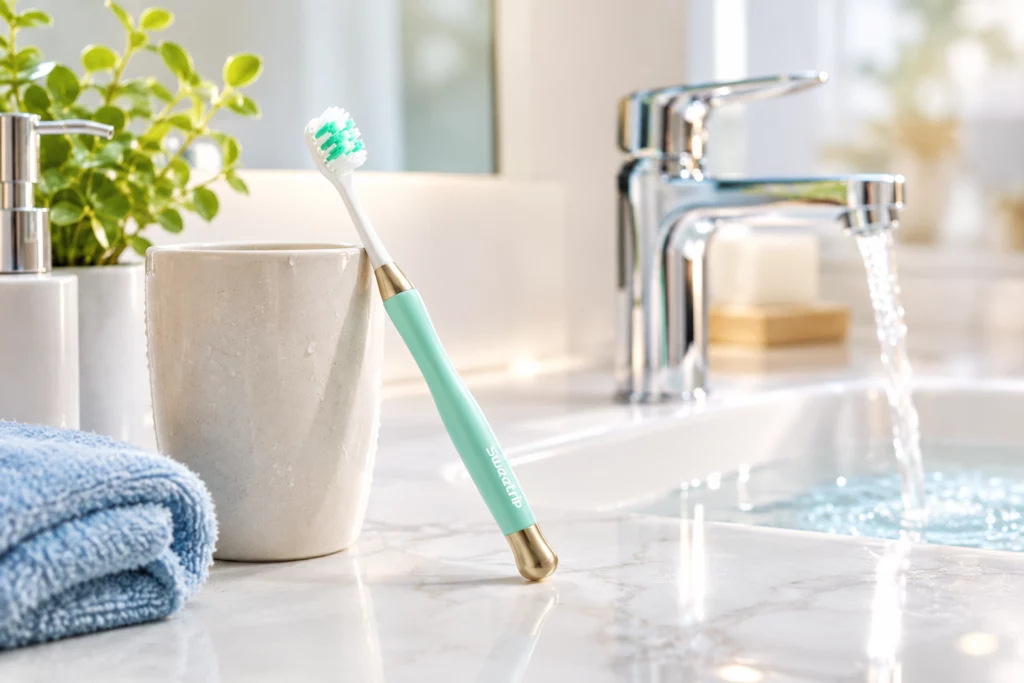
To maintain a healthy smile, most people stick to the basics. They select an effective toothpaste, brush twice daily, and ensure every session lasts a full two minutes. However, people often overlook one simple question at the bathroom sink: Should you use warm water or cold water to brush your teeth?
Choosing water temperature may seem like a personal preference. However, it plays a key role in brushing comfort—especially for sensitive teeth or irritated gums. Here is a breakdown of the science, benefits, and comfort factors to help you decide which water temperature works best for your smile.
Why Water Temperature Matters When You Brush Your Teeth
Water acts as a medium that wets your toothbrush bristles and helps dissolve toothpaste into a smooth, cleansable foam. Water temperature does not affect how well toothpaste removes plaque. However, it strongly influences your mouth comfort and how flexible your toothbrush bristles feel.
Most people default to cold tap water simply out of habit. Cold water feels refreshing and energizing, especially during a morning routine. However, cold water can trigger sharp nerve pain if you suffer from receding gums, exposed dentin, or enamel cracks. On the other hand, warm water offers a gentler experience that soothes sensitive tissues while softening brush bristles.
Brush Teeth with Warm or Cold Water: Comparing the Options
Understanding how water temperature affects your teeth, gums, and toothbrush will help you make the right choice.
1. Brushing Teeth with Cold Water
- The Refreshment Factor: Cold water provides a clean, crisp sensation that leaves the mouth feeling instantly refreshed.
- Nerve Sensitivity Triggers: For sensitive teeth, splashing cold water directly on your enamel can trigger sudden nerve pain.
- Bristle Firmness: Cold water stiffens synthetic nylon bristles. Firmer bristles may seem to clean faster. However, applying excessive pressure with stiff bristles can erode enamel and cause gum recession.
2. Brushing Teeth with Warm Water
- Soothes Tooth Sensitivity: Warm water is close to your body’s natural temperature (around 37°C or 98.6°F). This drastically reduces thermal shock for sensitive teeth.
- Softens Bristles: Lukewarm water slightly softens toothbrush bristles. A softer bristle surface cleans gently along the delicate gumline without causing micro-abrasions.
- Dissolves Toothpaste Better: Warm water helps toothpaste dissolve quickly. This creates a smooth foam that spreads evenly across your teeth.
Important Safety Note: Avoid using hot water. Water that is too hot can weaken or warp synthetic toothbrush bristles and irritate delicate oral mucosal tissue. Dental experts recommend using comfortable, lukewarm water for optimal oral hygiene.
Key Takeaways: Warm vs. Cold Water Brushing
| Feature | Cold Water Brushing | Warm/Lukewarm Water Brushing |
| Sensation | Crisp, cooling, refreshing | Soothing, gentle, comfortable |
| Sensitivity Risk | High for sensitive teeth | Very low (minimizes thermal shock) |
| Bristle Texture | Firm and rigid | Slightly softened and flexible |
| Plaque Removal | Equivalent | Equivalent |
What Do Dental Experts Recommend?
Leading organizations like the American Dental Association stress that technique matters most. Consistency, brushing time, and proper motion are far more important than water temperature. Plaque removal comes down to gentle physical friction and effective toothpaste. Water temperature plays a secondary role in cleaning your teeth.
However, dental professionals frequently advise patients with sensitive teeth to stick with lukewarm water. Mouth discomfort makes brushing difficult. When cold water hurts, you may rush your two-minute routine or skip key areas along the gumline.
Pairing lukewarm water with an ultra-soft manual toothbrush ensures optimal plaque control. This gentle combination protects your enamel and gums from abrasive damage. For daily oral maintenance, explore our professional range of manual toothbrushes designed for gentle, effective cleaning.
How to Optimize Your Daily Brushing Routine
Should you brush teeth with warm or cold water? Ultimately, these core habits matter most for long-term oral health:
- Brush for Two Minutes: Spend a full 120 seconds cleaning all quadrants of your mouth twice daily.
- Use Soft Bristles: Firm bristles can erode enamel and damage soft gum tissue over time.
- Master the Technique: Hold your brush at a 45-degree angle to your gums. Use gentle, circular strokes instead of harsh scrubbing.
- Replace Your Brush Regularly: Replace your toothbrush or brush head every three months, or sooner if the bristles fray.
Final Verdict
So, should you brush teeth with warm or cold water?
The short answer is: Use whichever temperature feels most comfortable to you. If you have healthy enamel and enjoy the cool, crisp feel of cold water, there is no harm in continuing your routine. However, if cold water triggers sharp sensitivity or discomfort, switching to comfortable lukewarm water is an easy, effective solution.
Focus on soft bristles, gentle technique, and two-minute sessions. These core habits keep your smile bright and healthy, regardless of your water preference.