If you have celiac disease or gluten sensitivity, following a strict gluten-free diet is essential every single day. Most people are vigilant about reading food labels, checking restaurant menus, and avoiding cross-contamination in the kitchen. However, one potential source of hidden gluten often slips under the radar: oral care products. Choosing a gluten-free toothpaste is an essential yet frequently overlooked aspect of managing celiac disease safely and effectively.
You don’t swallow toothpaste on purpose, but small amounts still enter your stomach during daily brushing. Even tiny amounts of gluten can trigger immune reactions in celiac patients. This can cause severe intestinal damage and uncomfortable symptoms throughout the body. Learning why gluten is in toothpaste and how to find safe alternatives is key to protecting your overall health.
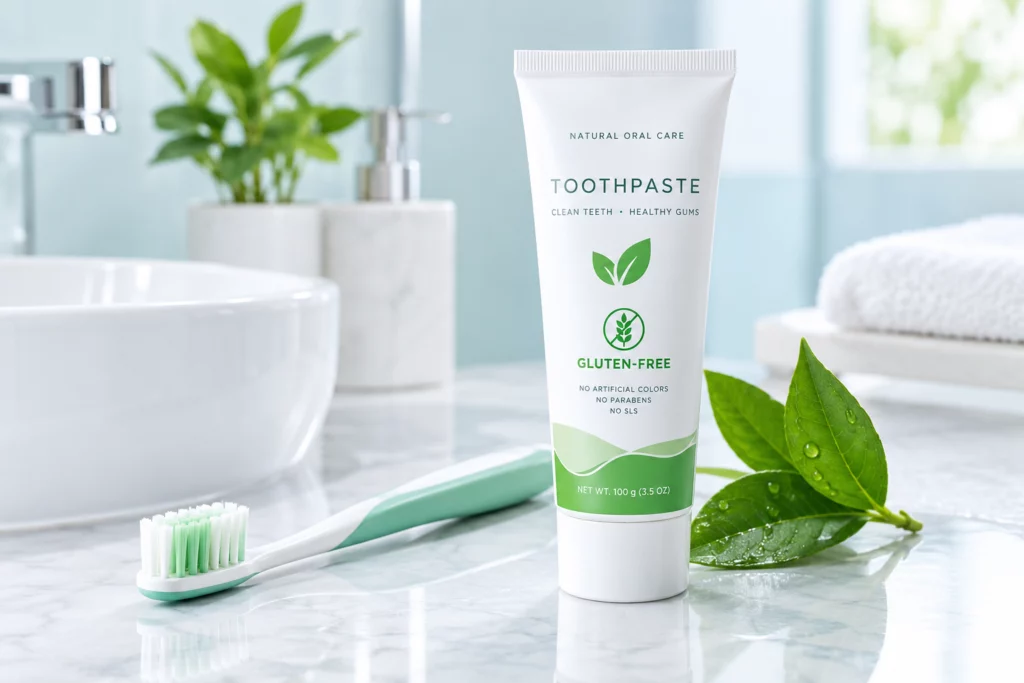
Why Is Gluten in Toothpaste?
Gluten itself is not an active ingredient intended to clean teeth or freshen breath. Instead, manufacturers often add grain-based ingredients as thickeners and binders. These additives give toothpaste its smooth texture and consistency.
Common ingredients that may contain gluten or wheat derivatives include:
- Grain alcohol: Sometimes derived from wheat or barley, used as a solvent or preservative.
- Hydrolyzed wheat protein: Added to reinforce foam or texture.
- Maltodextrin: Frequently derived from corn, but occasionally sourced from wheat without clear labeling.
- Modified food starch: Can originate from wheat unless specified as corn or tapioca starch.
Furthermore, cross-contamination during manufacturing is a major risk. Toothpaste made on shared equipment can easily carry trace amounts of gluten. This cross-contamination poses a hidden danger to sensitive individuals.
The Oral-Systemic Link for Celiac Disease
When individuals with celiac disease ingest gluten, their immune system attacks the lining of the small intestine. Oral membranes can absorb chemicals directly, while daily brushing leads to the accidental swallowing of small particles. Using products with gluten can cause recurring flare-ups, even if your diet is completely gluten-free.
Moreover, celiac disease direct impacts oral health. Clinical guidance from the American Dental Association shows that celiac disease directly affects oral health. Patients often experience enamel defects, recurring mouth ulcers, delayed tooth eruption, and tissue inflammation.
Using harsh formulations or reactive ingredients can further irritate sensitive oral tissues. Selecting a dedicated gluten-free toothpaste protects both your digestive system and your delicate oral mucosal barrier.
How to Choose a Safe Gluten-Free Toothpaste
Finding the right toothpaste requires scrutinizing ingredient lists and manufacturing practices. Here are key steps to ensure your oral hygiene routine remains entirely safe:
1. Look for Explicit Gluten-Free Certification
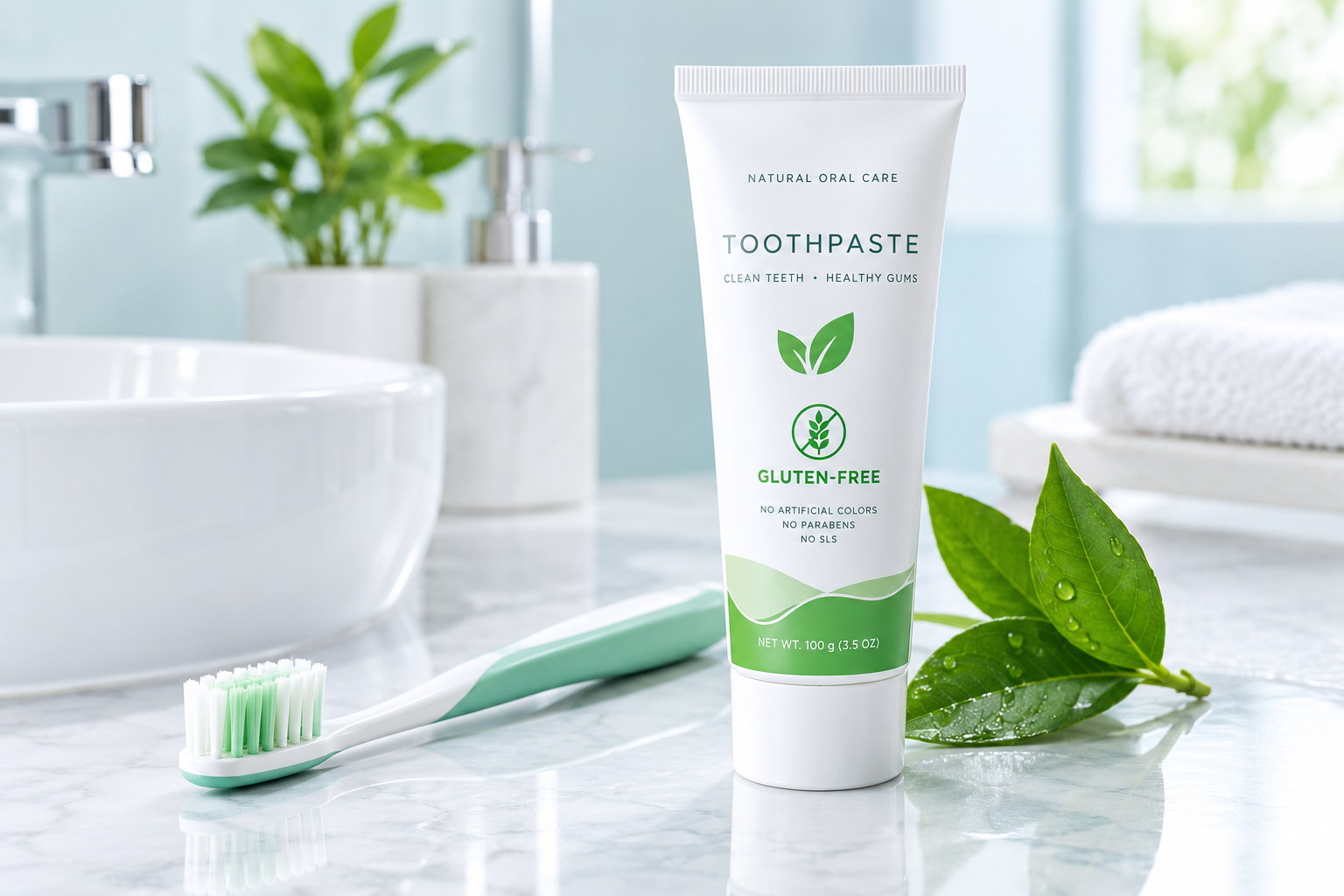
Do not rely solely on the absence of “wheat” on the ingredient list. Look for products clearly labeled “Gluten-Free” or certified by recognized third-party organizations. Certified products undergo strict testing to ensure gluten levels stay under 20 parts per million (ppm). This limit is the established safety threshold for celiac patients.
2. Choose Clean, Minimalist Formulations
Products with straightforward, gentle formulations carry less risk of hidden additives or cross-contamination. For instance, you can choose specialized formulas like the OralGos Fluoride-Free Toothpaste. This clean, reliable option avoids unnecessary chemicals while maintaining great oral hygiene.

3. Contact the Manufacturer directly
If a toothpaste label does not explicitly state its gluten-free status, contact the brand’s customer support. Ask if their raw ingredients contain wheat, barley, or rye derivatives. You should also verify if their production facilities run dedicated gluten-free lines.
Daily Oral Care Tips for Celiac Patients
Managing celiac disease extends beyond food—it encompasses every product that enters your mouth. Here are practical daily tips to maintain a healthy, gluten-free oral care regimen:
- Replace Your Toothbrush Regularly: Replace your toothbrush every 3 months to prevent gluten buildup. You should also change it right away if you suffer a gluten flare-up.
- Check Floss and Mouthwash Labels: Floss coatings and liquid mouthwashes can also contain gluten-derived flavorings or emulsifiers. Always verify their safety labels.
- Inform Your Dentist: Inform your dental team about your celiac diagnosis before your visit. This ensures they use gluten-free polishing pastes and impression materials during your checkup.
Conclusion
Managing celiac disease requires daily attention. However, your toothbrushing routine should never cause stress or unexpected flare-ups. Switching to a certified gluten-free toothpaste removes a hidden source of gluten. This simple step helps protect your body from painful autoimmune reactions.
Prioritize clean, transparent formulations that safeguard both your digestive well-being and your bright, healthy smile.