Watching your baby reach milestones is one of the most rewarding aspects of parenting. However, the arrival of primary teeth can be a challenging period filled with sleepless nights, fussiness, and constant drooling. Understanding the baby teething timeline helps parents know what to expect at every stage. It makes it easier to spot normal discomfort, recognize true illness, and build healthy dental habits early.

Understanding the Complete Baby Teething Timeline
While every child develops at their own pace, primary tooth eruption generally follows a predictable sequence. Most infants start teething around 6 months of age. However, starting anywhere between 4 and 12 months is completely normal. By the time your child reaches 2.5 to 3 years old, a full set of 20 primary teeth typically emerges.
BABY TEETH ERUPTION SEQUENCE
Lower Central Incisors (6–10 Months)
Upper Central Incisors (8–12 Months)
Upper & Lower Lateral (9–16 Months)
First Molars (13–19 Months)
Canines (Cuspids) (16–23 Months)
Second Molars (23–33 Months)
Breakdown of the Baby Teething Timeline Stage by Stage
- 6 to 10 Months (Lower Central Incisors): The bottom two middle teeth are almost always the first to appear. You may notice your baby gnawing on hands and toys to relieve pressure.
- 8 to 12 Months (Upper Central Incisors): Next, the upper central incisors typically emerge to complete the front set. This front-facing set allows infants to begin exploring soft finger foods.
- 9 to 16 Months (Lateral Incisors): The lateral incisors appear next, forming a full set of four front teeth on each jaw.
- 13 to 19 Months (First Molars): Located toward the back of the mouth, molars have broader surfaces. Because they exert more pressure on the gums during eruption, this stage often triggers heightened fussiness.
- 16 to 23 Months (Canines/Cuspids): These pointed teeth fill the gap between the incisors and the first molars.
- 23 to 33 Months (Second Molars): The final set of primary teeth emerges at the back of the mouth. Once these arrive, your toddler has a complete primary arch.
What Symptoms Are Normal During the Baby Teething Timeline?
As teeth cut through gum tissue, localized inflammation causes temporary discomfort. Recognizing expected symptoms helps reassure parents that their child’s development is progressing smoothly.
Expected Physical and Behavioral Signs
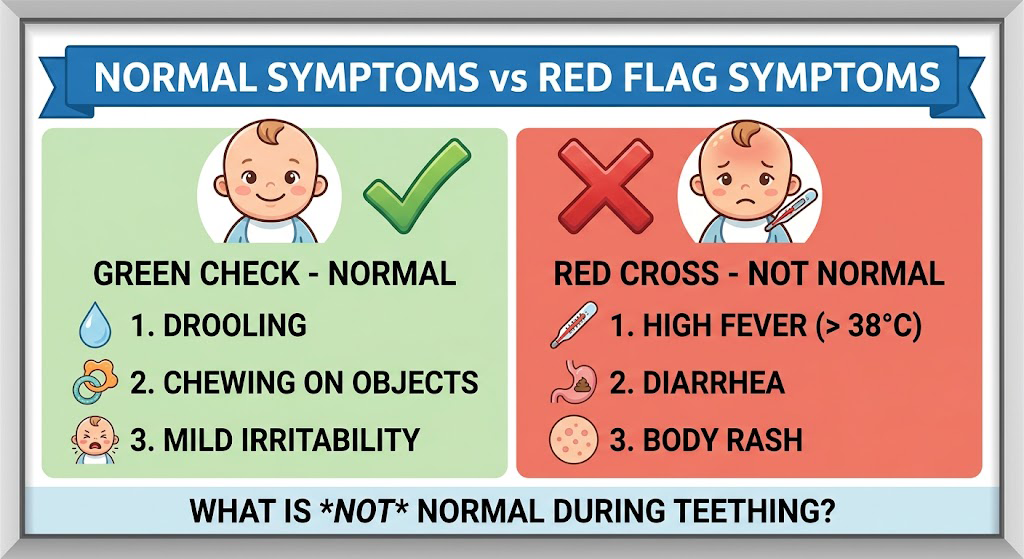
- Increased Drooling: Teething stimulates saliva production. Keep a soft cloth nearby to pat the chin dry and prevent skin chapping.
- Chewing and Gnawing: Instinctively, infants bite down on hard objects to apply counter-pressure to sore gums.
- Swollen or Tender Gums: Gums often become red and swollen prior to tooth eruption.
- Mild Fussiness and Restlessness: Discomfort can cause temporary changes in mood and mild sleep disruption.
- Slight Body Temperature Elevation: Mild gum soreness can cause a slight temperature increase. However, normal teething body temperature always remains below 100.4°F (38°C).
Red Flag Symptoms: What Is NOT Normal?
A widespread misconception among parents is attributing systemic illness to teething. Parents must distinguish basic teething discomfort from conditions requiring a doctor’s visit.
Signs That Point to Illness, Not Teething
- True Fever (100.4°F / 38°C or Higher): Elevated body temperature is caused by an infection, not by emerging teeth.
- Diarrhea or Vomiting: Digestive distress is not a standard response to teething. Loose stools often happen when babies put dirty objects into their mouths.
- Widespread Body Rash: While localized facial skin irritation from excess drool is common, generalized body rashes indicate other conditions.
- Persistent Lethargy or Refusal to Drink Liquids: Sore gums may cause a baby to refuse solid food. However, keeping your baby hydrated is still essential.
Safe Soothing Techniques and Daily Oral Hygiene
Helping your baby through the baby teething timeline involves combining gentle comfort measures with consistent daily oral hygiene.
DAILY ORAL CARE PROGRESSION
Infant (0–6 Months): Clean gums with damp cloth
First Tooth Appears: Introduce kids manual toothbrush
Toddler (2+ Years): Transition to kids electric toothbrush
Advanced Cleaning: Introduce kids water jet flosser
Soothing Tender Gums
- Cold Massage: Gently rub your baby’s gums using a clean finger or a chilled, damp washcloth.
- Solid Teething Rings: Choose teething rings made of firm rubber. Avoid liquid-filled rings that can puncture, as well as amber teething necklaces because of strangulation and choking risks.
Building Oral Care Habits Early
Dental care begins before the first tooth erupts by wiping the gums with a soft cloth. As soon as the first tooth breaks through, establishing a daily cleaning routine protects enamel from early decay.
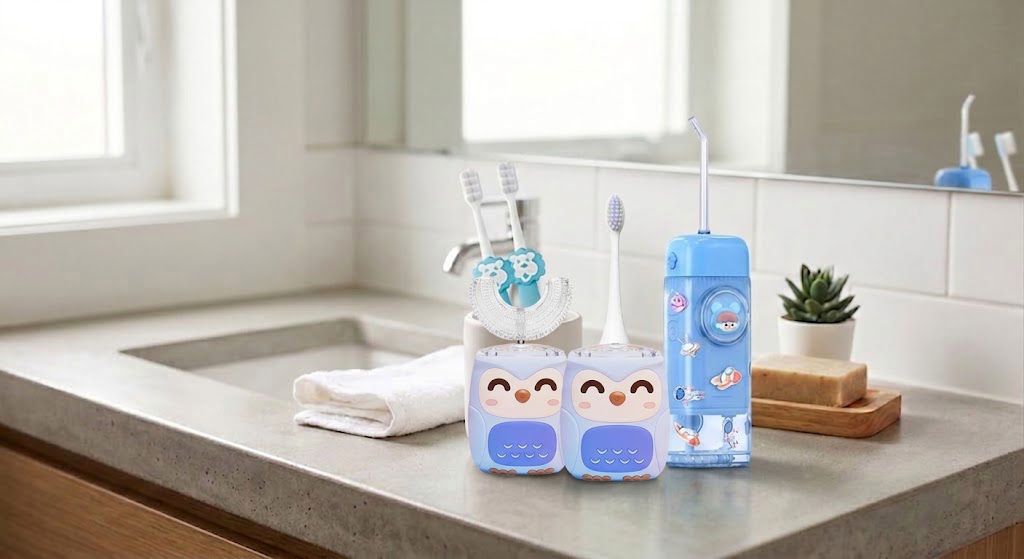
- Manual Toothbrushes: Clean emerging teeth twice daily with an age-appropriate kids toothbrush. Always use soft bristles and a tiny smear of fluoride toothpaste.
- Electric Toothbrushes: Switching to a kids electric toothbrush keeps toddlers engaged. It removes plaque efficiently along sensitive gumlines.
- Water Flossing: Use a kids water floosser for toddlers with closely set teeth. It safely cleans hard-to-reach interdental spaces.
Schedule your child’s first dentist visit when their first tooth appears. ADA guidelines recommend going no later than age one.
Conclusion
Navigating the baby teething timeline requires patience, observant care, and accurate knowledge. Identifying common teething symptoms like drooling and mild fussiness helps parents manage discomfort early. Always seek medical guidance if your baby develops a true fever. Combine these supportive care steps with early oral hygiene habits to build a foundation for lifelong dental health.