When people look in the mirror, they often focus on the brightness of their front teeth. However, dental decay rarely starts there. If you visit your dentist regularly, you have likely heard a familiar refrain. The cavities are almost always hiding in the back. Understanding why back teeth decay faster than anterior teeth is essential for protecting your long-term oral health. Front teeth handle biting and aesthetics, whereas back teeth (molars and premolars) endure the heavy pressure of daily chewing. Unfortunately, their unique structure also makes them prime breeding grounds for harmful bacteria.
1. Why Back Teeth Decay Faster: Anatomical Challenges
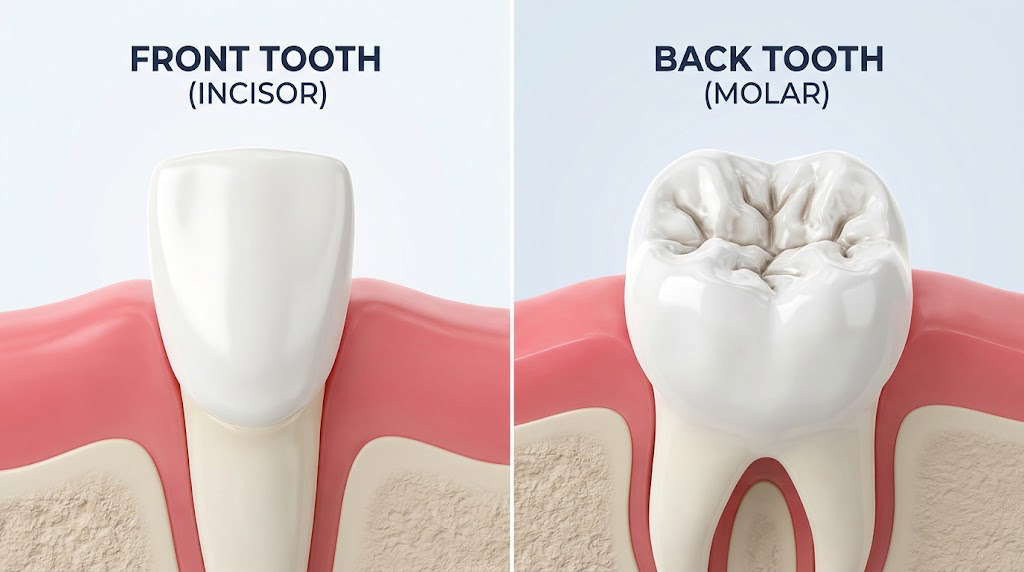
The primary reason posterior teeth are vulnerable lies in their physical structure. Unlike the smooth, flat surfaces of your incisors and canines, molars feature complex topography.
Deep Fissures: Why Molars Catch Food and Decay Faster
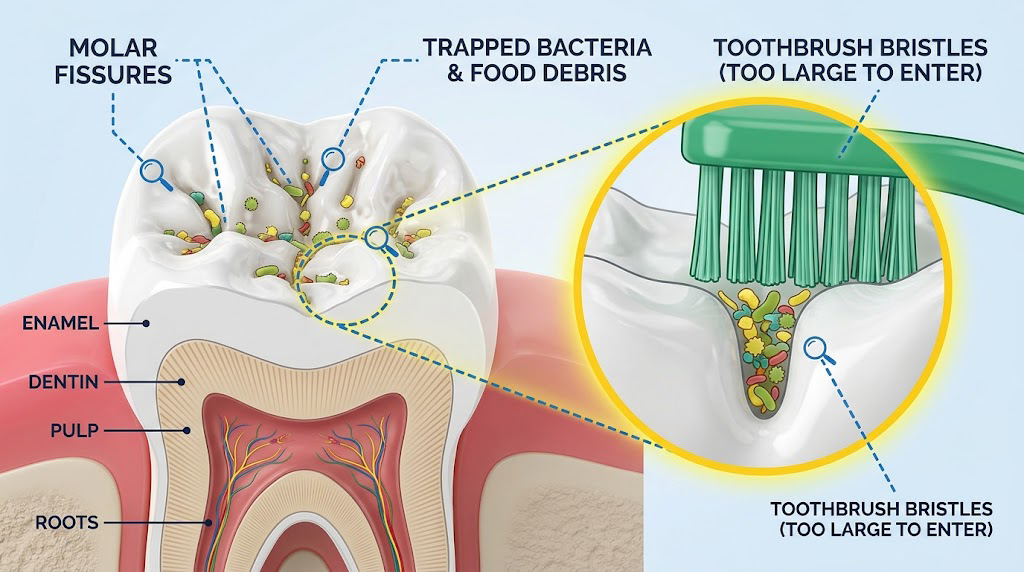
The chewing surfaces of back teeth are covered in microscopic grooves, pits, and fissures. These microscopic valleys are fantastic for grinding down tough foods like meat, vegetables, and grains. However, they are also narrow enough to trap microscopic food particles and plaque.
Toothbrush bristles are often too wide to sweep out debris nested deep inside these grooves. Over time, trapped carbohydrates feed oral bacteria, which produce enamel-destroying acids.
2. Saliva Distribution: Why Back Teeth Suffer More Decay
Saliva is your mouth’s natural defense system. It neutralizes acids, washes away food debris, and delivers essential minerals like calcium and phosphate to remineralize enamel.
However, saliva flow is not distributed evenly across the dental arch:
- Anterior Advantage: Saliva constantly bathes the front teeth. This saliva pools from the salivary glands located beneath the tongue.
- Posterior Disadvantage: Back teeth sit further away from major gland ducts, meaning they receive less continuous rinsing action. Without adequate saliva buffering, acids linger longer on molar surfaces, speeding up mineral loss.
The American Dental Association notes that natural defenses are often not enough to protect back teeth from decay. Maintaining a thorough oral hygiene routine is therefore critical.
3. Physical Limitations: Why Cleaning Back Teeth Is Harder
Even with diligent brushing habits, the posterior region presents physical hurdles. Many people have a strong gag reflex when using a manual toothbrush on their back molars. Reaching the second and third molars can be difficult. As a result, people often rush their brushing in the back of the mouth or clean those areas less thoroughly.
Furthermore, traditional toothbrushes only clean the top, front, and back surfaces of teeth. They completely miss the tight spaces directly between molars, where food compaction occurs naturally during chewing.
4. How to Stop Back Teeth From Decaying Faster
Knowing why back teeth decay faster allows you to upgrade your daily preventative care routine. Standard brushing is only the first step; protecting your molars requires targeted tools and techniques.
Upgrade Your Interdental Care to Protect Back Teeth
Because toothbrush bristles cannot squeeze between tightly packed molars, interdental cleaning is non-negotiable. Specialized tools like an interdental cone brush help clear out stubborn plaque from wider embrasures and molar gaps. This prevents plaque from calcifying into tartar.

Advanced Water Flossing to Prevent Molar Decay
For hard-to-reach areas and stubborn gumline debris, mechanical water streams offer superior flushing action. Add a high-pressure water flosser to your nightly routine. It helps dislodge food particles from deep pockets and posterior gaps that string floss often misses.

Conclusion
Back teeth develop cavities faster due to a combination of factors. These include their unique design, lower saliva exposure, and the difficulty of cleaning them with standard brushes. By recognizing these risk factors, you can take proactive steps to protect your smile.
Combine proper brushing with targeted interdental tools. This ensures your back teeth receive the defense they need to stay strong and healthy for years to come.