The global oral care market is booming. Consumers increasingly demand products that meet their unique oral hygiene needs. Brands entering this competitive market must understand their manufacturing options. They need to choose between OEM toothpaste and ODM toothbrush solutions to succeed.
Choosing the right strategy can significantly influence cost structures, profit margins, and brand differentiation. This article explains the key differences between OEM and ODM. It also highlights their advantages and shows how your brand can use these strategies to succeed in the oral care sector.
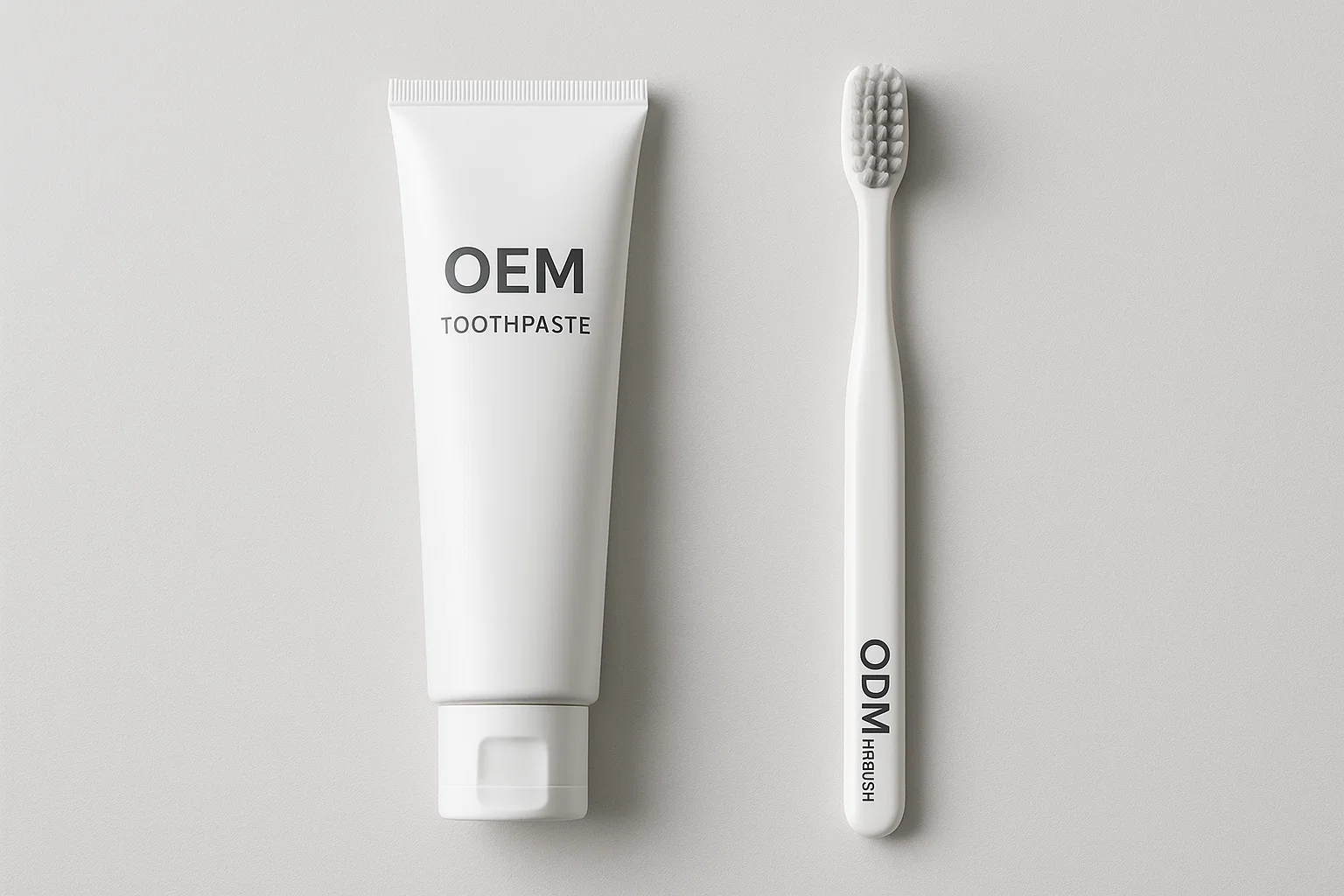
Understanding OEM Toothpaste: Custom Formulations Your Way
Original Equipment Manufacturer (OEM) toothpaste lets brands create products using formulas that a manufacturer already provides. Brands can make minor changes to flavor, packaging, or branding. This model suits companies that want to launch a toothpaste line quickly. It does not require extensive research and development.
Advantages of OEM Toothpaste
- Lower Development Costs: OEM toothpaste manufacturers already have tested formulations, reducing R&D expenses. Brands can focus resources on marketing and distribution rather than product development.
- Faster Time-to-Market: Using ready-made formulas, you can get your product to store shelves or online quickly. This allows you to take advantage of market trends without delay.
- Regulatory Compliance: Established OEM manufacturers typically comply with international oral care standards, minimizing compliance risks for your brand.
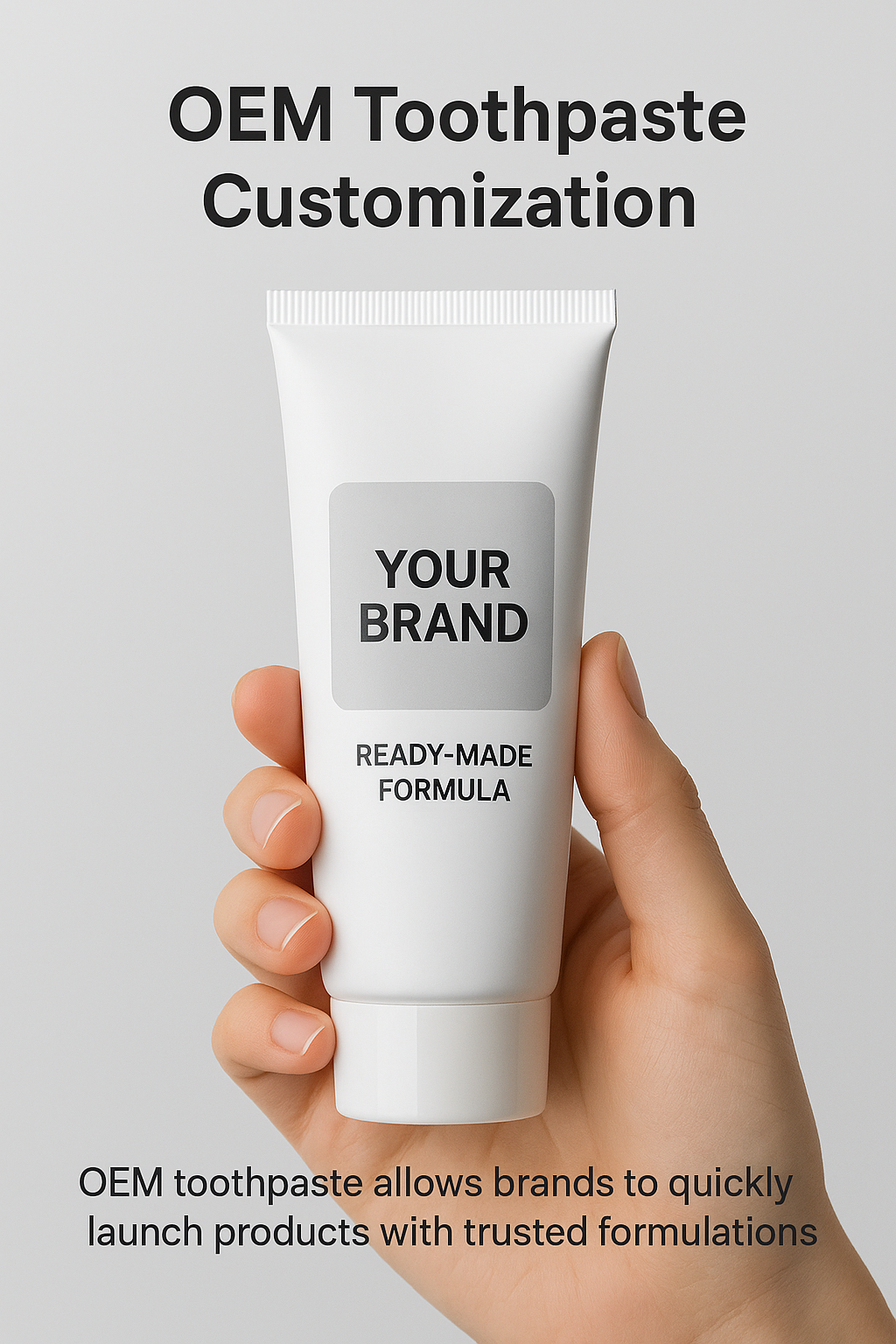

For example, OralGos W77 Colour Corrector Toothpaste provides a clinically safe, color-correcting formula. Brands can adopt it and customize it through OEM options. By leveraging such products, companies can introduce innovative oral care solutions without investing heavily in R&D.
When OEM Toothpaste Makes Sense
OEM toothpaste is best suited for brands that prioritize speed, cost-efficiency, and market entry. Companies with limited technical resources can still offer high-quality products. By working with trusted OEM partners, they can provide formulas for whitening or cavity prevention.
Exploring ODM Toothbrushes: Fully Customized Innovation
Original Design Manufacturer (ODM) toothbrushes take customization a step further. Unlike OEM, ODM solutions let brands design products from the ground up. This includes the brush shape, bristle technology, handle ergonomics, and other unique features. This approach is ideal for brands aiming to stand out in a crowded oral care market.
Advantages of ODM Toothbrush
1. Unique Product Differentiation: ODM toothbrushes, such as Advanced Spiral Bristles Deep-Cleaning Toothbrush or 3-Sided Ultra-Soft Triple Toothbrush, allow brands to create designs that are not available elsewhere.
2. Higher Profit Margins: Unique features and patented designs enable premium pricing, improving profitability per unit sold.
3. Full Control Over Branding: ODM gives brands full flexibility in product design, packaging, and messaging. This helps ensure that their brand identity remains consistent across all touchpoints.


When ODM Toothbrush is Ideal
ODM toothbrushes are optimal for brands seeking to innovate and differentiate. Companies that invest in design and marketing can attract loyal customers. They achieve this by offering products with superior performance, comfort, or visual appeal.
OEM Toothpaste vs ODM Toothbrush: Key Differences in Cost and Profitability
Understanding the financial implications of OEM toothpaste and ODM toothbrush manufacturing is essential for strategic decision-making.
| Feature | OEM Toothpaste | ODM Toothbrush |
|---|---|---|
| Development Cost | Low | Medium to High |
| Time-to-Market | Fast | Moderate |
| Customization | Limited | Extensive |
| Profit Potential | Moderate | High |
| Brand Differentiation | Low to Medium | High |
| Regulatory Support | Strong | Requires oversight |
OEM toothpaste is cost-effective, reducing upfront investment and risk. However, formula commoditization can limit its profit margins. ODM toothbrushes require higher development costs. However, they offer unique selling points that allow brands to charge premium prices. This approach can lead to stronger long-term profitability. Statista research shows steady growth in the global oral care market. Both OEM toothpaste and ODM toothbrush brands can tap into this demand. Their strategies, however, differ in scale and profitability.
Integrating OEM and ODM for a Balanced Oral Care Strategy
Many successful oral care brands adopt a hybrid approach, combining OEM toothpaste with ODM toothbrushes. This strategy allows brands to launch quickly with cost-effective toothpaste solutions while differentiating themselves with innovative toothbrush designs.
A clinically safe OEM toothpaste like the OralGos W77 Colour Corrector Toothpaste pairs well with an ODM toothbrush that offers advanced spiral bristles or a 3-sided cleaning system. Together, they form a compelling oral care bundle that strengthens brand recognition and customer loyalty.
Considerations When Choosing OEM Toothpaste or ODM Toothbrush
When deciding which manufacturing model to adopt, brands should evaluate several factors:
- Budget and Investment Capacity: OEM requires lower investment, while ODM demands higher upfront costs for design and tooling.
- Market Positioning: Premium brands often gain more from ODM because it offers stronger differentiation. In contrast, budget or entry-level brands may perform better with OEM solutions.
- Speed vs Innovation: OEM enables faster market entry, while ODM supports innovation and long-term brand building.
- Regulatory Landscape: Both options require careful regulatory compliance, but OEM manufacturers often simplify the process due to their established frameworks.
Maximizing Brand Impact Through Strategic Partnerships
Partnering with reputable OEM and ODM manufacturers ensures product quality and market relevance. Established suppliers often provide technical support, regulatory guidance, and R&D insights. For brands entering global markets, such partnerships are invaluable for minimizing compliance risks and optimizing production efficiency.
Using trusted resources like OralGos toothbrushes and OEM toothpaste can simplify your supply chain. It also shortens time-to-market and strengthens brand credibility.
Conclusion: Aligning OEM and ODM Strategy with Brand Goals
Choosing between OEM toothpaste and ODM toothbrush manufacturing is more than a logistical decision. It is a strategic choice that defines your brand’s future in the oral care market.
OEM toothpaste works best for cost-conscious brands that want a fast market entry. In contrast, ODM toothbrushes provide the innovation and differentiation needed for long-term success.
For many companies, the most effective path is a mix of both strategies. OEM toothpaste offers efficiency and reliability, while ODM toothbrushes add uniqueness and brand strength. By weighing costs, positioning, and long-term goals, brands gain a stronger competitive edge. As a result, they improve profitability and establish a sustainable presence in the global oral care market.