When most people evaluate their smile, they focus almost entirely on color shade. They search for peroxide gels, purple correctors, and bleaching strips, hoping to wipe away stubborn yellow tones. However, dental optical science reveals a surprising truth: shade pigment is only half of the visual equation. The physical surface structure of your teeth plays a massive role in how light bounces back into the eyes of an observer.
Understanding enamel gloss vs. tooth whiteness reveals why two smiles with identical underlying dentin colors can look completely different. A smooth tooth reflects light like polished glass, creating an instant radiant glow. A rough or eroded tooth scatters light, making even bleached enamel look dull and chalky.
Enamel Gloss vs. Tooth Whiteness: Understanding Light Reflection
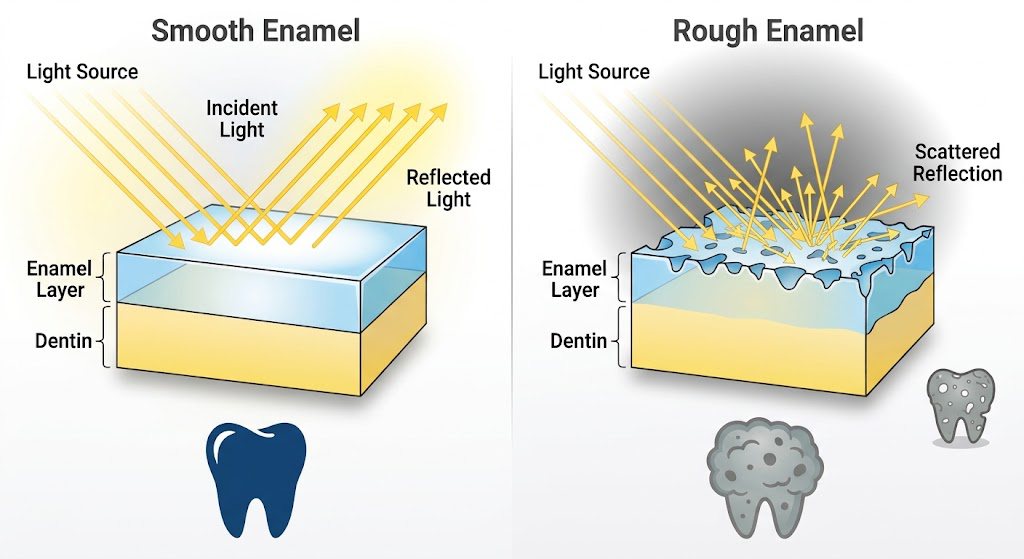
To understand why surface texture dictates appearance, we must examine how light interacts with natural tooth structures. Tooth enamel consists of densely packed hydroxyapatite mineral crystals organized into tight prisms. When healthy, these crystals form a micro-smooth outer barrier.
Light hitting a tooth surface reacts in two distinct ways depending on its texture:
- Specular Reflection: On a smooth enamel surface, light strikes evenly and reflects in a single uniform direction. This mirrors the optical reflection seen on polished glass, producing high gloss and a vibrant, healthy shine.
- Diffuse Scattering: On a rough, pitted, or eroded enamel surface, incoming light hits microscopic nicks and scratches. The light bounces off in multiple chaotic directions. This diffuse scattering cancels out natural luster, giving the tooth a matte, lifeless gray or yellow hue.
When evaluating enamel gloss vs. tooth whiteness, gloss acts as a natural visual amplifier. High surface gloss reflects ambient light directly to the observer. This bright shine effectively masks minor yellow tones from the dentin underneath.
Key Science Behind Enamel Gloss vs. Tooth Whiteness
The physical relationship between smoothness and brightness rests on three core dental optical principles:
- Consistent Refractive Index: Intact, highly mineralized enamel has a consistent refractive index. When demineralization creates microscopic voids, light scatters unevenly, reducing clarity and brightness.
- Surface Roughness (Ra Value): Dental studies measure surface roughness using Ra values. Lower Ra values directly correlate with higher visual gloss ratings, independent of the actual color tint.
- Stain Resistance: Smooth, glossy enamel lacks microscopic crevices where dark chromogens from coffee, tea, and red wine can lodge. A rough surface absorbs pigments faster, speeding up surface discoloration.
Rough enamel not only looks duller today, but it also stains much faster tomorrow. Protecting surface texture is essential for long-term brightness.
What Causes Loss of Enamel Gloss and Tooth Whiteness?
Everyday life subjects our tooth enamel to chemical and physical stress. Over time, these daily factors degrade the ultra-smooth microscopic finish of your teeth:
- Dietary Acid Erosion: Frequent exposure to acidic beverages like soda, citrus juices, kombucha, and wine dissolves surface minerals, leaving behind microscopic pits.
- Abrasive Toothpastes: High-RDA (Relative Dentin Abrasivity) whitening toothpastes often use harsh silica or calcium carbonate grit. While they scrub away surface stains, they can scratch the delicate enamel surface over time.
- Aggressive Brushing: Brushing too hard or using hard-bristled toothbrushes mechanically wears down the smooth outer layer.
- Acid Reflux & Dry Mouth: Stomach acid directly strips minerals from your teeth. Meanwhile, dry mouth leaves enamel without the protective proteins found in natural saliva.
How to Restore Enamel Gloss and Enhance Tooth Whiteness
If your teeth feel rough or look dull, smoothing your enamel often works better than aggressive bleaching.
1. Remineralize with Hydroxyapatite and Fluoride
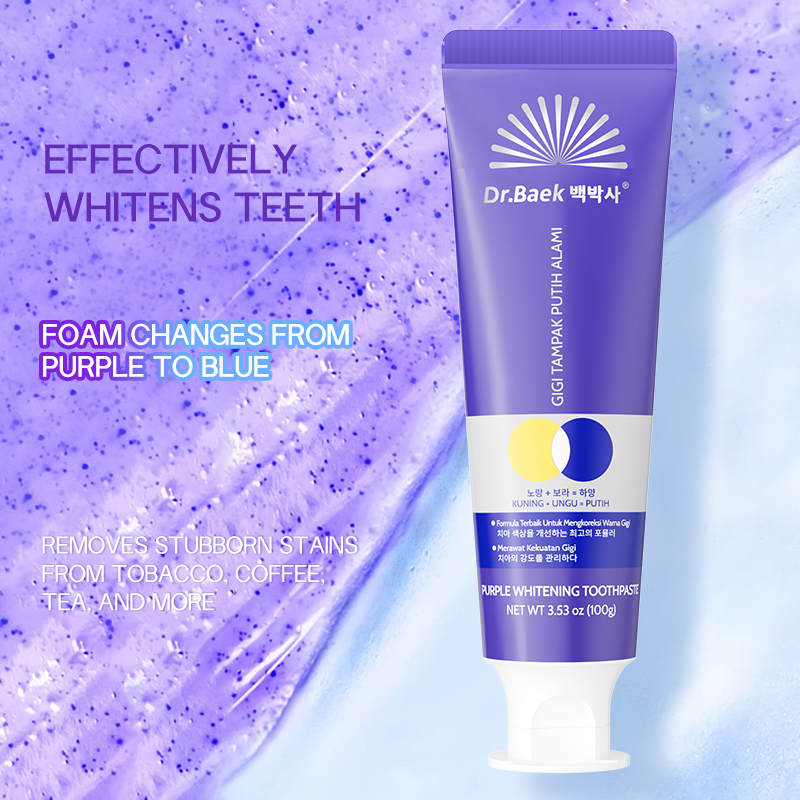
Rebuilding microscopic enamel defects requires targeting the source of mineralization loss. Targeted daily formulas can rebuild your tooth surface. Using a whitening toothpaste for enamel strengthening deposits minerals like nano-hydroxyapatite straight into micro-scratches. As these minerals fill microscopic gaps, they smooth out roughness and restore natural specular reflection.
2. Switch to Low-Abrasivity Oral Care
Protect your enamel polish by using soft-bristled toothbrushes and non-abrasive toothpastes. Look for daily formulas engineered to polish rather than scratch. Gentle polishing compounds smooth out existing micro-scratches without stripping away precious enamel volume.
3. Practice Acid Neutralization
Never brush your teeth immediately after consuming acidic food or drinks. Acid temporarily softens enamel, making it highly vulnerable to mechanical abrasion. Rinse your mouth with water after meals and wait at least 30 minutes before brushing. This gives your saliva enough time to re-harden the enamel.
Research from the American Dental Association highlights two key habits: maintaining a neutral oral pH and boosting saliva flow. Together, these steps prevent acid wear and protect long-term mineral balance.
The Verdict: Polish for True Radiance
Whitening gels can alter internal stain pigments, but they cannot restore lost light reflection. True smile radiance requires a dual approach. You need to maintain light mineral shades while protecting the glossy surface that creates a natural shine.
Prioritize micro-smoothness over harsh abrasion to protect your enamel. This gentle approach unlocks a naturally brighter, more vibrant smile.