The oral care industry is highly competitive. Certifications are more than just regulatory requirements, they demonstrate a company’s commitment to quality, safety, and compliance. From toothbrushes to mouthwash, ensuring that products meet global standards protects both consumers and manufacturers. This article explores the key certifications: ISO, CE, FDA, and OEM compliance. You’ll also learn why each plays a vital role in product quality and compliance.
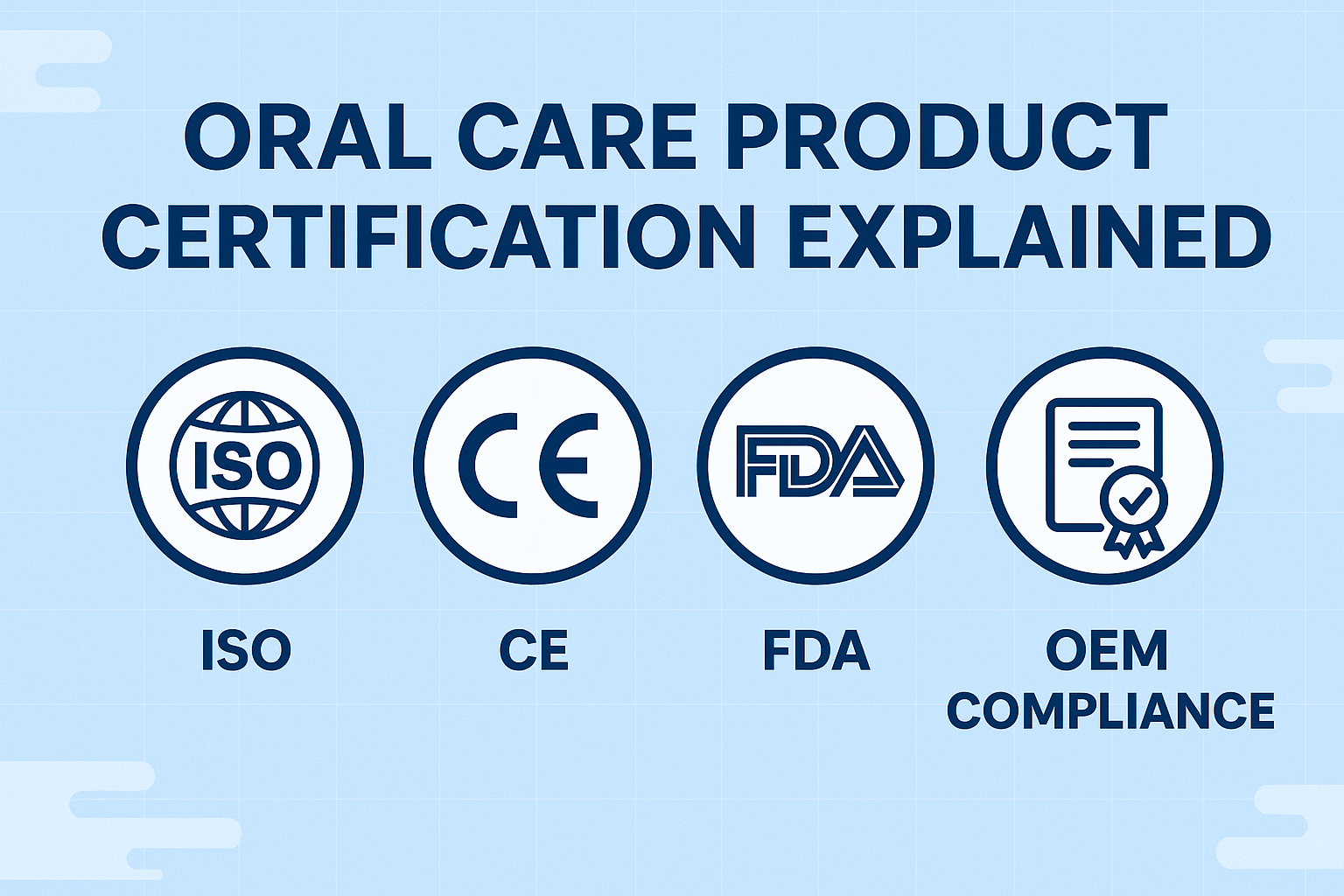
Why ISO, CE, FDA, and OEM Compliance Matter in Oral Care
Certifications serve multiple purposes. They verify that a product aligns with international quality benchmarks, adheres to local regulations, and minimizes potential safety risks. For companies aiming to export their oral care products globally, certifications are often a prerequisite. Retailers, distributors, and even consumers increasingly look for these credentials as proof of trustworthiness.
Achieving certifications like ISO, CE, or FDA approval signals that a manufacturer prioritizes quality control and regulatory adherence. Meanwhile, OEM compliance ensures that outsourced production still meets the brand’s standards, which is especially crucial for businesses leveraging Original Equipment Manufacturing partnerships.
Explore OralGos’ certified product range here and learn more about our OEM services here.
ISO Certification: Quality Management Systems
The International Organization for Standardization (ISO) develops global standards for various industries, including oral care. ISO certification focuses on establishing and maintaining quality management systems (QMS).
For oral care products, the most widely used standard is ISO 13485. It defines the quality management system (QMS) requirements for medical device manufacturing. Toothbrushes and toothpaste may not always count as medical devices. Still, using ISO 13485 principles helps keep production consistent, traceable, and well-managed.
Key benefits of ISO certification include:
- Consistent product quality across batches
- Enhanced regulatory compliance
- Streamlined processes for international market entry
Manufacturers seeking ISO certification must undergo audits conducted by accredited organizations. This involves documentation review, process evaluation, and on-site inspections.

CE Marking: European Compliance
The CE mark is mandatory for products sold within the European Economic Area (EEA). It indicates conformity with European health, safety, and environmental standards. For oral care products, CE marking demonstrates compliance with European safety and quality standards. It confirms that the product meets the key requirements under the Medical Device Regulation (MDR) or other relevant consumer product directives.
Obtaining a CE mark requires a comprehensive evaluation process:
- Product testing against EU standards
- Risk assessment and technical documentation
- Quality system evaluation and conformity declaration
The CE mark provides assurance to both regulators and consumers in Europe that the product is safe for use. Distributors, retailers, and online marketplaces often prefer brands that hold CE-certified products.
FDA Approval: US Regulatory Standards
In the United States, the Food and Drug Administration (FDA) regulates a wide range of oral care products. These include items such as toothbrushes, toothpastes, and whitening gels. FDA approval ensures that products are safe, effective, and labeled correctly.
The FDA’s review process depends on the classification of the product. For example:
- Class I devices like manual toothbrushes usually require general controls and may be exempt from premarket notification.
- Higher-risk devices, such as powered toothbrushes with unique features, may require 510(k) clearance.
Compliance with FDA standards also includes Good Manufacturing Practices (GMP), proper labeling, and rigorous documentation. This ensures not only legal compliance but also consumer confidence in the product.
OEM Compliance: Maintaining Standards in Outsourced Production
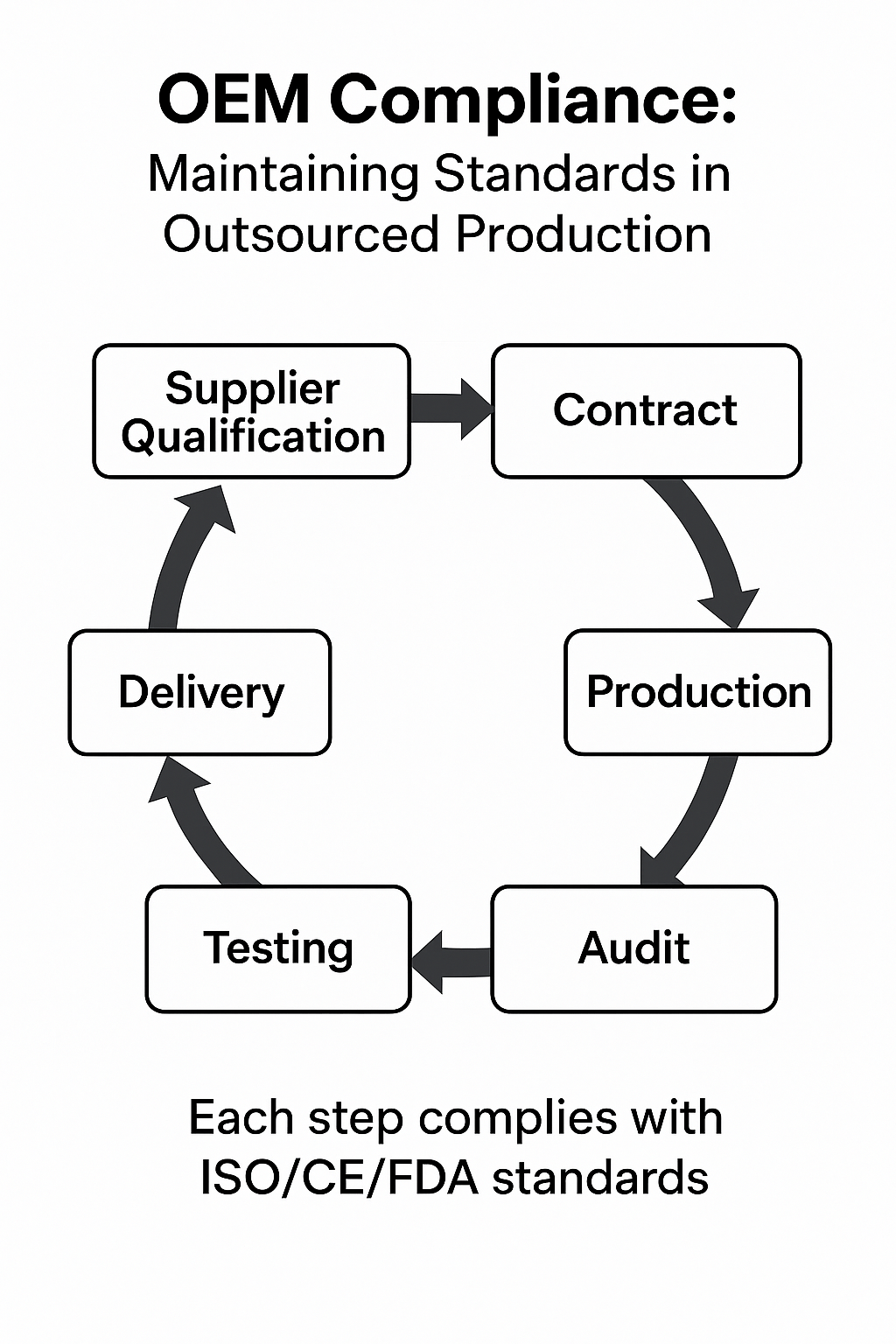
For brands using third-party manufacturers, OEM compliance is critical. OEM compliance involves a series of processes and audits that ensure quality in outsourced production. It guarantees that every product meets brand specifications, regulatory standards, and international certifications such as ISO, CE, and FDA.
A typical OEM compliance process includes:
- Supplier qualification and capability assessment
- Contractual quality agreements and compliance standards
- Continuous quality monitoring through audits and batch inspections
Maintaining OEM compliance is vital for minimizing risk, reducing recalls, and safeguarding brand reputation. Brands that work with reputable OEM suppliers, such as OralGos, benefit from strong compliance systems. These frameworks ensure that every product leaving the factory meets strict global standards.
Learn how our OEM service ensures certified quality here.
Integrating Certifications into Product Strategy
For oral care brands, certifications should be an integral part of the product strategy. They not only facilitate market entry but also enhance brand credibility. When a brand meets ISO, CE, FDA, and OEM compliance standards, it builds a strong foundation of quality and safety. This comprehensive profile appeals to distributors, retailers, and informed consumers alike.
Brands can leverage certifications in marketing communications, product packaging, and B2B negotiations. Highlighting certified quality reassures buyers and can differentiate products in a crowded marketplace.
Conclusion
In today’s global oral care market, certifications go far beyond simple formalities. They serve as clear proof of quality, safety, and regulatory compliance. Understanding the details behind ISO, CE, FDA, and OEM compliance helps brands navigate complex regulatory requirements. It also allows them to build trust and maintain consistent quality throughout production.
Manufacturers and startups in oral care can benefit from partnering with a certified OEM provider like OralGos. Such collaboration guarantees full compliance and high quality from design to final delivery. This approach not only mitigates compliance risks but also strengthens market positioning and consumer confidence.
Discover our certified oral care products here and explore our end-to-end OEM solutions here.