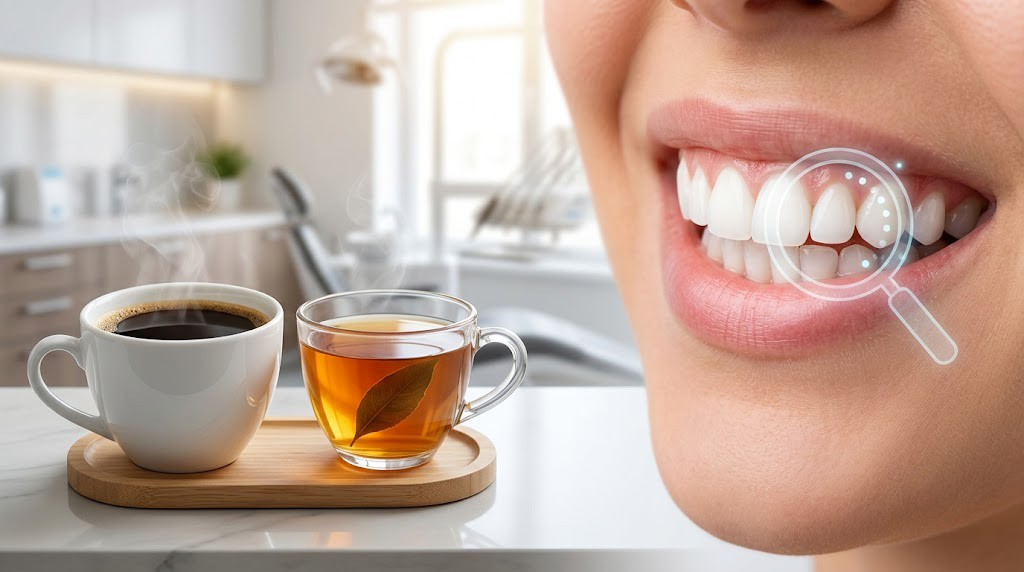
For millions of people, a morning routine feels incomplete without a hot cup of coffee or a comforting mug of tea. While these beloved beverages provide energy and antioxidants, they also share a frustrating side effect: stubborn tooth discoloration. If you have ever caught yourself looking in the mirror after your morning brew and wondering why coffee stains teeth, you are not alone. The answer lies in the complex interaction between organic botanical compounds and the microscopic architecture of your tooth enamel.
The Science Behind Why Coffee Stains Teeth
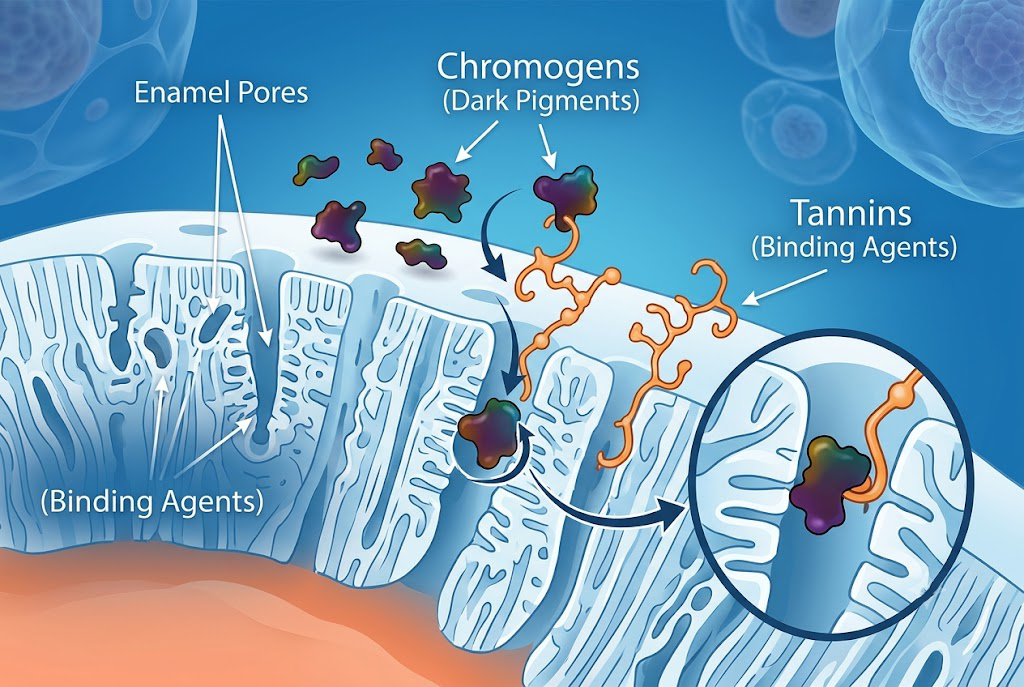
To understand why coffee stains teeth, we first need to look at the structure of tooth enamel. Though enamel is the hardest substance in the human body, its surface is not entirely smooth. Under a microscope, enamel contains microscopic pits, ridges, and pores.
When you consume deeply pigmented food and drinks, microscopic compounds enter these pores, binding to the structural matrix of your teeth. Over time, these surface stains transition from temporary discoloration to deep-seated intrinsic staining.
Tannins, Chromogens, and Acid: Why Coffee Stains Teeth So Quickly
Three primary chemical culprits contribute to beverage-induced staining: chromogens, tannins, and acids. Understanding how these work together explains why coffee stains teeth so quickly compared to other drinks.
+-----------------------------------------------------------------------+
|                       THE STAINING TRINITY                            |
+--------------------------+--------------------+-----------------------+
| Compound                 | Key Role           | Action                |
+--------------------------+--------------------+-----------------------+
| 1. Chromogens            | Pigment source     | Intense color agents  |
| 2. Tannins               | Adhesion booster   | Helps pigments stick  |
| 3. Organic Acids         | Enamel softener    | Opens micropores      |
+--------------------------+--------------------+-----------------------+
1. Chromogens: Dark Pigments That Stain Teeth
Chromogens are chemical compounds with intense pigmentation that readily adhere to surfaces. Both dark roasts and black teas are packed with chromogens, giving them their rich colors. When chromogens settle onto enamel, they leave behind dark residues.
2. Tannins: The Binding Agents Behind Coffee Stains
Tannins are naturally occurring plant polyphenols found in coffee, tea, wine, and certain fruits. While tannins themselves do not directly color your teeth, they act as powerful binding agents. They make it significantly easier for chromogens to stick to the enamel surface. Tea, especially black and green varieties, often contains higher tannin levels than coffee, which is why tea drinkers frequently experience stubborn gray or brown discoloration.
3. Acidity: How Enamel Erosion Causes Teeth to Stain
Coffee and tea are inherently acidic. Acid temporarily weakens and softens tooth enamel by softening its protective mineral surface. According to clinical guidance from the American Dental Association, consuming acidic foods and drinks lowers oral pH, making teeth far more susceptible to structural wear and pigment absorption. When enamel becomes porous due to acid exposure, chromogens and tannins penetrate much deeper into the tooth layer.
How to Prevent Coffee and Tea Stains Without Quitting Your Daily Brew
You do not need to give up your favorite hot drinks to maintain a bright smile. Implementing a few smart, science-backed daily habits can dramatically minimize pigment retention.
Drink Through a Straw
When drinking iced coffee or cold-brewed tea, using a reusable straw minimizes direct contact between acidic, pigment-rich liquids and your front teeth.
Rinse with Water Immediately
Swishing water around your mouth right after finishing your beverage helps neutralize acidity and washes away lingering tannins before they bond to enamel pores.
Avoid Immediate Brushing
Because acidic drinks temporarily soften enamel, brushing immediately after drinking coffee can cause micro-abrasions on your teeth. Wait roughly 30 minutes before brushing to allow your saliva to remineralize your enamel naturally.
Correcting Existing Stains: Modern Color Theory in Oral Care
While preventative habits keep new stains at bay, addressing existing yellow tones requires targeted care. Traditional abrasive whitening pastes often rely on harsh scrubbers that can erode sensitive enamel over time. Modern dental cosmetics take a gentler, more effective approach inspired by color science.
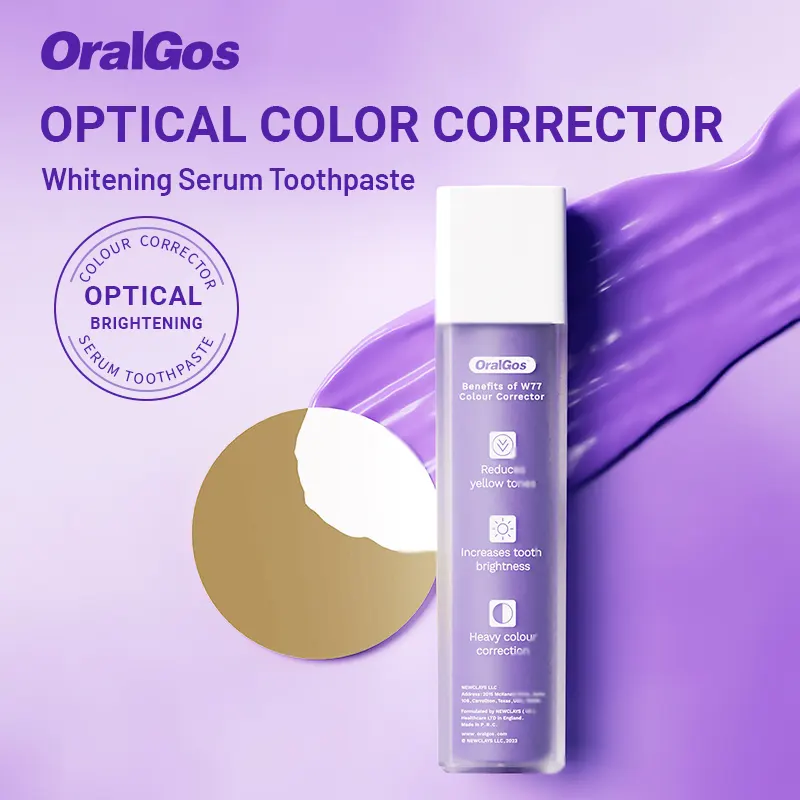
Just as purple shampoo neutralizes brassy yellow tones in blonde hair, deep purple pigments neutralize yellow discoloration on teeth because purple and yellow sit directly opposite each other on the color wheel.
If you are dealing with daily coffee or tea residue, incorporating specialized whitening products into your routine can make a noticeable difference. Formulations like those found in the dedicated toothpaste collection from Oralgos are crafted to lift surface pigments while preserving enamel integrity.
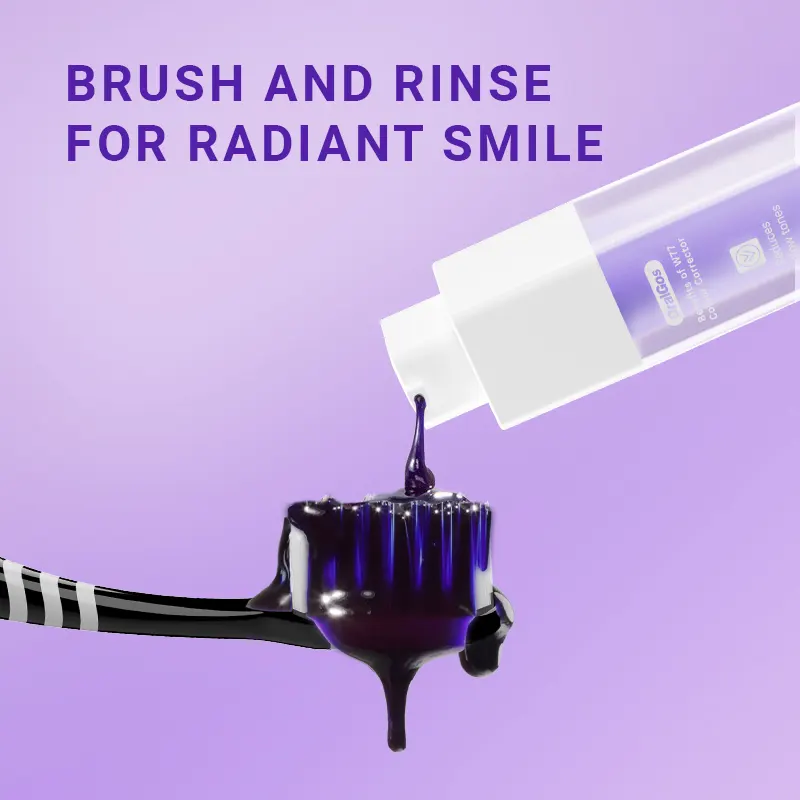
For an immediate visual boost, applying targeted optical correctors—such as the Oralgos Colour Corrector Toothpaste—uses water-soluble purple dyes to mask yellow undertones instantly, giving you a brighter look without aggressive chemical bleaching or sensitivity.
Summary: Protecting Your Smile Long-Term
Understanding why coffee stains teeth empowers you to enjoy your daily beverages without compromising your smile. By understanding how tannins, chromogens, and acidity interact with your enamel, you can combine simple habits—like rinsing with water—with modern oral care solutions to keep your teeth clean, healthy, and bright every day.