In today’s competitive oral care market, brands need to understand the difference between ODM vs OEM. This knowledge helps them make smarter decisions when manufacturing toothbrushes, toothpaste, or whitening products. While these two production models may seem similar, they lead to different business outcomes. Each model affects product development, cost, and brand control in its own way.
As an experienced oral care factory, OralGos has partnered with both ODM and OEM clients around the world. The company helps each brand create products that truly stand out in a competitive market. Let’s explore how these models differ and which one may be right for your business.
What Is OEM in Oral Care Manufacturing?
OEM (Original Equipment Manufacturing) is a production model in which the brand owner supplies the design, formula, and specifications. The factory then manufactures the product according to these requirements.
In other words, the factory acts as a technical executor, not an innovator. For example, a U.S. dental care company might design a premium electric toothbrush. To bring the concept to life, the brand can partner with a China-based oral care factory. The factory then produces the product at scale while ensuring strict quality and safety standards.
✅ Advantages of OEM:
- Full control over design and intellectual property
- Custom packaging and private labeling
- Consistent quality assurance with global standards (e.g., ISO, FDA, and Walmart audits)
However, OEM requires more resources from the brand owner—such as R&D investment, compliance testing, and marketing strategy.
To explore how OEM manufacturing works in detail, visit OralGos’s comprehensive OEM Service guide here.
What Is ODM in Oral Care Manufacturing?
ODM (Original Design Manufacturing) allows brands to use ready-made product designs and formulas created by the factory. This model is ideal for companies that want to enter the market quickly without investing heavily in product development.
For example, a start-up oral care brand might select an ODM toothbrush model that has already passed performance testing. The brand can then customize it with its own color scheme, packaging, and logo.
✅ Advantages of ODM:
- Faster time-to-market
- Lower development costs
- Access to proven designs and technologies
OralGos, with its strong R&D capabilities, offers a wide variety of ODM oral care products. These may include whitening toothpastes with purple color-correction formulas and sonic electric toothbrushes tailored for different global markets.
Key Differences Between ODM and OEM in Oral Care
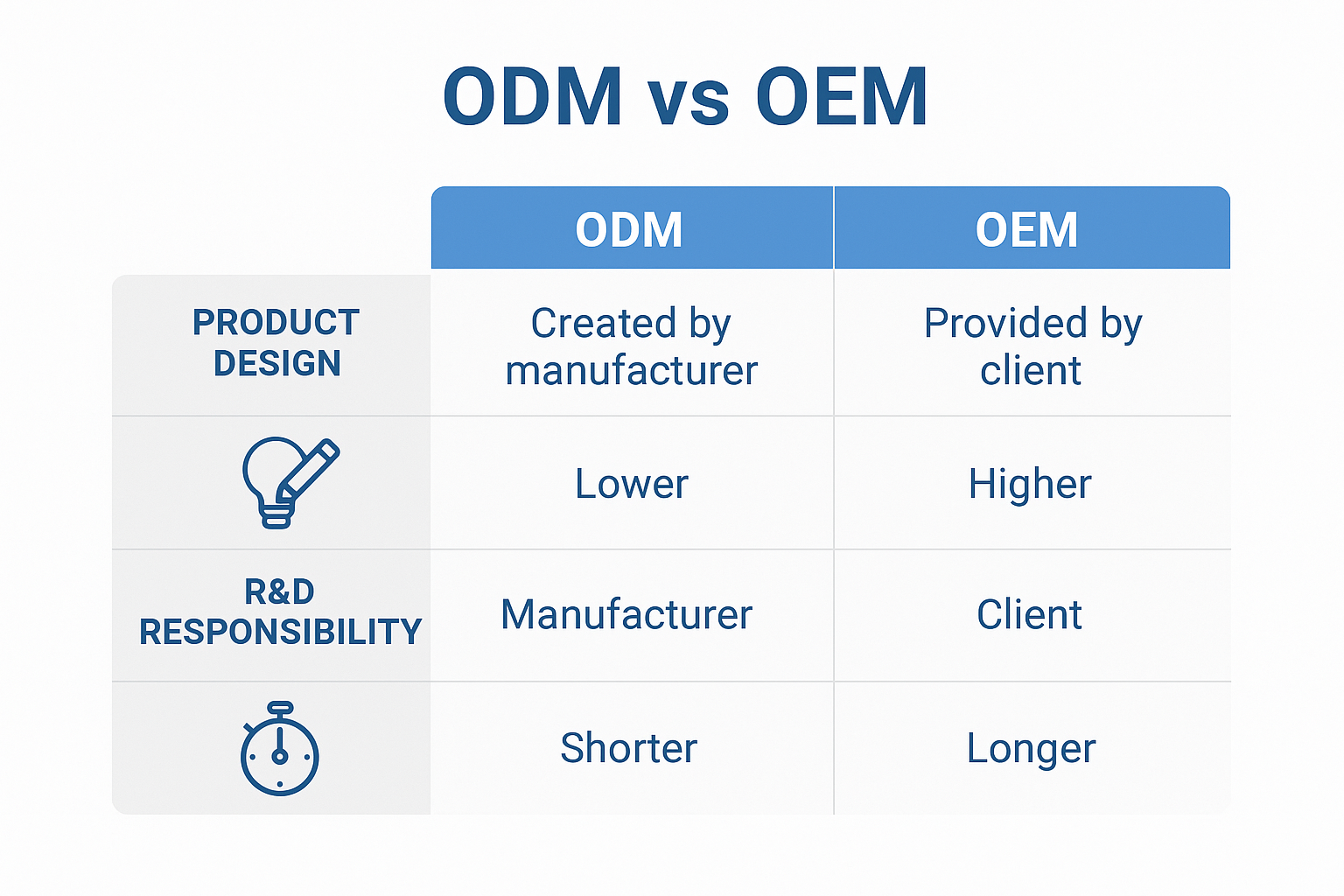
Understanding ODM vs OEM depends on what your brand values more — control and customization, or speed and efficiency.
| Aspect | OEM (Original Equipment Manufacturing) | ODM (Original Design Manufacturing) |
|---|---|---|
| Product Design | Brand provides full design | Factory provides ready-made designs |
| R&D Responsibility | Brand-led | Factory-led |
| Time-to-Market | Longer | Faster |
| Cost Efficiency | Higher initial investment | Lower entry cost |
| Customization Level | Fully customized | Limited but flexible |
| Ownership of IP | Brand retains IP | Factory holds initial IP |
In short, OEM works best for established brands that focus on product differentiation. ODM, on the other hand, is ideal for new companies looking for flexibility and cost efficiency.
Real-World Case Example: Hybrid ODM–OEM Partnership
At OralGos, many successful collaborations come from a hybrid ODM–OEM model.
For instance, a European oral care distributor wanted to launch a whitening toothpaste line with purple color-correcting technology. Instead of starting from scratch, they chose an existing ODM base formula from OralGos. Then, they customized the fragrance, packaging, and documentation to meet the requirements of their regional market.
This approach reduced R&D time by half while preserving a premium, brand-exclusive identity. It also demonstrates how flexibility between ODM and OEM can lead to successful and efficient outcomes.
Why the Factory Perspective Matters
From a factory’s point of view, ODM and OEM projects require distinct workflows:
- Our engineers collaborate closely with OEM clients’ R&D teams. They check and validate every parameter, from fluoride levels to motor vibration frequency, before starting mass production.
- For ODM clients, our product specialists recommend best-selling models based on market data, compliance requirements, and cost optimization.
An experienced oral care factory combines technical expertise with market insight. This allows it to turn abstract brand ideas into tangible, shelf-ready products.
Choosing Between ODM vs OEM for Your Oral Care Brand
OEM is the smarter choice for brands that prioritize exclusivity, patented products, or compliance with regional regulations. Examples include FDA or EU certification.
If your brand aims to test new markets quickly or expand its product lines on a limited budget, ODM is a flexible solution. It allows brands to move fast without compromising product quality.
Some brands start with ODM to build market awareness and later switch to OEM once their position is stable. This strategy combines short-term agility with long-term growth potential.
To better understand how to choose the right manufacturing model, it helps to review international standards. Useful resources include ISO.org and FDA.gov.
Conclusion: Key Takeaways on ODM vs OEM in Oral Care
The debate of ODM vs OEM is not about which model is better, but which one aligns with your brand’s goals and capabilities.
OralGos, a trusted oral care factory with years of experience, empowers global partners to create innovative products. All products are compliant, scalable, and prepared for market launch.
Whether introducing a whitening toothpaste or growing your electric toothbrush range, choosing the right production model is key. Partnering with the right manufacturer will play a key role in your brand’s long-term success.