Introduction
In 2025, the global mouthwash market is firmly in growth mode. One market report estimates that the global mouthwash market will reach about USD 8.3 billion in 2025. It also predicts a compound annual growth rate of roughly 6.5% through 2032. Market.us+3Persistence Market Research+3thebusinessresearchcompany.com+3 For manufacturers and brands exploring private label opportunities, the rising demand creates an ideal moment to explore formulation innovation via mouthwash OEM partnerships.
This article explores the latest market data and outlines the main formulation trends driving private label mouthwash in 2025. We also explain how an experienced manufacturer can help brands bring a market-ready private label solution to life. For example, partners like OralGos OEM Service offer end-to-end formulation and production support.
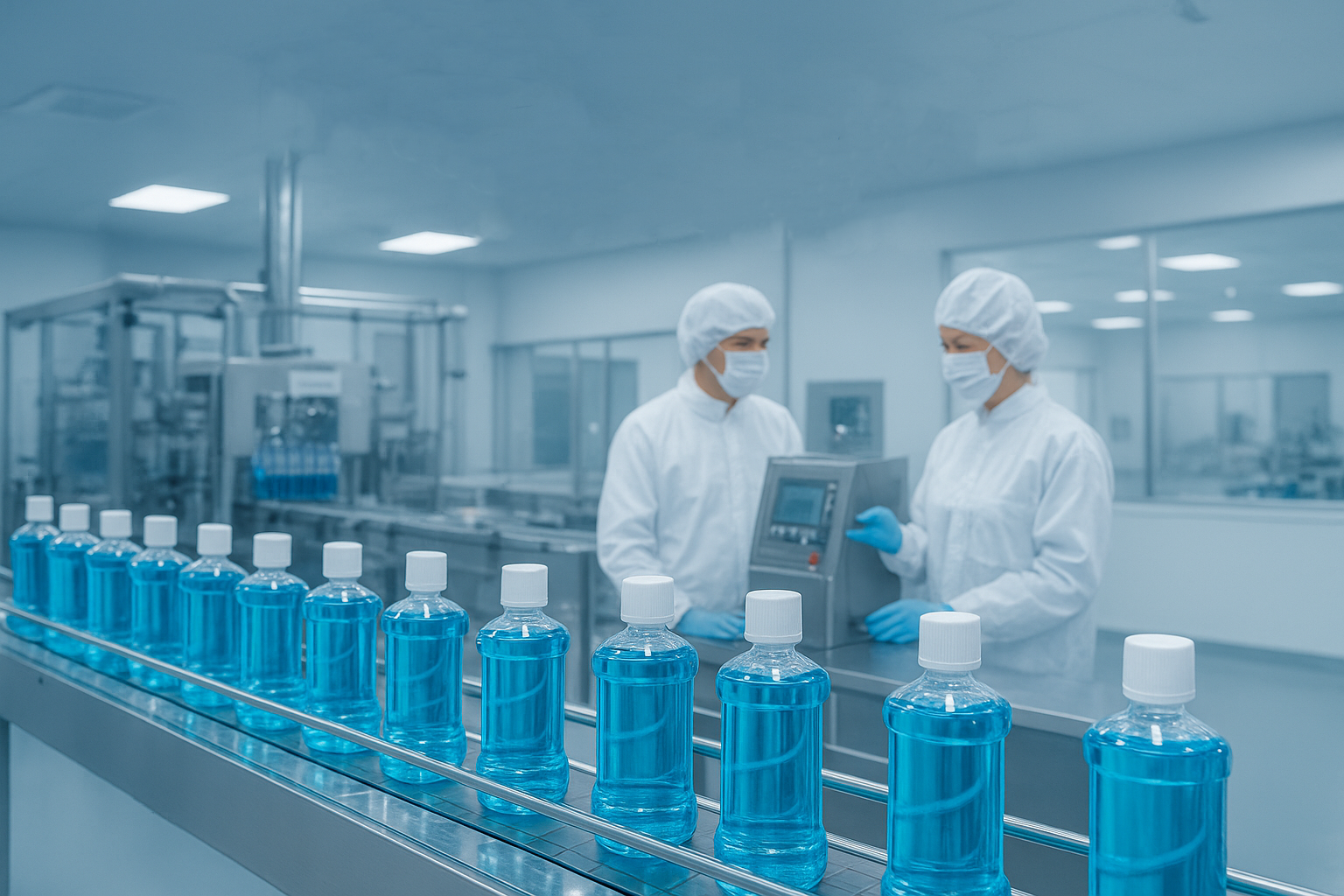
Mouthwash OEM Market Overview: Why Private Label Gains Traction
Global Market Size & Growth for Mouthwash OEM
The overall mouthwash/ oral rinses segment is expanding steadily. One analysis shows that the global oral rinses market includes a large share of mouthwash products. Analysts value the market at USD 4.3 billion in 2025. They also project it to grow at a robust CAGR of 6.5% through 2030. MarketsandMarkets
Another source projects the mouthwash market at roughly USD 8.3 billion in 2025. Persistence Market Research+1
Several factors drive this growth. Consumers are becoming more aware of oral health and are shifting toward preventive care. Additionally, the rise of e-commerce and a growing preference for differentiated formulations contribute to market expansion.
Opportunities for Private Label Mouthwash Partnerships
Brands seeking to enter or expand within this market increasingly turn to mouthwash OEM arrangements. A private label mouthwash approach allows brands to accelerate time-to-market without owning full manufacturing infrastructure. By partnering with an OEM, brands can focus on their core activities such as branding, packaging, marketing, and distribution. At the same time, they benefit from the OEM’s expertise in R&D, quality systems, and regulatory compliance.
For example, a manufacturer with a dedicated OEM service can assist a brand in defining formulation specifications and ensuring regulatory compliance. They can also manage supply-chain logistics and oversee package design, providing end-to-end support.
Moreover, the mouthwash category is highly fragmented and competitive. Private label gives brands the flexibility to explore niche trends. These include alcohol-free formulas, herbal extracts, microbiome-friendly options, and sustainable packaging—all without requiring high CAPEX.
Key Drivers for Engaging with Mouthwash OEMs
- Consumer demand for functional and differentiated mouthwash variants (beyond standard antiseptic/ breath-freshening).
- Growth of e-commerce and DTC brands, which favour agile supply chains and contract manufacturing.
- Rising cost pressures and regulatory complexity, making turnkey OEM offerings attractive to brands.
- Emergence of regional markets (especially Asia-Pacific) where fast-moving private label strategies can capture premium growth. MarketsandMarkets+1
Formulation Trends for 2025 in Private Label Mouthwash OEM
Here, we examine three major trends in formulation that private label brands and OEM manufacturers are prioritising.
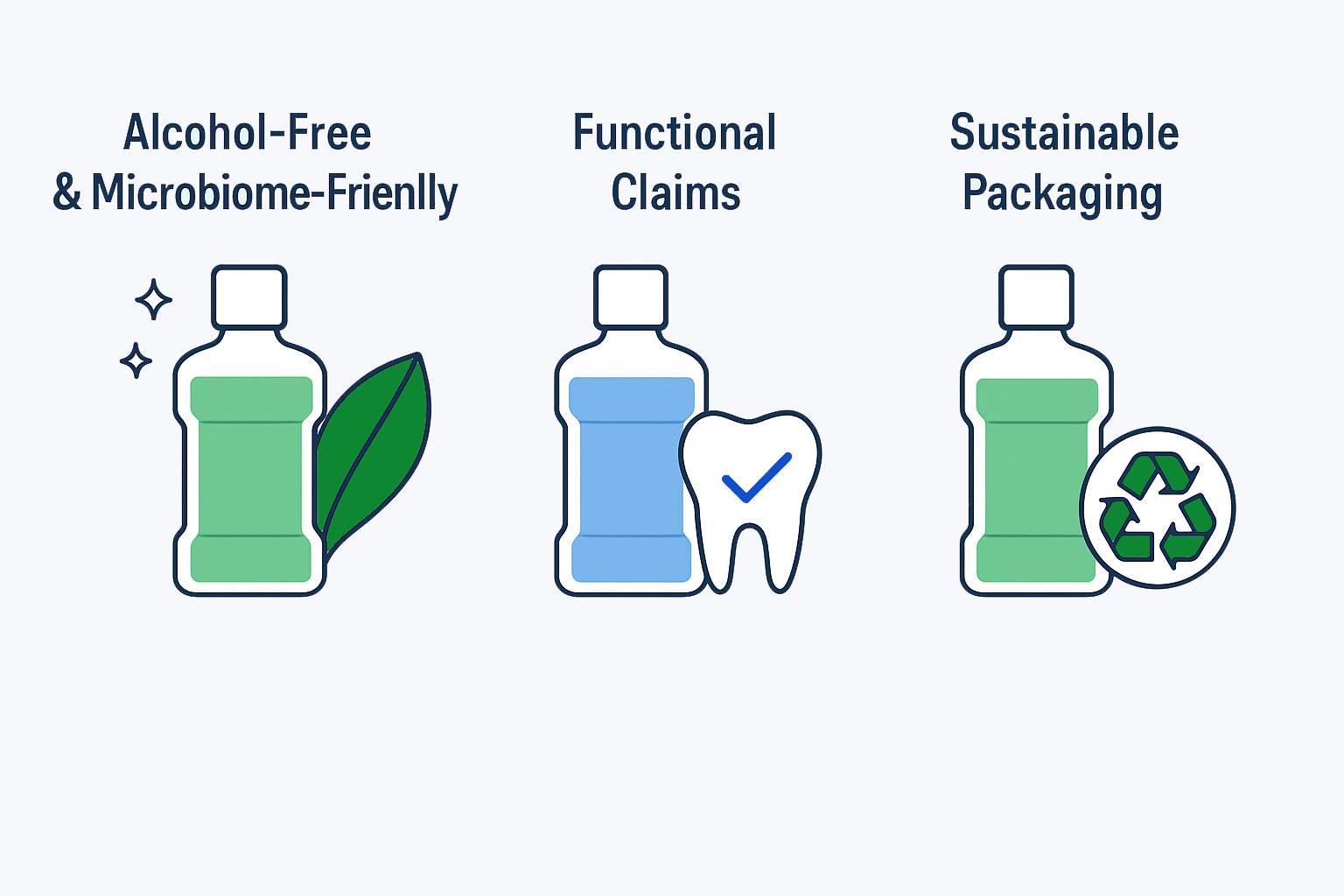
1. Alcohol-Free & Microbiome-Friendly Mouthwash Formulas
An increasing number of consumers are rejecting traditional alcohol-based mouthwash formulas due to burning sensation, dryness or concern about microbiome disruption. Reports note that novel mouthwash versions emphasise preserving beneficial oral microbiota.
For private label mouthwash OEM engagements, the shift means offering formulations that are:
- Alcohol-free or low-alcohol basis
- Contain prebiotics, probiotics or targeted botanical extracts (e.g., green tea, neem, aloe)
- Aim for sensory acceptability (flavour, mouth-feel) while supporting claims such as “microbiome-friendly” or “sensitive gums”.
- Brands that partner with an experienced OEM can specify these features in their formulation brief. They can rely on the OEM’s laboratories to test the product’s efficacy. They can also depend on the OEM’s regulatory expertise to ensure safety and compliance.
2. Functional Claims & Multi-Benefit Private Label Formulas
The data show the mouthwash market is moving beyond purely cosmetic/ breath-freshening benefits. Therapeutic, specialised formulations are gaining share. MarketsandMarkets+1 For private label mouthwash OEM programmes, this means pivoting to:
- Enamel protection mouthwashes (fluoride, hydroxyapatite adjuncts)
- Gum-care mouthwashes targeting gingivitis or periodontal support
- Dry-mouth, sensitivity or whitening adjunct formulas
- Natural/ botanical variants with clean-label positioning
- For example, brands can incorporate ingredients such as stannous fluoride, CPC (cetylpyridinium chloride), essential oils, or herbal actives. Brands can package these formulations under a private label brand. By highlighting clear functional benefits, they can make the product stand out on crowded shelves.
- In an OEM context, manufacturers need to provide flexibility in formulation and conduct stability testing. They also must offer regulatory support, including claims substantiation, and handle batch manufacturing for small or medium runs.
- Thus, selecting a mouthwash OEM partner with proven multi-benefit formulation experience is key.
3. Sustainable Packaging & Clean-Label Ingredients in Mouthwash OEM
Sustainability is a propellant for consumer choice across all personal-care segments, including mouthwash. The market research highlights that natural and organic mouthwash variants are gaining traction. Market.us
Private label brands are well-positioned to exploit this via OEM collaborations. Key features include:
- Packaging made from recycled plastic or bioplastic, lightweight bottles, refill-friendly formats
- Ingredient lists that emphasise “free from” (e.g., alcohol-free, SLS-free, synthetic fragrance–free)
- Traceability and transparency of sourcing (botanical extracts, fair-trade, non-GMO)
- An OEM facility that offers sourcing, formulation, and packaging innovation enables a private label brand to achieve sustainability goals. This allows brands to avoid building their own in-house infrastructure.
- From a procurement and industry perspective, private label mouthwash OEM provides an efficient way for brands to test new products. Brands can launch sustainable variants in region-specific SKUs. For example, they might create a herbal neem formula for South-Asian markets or a mint-tea variant for Europe. Once these products are validated, brands can confidently scale up production.
Implementation Steps for Brands Using Mouthwash OEM
To translate these trends into action, private label brands should follow a structured process when engaging an OEM:
- Define your brand’s value proposition clearly. For example, you might offer an “Alcohol-free gum-care mouthwash for millennials.” Alternatively, you could provide a “Botanical enamel-support mouthwash in a refill pack.”
- Choose an OEM with proven experience in mouthwash formulation, regulatory compliance and packaging flexibility. For example, a manufacturer offering tailored OEM service via OralGos OEM Service can shorten time-to-market.
- Collaborate on formulation brief: Specify form (liquid vs spray), actives, flavour system, label claims, clean-label ingredients.
- Conduct stability, efficacy and safety testing (microbiological, organoleptic, shelf-life).
- Design packaging aligned with sustainability, brand identity and logistics (bottle size, refill, secondary packaging).
- Plan regulatory and compliance pathway for target markets (USA, EU, Asia-Pacific).
- Launch pilot SKU, then iterate based on consumer feedback and scale via OEM’s manufacturing capacity.
Conclusion
Brands looking to enter the mouthwash segment in 2025 and beyond can benefit from partnering with a mouthwash OEM. This partnership provides an efficient route to bring private label products to market. This approach allows brands to launch private label products with differentiated formulations.
The market is experiencing steady growth, with a CAGR of approximately 6.5%. Consumer demand is increasing for products that are sustainable and offer multiple benefits. There is also growing interest in microbiome-friendly solutions, creating an opportune moment for brands. Persistence Market Research
Private label brands can gain a competitive edge by focusing on alcohol-free formulas and functional claims. They can also emphasize clean-label products and sustainable packaging to strengthen their market position. Choosing the right OEM partner is crucial for success in the evolving mouthwash segment. Brands should align formulation innovation with market insights and execute efficiently to stay ahead of the competition.