Cavity prevention is a cornerstone of oral health. According to the American Dental Association, fluoride toothpaste is one of the most scientifically validated and cost-effective tools for cavity prevention. Researchers have spent decades studying fluoride. Their findings show that it not only protects teeth but also boosts their ability to repair early damage.
Understanding these mechanisms can empower consumers to make informed choices and maximize the benefits of daily oral care.
How Cavities Form: The Role of Demineralization and Remineralization
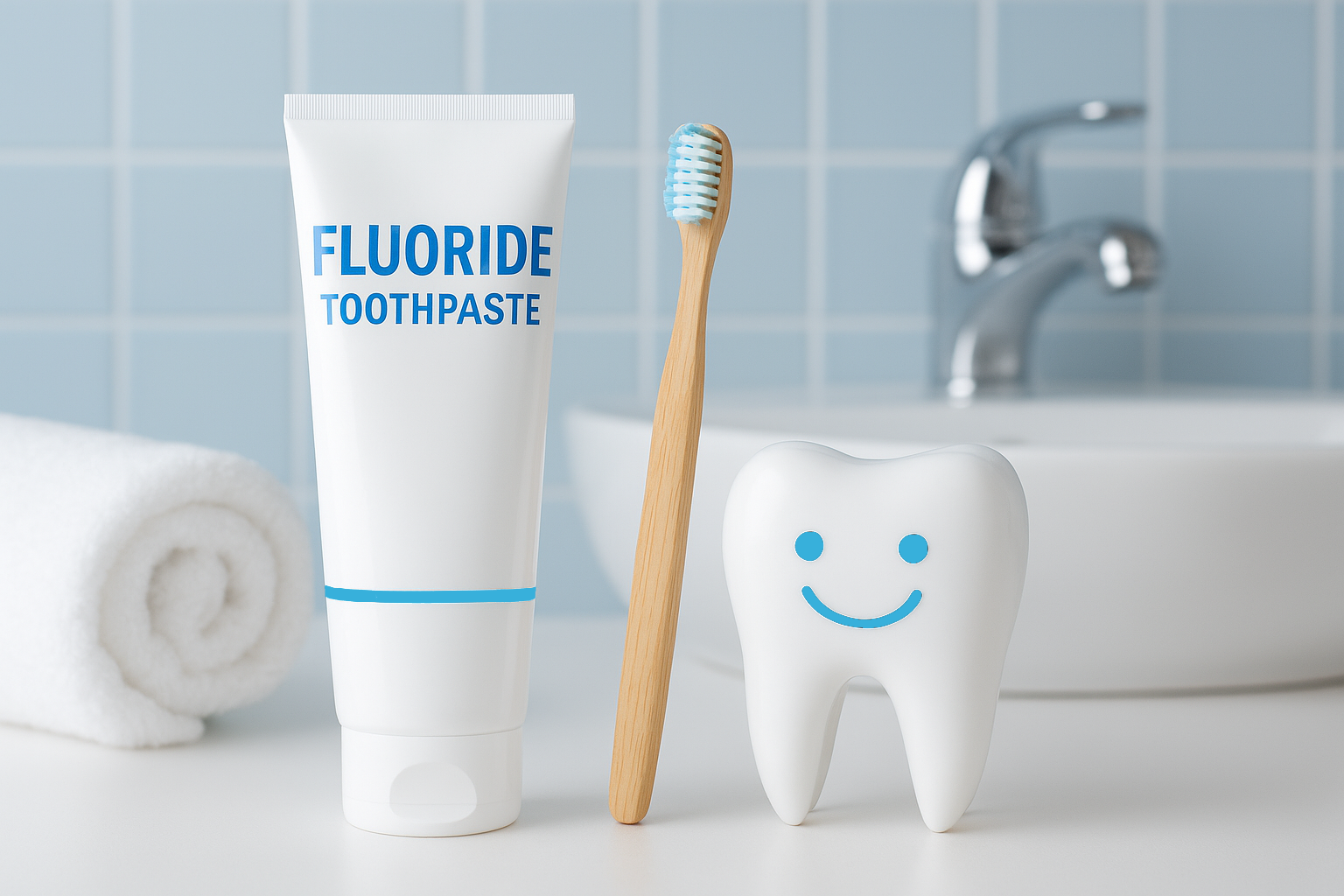
Teeth are primarily composed of hydroxyapatite, a crystalline structure made of calcium, phosphate, and hydroxyl ions. The balance between demineralization and remineralization determines tooth integrity.
- Demineralization: When cavity-causing bacteria such as Streptococcus mutans metabolize sugars, they produce acids like lactic and acetic acid. Hydroxyapatite crystals in teeth start dissolving when the mouth’s pH falls below about 5.5. The enamel releases calcium and phosphate ions into the saliva. Dentists refer to this process as demineralization.
- Remineralization: After acid exposure, saliva buffers the oral environment, restoring a higher pH and providing a source of calcium and phosphate ions. These ions redeposit into partially demineralized enamel, repairing early damage—a process called remineralization.
- Cavity Formation: When demineralization consistently outpaces remineralization, enamel loses mineral density, leading to cavity formation.
How Fluoride Toothpaste Protects Teeth and Prevents Cavities
Fluoride toothpaste is central to cavity prevention because fluoride ions actively enhance both enamel resistance and remineralization while interfering with bacterial acid production. Its mechanisms can be divided into three complementary actions:
1. Strengthening Enamel with Fluoride: Formation of Fluorapatite
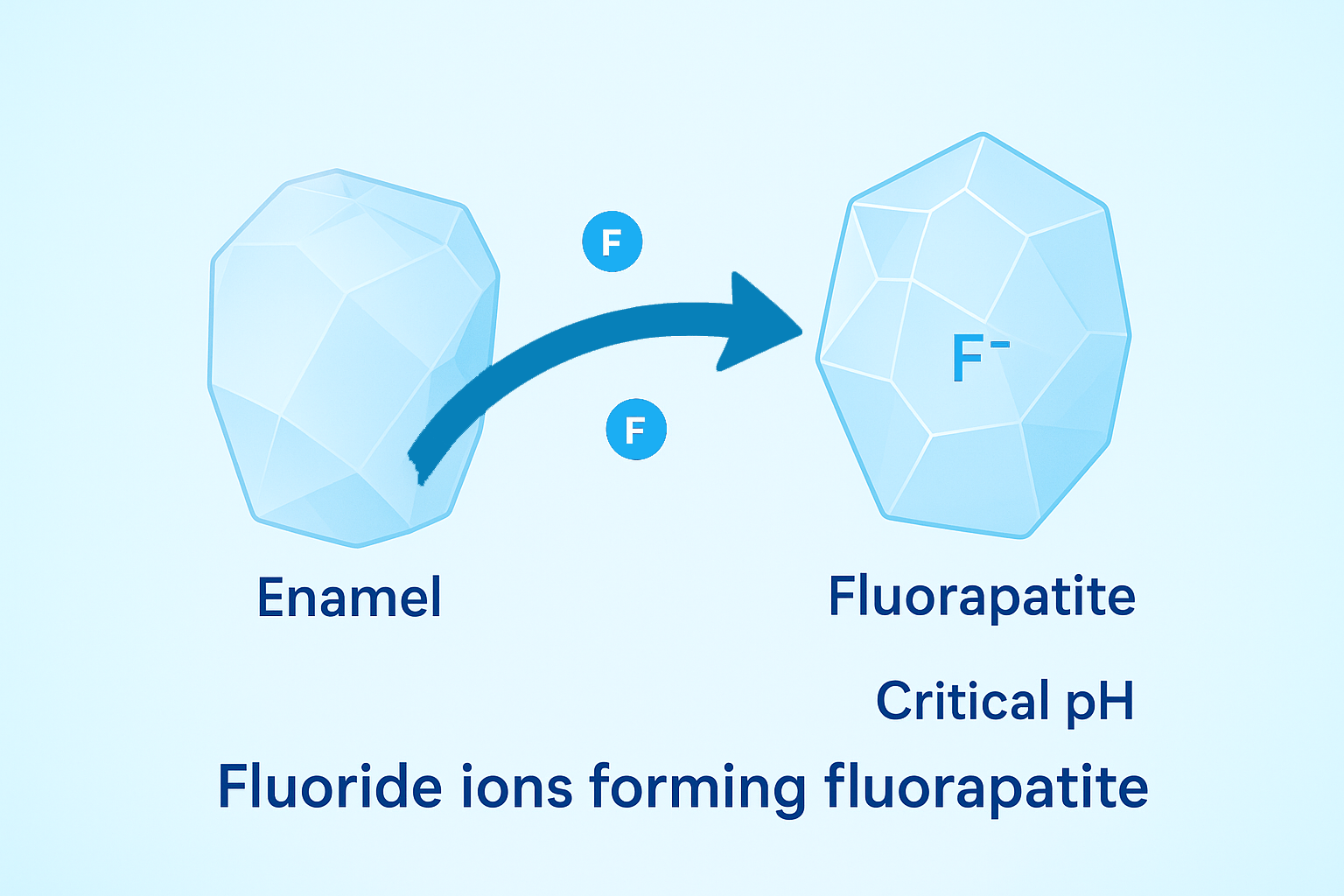
Fluoride ions actively join the hydroxyapatite crystals, replacing hydroxyl groups. The resulting fluorapatite crystals are stronger, denser, and resist acid damage better.
- Enhanced resistance: Fluorapatite dissolves only when the pH drops to about 4.5. In comparison, hydroxyapatite starts dissolving at around 5.5. This means enamel containing fluorapatite is more resistant to acid attacks.
- Durable mineral layer: Using fluoride toothpaste helps teeth build a stronger surface. This surface resists acid exposure better over time.
- Scientific validation: Laboratory studies consistently demonstrate that fluoridated enamel has superior hardness and reduced solubility, providing a tangible shield against cavity formation.
2. Accelerating Remineralization: The Repair Mechanism of Fluoride Toothpaste
Fluoride serves as a catalyst for mineral deposition, even at very low concentrations.
- Nucleation sites: Fluoride ions adhere to demineralized enamel, providing scaffolding for calcium and phosphate ions to reattach and grow.
- Optimized crystal growth: The new mineral usually forms as fluorapatite. This reinforces the enamel and makes it more resistant to acid than the original hydroxyapatite.
- Early cavity reversal: Fluoride toothpaste can fix initial white spots on teeth before cavities form. This demonstrates its ability to both prevent and repair damage.
3. Reducing Acid Production by Oral Bacteria with Fluoride Protection
Fluoride indirectly hinders bacterial acid production:
- Enzyme inhibition: Weak-acid fluoride ions penetrate bacteria and block the enzymes responsible for acid production.
- Microbial growth moderation: Professional fluoride applications at higher concentrations may reduce bacterial adhesion and biofilm formation, further lowering cavity risk.
- pH stabilization: By decreasing acid output, fluoride toothpaste helps maintain a more neutral oral pH, limiting demineralization events.
Fluoride Sources in Oral Care: Systemic vs. Topical Application
- Systemic fluoride: Ingested via fluoridated water, salt, or milk, systemic fluoride is incorporated into developing enamel during childhood, forming intrinsic fluorapatite. Its effect on already erupted teeth is limited.
- Topical fluoride: Fluoride toothpaste, gels, rinses, and varnishes deliver fluoride directly to erupted teeth, supporting enamel resistance, remineralization, and bacterial inhibition. The regular use of fluoride toothpaste ensures a constant low-level fluoride presence, critical for lifelong cavity prevention. More specialized products like fluoride varnishes can maintain high local fluoride concentrations for prolonged protection.
For practical guidance and product options, visit Oralgos toothpaste collection for professionally formulated, effective cavity-preventive options.
Evidence-Based Benefits of Fluoride Toothpaste and Usage Guidelines
Research from long-term trials and population studies proves that fluoride toothpaste works. When used properly, it can lower the risk of cavities by 30–60%. Current guidelines recommend:
- Children: Use a pea-sized amount of fluoride toothpaste from the eruption of the first tooth.
- Adults: Brush twice daily with 1000–1500 ppm fluoride toothpaste.
- Professional care: Periodic fluoride varnish or gel application for high-risk patients enhances protection.
Using fluoride toothpaste prevents cavities and supports long-term oral health. It is particularly important for growing children and people at higher risk of tooth decay.
Conclusion: Fluoride Toothpaste as a Triple Defense
Fluoride toothpaste provides armor, repair, and defense for teeth:
- Armor: Forms fluorapatite, strengthening enamel against acid attack.
- Repair: Accelerates remineralization and restores early enamel damage.
- Defense: Reduces bacterial acid production, stabilizing the oral environment.
Using fluoride toothpaste daily and following professional advice can help prevent cavities. It also protects enamel and supports long-term oral health. Fluoride is one of the most cost-effective public health measures in dentistry. Scientific studies confirm its benefits for people of all ages.