In the world of oral care, the phrase whitening toothpaste has become ubiquitous. Despite its popularity, few professionals take the time to examine which ingredients are truly effective. Equally important is understanding how these ingredients work to achieve visible whitening results. For those in dental and oral care, understanding the science behind whitening toothpaste ingredients is crucial. This knowledge guides product formulation, ensures regulatory compliance, and supports truthful marketing claims.
This article focuses on the key ingredients in whitening toothpaste backed by science. It highlights recent research on their effectiveness. You will also learn how to make informed decisions when choosing or positioning a product.
What Defines a Whitening Toothpaste?
Whitening toothpaste aims to do more than provide basic oral cleansing. Its purpose is to enhance tooth brightness and address surface stains, and in some cases, deeper discoloration. Unlike standard toothpaste, whitening toothpaste includes specific active ingredients. These components work to remove stains, balance tooth color, and enhance brightness.
When evaluating ingredients for procurement or formulation, focus on three aspects:
(a) the whitening mechanism involved—such as abrasion, adsorption, oxidation, or optical color correction;
(b) the evidence supporting its efficacy;
(c) safety and regulatory compliance
Key Ingredients in Whitening Toothpaste Formulations
Here we explore several major categories of ingredients commonly found in whitening toothpaste, supported by scientific literature.
Hydrogen Peroxide & Carbamide Peroxide (Oxidative agents)
One of the longest‑standing mechanisms for whitening is the oxidative breakdown of chromogens within enamel and dentin. The active agents are usually hydrogen peroxide (HP) or its reservoir form carbamide peroxide (CP).
- According to the European Commission’s Scientific Committee on Consumer Products, hydrogen peroxide whitens teeth by entering the enamel and targeting stain molecules inside. Once inside, it reacts with stain molecules and breaks them down. Higher concentrations of hydrogen peroxide deliver stronger whitening effects. ec.europa.eu+2pmc.ncbi.nlm.nih.gov+2
- An in-vitro study on commercial whitening toothpaste containing hydrogen peroxide showed a visible whitening effect. However, it also raised safety concerns, noting potential dentin loss when peroxide was combined with acidic conditions. BioMed Central
- A review concluded that when used as directed, peroxide‑based systems are safe and effective. pmc.ncbi.nlm.nih.gov
Implication for procurement/formulation: When evaluating a whitening toothpaste that contains peroxide, review its concentration, pH level, and buffering system. Also, pay attention to local regulations. In many markets, regulators allow only low concentrations of hydrogen peroxide in over-the-counter whitening products. Studies confirm its efficacy, yet maintaining safety margins and minimizing enamel or dentin damage remain essential.
Baking Soda, Hydrated Silica & Abrasives
A second major category uses physical or chemical abrasives to remove extrinsic stains.
- A review stated that baking soda (sodium bicarbonate) and hydrated silica are common ingredients in whitening toothpaste. Many whitening toothpaste formulations use these ingredients to remove surface stains. Health+1
- These abrasives are more effective on surface stains (e.g., coffee, tea) than deeper intrinsic discoloration. advancedemeralddentistry.com
Note: A higher level of abrasivity can enhance stain removal efficiency. However, it may also roughen the enamel surface, which can increase tooth sensitivity and make future staining more likely.
Activated Charcoal & Adsorptive Agents
In recent years, activated charcoal has become a popular “natural” whitening ingredient.
- In a 2022 study, researchers found that toothpaste containing activated charcoal achieved the greatest whitening effect after 28 days. It outperformed both hydrogen peroxide and blue covarine in the same trial. However, the authors also raised concerns about potential roughening of the enamel surface. scielo.sa.cr+1
- Another in‑vitro review found that both charcoal‑based and hydrogen peroxide‑based toothpastes offered the strongest whitening capabilities. However, their effects on enamel varied between formulations. mdpi.com+1
Implication: Charcoal‑based whitening toothpaste can deliver visible results, but formulations must ensure safe abrasivity, enamel protection and consistent manufacturing quality.
Optical Colourants & Blue/Purple Pigments
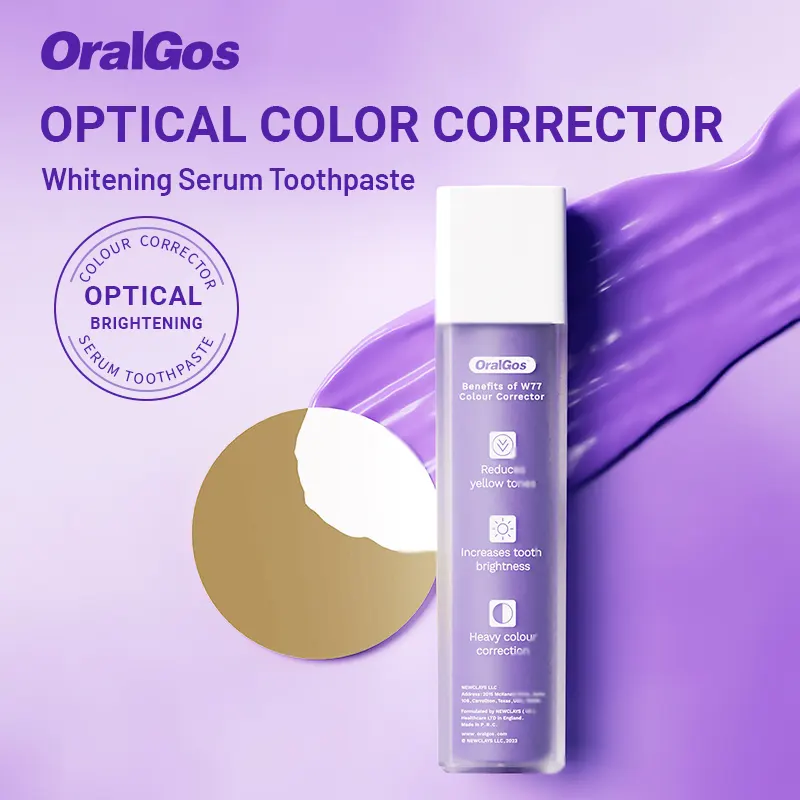
Some whitening toothpastes do not rely on chemical bleaching. Instead, they use optical colour correction by depositing a thin pigment layer on the enamel. This layer changes the perceived whiteness, for example by neutralizing yellow tones.
- An experimental study observed that whitening toothpastes containing optical colourants produced whiter appearance (higher ΔW) on enamel in vitro. pmc.ncbi.nlm.nih.gov
- However, another study showed that blue covarine achieved less whitening effect than HP or charcoal. scielo.sa.cr
Optical colour correction can serve as an effective whitening strategy, particularly for marketing purposes. However, when positioning a product for professional or B2B channels, it is important to be clear about its mechanism. This approach changes the appearance of teeth rather than removing stains or bleaching enamel.
Research Insights on Whitening Toothpaste Ingredients
When choosing or formulating a whitening toothpaste, you should consider both mechanism and evidence:
- Effectiveness:
- Whitening toothpaste with optical colourants produced significant enamel‑whitening effect (grade 4) in vitro. pmc.ncbi.nlm.nih.gov+1
- Many studies confirm that whitening toothpaste can remove extrinsic stains effectively; deeper intrinsic staining remains more challenging. Today’s RDH+1
- Charcoal-based formulas can outperform hydrogen peroxide in certain in-vitro studies. However, researchers have collected limited human clinical data, and they must consider the potential effects on enamel. scielo.sa.cr
- Safety / enamel integrity:
- Even effective whitening agents carry risks, including abrasion, enamel surface roughening, and reduced microhardness—particularly with highly abrasive or charcoal-based formulas. link.springer.com
- Over-the-counter toothpastes that contain peroxide use minimal hydrogen peroxide concentrations to comply with regulations. They are less aggressive than in-office bleaching treatments. ec.europa.eu
- Formulation synergy: Many whitening toothpaste formulations combine mechanisms (abrasive + oxidative + optical) to deliver balanced performance while preserving enamel. sciencedirect.com+1
Considering these factors, brands and procurement professionals should prioritise transparency regarding active ingredients and independent efficacy data. They should also verify that the toothpaste’s abrasive levels are safe for enamel, as measured by RDA values. Additionally, they must ensure that the products meet regulatory requirements in their target markets.

Practical Implications for Oral-Care Brands & Whitening Toothpaste Procurement
- When listing product ingredients, clearly describe the mechanism of each component. For example, indicate “0.1% hydrogen peroxide for stain oxidation” or “activated charcoal for stain adsorption.”
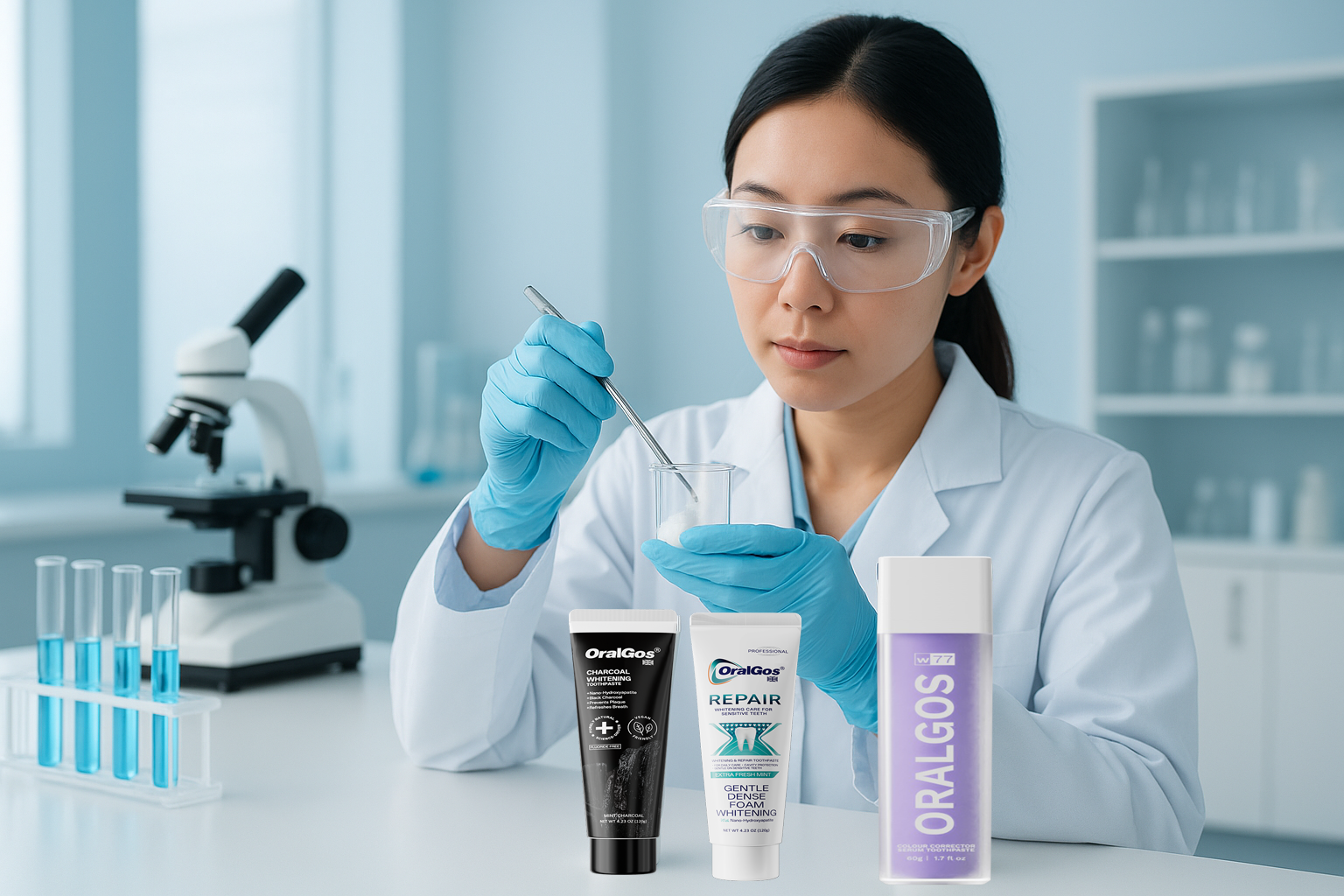
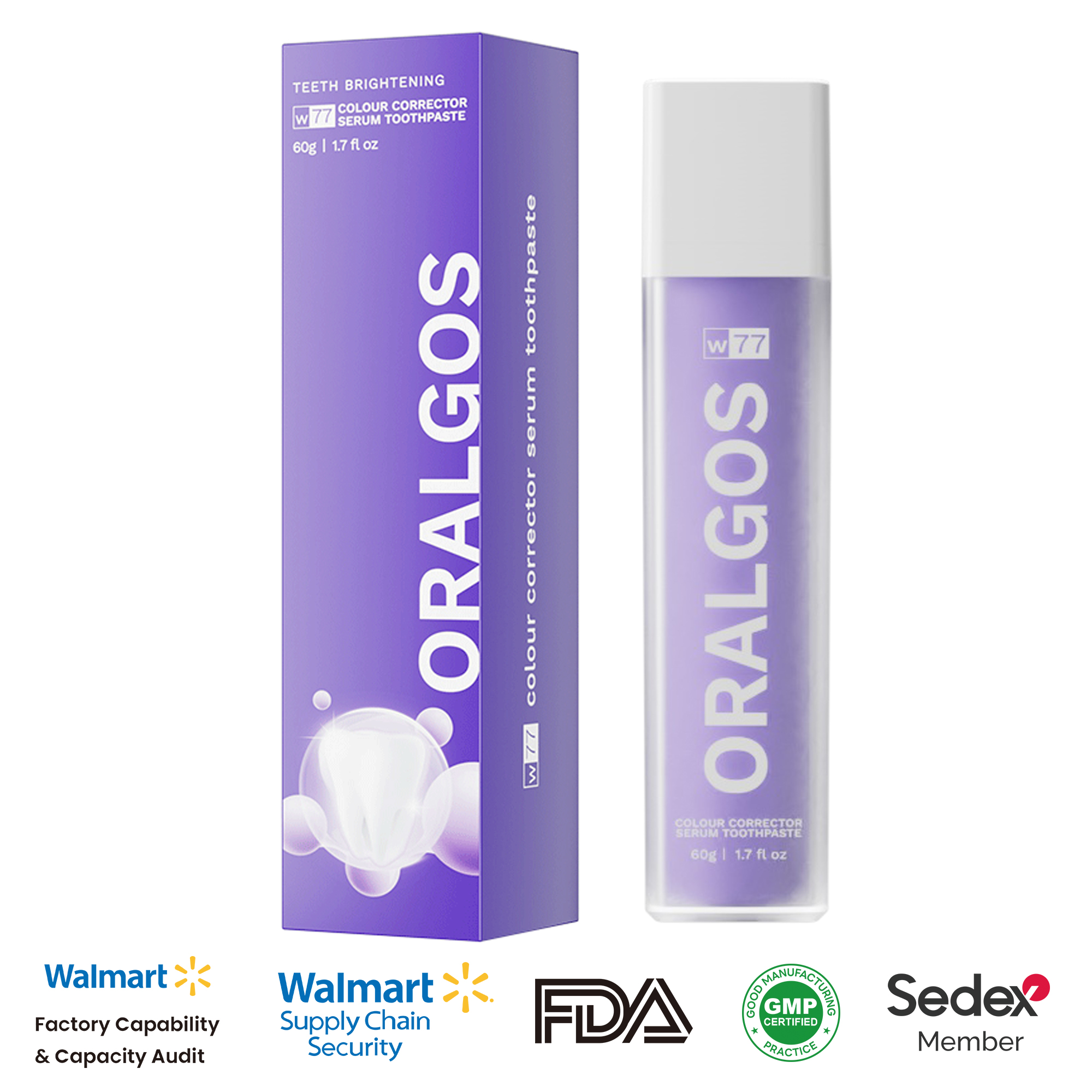
- Consider providing links to the full product specifications so customers can review them in detail. For example, link to Oralgos Colour Corrector Toothpaste or Oralgos UK Fluoride-Free Charcoal Toothpaste.
- For procurement teams, it is important to verify key product parameters, including abrasion ratings and peroxide concentrations. They should review supporting clinical or in‑vitro studies to confirm the product’s effectiveness. Additionally, they must ensure that the product complies with regulatory limits, such as hydrogen peroxide restrictions in the EU.
- When marketing to B2B audiences, such as distributors and dental professionals, highlight the science behind the “whitening toothpaste” ingredients. Avoid relying solely on superficial claims about whiter teeth. Provide evidence that demonstrates both the product’s mechanism of action and its safety profile.
- When positioning a whitening toothpaste, clearly state the source of its effect. Specify whether it works through surface-stain removal, optical colour correction, or active bleaching. Doing so helps manage customer expectations and ensures compliance with regulatory claims.
Summary & Take‑home Messages
- The term “whitening toothpaste” covers a wide variety of formulations. These include abrasive stain removers, peroxide-based bleaches, charcoal adsorbents, and optical colourants.
- Whitening toothpaste ingredients fall into several categories, including hydrogen peroxide or carbamide peroxide, baking soda or hydrated silica abrasives, activated charcoal, and optical pigments. Each of these categories has varying levels of scientific evidence supporting their effectiveness.
- For B2B/ procurement and professional audiences, selecting and discussing whitening toothpaste ingredients wisely means balancing efficacy data with enamel‑safety and regulatory compliance.
- One example of using colour correction instead of aggressive bleaching is the formulation of Oralgos Colour Corrector Toothpaste. This product demonstrates how a whitening toothpaste can achieve effective results while remaining safe for users.
- Ultimately, a high-quality whitening toothpaste is about more than achieving a brighter smile. It should deliver scientifically validated ingredients, credible performance, and protect long-term enamel health.