
In our last article, “How to Make a Toothbrush from Start to Finish,” we explained how to create a toothbrush. This included concept sketches, selecting materials, injection molding, and the final steps of tufting and trimming. In this continuation, we take a closer look at toothbrush tuft arrangement. We examine how manufacturers arrange bristles and show how these arrangements affect both performance and production.
What Is Toothbrush Tuft Arrangement? Understanding Bristle Configuration Basics
Designers determine the toothbrush tuft arrangement by configuring groups of bristles (tufts) on the brush head. It’s a critical design choice. Different tuft patterns affect a toothbrush’s cleaning effectiveness and its gentleness on the gums. They also influence how easily manufacturers can produce the brush.
Common Tuft Arrangement Patterns: Key Toothbrush Bristle Configurations
Here are several widely used tuft arrangement techniques:
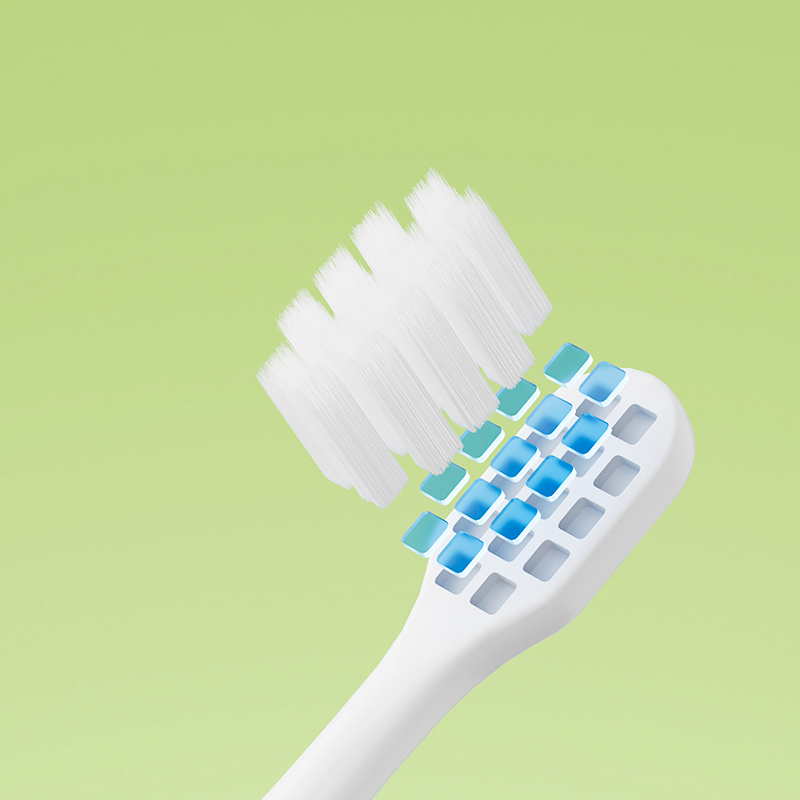
Parallel Tufting: Straight-Line Bristle Arrangement
Manufacturers align tufts of bristles in straight rows, orienting them all in the same direction in parallel tufting. This is a classic, efficient arrangement. However, research shows that parallel tufting may lead to higher abrasive wear on dentin compared to other arrangements. PubMed
Cross (Interlaced) Tufting: X-Shaped Bristle Layout for Enhanced Cleaning
Cross tufting arranges some tufts at angles that intersect or intermix with others. This creates a more complex surface geometry. In-vitro studies show that cross tuft arrangement reduces dentin wear compared to a parallel layout. Researchers believe this happens because the angled bristles distribute force more evenly. PubMed
Some patented toothbrush designs use cross tufting to enhance performance. For example, one design intermingles tufts so that bristles from different clusters cross, improving both flexibility and cleaning reach. patentimages.storage.googleapis.com
Spiral or Radial Tufting: Circular Bristle Formations for Polishing Action
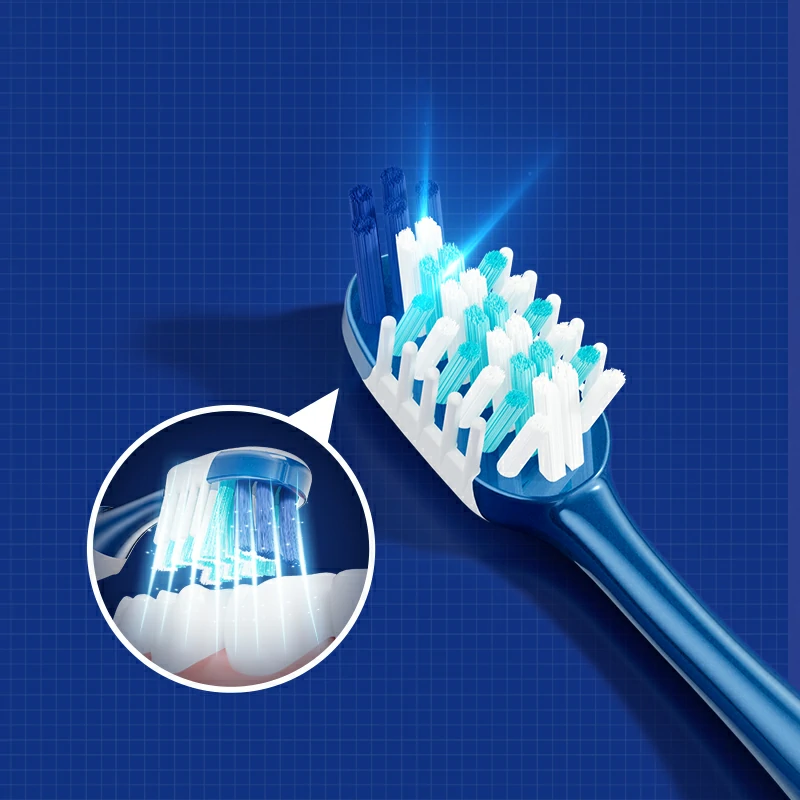
Some high-end or specialty toothbrush heads feature spiral or radial tufting. In these designs, manufacturers arrange the tufts along a circular or helical path.
Manufacturers use these less common designs to achieve ergonomic brushing or to create innovative bristle patterns. Although studies on spiral tufting in toothbrushes are limited, the principle resembles tufting in textile manufacturing. Manufacturers arrange threads or bristles in a specific pattern to improve performance or enhance aesthetics.
Staggered or Variable-Length Tufting: Multi-Level Bristle Pattern for Better Reach
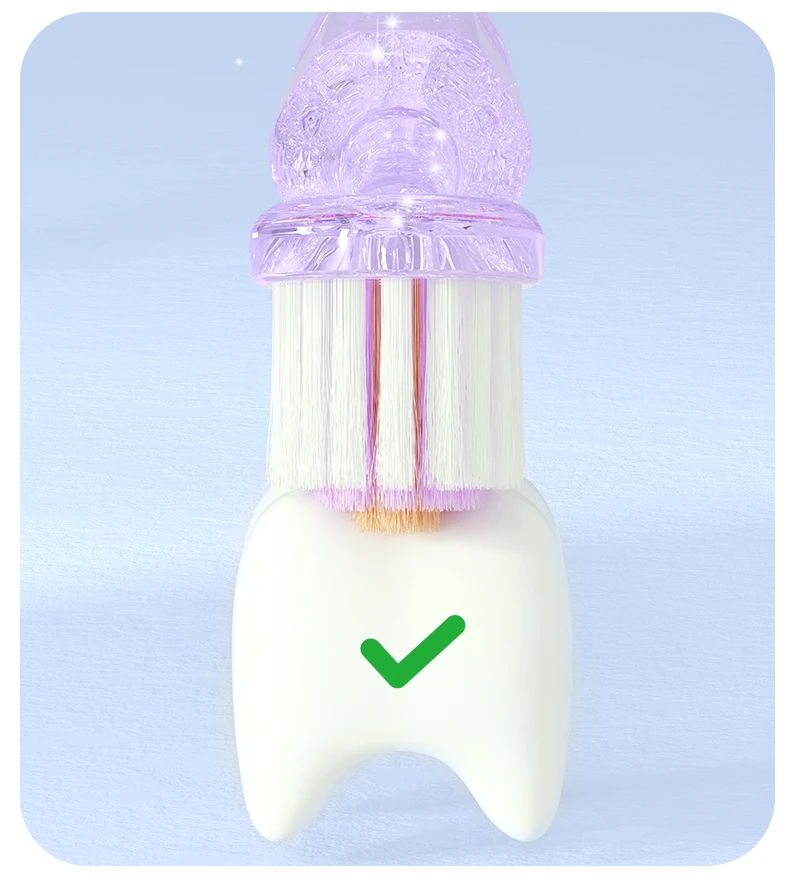
Using this method, manufacturers position tufts at different heights and angles to achieve the desired brushing effect. This anisotropic tufting offers both cleaning reach and a massage-like effect on gums.
Some tufting machines and patented brush designs allow manufacturers to use tufts of different lengths and angles. This flexibility helps optimize the toothbrush’s cleaning performance. eureka.patsnap.com+1
Why Toothbrush Tuft Arrangement Matters: Cleaning Efficiency and Performance Trade-offs
Choosing a tuft arrangement is not just about looks — it’s also a performance decision:
- Cleaning Efficiency & Coverage
- Angled or cross-arranged tufts reach interdental spaces and other hard-to-reach areas more effectively. The bristles intermix and adjust to different tooth contours to enhance cleaning.
- Abrasive Wear
- Studies show that brushes with parallel tuft arrangements can wear down dentin more than cross-tufted brushes. This effect is especially noticeable when using abrasive toothpaste. PubMed Designers must balance between aggressive cleaning and gentle abrasion.
- Flexibility & Durability
- Variable-length tufting gives different clusters different stiffness and flexibility. Longer tufts might compress more easily, while shorter ones provide support, giving a dynamic brushing feel.
Manufacturing Considerations for Toothbrush Tuft Arrangement and Brush Head Production
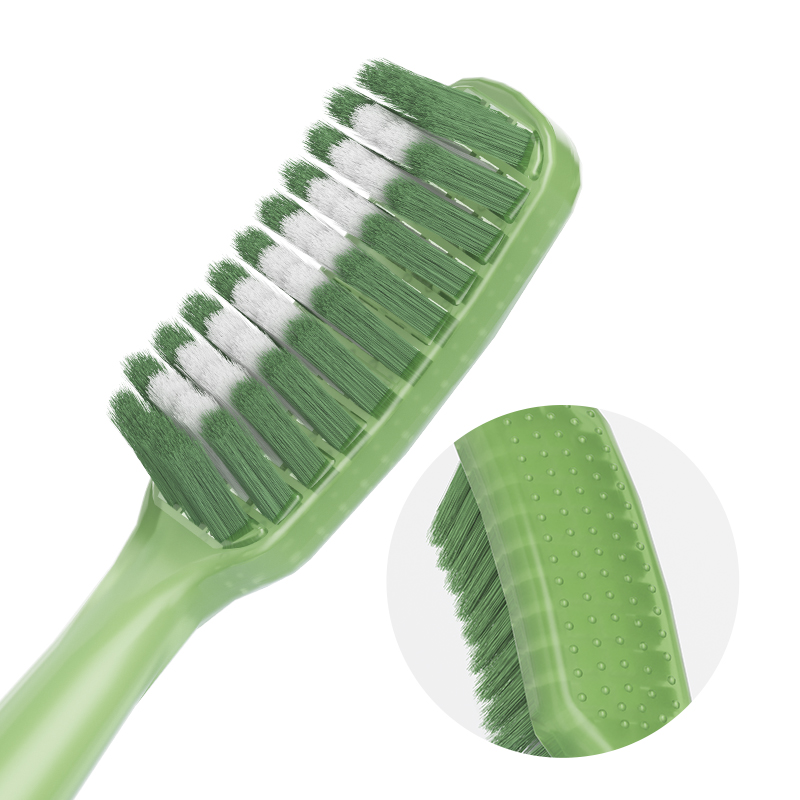
From a production standpoint, not every tuft arrangement is equally easy to manufacture. High-complexity tufting patterns (like staggered or cross tufting) often require more advanced tufting machines.
- Tufting Machines: Tufting machines, both semi-automatic and automatic, implant bristles into the toothbrush head. The bristles fit precisely into drilled or molded holes. toothbrush-machine.com+2machineto.com+2
- Precision Insertion: In designs where tuft orientation or length varies, specialized machinery or methods are used. Some patents describe machines and processes for inserting bristle bundles into a carrier. These systems let manufacturers control the length and orientation of each tuft. eureka.patsnap.com+1
- Material & Tuft Density: The choice of filament material (e.g., nylon, PBT) and how tightly tufts are packed both matter. Denser tufting (more tufts per area) can improve cleaning but may raise production cost or complicate insertion.
Design Implications and Innovation in Modern Toothbrush Development
Designers can use tuft arrangements strategically. For example, designers may place stiff parallel tufts in the center of the brush head to enhance scrubbing. They then position angled or staggered cross tufts at the edges to improve contact and reach.
Moreover, tuft arrangement is not just functional — it’s a key area for innovation. Brands vary tuft heights, angles, and densities to create distinct cleaning experiences. These differences also affect ergonomics and the toothbrush’s overall appearance.
Connecting Back to Manufacturing: Supply-Chain Impact and Production Scalability
In our previous article on toothbrush production, we explained the key steps from design to manufacturing. Tufting is one of the final steps, and it plays a critical role in the brush’s performance.
In this context, understanding tuft arrangement shows why toothbrush designs require different tufting machines. It also reveals how design choices affect both performance and manufacturing costs.
Looking Ahead: The Next Chapter — Ergonomic Toothbrush Handle Design
As rich as the world of tuft arrangement is, it’s just one piece of the puzzle. In our next article, we will explore toothbrush handle design. We will examine how designers use geometry, ergonomics, and materials to create comfortable and durable toothbrush handles. We will also explore how manufacturing processes ensure these handles work well with the tuft arrangements discussed here.
Stay tuned — in the next installment, we’ll dive into handle design strategies and the manufacturing process that supports them.