
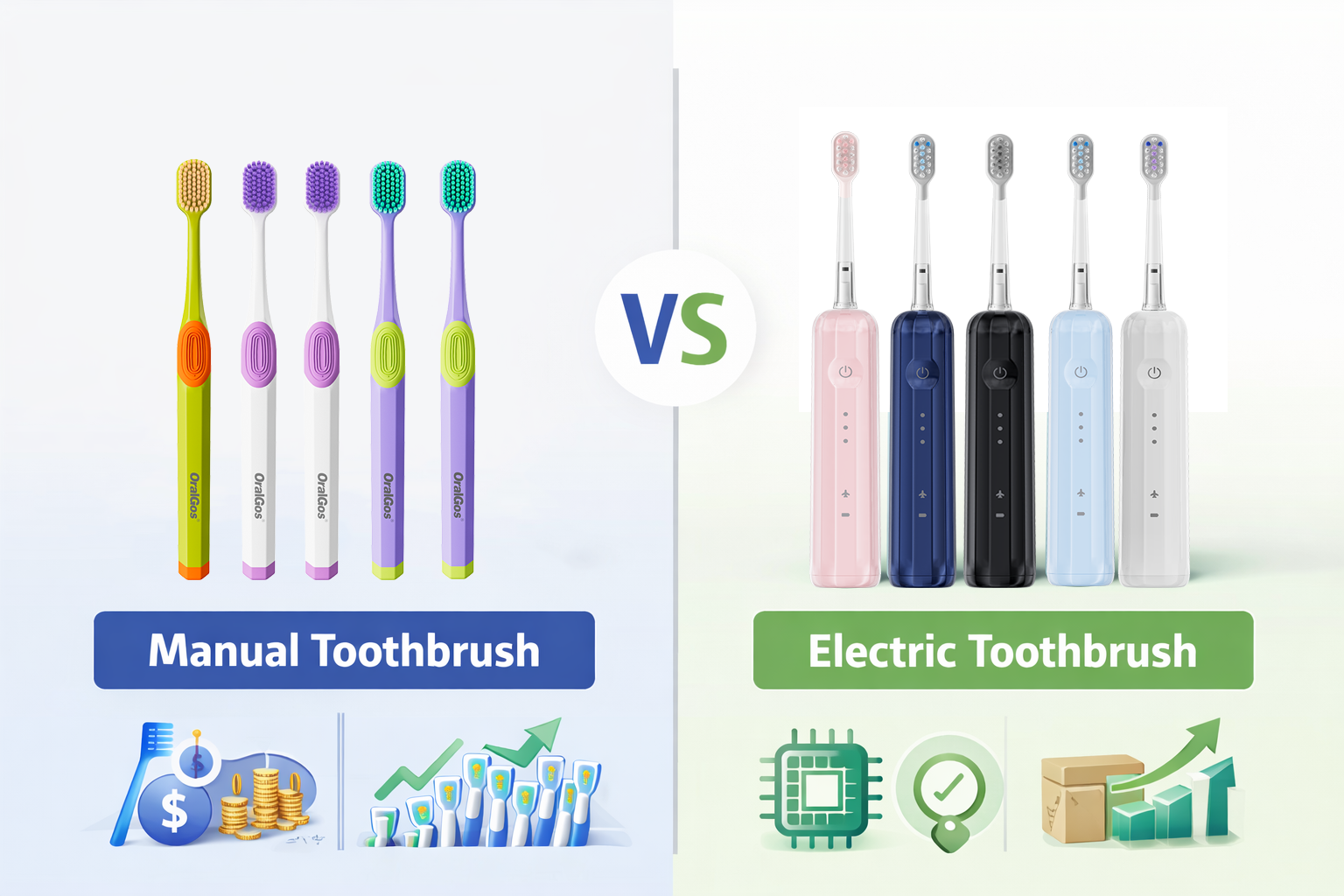
In the ever-expanding oral care market, wholesale toothbrush buyers face an important decision. They must choose between electric toothbrushes and traditional manual options when planning bulk purchases. This choice affects pricing, order volume, and channel strategy across different distribution models.
Understanding the Wholesale Toothbrush Market
Worldwide, wholesale toothbrush demand keeps growing, thanks to higher oral hygiene awareness and new product innovations. Electric toothbrushes, once considered a premium segment, are increasingly accessible, while manual toothbrushes remain a staple in everyday consumption. Wholesale buyers must analyze both market trends and customer preferences before committing to inventory.
Grand View Research predicts that the electric toothbrush segment will grow faster than manual brushes. Advanced features such as oscillation, vibration, and smart timers are driving this growth. On the other hand, manual brushes maintain a consistent demand thanks to affordability and universal availability.
Key Differences in Wholesale Toothbrush: Electric vs Manual
1. Cleaning Efficiency
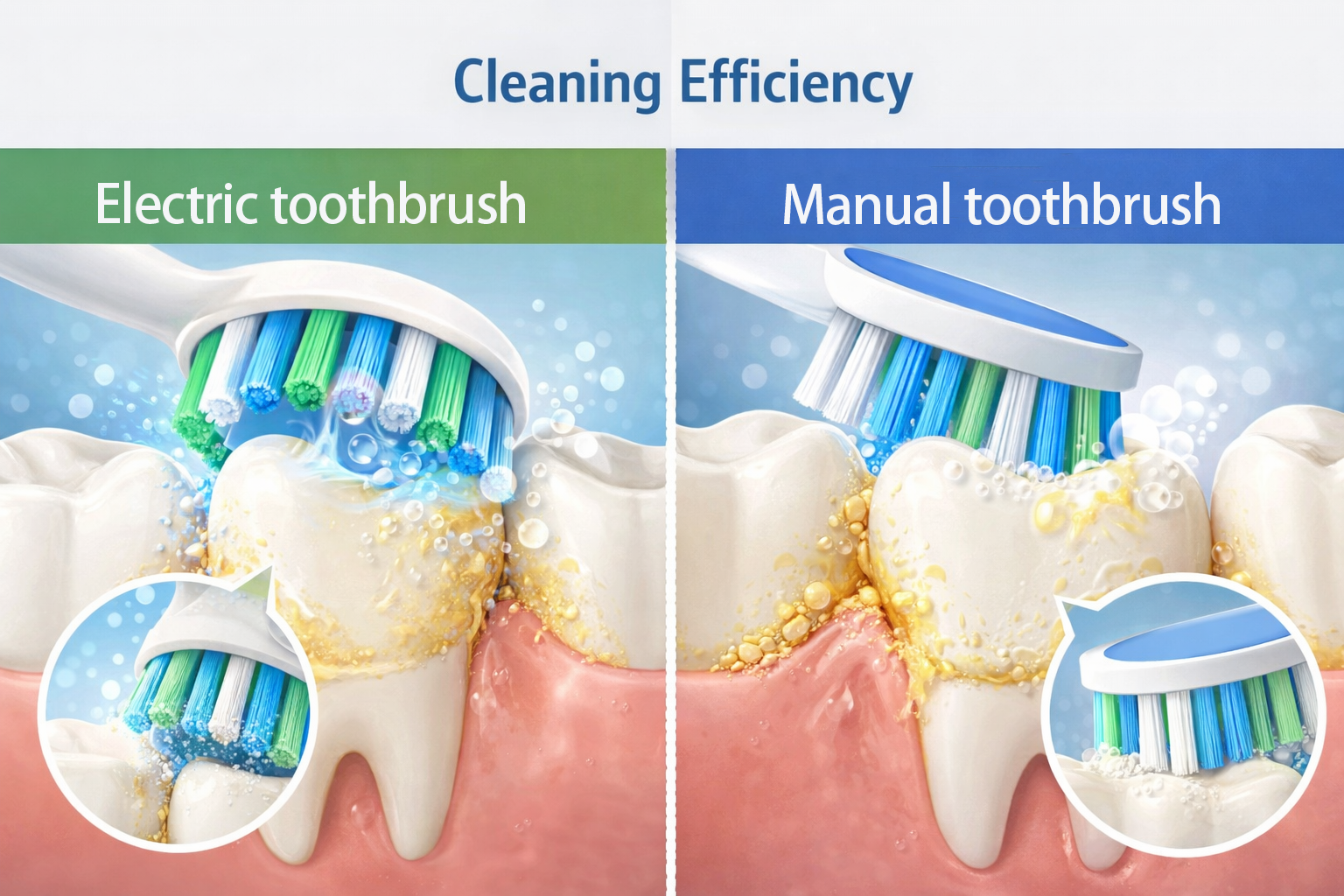
Electric toothbrushes often outperform manual brushes in plaque removal and gum health improvement. Oscillating and vibrating mechanisms make brushing more effective, especially for children, elderly, or those with dexterity issues. For wholesale buyers, this translates to higher perceived value and potential for repeat purchases.
Manual toothbrushes, while effective with proper technique, depend heavily on the user’s skill and time commitment. Manual toothbrushes remain popular because of their low cost and broad market acceptance. These qualities make them a reliable choice for bulk distribution.
2. Consumer Preferences and Sales Channels
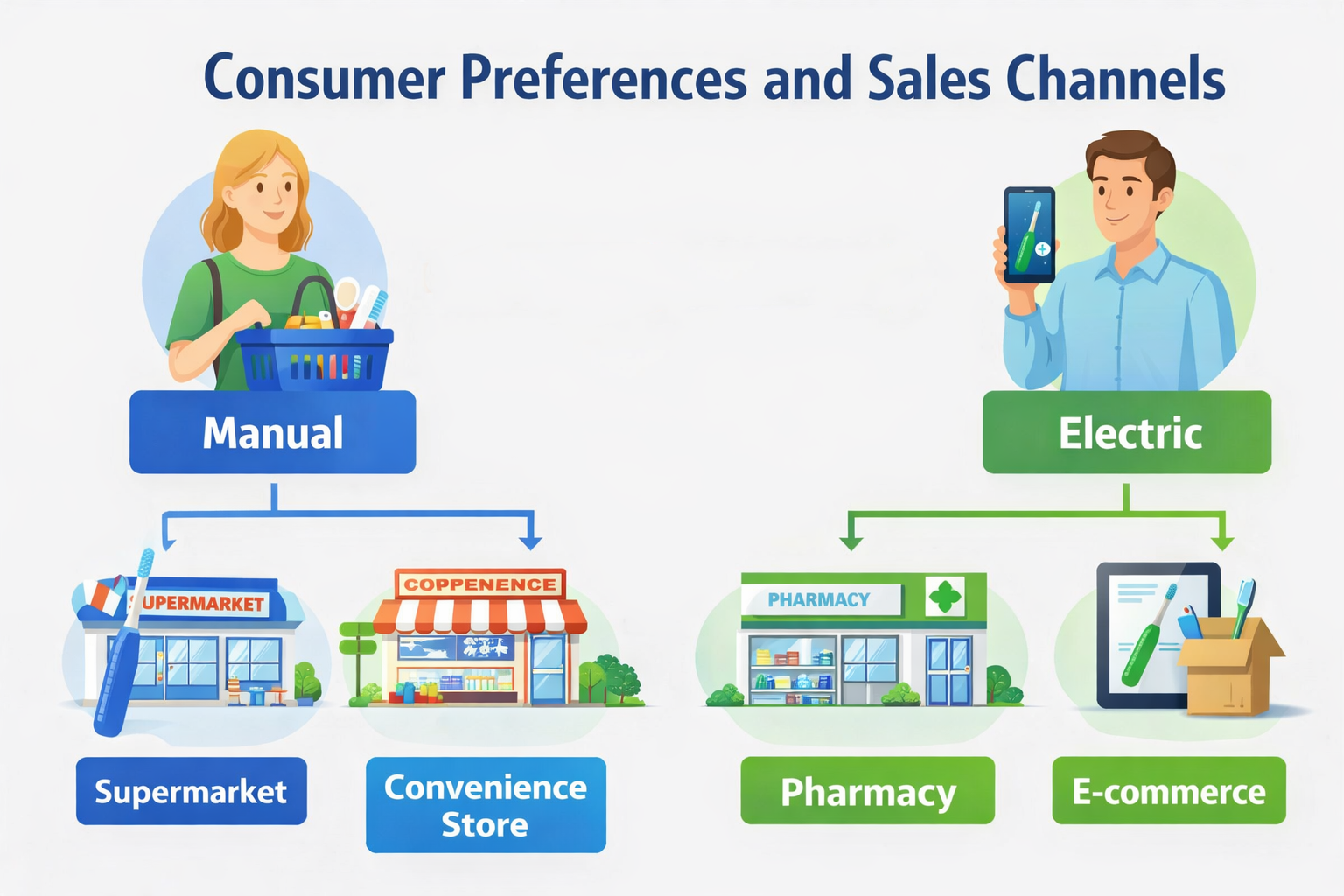
Wholesale buyers should consider their target channels. Pharmacies and specialty stores increasingly favor electric toothbrushes because they offer higher margins and appeal to customers. Conversely, supermarkets, convenience stores, and online bulk platforms often maintain large orders for manual brushes.
For example, distributors who want to stock premium products can consider the Oralgos Electric Toothbrush Range. This range caters to tech-savvy and health-conscious consumers. Manual brushes, however, remain ideal for large-volume, cost-sensitive markets.
3. Pricing and Order Volume
Electric toothbrushes generally command a higher wholesale price per unit, which can impact order size. Buyers must balance upfront cost with profit potential, considering factors such as warranty, replacement brush heads, and branding opportunities.
Wholesale buyers often order manual toothbrushes in bulk. The lower price per unit helps them satisfy high-volume sales. This price flexibility can help distributors maintain consistent stock levels without using too much capital.
4. Market Trends and Future Outlook
The oral care industry is seeing a shift toward digital and connected devices. Smart electric toothbrushes with app integration and data tracking are gaining traction, particularly among young adult demographics. Wholesale buyers who target niche or premium channels can take advantage of this trend. Doing so positions their business as an innovator in oral care solutions.
However, manual toothbrushes are unlikely to fade in relevance. Emerging markets and budget-conscious consumers continue to rely on manual options, ensuring consistent demand for bulk orders.
Making the Right Choice for Wholesale Toothbrush Buyers
Ultimately, the decision between electric and manual toothbrushes depends on your business goals, customer base, and sales channels. Buyers seeking higher margins and long-term brand loyalty may lean toward electric options. Those prioritizing high-volume turnover and accessibility may favor manual brushes.
A balanced approach can also be effective. Stocking both types of toothbrushes allows wholesalers to meet diverse consumer needs and manage inventory efficiently. By analyzing sales data, understanding market trends, and maintaining strong supplier relationships, wholesale buyers can maximize profitability and customer satisfaction.