Dental alignment changes constantly throughout adulthood, often resulting in noticeable shifts over a period of a few years. Many people mistakenly believe that teeth permanently lock into position once they reach adulthood. In reality, dental alignment is dynamic, and minor movements can occur throughout your entire life. For individuals investigating why are my teeth shifting, this phenomenon represents a well-documented progression within adult dentistry. Understanding the underlying mechanisms behind this movement is the first step toward preserving your oral health and structural alignment.
The Natural Mechanics of Dental Drift
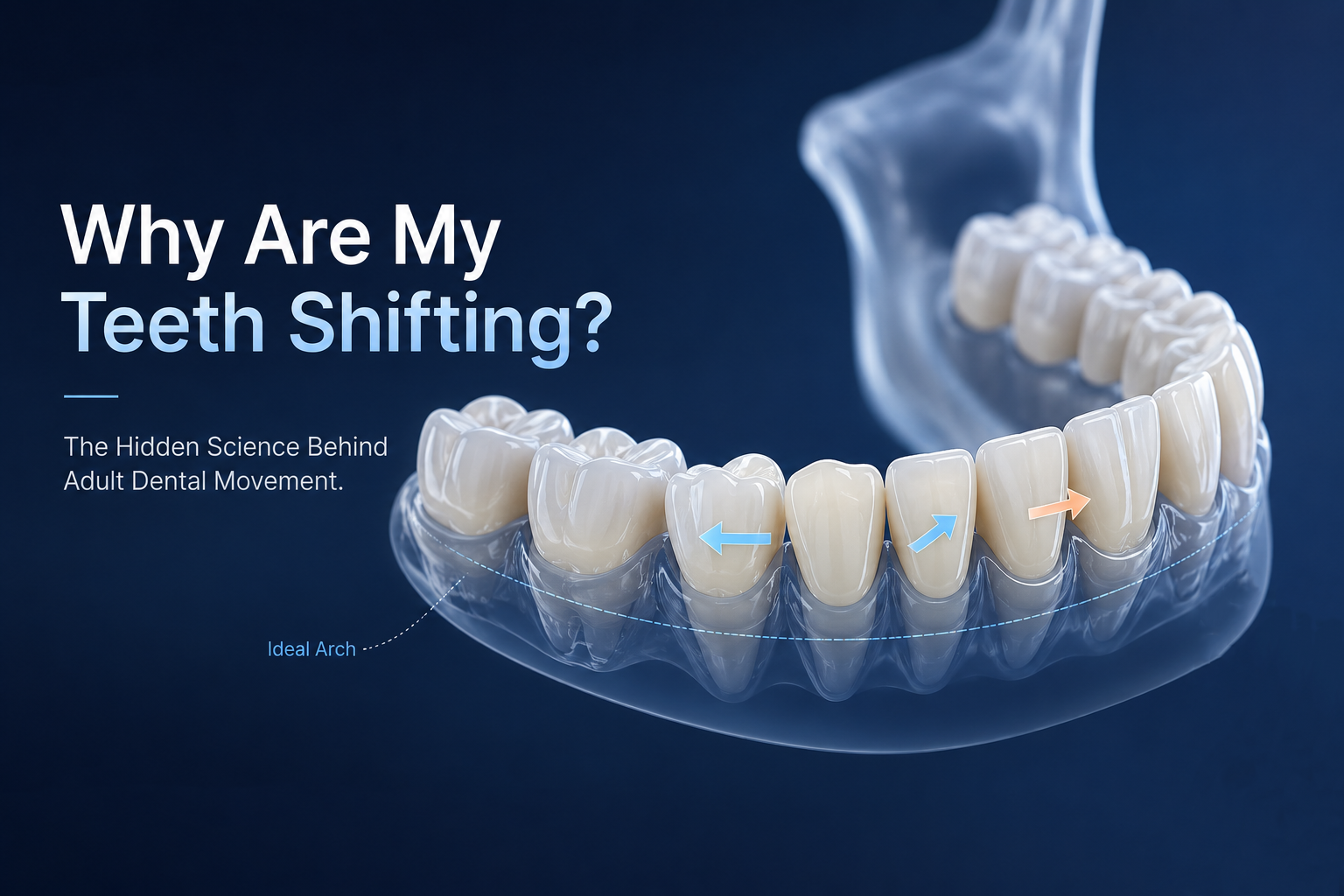
To understand why are my teeth shifting, it helps to look at the anatomy of your mouth. Teeth do not secure directly into solid bone. Instead, a specialized tissue called the periodontal ligament holds them in place like a suspension system. This fibrous tissue allows for micro-movements to accommodate the forces of chewing.
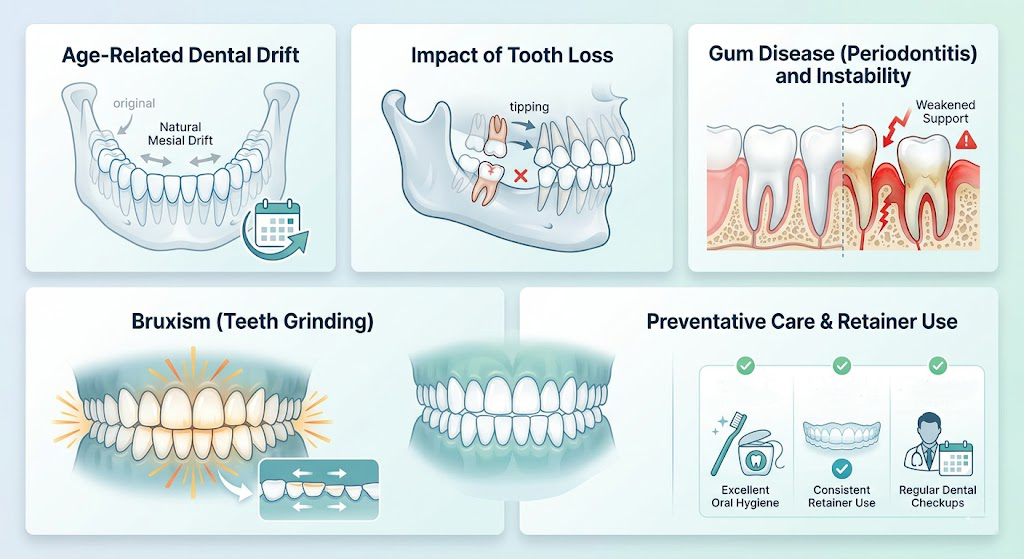
Over time, a natural phenomenon known as mesial drift occurs. This is the tendency of teeth to slowly move forward toward the front of your mouth. Decades of chewing gradually wear down the enamel surfaces where teeth meet. To close these tiny gaps, your teeth naturally drift forward, often causing subtle crowding as you age.
Primary Reasons Why Are My Teeth Shifting
Age-related dental drift is an incredibly gradual process. However, sudden or noticeable tooth movement usually signals a specific lifestyle change or an underlying dental issue.
1. Chronic Periodontal Disease: A Major Cause of Teeth Moving
Gum disease is arguably the main condition that speeds up dental movement. When plaque and tartar build up along the gumline, they cause inflammation that can escalate into periodontitis. This condition destroys the soft tissue and the alveolar bone supporting your teeth. As the foundational support weakens, teeth lose their stability and begin to migrate.
2. How Tooth Loss and Extraction Accelerate Dental Drift
Your dentition operates as a complete structural arch; each tooth relies on its neighbors to stay upright. When a missing tooth leaves an open space, the opposing and adjacent teeth lose their structural boundaries. The surrounding teeth will naturally tilt or drift into the open space, disrupting your entire bite alignment.
3. Everyday Dental Wear and Tear That Alters Tooth Position
How you care for your teeth daily heavily impacts their long-term position. Standard mechanical forces—like aggressive brushing or using an degraded brush—can cause gum recession, which reduces structural support.
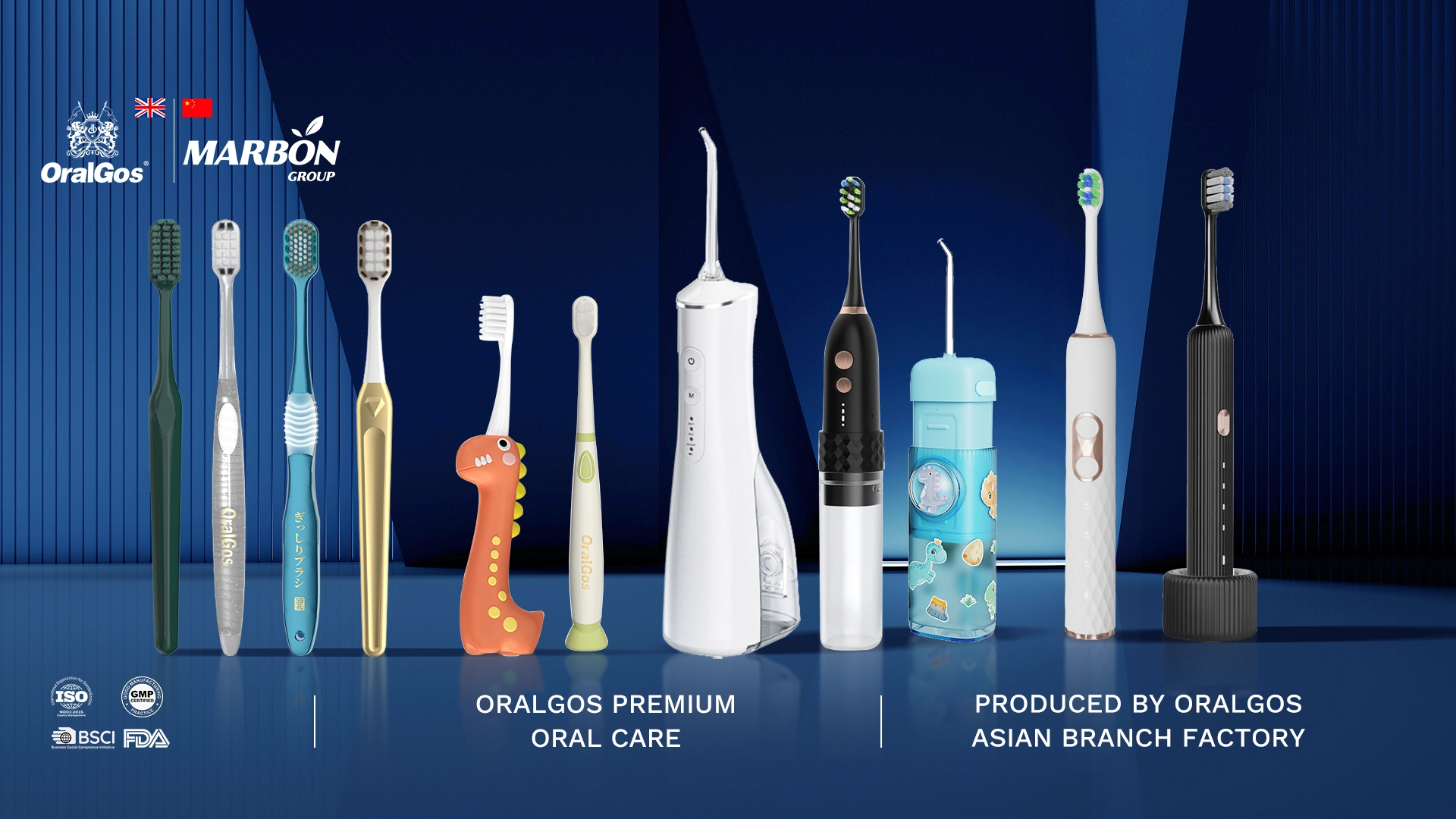
You can upgrade your daily routine with a high-quality manual toothbrush that features soft bristles. This simple change ensures an effective clean without damaging your delicate gum tissues. For superior plaque removal, consider switching to an electric toothbrush. These devices deliver precise pressure control, successfully protecting your gums from recession and shifting.
4. Bruxism: How Teeth Grinding Forces Dental Movement
Clenching or grinding your teeth, especially at night, places immense, unnatural pressure on the periodontal ligaments. This constant structural stress stretches the delicate ligaments, forcing teeth out of alignment. Over time, this movement creates noticeable changes in how your upper and lower teeth meet.
Preventative Strategies to Stop Teeth Shifting
Recognizing the causes of adult tooth movement allows you to take proactive steps to safeguard your alignment.
Prioritize Excellent Oral Hygiene to Prevent Shift
Maintaining the structural integrity of your bone and gums requires rigorous plaque control. Brushing twice a day is essential, but standard toothbrushes cannot reach the tight spaces between shifting teeth. These hidden gaps create the perfect environment for bacteria to thrive.
You can easily clear this buildup by adding a specialized water flosser to your nightly routine. This device flushes out deep debris and bacteria from between your teeth, effectively stopping gum disease before it starts.
Wear Your Retainers to Lock Your Alignment
After orthodontic treatment, teeth retain a natural “memory” of their old alignment. Without intervention, they will constantly attempt to drift back to their original positions. Wearing your retainer exactly as prescribed by your orthodontist is the only definitive way to counteract natural mesial drift.
Schedule Regular Dental Checkups for Tracking Movement
A dental professional can often spot tiny alignment changes long before you notice them in the mirror. Routine cleanings remove the hardened tartar that breeds bone-destroying bacteria. The American Dental Association recommends regular dental visits for overall health. These checkups do more than catch cavities; they monitor the structural alignment of your entire mouth.
Summary: Managing Your Dental Alignment
The answer to why are my teeth shifting typically involves a mix of natural aging and oral health. Specifically, your alignment depends heavily on gum stability and daily localized pressure. You can protect your alignment by investing in premium oral hygiene tools and monitoring changes in your bite. Partnering closely with your dentist ensures you maintain a healthy, stable smile for a lifetime.