Maintaining a bright smile and healthy gums goes far beyond just scrubbing your teeth for two minutes twice a day. Most people have the right tools, including a toothbrush, floss, and rinse. Yet, few know how to combine them for the best results. The degree to which sequential application influences overall oral efficacy remains a pivotal point of discussion within the dental community. As it turns out, the sequence matters immensely. Implementing the proper order of oral care drastically optimizes your daily hygiene routine. This systematic approach ensures maximum plaque disruption while allowing protective minerals, such as fluoride, to remain on the enamel.
Let’s dive into the science-backed sequence that dental experts recommend.
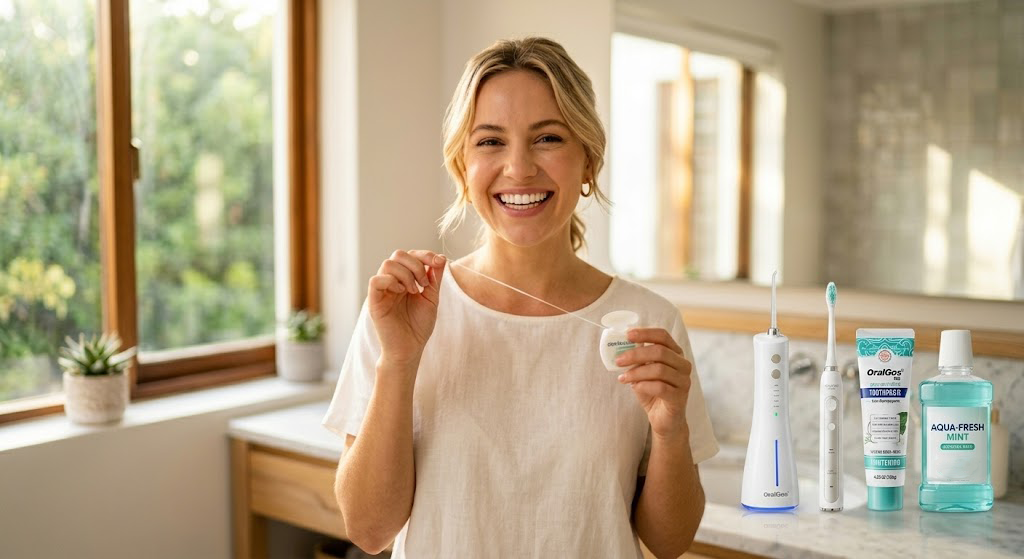
The Science Behind the Proper Order of Oral Care
Many people view their morning and nightly dental routines as a simple checklist. They assume that completing each task matters more than the actual sequence. However, the mouth is a complex ecosystem. Plaque and food debris constantly accumulate in tight spaces that a toothbrush simply cannot reach.
Neglecting the proper order of oral care compromises your routine. You risk washing away the active ingredients in your toothpaste or trapping harmful bacteria beneath protective minerals. Optimizing your sequence ensures that each product can perform its designated job without interfering with the others.
Step 1: Floss First in Your Oral Care Routine
For decades, the standard assumption was to brush first and floss afterward. However, modern clinical research has flipped this script. According to the American Dental Association, flossing before you brush is the most effective way to clean your teeth.
Utilizing traditional string floss or a high-quality water flosser effectively dislodges stubborn food debris. This process lifts sticky plaque from narrow interdental spaces and along the gumline. If you brush before performing this step, the loosened debris remains sitting in your mouth. By flossing first, you clear these tight spaces out into the open.
Removing this physical barrier allows fluoride to penetrate narrow interdental spaces. Consequently, this targeted delivery provides superior protection against cavities.
Step 2: Brush Second to Optimize Dental Hygiene
Once the debris between your teeth has been dislodged, it is time for the main event: brushing. Brushing effectively polishes tooth surfaces and cleans the tongue. This critical step sweeps away the debris previously dislodged by your flossing routine.
To achieve the best results within the proper order of oral care, you need the right instrument. Select either a classic manual toothbrush or an advanced electric toothbrush based on your preference. High-quality electric models utilize sonic vibrations to efficiently break up dental biofilm.
Spend a full two minutes brushing at a 45-degree angle toward your gums. When you finish, spit out the excess foam, but do not rinse your mouth with water immediately. Leaving a thin layer of toothpaste residue allows the fluoride to continue strengthening your enamel.
Step 3: Rethinking the Mouthwash Step in Your Sequence
The final step in the sequence is often the most misunderstood. Many individuals naturally reach for a refreshing capful of mouthwash immediately after brushing. While this provides an instant burst of minty freshness, it can actually undo much of the hard work your toothpaste just accomplished.
Most over-the-counter mouthwashes contain a lower concentration of fluoride than standard toothpaste. Rinsing vigorously with mouthwash right after brushing washes away the highly concentrated fluoride film left behind by your toothpaste.
To maximize your routine, dental professionals suggest two alternatives for mouthwash:
- Use it at a completely different time: Use mouthwash after lunch or mid-day snacks to refresh your breath. This timing kills bacteria without disrupting your essential morning and evening brushing routines.
- Wait 20 to 30 minutes: If you prefer using mouthwash at night, wait at least 30 minutes after brushing. This delay gives the toothpaste’s fluoride sufficient time to bind to your enamel.
Conclusion: Mastering Your Daily Oral Hygiene Sequence
Achieving optimal dental health does not require a complicated, hours-long regimen. It simply requires understanding how your dental tools interact with one another. Committing to a systematic oral hygiene sequence optimizes your long-term health outcomes. By correctly coordinating flossing, brushing, and rinsing, you establish a powerful defense against caries, gingivitis, and halitasis.
Evaluate your current bathroom routine tonight. Flossing before you brush is a simple shift that drastically elevates your oral hygiene. This minor adjustment transforms a standard routine into a highly effective one.