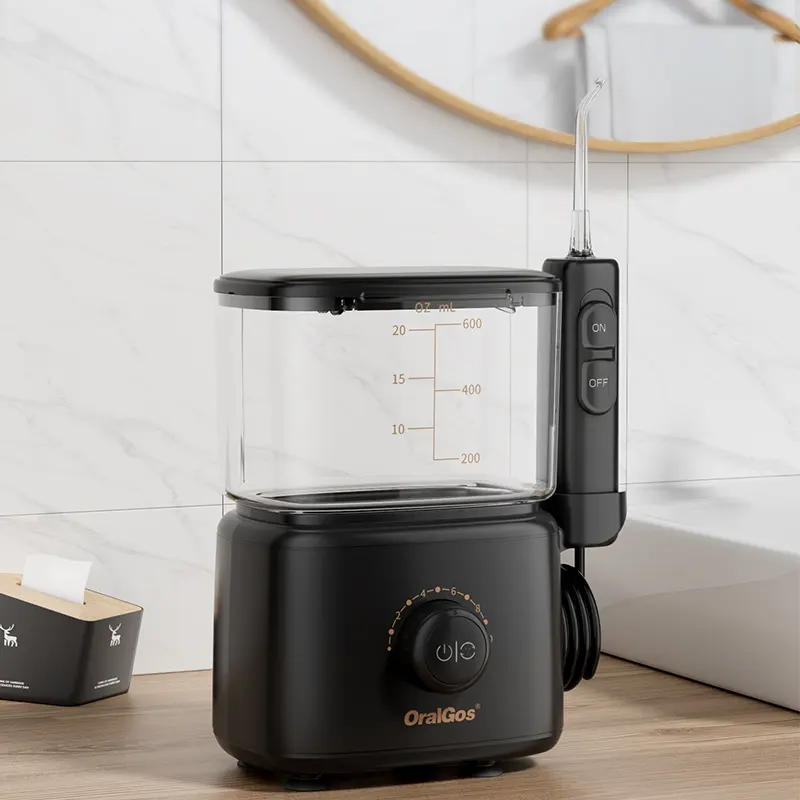
When choosing an oral irrigator, consumers often evaluate water pressure settings, tank capacity, and battery life. However, the internal driver of performance remains hidden inside the handle: the pump system. The water flosser pump mechanism converts electrical energy into high-velocity water pulses. These pulses clean deep between teeth and along the gumline.
Two primary motor-pump configurations dominate the oral care market: diaphragm pumps and piston pumps. Understanding how different pump mechanisms work makes it easier to choose the right device. This helps consumers, dentists, and engineers select the best tool for long-term oral hygiene.


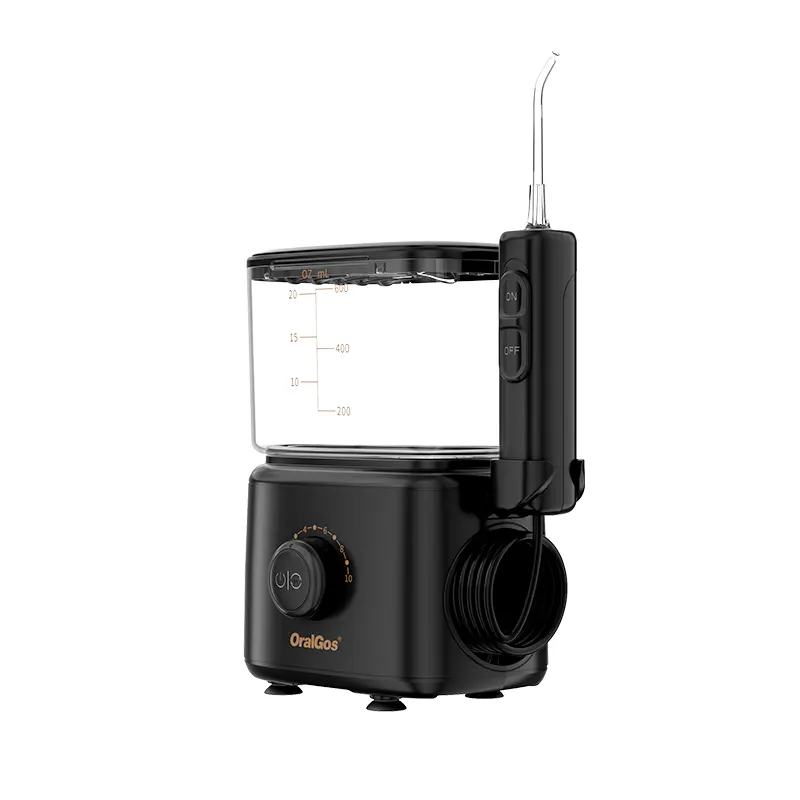
What Is a Water Flosser Pump Mechanism?
At its core, a water flosser relies on a miniature motor that drives a mechanical pump. This system draws fluid from the reservoir and ejects it through a narrow nozzle as a rhythmic stream of pressurized water.
The mechanical design dictates three crucial performance metrics:
- Pulse Rate: How many times per minute the water stream pulses (typically between 1,200 and 1,800 RPM).
- Pressure Range: Measured in pounds per square inch (PSI), usually spanning from 20 PSI for sensitive modes to over 110 PSI for deep cleaning.
- Flow Stability: How consistently the pump delivers fluid without sudden drops in water stream power.
Both diaphragm and piston pumps achieve effective plaque removal, but their structural engineering leads to distinct user experiences.
How the Diaphragm Water Flosser Pump Mechanism Works
A diaphragm pump belongs to the positive displacement family. It uses a flexible silicone or rubber membrane that expands and contracts to move water.
Diaphragm Pump Mechanical Operation
- Suction Stroke: An electric motor turns an eccentric wheel to pull the diaphragm outward. This movement creates a vacuum inside the pump chamber. Fluid enters the chamber through a single one-way inlet valve.
- Discharge Stroke: The motor pushes the diaphragm inward, compressing the fluid chamber. The inlet valve shuts, and the fluid forces open the outlet valve, creating a concentrated water pulse.
       [ Flexible Diaphragm ]
       /                    \
  (Pulls Back)          (Pushes In)
       ↓                     ↓
Suction Chamber        Discharge Nozzle
(Inlet Valve Opens)    (Outlet Valve Opens)
Key Advantages of Diaphragm Water Flosser Pumps
- Sealed Fluid Path: The flexible membrane forms an absolute seal between the mechanical motor assembly and the fluid channel. This prevents water leakage into the electrical housing.
- Quiet Operation: Because the moving diaphragm absorbs mechanical vibrations, diaphragm systems generate minimal noise.
- Compact Footprint: Diaphragm assemblies fit easily into slim, ergonomic handles. This compact design makes them popular in handheld and portable water flossers.
Limitations of Diaphragm Pump Mechanisms
Flexible membranes experience continuous material flex. Daily exposure to high pressure and mineral deposits can weaken the rubber membrane over time. As a result, the flosser gradually loses output pressure.
How the Piston Water Flosser Pump Mechanism Works
Piston pumps work much like a miniature engine. Inside a sealed cylinder, a rigid rod slides back and forth to pump water.
Piston Pump Mechanical Operation
- Retraction: An electric motor rotates a crankshaft, pulling the piston back inside the cylinder. This movement draws water from the reservoir through a check valve.
- Forward Stroke: The piston drives forward into the sealed chamber, forcing water out under high pressure through the discharge nozzle.
[ Electric Motor ] ───> [ Crankshaft Drive ]
                              │
                              ▼
                  [ Rigid Piston Cylinder ]
                   (Reciprocating Stroke)
                              │
                              ▼
                  [ High-PSI Water Stream ]
Key Advantages of Piston Water Flosser Pumps
- High & Stable PSI: Rigid pistons do not stretch under force. This allows them to maintain high pressures up to 120 PSI without performance loss.
- Exceptional Longevity: Pistons made of metal or high-grade polymers can handle years of daily friction. This durability makes them ideal for heavy daily use.
- Precise Pressure Control: Piston displacement directly matches motor torque, delivering fine control over pulsation rhythms.
Limitations of Piston Pump Mechanisms
Piston systems require mechanical seals (O-rings) to prevent internal fluid leakage. Over time, continuous friction can degrade these precision seals. Piston designs are also heavier and generate higher running noise and vibration levels.
Diaphragm vs. Piston: Water Flosser Pump Comparison
| Engineering Feature | Diaphragm Pump System | Piston Pump System |
| Pulsation Efficiency | Moderate to High | High to Very High |
| Peak Pressure Output | 30 – 90 PSI | 40 – 120+ PSI |
| Noise Level | Low (Quiet operation) | Moderate to High |
| Size & Weight | Lightweight & Compact | Heavier & Bulky |
| Leak Prevention | Superior (Hermetic seal) | Dependent on O-ring seals |
| Ideal Application | Cordless & Travel Flossers | Countertop & Heavy-Duty Units |
Impact of Flosser Pumping Mechanisms on Oral Health
Both pump types help improve oral health. They disrupt subgingival biofilm and clear food debris from areas traditional floss often misses.
The American Dental Association notes that oral irrigators improve gum health by reducing gingivitis. Their effective pumping action cleans hard-to-reach areas around implants, fixed bridges, and braces.
- For Sensitive Gums: Diaphragm pumps provide a gentle pulsation curve that accommodates inflamed or delicate gum tissue.
- For Orthodontics & Implants: Piston pumps deliver higher, continuous pressure. This extra mechanical force easily clears stubborn food debris trapped under brace wires and around crown margins.
Conclusion: Which Water Flosser Pump Mechanism Fits Your Needs?
Choosing between these two internal architectures depends on lifestyle habits and personal dental needs:
- Choose a diaphragm pump for a lightweight and whisper-quiet flosser. Its leak-proof design fits seamlessly into travel and daily cordless routines.
- Choose a piston pump if you need maximum pressure and heavy-duty durability. This design powers countertop units built for daily family use.
When you understand how your oral care device works, you can choose the best water flosser for your long-term dental health.