Selecting the right water flosser often comes down to understanding technical specifications. While pressure settings, tank capacity, and battery life are important, the pulsation rate is critical for effective oral hygiene. Measured in pulses or revolutions per minute (RPM), this frequency determines how thoroughly the device cleans.
Pulsating water streams leverage water force to dislodge food particles, disrupt bio-film, and massage gum tissue. However, higher RPM does not automatically equate to better cleaning. Finding the ideal pulse frequency ensures optimal plaque removal while protecting sensitive oral tissue.
What Is Oral Irrigator Pulsation Rate and Why Does It Matter?
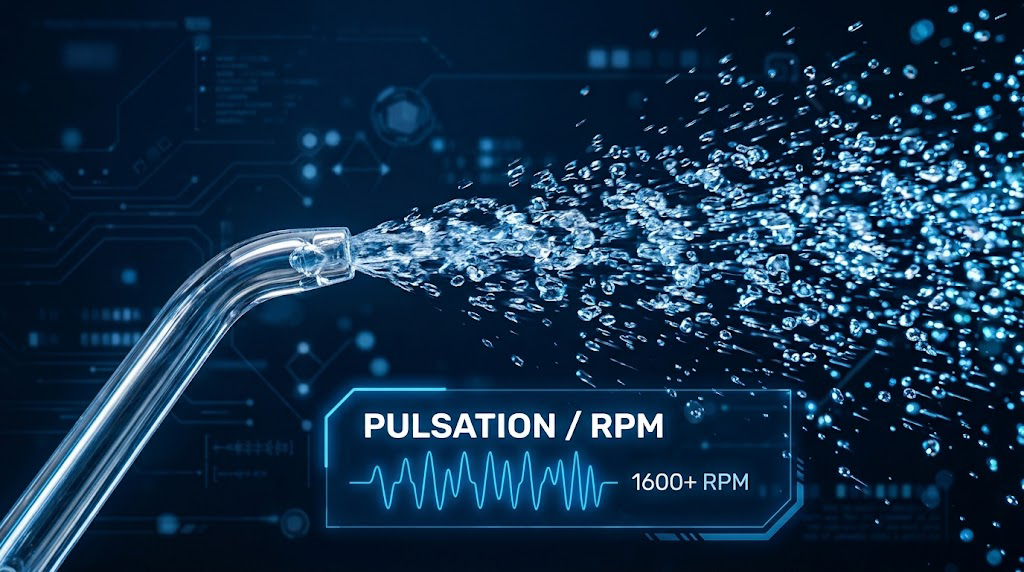
A water flosser’s pulse rate is how frequently the pump breaks the water stream into tiny droplets. Instead of a solid jet, modern devices deliver rapid micro-bursts of water.
How Pulsation Works:
[ Water Reservoir ] → [ Internal Pump ] → [ Pulsing Stream ] → (Disrupts Biofilm & Plaque)
A calibrated pulse rate creates hydraulic shockwaves that reach deep into interdental spaces and subgingival pockets (below the gumline). These areas are difficult to reach with standard string floss or manual toothbrushes.
Dental organizations like the American Dental Association support using pulsating water flossers. These devices safely remove plaque without hurting sensitive gum tissue. The micro-burst action also stimulates blood circulation in the gums, promoting healthier oral tissue over time.
Comparing RPM Ranges and Pulsation Rates in Water Flossers
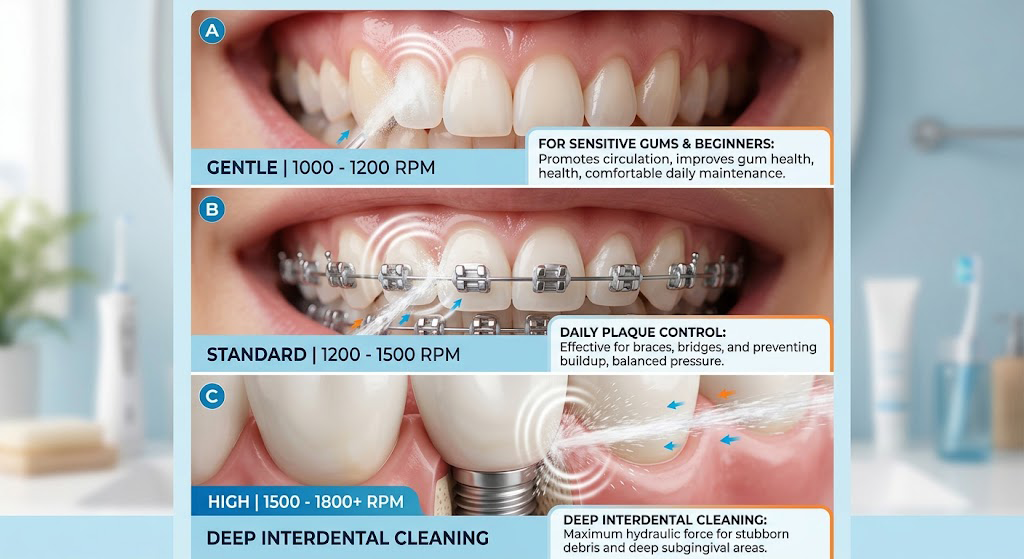
Modern oral irrigators generally operate across three distinct speed tiers:
| Speed Tier | Pulse Range (RPM / PPM) | Best Suited For | Primary Benefit |
| Gentle / Sensitive | 1,000 – 1,200 | Sensitive gums, implants, beginners | Low impact, comfortable daily maintenance |
| Standard / Daily | 1,200 – 1,500 | Daily plaque control, braces, bridges | Balanced pressure for efficient biofilm removal |
| High / Dynamic | 1,500 – 1,800+ | Deep interdental cleaning, stubborn debris | Maximum hydraulic force for thorough flushing |
1. Low Pulsation Rates (1,000 – 1,200 RPM)
Lower pulse rates deliver a gentler rinse that protects sensitive mouths. This range is ideal for anyone recovering from oral surgery, managing severe gingivitis, or dealing with sensitive teeth. While gentle on tissue, this range may require longer cleaning times to clear dense interdental debris.
2. Standard Oral Irrigator Pulsation Rate (1,200 – 1,500 RPM)
Most dental professionals consider 1,200 to 1,400 RPM the “sweet spot” for daily maintenance. This frequency generates sufficient kinetic energy to disrupt sticky plaque matrices without irritating healthy gum tissue.
3. High Pulsation Frequency (1,500 – 1,800+ RPM)
High-frequency water flossers create quick micro-bursts to clear trapped food. They easily wash away debris around braces, bridges, and dental implants. However, using high frequencies alongside excessive pressure settings can cause tissue irritation or bleeding if used incorrectly.
How to Choose the Optimal Oral Irrigator Pulsation Rate
Selecting the right pulsation frequency depends on your specific oral health needs, existing dental work, and gum sensitivity:
- Sensitive Gums or Gingivitis: Start at lower frequencies (1,000–1,200 RPM) paired with low pressure. Gradually increase frequency as gum health improves and tissue adapts.
- Orthodontic Braces and Implants: Look for devices offering variable frequency settings (1,400–1,700 RPM). Higher frequency streams easily dislodge debris around brackets and wires.
- General Daily Hygiene: Operating around 1,400 RPM offers the ideal balance for daily flossing. It delivers enough cleaning power to remove plaque while keeping your gums comfortable.
Many advanced irrigators offer customizable pulse modes, allowing users to switch between continuous cleaning and rhythmic massage functions. Check out our full line of water flossers to find models with customizable speed modes.

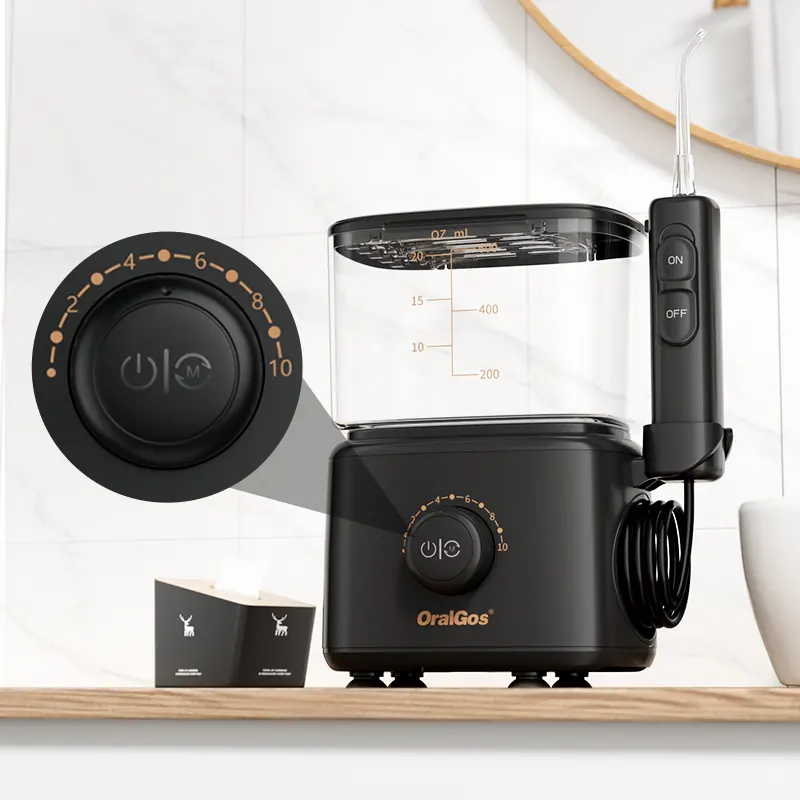
Matching PSI Pressure with Flosser Pulsation Rate
A common misconception is that pulsation rate (RPM) and water pressure (PSI) are identical. In reality, they perform two distinct roles:
- Pulsation Rate (RPM): Controls how frequently the water stream impacts the tooth and gum surface per minute.
- Water Pressure (PSI): Controls the force behind each individual water pulse.
| Parameter | Meaning | Definition |
| RPM / Pulsation Rate | Frequency | Number of water hits per minute |
| PSI / Water Pressure | Force | Physical impact force of each burst |
To prevent tissue trauma while maximizing cleaning power, aim for a high pulse frequency paired with moderate water pressure. High RPM breaks up stubborn plaque quickly. This lets you clean thoroughly without using high water pressure that might hurt your gums.
Summary
Understanding your device’s pulsation rate helps you tailor your daily routine for maximum efficacy and comfort. Choosing a device with adjustable speed settings ensures a cleaner mouth, whether you have sensitive gums or dental implants.