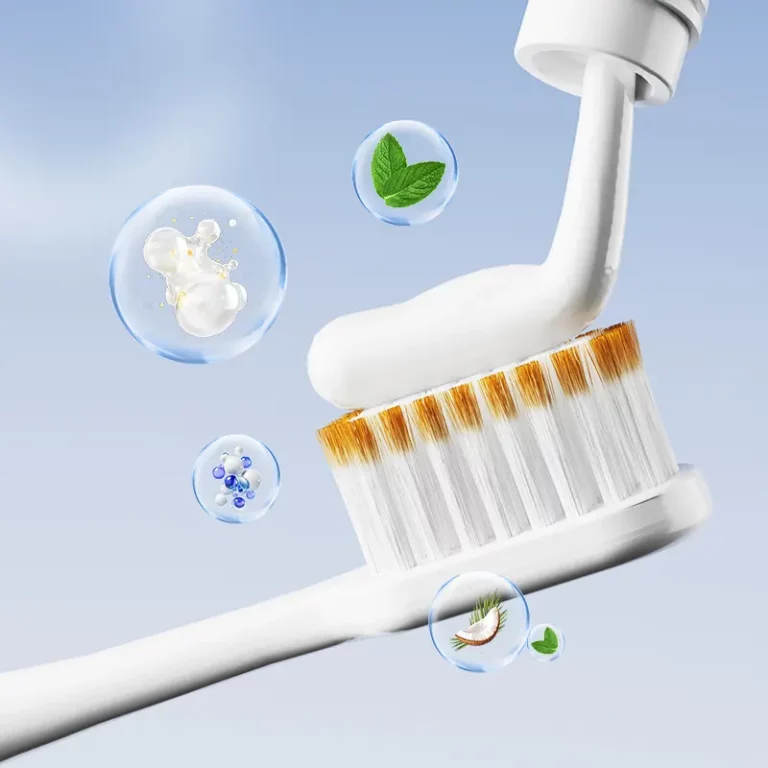
Introduction: Why toothbrush injection molding matters
In the world of oral care manufacturing, toothbrush injection molding plays a pivotal role. This process shapes plastic pellets into ergonomic, durable toothbrush handles — the foundation for any quality toothbrush. As global demand for reliable, affordable toothbrushes rises, mastering injection molding becomes essential for manufacturers who aim for consistency, scale, and cost‑efficiency.
Building on “How to Produce a Toothbrush: From Design to Manufacturing”, this article explores injection molding in greater detail. It covers technical aspects, material choices, and recommended best practices. For full context of design-to-manufacture flow, refer to the original post.

What is toothbrush injection molding — and how does it work
Injection Molding (or injection moulding) is a widely used manufacturing process for producing plastic parts — including toothbrush handles.
Basic steps of the process
The toothbrush injection molding workflow generally follows these steps:
- Mold design & fabrication — Engineers precisely machine steel or aluminum molds to create the exact handle shape. They also feature internal cavities to accommodate bristle holes.
- Plastic preparation — Engineers load thermoplastic pellets, usually polypropylene (PP), into the injection molding machine. They then heat the pellets until they melt, typically between 200 and 250 °C.
- Injection — Engineers inject the molten plastic into the mold cavity under high pressure. This process ensures that they fill the cavity and accurately reproduce every detail.
- Cooling and solidification — Mold cooling systems (often water‑based) rapidly solidify the plastic. Cooling must be uniform to prevent warping or sink marks.
- Ejection and handle release — Once solid, ejector pins or plates push out the handle from the mold.
- Post‑processing (if needed) — This may include trimming excess material, polishing, or adding grips and other handle components.
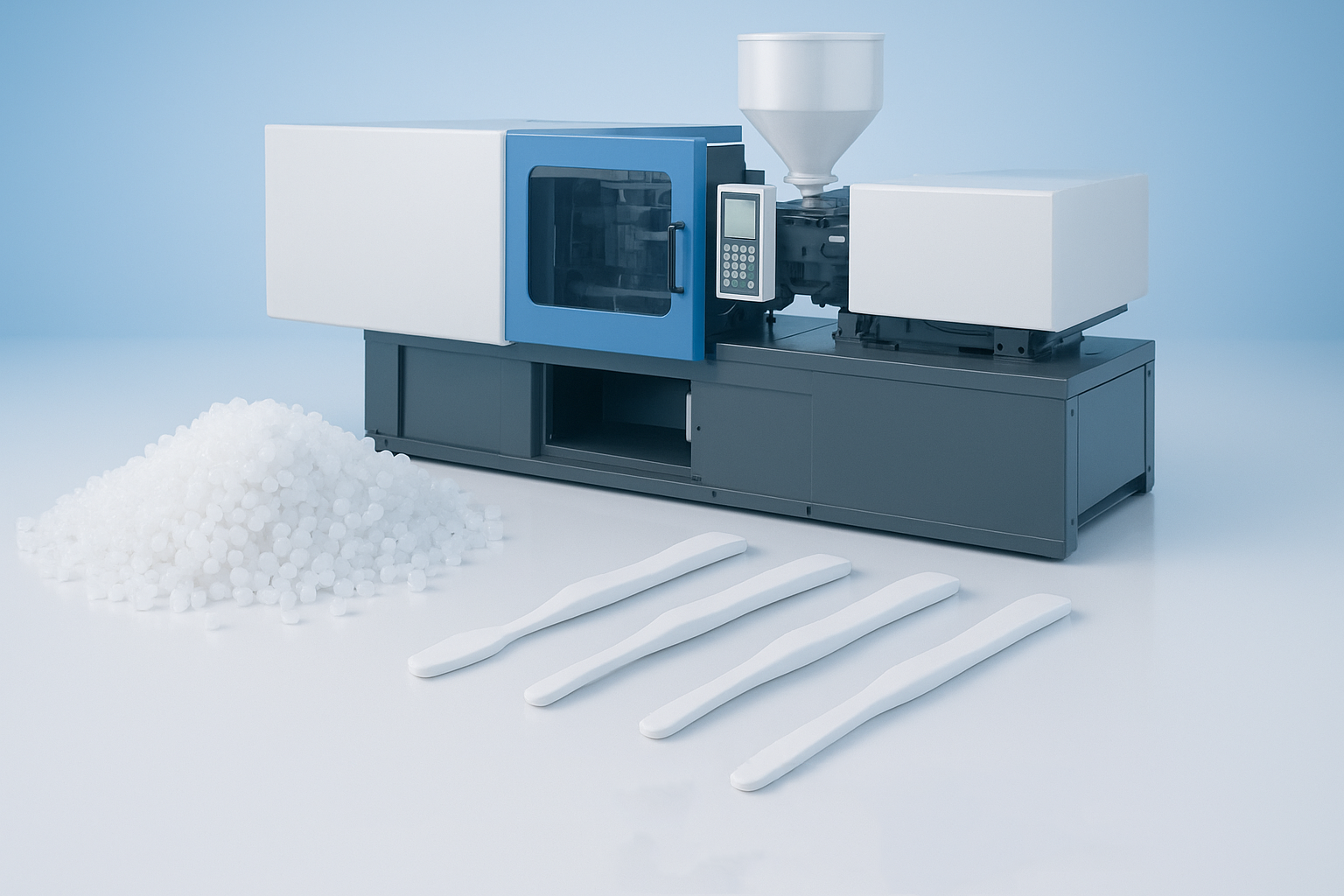
Automation and modern injection molding technology allow manufacturers to produce hundreds or even thousands of toothbrush handles each hour. This high output ensures both consistent quality and cost efficiency.
Why polypropylene — material choice matters
Selecting the right plastic is critical. Polypropylene (PP) remains the go-to material for toothbrush handles because it’s:
- Lightweight yet durable — Comfortable to hold while resisting daily wear and tear.
- Chemically resistant — It withstands exposure to toothpaste, mouthwash, and water without degrading.
- Moldable — Its thermal and flow properties ensure it fills intricate mold cavities and holds shape after cooling.
In short, polypropylene (PP) helps toothbrushes achieve the right balance of performance, cost, and ergonomics. This balance is essential for mass-market oral care products.
Key technical considerations for effective toothbrush injection molding
To ensure quality and consistency, manufacturers must manage several critical factors during molding:
Mold design precision
Molds must have accurate cavity geometry and proper draft angles to allow easy ejection. They also need balanced runners and gates to ensure the mold fills uniformly. In addition, well-designed cooling channels help maintain an even temperature throughout the mold.
Manufacturers use two-component injection molds when producing handles with multiple colors or materials. People often apply this technique to soft-grip overlays. This involves sequential or simultaneous injection of different materials or colors into the same handle mold.
Process control: pressure, temperature, timing
Engineers carefully control the injection pressure and temperature of the molten plastic during molding. This ensures the mold cavity fills completely and prevents defects such as air traps or short shots.
After filling, the holding (packing) pressure and cooling time become critical. Proper packing prevents sink marks and internal voids; efficient cooling reduces cycle time while preserving dimensions.
Post‑molding finishing and quality control
Once handles are ejected, finishing steps may include removing sprues and flash, polishing, and inspecting dimensions and surface finish. High standards in finishing maintain ergonomic feel, aesthetic quality, and ensure reliable bristle attachment later.
Quality control is not a one-time check. Many factories integrate it throughout the entire process, including material incoming inspection, mold trial testing, and process stability checks. They also perform a final handle inspection before moving on to bristle planting.
Manufacturing scale, efficiency, and sustainability aspects
Automation and efficient cycle times greatly increase production capacity. A single injection molding line can manufacture tens of thousands of toothbrush handles daily.
For example, some toothbrush manufacturing plants operate two injection molding machines alongside multiple tufting and trimming machines. Together, these machines can produce over 15,000 brushes in an 8‑hour shift.
From an environmental standpoint, PP handles, while durable and recyclable, can contribute to plastic waste if disposed improperly. Forward-looking manufacturers may explore recycled plastics or bio‑based polymers, or design modular toothbrushes to extend longevity. Many in the oral‑care industry already consider such sustainable alternatives as part of their long-term strategy.
How injection molding connects to the full toothbrush production chain
Understanding toothbrush injection molding as a standalone process is useful. Its real value, however, becomes clear when we see it as the first critical step in the entire production chain.
Once the handles are molded, engineers carry out the next stages—bristle planting, assembly, quality control, and packaging. Each stage depends on the precision and consistency the molding process provides. This is why injection molding is central in any good toothbrush manufacturing guide. For example, “How to Produce a Toothbrush: From Design to Manufacturing” highlights its importance.
In the next article of this series, we will dive into bristle planting. We will explain how manufacturers anchor bristles into molded heads. The article will also cover the methods used (staple vs. anchorless tufting), the machines involved, and quality control measures.
This will complete the core production chain and show how each step connects. It highlights how design, molding, and assembly work together to produce high-quality toothbrushes.
Conclusion
Toothbrush injection molding remains the linchpin of modern toothbrush manufacturing. It transforms molten plastic into precise, uniform handles at high speed. This efficiency and consistency help oral-care brands meet global demand without compromising quality.
Careful mold design and strict process control keep production stable. With these in place, manufacturers can deliver handles that are fully prepared for bristle planting and final assembly. As the industry evolves, considerations such as sustainability and multi-material molding (e.g. soft‑grip handles, dual‑color designs) will grow in importance. In upcoming writing I will explore the next stage: bristle planting — where molded handles meet the bristles that do the cleaning.
Stay tuned for the next installation in this toothbrush production series.