Modern consumers no longer buy whitening products based on marketing claims alone—they want proof. As a result, oral-care brands now prioritize whitening toothpaste formulations backed by scientific research for worldwide markets. Recent studies show that researchers achieve enamel-safe whitening through effective techniques. This is possible not only with traditional abrasives but also with innovative color-correction technology, biomimetic minerals, and stabilized active ingredients.
This article reviews the most scientifically validated whitening toothpaste ingredients. It also explains why these ingredients are important for oral-care professionals and procurement leaders.
Whitening Toothpaste Ingredients Backed by Science
Clinical literature published between 2022–2024 consistently shows that whitening efficiency depends on ingredient stability, enamel interaction, particle morphology, and pH safety. A modern whitening toothpaste must therefore balance stain removal with long-term tooth integrity.
Below is an evidence-based breakdown of the most effective whitening agents recognized by researchers and dental manufacturers worldwide.
Key Active Ingredients Used in Whitening Toothpaste
Hydrated Silica — The Gold-Standard Mild Abrasive
Hydrated silica remains the backbone of most whitening formulations thanks to its controlled particle hardness. Unlike older calcium carbonate abrasives, modern silica polishing technology allows targeted removal of chromogenic plaque without cutting into dental enamel. A 2023 comparative study showed that optimized silica can remove significantly more surface stains. In fact, it delivered up to 40% higher stain lift while remaining within safe RDA limits.
Activated Charcoal — High-Porosity Stain Adsorption
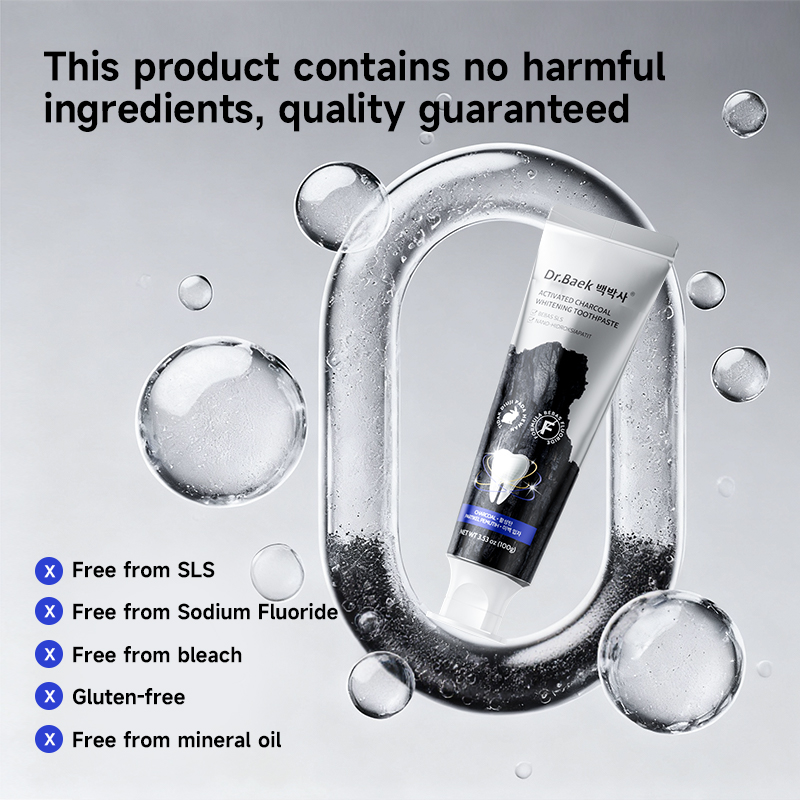
Activated charcoal offers adsorption-based cleaning rather than abrasion. Its ultra-porous surface captures tannins from coffee, tea, and wine. While charcoal alone does not chemically bleach teeth, evidence confirms improved brightness after consistent use.
Brands targeting natural-conscious consumers can benefit from specialized products. The Fluoride-Free Charcoal Toothpaste and the OralGos Activated Charcoal Whitening Toothpaste offer both functional advantages and marketing appeal, supported by measurable results.

Colour-Correcting Pigments — Science-Driven Optical Whitening
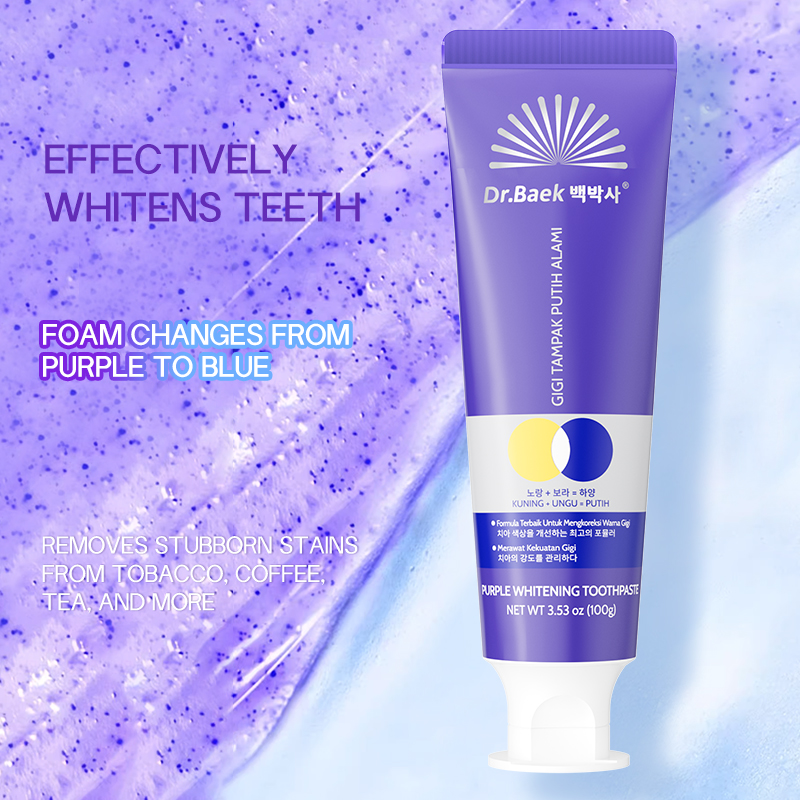
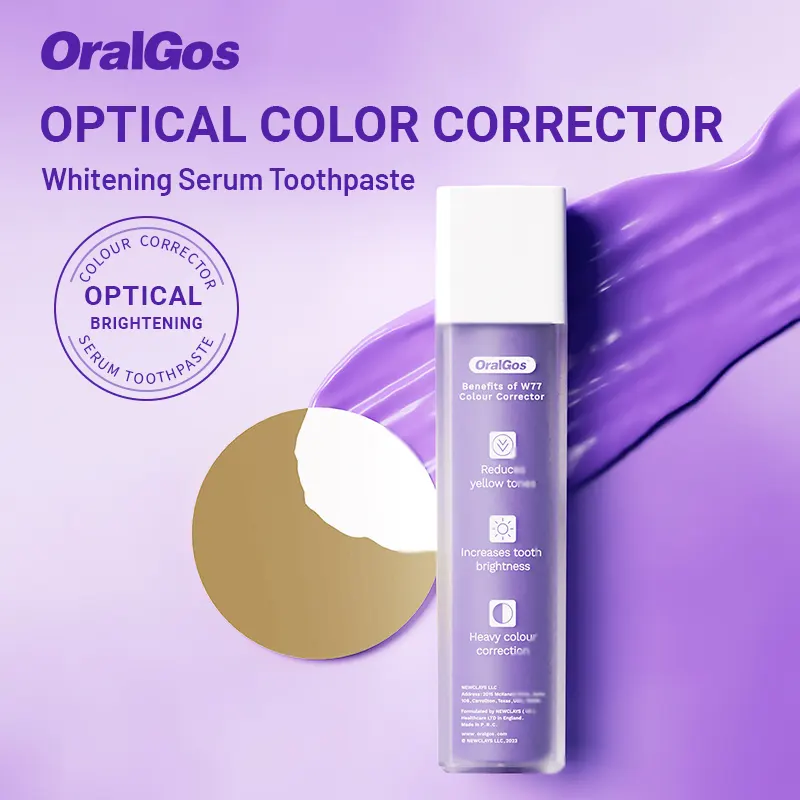
One of the fastest-growing whitening technologies since 2023 is purple-toned color-correcting toothpaste. Its mechanism follows the color theory used in professional violet toners: purple neutralizes yellow.
The OralGos W77 Colour Corrector Toothpaste applies clinically validated pigment ratios that instantly adjust tooth perception. Rather than using peroxide bleaching, this formula whitens teeth through optical modification. This formula works well for consumers with sensitive teeth and for markets that restrict peroxide use.
This ingredient category is a key focus for SEO-driven branding. Searches for terms like “color correcting toothpaste” are steadily rising. The same trend is seen for “purple whitening toothpaste” across Southeast Asia, the UK, and the Middle East.
Fluoride & Fluoride Alternatives — For Enamel Strengthening During Whitening
Whitening often exposes enamel weaknesses, which is why remineralization must accompany stain removal. Sodium fluoride, stannous fluoride, nano-hydroxyapatite, and calcium-phosphate complexes are the most scientifically validated strengthening ingredients.
Enzyme-Based Whitening — A Gentle Biological Approach
Bromelain and papain, derived from pineapple and papaya, dissolve protein films that trap stains. These enzymes are gaining traction in whitening toothpaste targeting sensitive users. Their non-abrasive mechanism aligns with recommendations from conservation-focused dentists.
Recent papers highlight that enzyme systems can increase stain removal by 15–20% when combined with low-RDA abrasives.
Supporting Ingredients That Enhance Whitening Performance
Stabilizers and pH Balancers
A whitening toothpaste must maintain a pH between 6.5 and 7.5 to avoid enamel demineralization. Stabilizers also protect pigments, enzymes, and minerals from early degradation.
Humectants and Polymers for Even Ingredient Delivery
Glycerin and sorbitol maintain toothpaste texture, while polymers keep abrasives suspended for uniform cleaning action.
Anti-Bacterial Agents for Long-Term Whitening
CPC, zinc salts, and essential-oil complexes help limit bacterial growth. By doing so, they reduce chromogenic plaque buildup, which is essential for maintaining long-term whitening.
Whitening Toothpaste Product Examples Backed by Science
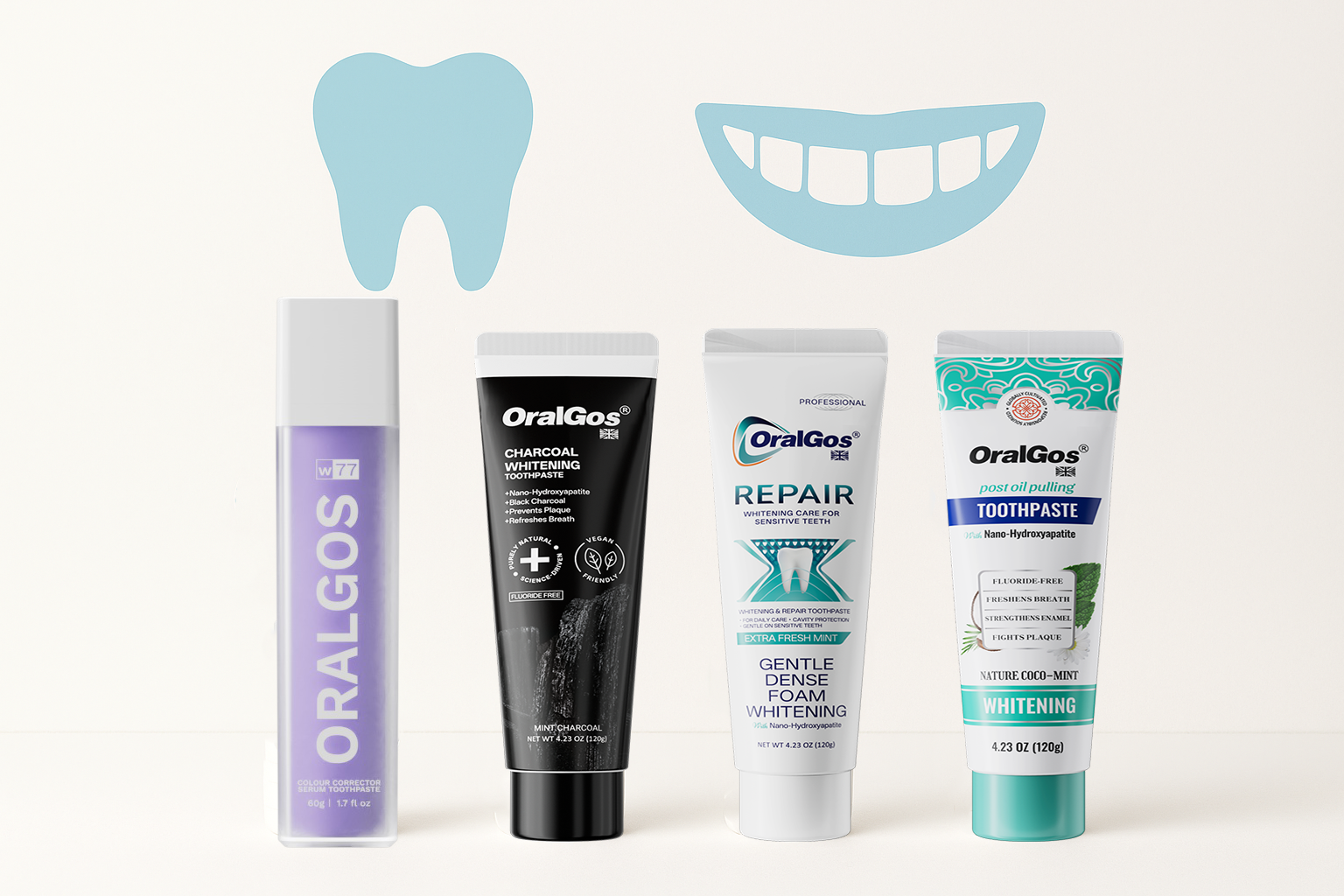
Below are OralGos formulations designed for global oral-care brands looking to enhance B2B product catalogues:
- Enamel Strengthening Whitening Toothpaste
- Charcoal Whitening Toothpaste
- Colour-Corrector Whitening Toothpaste (W77)
- Toothpaste Category Overview
For additional scientific authority, brands can also reference the American Dental Association’s research index available through its official website.
Conclusion: A Science-First Future for Whitening Toothpaste
Today’s oral-care consumers expect proof—and the science is stronger than ever. From optimized hydrated silica to enzyme systems and innovative color-correcting pigments, modern whitening toothpaste formulations deliver measurable brightness without sacrificing enamel health. Ingredient science is now essential for manufacturers and global buyers seeking trustworthy whitening solutions. It serves not merely as a marketing point but as the key to product success.