As global regulations tighten, mouthwash brands can no longer rely only on flavor innovation or marketing claims. Regulatory compliance, ingredient safety, and manufacturing transparency have become decisive factors—especially for brands operating across borders. GMP mouthwash represents a key pillar of this shift. It combines compliant formulation and manufacturing practices to meet FDA and CE standards while ensuring consistent product safety. This article examines the development of compliant mouthwash formulations. It reviews key global regulatory requirements and explains the growing importance of ingredient safety.

Why GMP Mouthwash Matters in Global Markets
Good Manufacturing Practice (GMP) goes beyond factory certification. It defines a structured system for formulation design, ingredient sourcing, production control, and quality assurance. For mouthwash products sold internationally, GMP compliance is often the baseline requirement for regulatory approval.
A GMP mouthwash ensures that:
- Raw materials are traceable and verified
- Active ingredients must meet official standards or cosmetic-grade quality
- Microbial control and stability testing are conducted systematically
- Each batch is produced under documented, auditable conditions
GMP compliance helps distributors and brand owners reduce regulatory risks. It also speeds up market entry in regions such as North America, the EU, and the Middle East.
Ingredient Safety as the Core of Compliance
Regulators and consumers increasingly evaluate modern mouthwash formulations not only for efficacy, but also for long-term safety. Regulatory authorities focus heavily on ingredient profiles, permissible concentrations, and safety data.
GMP Mouthwash and Active Ingredient Control
A compliant GMP mouthwash formulation carefully balances functional performance with safety thresholds. Common active ingredients include cetylpyridinium chloride (CPC), sodium fluoride, and zinc compounds. Each must comply with the concentration limits specified by FDA monographs and EU cosmetic regulations.
Under GMP systems, ingredient safety is ensured through:
- Supplier qualification and audits
- Certificates of Analysis (COA) for each raw material
- Compatibility and interaction testing within the formulation
This approach minimizes formulation risks such as irritation, instability, or regulatory rejection.
FDA Compliance Guidelines for Mouthwash
In the United States, regulators classify mouthwash products as cosmetics or OTC drugs based on their claims. Anti-caries or anti-gingivitis claims often place products under FDA OTC drug regulations.
GMP Mouthwash Under FDA Oversight
FDA-compliant GMP mouthwash manufacturing requires adherence to:
- OTC drug GMP regulations (21 CFR Parts 210 & 211)
- Ingredient compliance with FDA monographs
- Label accuracy and claim proof
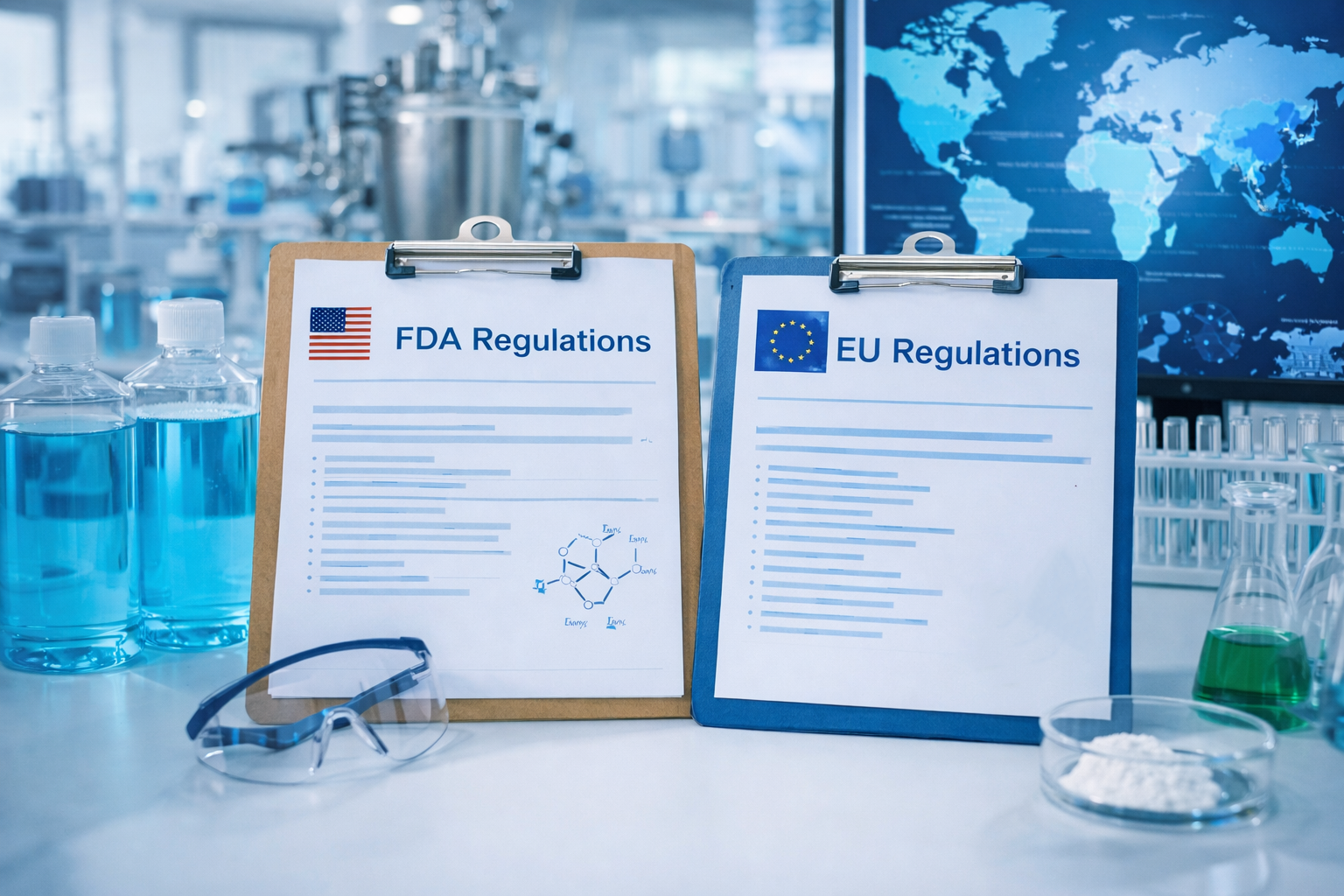
Brands targeting the U.S. market must ensure their formulations are supported by both safety data and manufacturing documentation. Detailed FDA guidance is publicly available through the U.S. Food & Drug Administration, making transparency a non-negotiable requirement for compliant manufacturers.
CE and EU Regulatory Expectations
In the European Union, mouthwash products fall under the EU Cosmetic Regulation (EC) No 1223/2009. While CE marking is not mandatory for cosmetics, compliance with EU safety assessment and documentation standards is essential.
GMP Mouthwash and EU Safety Assessment
For EU markets, a GMP mouthwash must be supported by:
- A Cosmetic Product Safety Report (CPSR)
- Ingredient compliance with EU annexes
- Manufacturing alignment with ISO 22716 (Cosmetic GMP)
Ingredient safety assessors pay close attention to allergens, preservatives, and alcohol content, particularly for products marketed to children or sensitive users.
Manufacturing Transparency and OEM Responsibility
For brands working with OEM partners, regulatory compliance depends heavily on the manufacturer’s quality system. A GMP-certified OEM does more than produce—it safeguards brand reputation.
Professional OEM services, such as those offered through Oralgos OEM Service, integrate formulation development, regulatory documentation, and batch-level quality control into one system. This reduces compliance gaps and ensures that each GMP mouthwash formulation is scalable without compromising safety.
Building Global Trust Through Ingredient Safety
Consumers and regulators increasingly demand clear answers: What’s inside the bottle, and is it safe long-term? Brands that prioritize ingredient transparency gain faster approvals and stronger market trust.
Aligning formulation strategies with FDA and EU guidelines allows a GMP mouthwash to exceed basic compliance. It also enables the product to adapt to different regulatory environments.
External regulatory references add credibility. Examples include guidance from the U.S. Food & Drug Administration and the European Commission’s cosmetic safety framework.
Conclusion: Compliance Is Now a Key Advantage
In today’s oral care landscape, compliance is no longer a backend requirement. It has become essential for market success. GMP mouthwash formulations that prioritize ingredient safety, manufacturing discipline, and regulatory alignment are better positioned for sustainable global growth.
By following FDA and CE compliance guidelines, brands can reduce regulatory friction. This approach also helps protect consumers and build long-term trust across markets. Ingredient safety is not just about meeting standards. It also helps protect your brand as regulations continue to increase.