Every morning and night, you dutifully brush your teeth to maintain a healthy smile. However, few users account for the microscopic biofilm and pathogens that can accumulate on bristles between uses. While we use our toothbrushes to remove plaque and debris, the damp environment of a bathroom is a breeding ground for germs. From airborne particles to oral bacteria, your brush might be dirtier than you think. In this guide, we explore how to sanitize toothbrush bristles effectively. Learn how to maintain a sterile cleaning routine and protect your oral health from hidden pathogens.
Why Sanitizing Your Toothbrush Is Essential: Understanding Bacteria Growth
The human mouth is home to hundreds of different types of germs and bacteria. During brushing, these bacteria, food particles, and debris climb into and settle between your toothbrush bristles. Furthermore, most people store their toothbrushes in the bathroom, often near the toilet. Research suggests that “toilet plume”—microscopic droplets released during flushing—can settle on nearby surfaces, including your toothbrush.
According to the ADA, your body’s defenses usually manage these microbes. However, keeping your toothbrush sanitized is vital for anyone with oral infections or a sensitive immune system.
Step-by-Step Guide: How to Sanitize Toothbrush Bristles
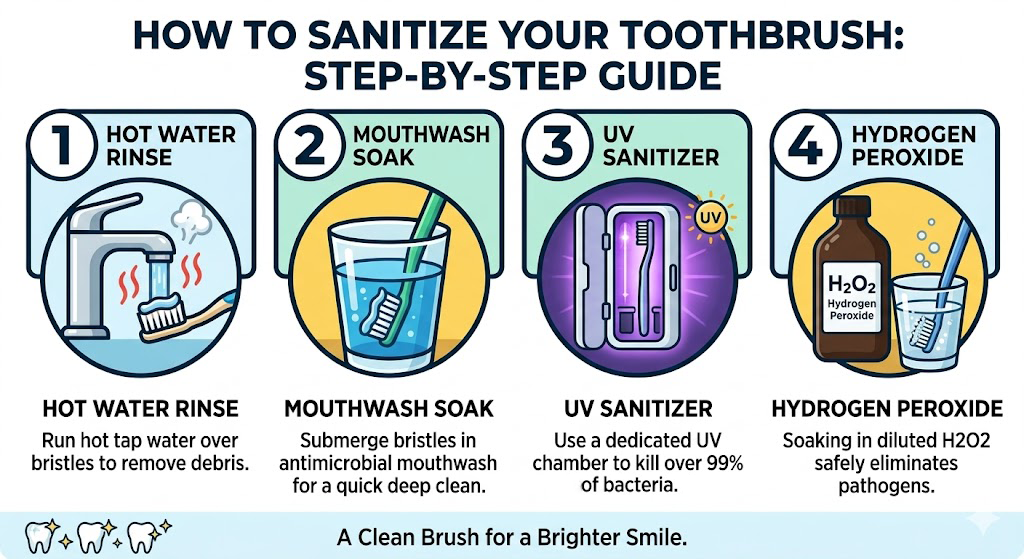
Cleaning and sanitizing are two different things. Rinsing removes debris, but sanitizing reduces the microbial load. Sanitize toothbrush fibers at home effectively by following these proven methods:
1. Run Under Hot Water
Before and after every use, rinse your toothbrush head with hot water. This softens the bristles to release trapped food particles and washes away excess toothpaste that can harbor bacteria.
2. Soak in Antibacterial Mouthwash
To disinfect your brush, simply soak it in an alcohol-based or antibacterial mouthwash for 30 seconds. Avoid soaking it for long periods, as this can degrade the bristles over time.
3. Use UV Sanitizers
UV toothbrush sanitizers are popular devices that use ultraviolet light to kill up to 99% of bacteria and viruses. These are particularly useful if you share a bathroom with several family members.
4. Hydrogen Peroxide Solution
A 3% hydrogen peroxide solution is a cost-effective sanitizer. Change the solution daily and soak the bristles for a few minutes to keep them fresh.
Choosing the Best Antibacterial Tools for Toothbrush Hygiene
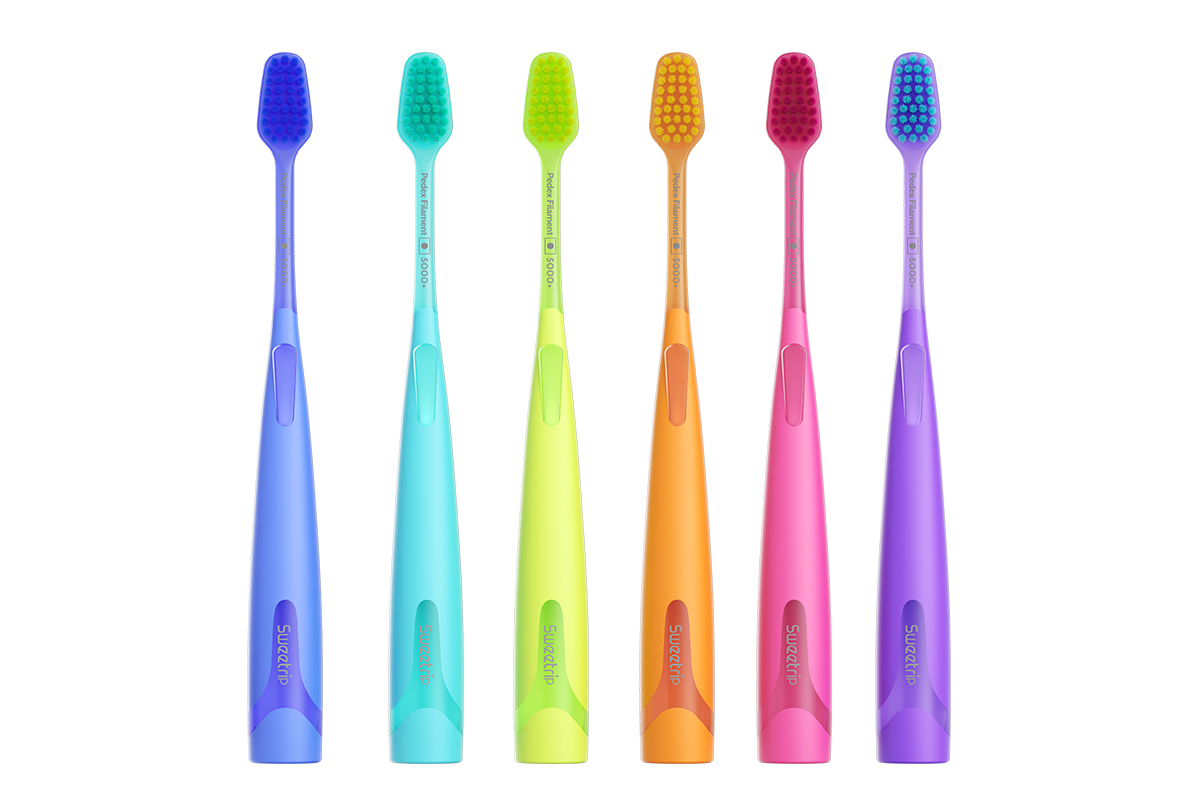
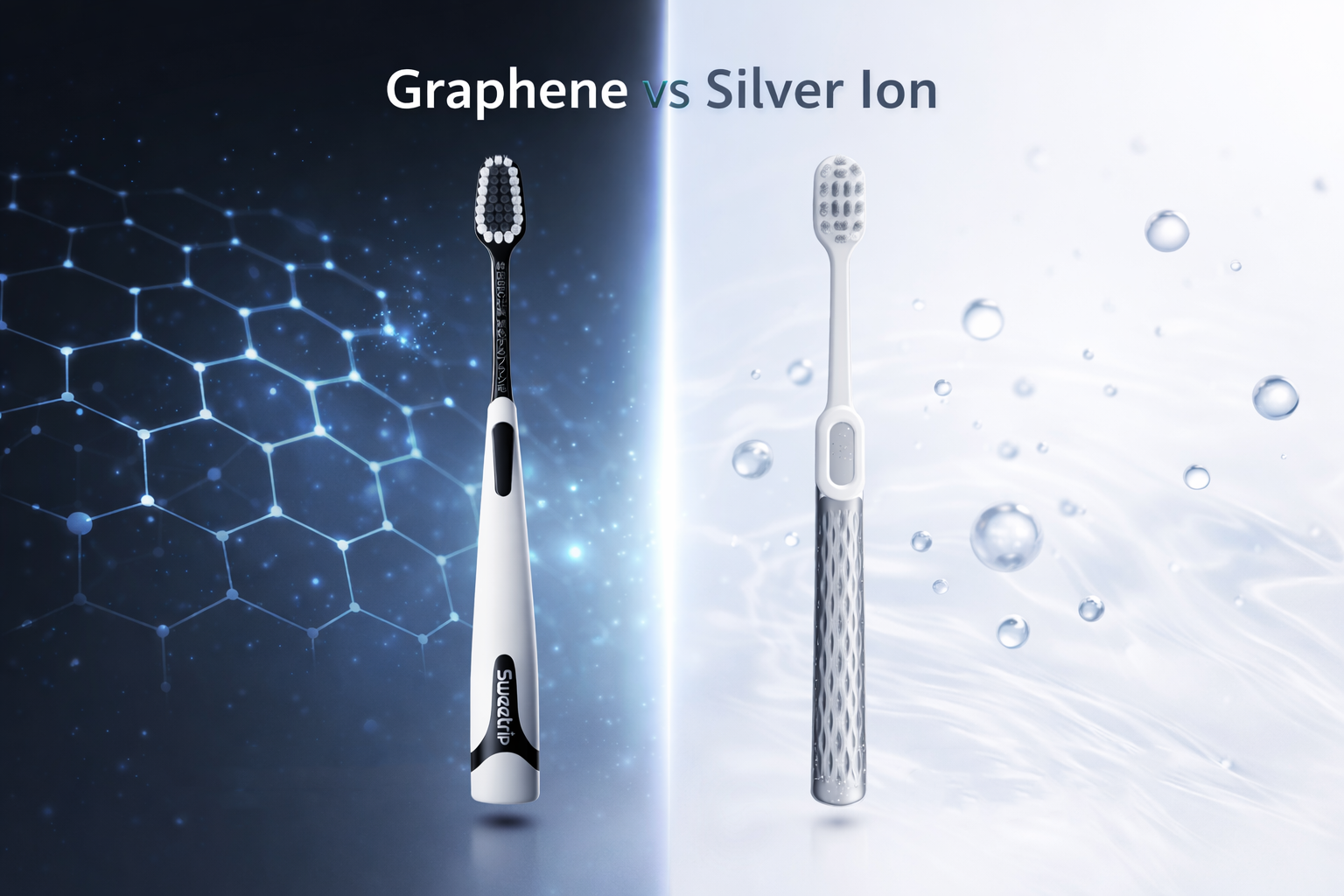
Sometimes, the best way to maintain a clean mouth is to start with a toothbrush designed to fight bacteria. Modern technology has introduced materials that naturally inhibit germ growth.
- Antibacterial Options: Choose the Dr. Baek Antibacterial Silver Ion Toothbrush to combat germs; its silver-ion technology naturally prevents bacterial growth.
- Graphene Technology: Another innovative choice is the Graphene Toothbrush. It uses the unique properties of graphene to provide a deeper, cleaner feel.
You might prefer a high-tech manual toothbrush or a powerful electric toothbrush. Either way, the material is just as important as your brushing technique.
Best Practices for Toothbrush Storage and Hygiene
Knowing how to sanitize toothbrush heads is only half the battle; how you store it afterward is equally important.
- Keep it Upright: Store your brush vertically in a holder to allow water to drain away.
- Air Dry: Avoid covering a wet toothbrush or storing it in a closed container. Moisture trapped in a dark space is the perfect environment for mold and bacteria to flourish.
- Keep it Separate: Keep toothbrush heads apart in shared holders to prevent cross-contamination.
- Close the Lid: Always close the toilet lid before flushing to minimize the spread of airborne germs.
When to Replace Your Toothbrush (Even After Sanitizing)
Even with regular sanitizing, toothbrush bristles eventually lose their effectiveness and require replacement. The ADA recommends that you replace your toothbrush every three to four months. You should swap it even sooner if you notice frayed bristles. Frayed bristles are less effective at cleaning teeth and can actually damage your gums.
Additionally, replace your toothbrush immediately after a cold, flu, or sore throat. This simple step prevents you from re-infecting yourself with lingering germs.
Final Thoughts on Oral Hygiene
Your toothbrush is your first line of defense against cavities and gum disease. Properly sanitizing your toothbrush and choosing antibacterial products will protect your oral health. These simple habits ensure your daily routine remains as hygienic as possible. Don’t let your cleaning tool become a source of contamination—rinse, dry, and replace regularly for the best results.