We have all heard about standard fluoride toothpaste. But lately, there is a new star in the oral care world: nano-hydroxyapatite toothpaste. Lately, wellness social media and dental blogs are buzzing with praise for this “miracle” ingredient. People claim it can naturally rebuild enamel and even reverse early-stage cavities.
But with any new darling of the wellness industry, a healthy dose of skepticism is natural. Is nano-hydroxyapatite toothpaste safe? Can these tiny particles cross bodily barriers? Is it truly a proven alternative to fluoride?
Let’s look at the science and see if this new ingredient belongs in your daily routine.
What is Nano-Hydroxyapatite Toothpaste?
First, let’s look at what nano-hydroxyapatite (n-HAp) actually is.
Your tooth enamel is the hardest substance in your body. This natural mineral makes up roughly 97% of your enamel. When you eat sugary or acidic foods, acid-producing bacteria strip these minerals away in a process called demineralization.
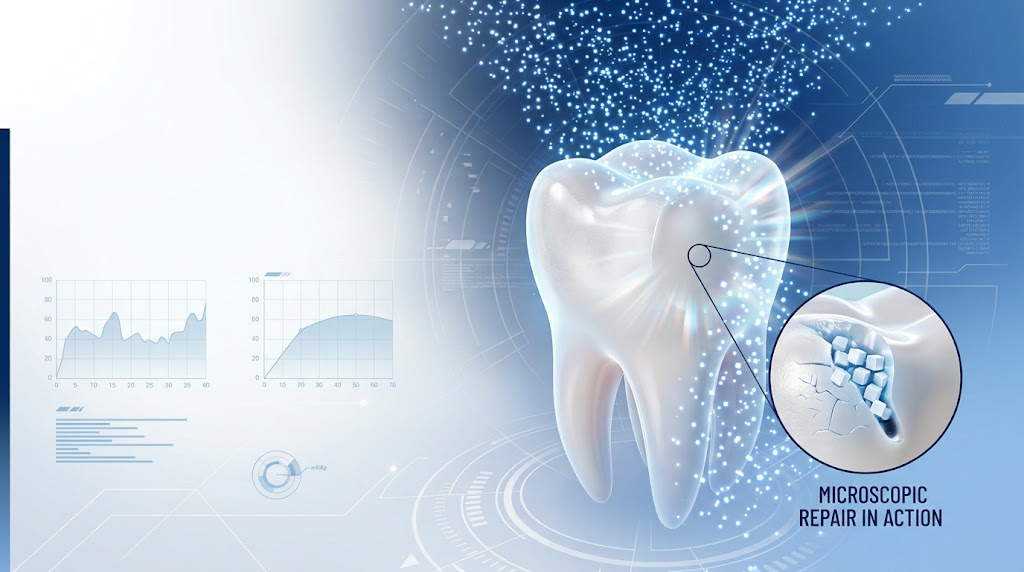
This is where nano-hydroxyapatite toothpaste plays a critical role. At the nanoscale, these tiny mineral particles physically bind to your teeth. These tiny particles act like microscopic puzzle pieces. They fit perfectly into damaged enamel to strengthen your teeth from the inside out.
Is Nano-Hydroxyapatite Toothpaste Safe for Daily Use?
The current scientific consensus confirms this to be true. Clinical trials repeatedly show that nano-hydroxyapatite toothpaste is safe for long-term use.
Unlike synthetic chemical additives, hydroxyapatite is entirely safe for your body. This means your body recognizes it as a natural substance because, well, it is! In fact, this mineral already exists in your bones and teeth.
The Toxicity Question: Is It Safe if Swallowed?
One of the biggest safety advantages of n-HAp over traditional fluoride is its non-toxic nature. If children swallow fluoride toothpaste, it can cause an upset stomach. Over time, swallowing too much fluoride can also stain developing teeth.
Because nano-hydroxyapatite is simply calcium and phosphate, swallowing it poses zero systemic risk. Once in your stomach, stomach acid safely breaks it down into calcium and phosphate. Your body then uses these just like dietary minerals. This makes it a highly safe option for toddlers who cannot spit yet.
The American Dental Association (ADA) views fluoride as the gold standard. However, global research continues to validate n-HAp as a highly effective, non-toxic alternative.
The Safety Profile of Nano-Hydroxyapatite Toothpaste vs. Fluoride
When comparing the two, both ingredients are designed to remineralize your teeth, but they do so through different mechanisms:
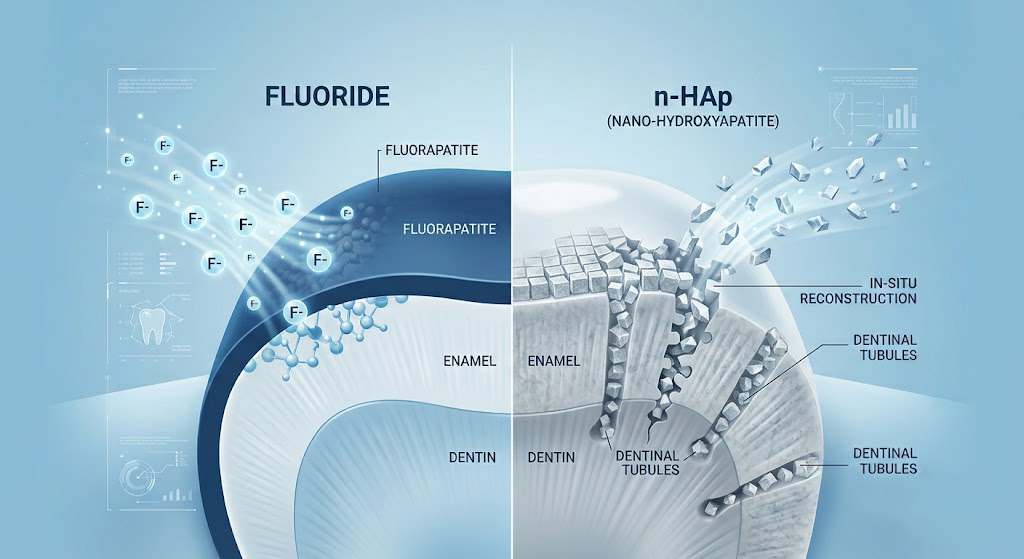
- Fluoride: Works by creating a new, more acid-resistant mineral layer on your teeth called fluorapatite. While highly effective, fluoride is toxic in large doses.
- Nano-hydroxyapatite: This ingredient replaces lost minerals with the same substance found in your teeth. This mineral is 100% non-toxic, safe for your body, and free of systemic side effects.
Concerns occasionally arise regarding the word “nano.” Some wonder if these tiny particles can penetrate deep tissues. However, extensive safety studies have confirmed that n-HAp particles in toothpaste do not pose a systemic risk. They readily dissolve in salivary fluids or stomach acids, ensuring they do not accumulate harmfully in the body.


Key Benefits of Switching to Nano-Hydroxyapatite
Beyond its stellar safety profile, why should you consider making the switch to an n-HAp formula?
- Rapid Sensitivity Relief: These tiny particles quickly plug the microscopic tubes leading to your tooth nerves. This action blocks the hot and cold triggers that cause pain.
- Natural Whitening: Abrasive charcoal toothpastes can scratch your enamel. In contrast, n-HAp fills in these micro-scratches to create a smoother, naturally brighter smile.
- Gentle on Oral Microbiome: This formula targets harmful bacteria. However, it completely protects the good bacteria that keep your mouth healthy.
Upgrade your oral routine today. Try a premium whitening and repair toothpaste made with safe nano-hydroxyapatite. Every family has unique dental needs. Browse our curated toothpaste selection today to find and compare your perfect formulations.
Final Verdict
So, is nano-hydroxyapatite toothpaste safe? Absolutely. NASA first developed this technology in the 1970s for astronauts in zero gravity. Backed by decades of research, it now represents a giant leap for modern dental care.
Are you looking for a fluoride-free alternative, struggling with sensitivity, or wanting to strengthen enamel naturally? Nano-hydroxyapatite is a safe, science-backed, and highly effective choice for your daily care.