Choosing the right product for a brighter, cleaner smile from a crowded dental aisle can be overwhelming. Options range from charcoal powders to advanced chemical whitening formulas. Choosing the right one is crucial for your long-term oral health. One ingredient that has stood the test of time—and sparked plenty of debate—is sodium bicarbonate. Yet, the core question remains: is baking soda toothpaste genuinely good or bad for your long-term dental health?
Mixing raw baking soda with water is a well-known home remedy. However, modern dental formulations offer a much safer, more controlled approach. To protect your oral health, you must understand how this common ingredient affects your enamel.
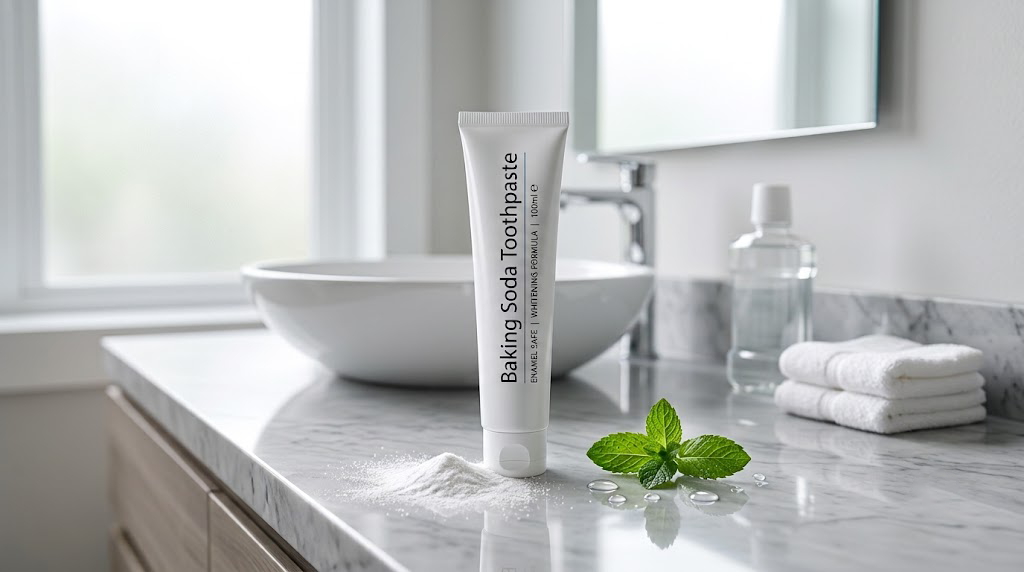
The Benefits of Baking Soda Toothpaste
Baking soda has earned its place in dental care for several proven reasons. Far from a passing internet trend, this ingredient offers distinct mechanical and chemical advantages for oral hygiene.
Exceptional Stain Removal and Teeth Whitening
The primary reason people turn to a baking soda toothpaste is its natural whitening capability. It acts as a mild abrasive that breaks up surface stains caused by coffee, tea, red wine, and tobacco. Harsh chemical bleaching agents penetrate deep into the tooth. In contrast, baking soda mechanically lifts surface stains to restore your enamel’s natural brightness without causing severe sensitivity.
Effective Plaque Removal and Acid Balancing
Beyond aesthetics, sodium bicarbonate is highly effective at combatting oral bacteria. This ingredient dissolves easily in water. As a result, it easily penetrates deep into the microscopic crevices of your teeth and gumline.
Furthermore, baking soda is naturally alkaline (with a high pH). The bacteria in your mouth thrive in acidic environments, producing acids that erode enamel and cause cavities. Neutralizing these harmful acids creates a tough environment for bacteria. This process lowers your risk of tooth decay and helps balance your oral microbiome.
An Affordable and Accessible Teeth Brushing Option
Compared to high-end, synthetic whitening treatments or clinical procedures, formulations utilizing sodium bicarbonate are highly cost-effective. It offers a budget-friendly way to maintain a clean feeling and a brighter smile without breaking the bank. Explore high-quality options by browsing this curated toothpaste collection.
The Risks: Is Baking Soda Toothpaste Bad for Your Teeth?
Despite its impressive benefits, using sodium bicarbonate on your dentition is not without its drawbacks. Understanding the potential risks can prevent long-term damage to your oral structures.
Potential for Enamel Erosion Over Time
While modern commercial dentifrices are formulated to be safe, raw baking soda can be highly abrasive. Some options have a high Relative Dentin Abrasivity (RDA) value. Brushing too hard with these formulas can gradually wear down your enamel. Eroded enamel cannot regenerate, quickly exposing the softer, yellower dentin beneath it.
Lack of Essential Fluoride in Natural Baking Soda Brands
Many consumers seek out natural alternatives because they want to avoid specific additives. However, many pure baking soda brands omit fluoride. According to the American Dental Association, fluoride is a critical component for remineralizing enamel and preventing dental caries. Relying solely on a non-fluoridated option might leave your teeth vulnerable to decay over time.
Potential Damage to Dental Adhesives and Braces
If you have permanent orthodontic brackets, retainers, or cosmetic veneers, you need to exercise caution. These abrasive particles can weaken the glues holding your braces or veneers in place. Over time, this weakening can lead to loose brackets or damaged restorations.
Finding the Balance: How to Choose a Baking Soda Formula Wisely
To maximize the brightening benefits while protecting your oral health, moderation and selection are key.
- Check the RDA Value: Look for commercial products with a low Relative Dentin Abrasivity (RDA) score, ideally below 80.
- Look for Fluoride Integration: Choose a formula that uses sodium bicarbonate to fight acid and fluoride to prevent cavities.
- Avoid DIY Mixtures: Avoid making DIY paste with regular baking soda from your pantry. The raw particle size is unregulated and far too abrasive for daily use.
Ultimately, sodium bicarbonate is an excellent tool for surface stain removal and pH balancing, as long as professional commercial formulations deliver it safely. If you suffer from chronic tooth sensitivity or receding gums, consult your dentist before making a permanent switch.