Toothbrush softness is an important factor in daily oral care. A toothbrush that feels too hard may cause discomfort, while one that feels too soft may not meet every user’s cleaning preferences. One important factor behind this difference is toothbrush bristle diameter.
Bristle diameter affects how individual filaments bend, resist pressure, and respond during brushing. Even when two toothbrushes use similar materials, differences in filament thickness can create different brushing experiences.
Understanding this relationship helps consumers choose suitable toothbrushes. It also helps toothbrush manufacturers develop products with different softness levels and cleaning needs.

1. What Is Toothbrush Bristle Diameter?
Toothbrush bristle diameter refers to the thickness of an individual bristle filament. Manufacturers usually measure this dimension in millimeters (mm).
For example, a toothbrush may use filaments with diameters of 0.12 mm, 0.15 mm, or 0.20 mm. These measurements may look small, but they can significantly affect how the bristles behave.
In general, thinner filaments bend more easily under pressure. Thicker filaments tend to resist bending and feel firmer during brushing.
However, diameter is not the only factor that determines toothbrush softness. Bristle material, length, shape, and tuft arrangement also influence the final result.
2. How Does Toothbrush Bristle Diameter Affect Softness?
The relationship between bristle thickness and flexibility is an important part of toothbrush design. A small change in diameter can affect how a filament responds when it touches teeth and gums.
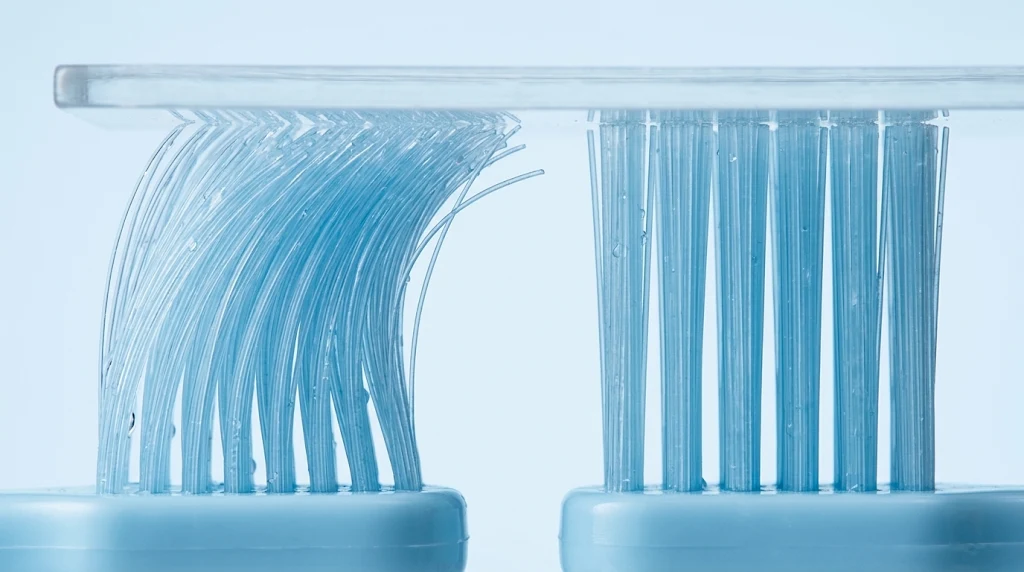
Thinner Bristles Usually Feel Softer
Thinner bristles generally offer greater flexibility. They bend more easily when users apply pressure during brushing.
This flexibility can create a gentle brushing sensation. It may also help individual filaments reach narrow spaces between teeth, depending on their length, shape, and arrangement.
Manufacturers often use 0.12 mm or 0.15 mm filaments to create soft-bristle toothbrushes. These dimensions can support a comfortable brushing experience when combined with suitable materials and tuft structures.
Thicker Bristles Usually Feel Firmer
Thicker bristles generally have greater resistance to bending. As a result, they may feel firmer when pressed against tooth surfaces.
Some users prefer this sensation because it creates a more noticeable brushing feel. However, harder bristles do not automatically provide better cleaning.
Excessive brushing pressure can increase the risk of gum irritation and tooth wear. Therefore, bristle firmness should not replace proper brushing technique.
3. Toothbrush Bristle Diameter Comparison
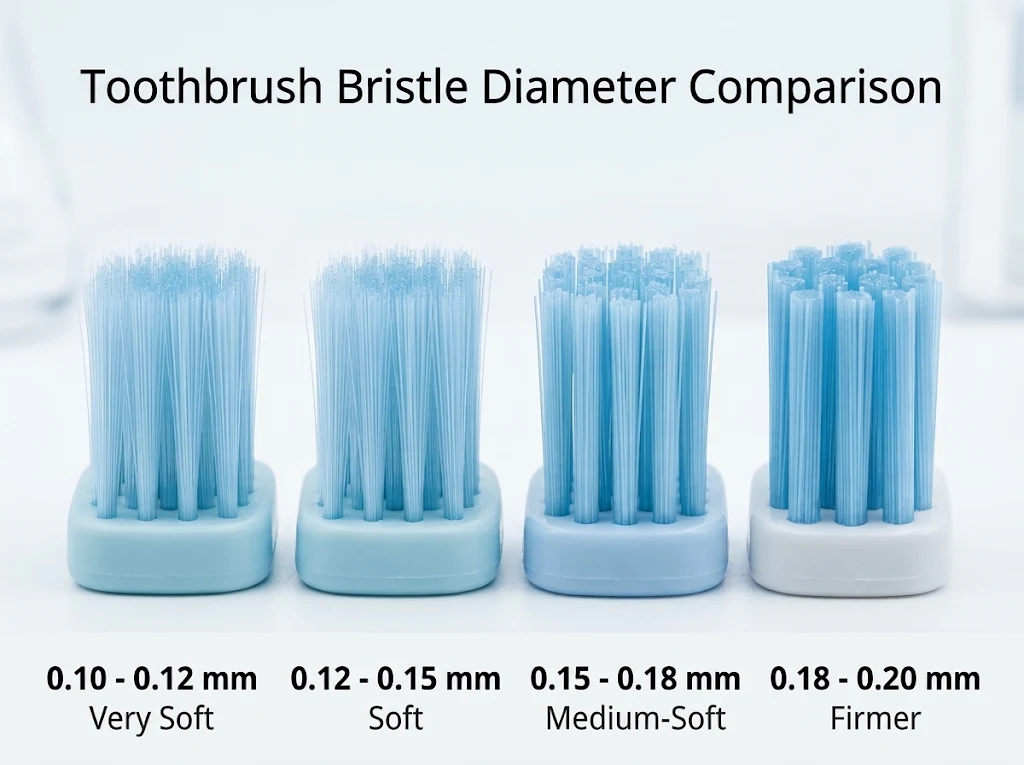
Different bristle diameters can create different levels of flexibility. The following table provides a general comparison of common filament sizes used in toothbrush design.
| Bristle Diameter | General Flexibility | Typical Feel |
| 0.10–0.12 mm | High | Very soft |
| 0.12–0.15 mm | Relatively high | Soft |
| 0.15–0.18 mm | Moderate | Medium-soft |
| 0.18–0.20 mm | Lower | Firmer |
These ranges are general design references, not universal industry standards. Actual softness depends on several factors, including filament material, length, cross-section, and tuft density.
Two toothbrushes can use the same 0.15 mm bristles but feel different. Bristle length and tuft arrangement can affect their softness.
4. What Other Factors Influence Toothbrush Softness?
Although toothbrush bristle diameter plays an important role, manufacturers must consider several additional design elements.
Bristle Length
Longer bristles generally bend more easily than shorter bristles of the same material and diameter. This can create a softer brushing sensation.
Shorter filaments usually provide greater resistance to bending. Their performance also depends on how manufacturers arrange them within each tuft.
Bristle Material
Different materials have different levels of flexibility and recovery. Common toothbrush filament materials include PBT and nylon.
Toothbrush manufacturers widely use PBT filaments because they offer good flexibility and recover their shape easily. Nylon is another common option for toothbrush bristles.
The material, filament diameter, and production quality work together to determine the final brushing feel.
Tuft Density and Arrangement
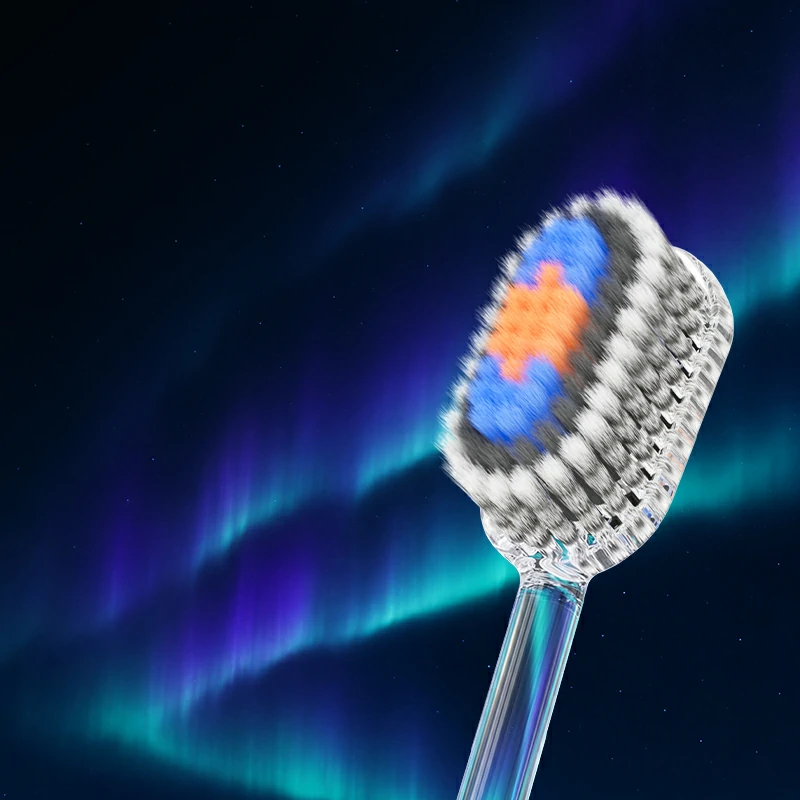
Tuft density refers to the number of bristle tufts placed on a toothbrush head. A higher density can change how the brush head responds to pressure.
The arrangement and cutting shape of the bristles also influence contact with tooth surfaces and cleaning performance.
Therefore, manufacturers should evaluate the complete brush head rather than relying on diameter alone.
5. How to Choose the Right Toothbrush Bristle Softness
Choosing a suitable toothbrush involves more than checking filament thickness. Users should consider comfort, brushing habits, and oral care needs.
For everyday brushing, a soft-bristled toothbrush is a practical choice for many people. The American Dental Association (ADA) recommends using a soft-bristled toothbrush to help reduce the risk of gum abrasion.
You can learn more about toothbrush recommendations from the American Dental Association.
When selecting a toothbrush, consider these points:
- Choose soft bristles: They offer a gentler brushing experience for everyday oral care.
- Check the bristle design: Filament length, material, and arrangement affect flexibility.
- Use gentle pressure: Pressing too hard can irritate gums and contribute to tooth wear.
- Replace worn toothbrushes: Frayed or damaged bristles may reduce brushing effectiveness.
Consumers can explore different designs and styles in our manual toothbrush collection and electric toothbrush collection.
6. Why Bristle Diameter Matters to Toothbrush Manufacturers
For toothbrush manufacturers, bristle diameter is an important product development consideration. Different markets may have different preferences for softness, brushing comfort, and product design.
For example, children’s toothbrushes often use fine filaments to create a gentle brushing experience. Adult toothbrushes may offer several filament sizes to meet different consumer preferences.
Manufacturers should also test the relationship between bristle diameter, filament length, tuft density, and material performance. This approach helps create a balanced toothbrush design rather than relying on one specification.
Brands can choose the right bristle specifications to create private-label toothbrushes that meet market needs.
Conclusion
Toothbrush bristle diameter has a direct influence on filament flexibility and plays an important role in determining toothbrush softness. In general, thinner bristles bend more easily, while thicker bristles offer greater resistance.
However, diameter alone cannot determine the complete brushing experience. Bristle material, length, tuft density, and arrangement also affect the final result.
Understanding these factors helps consumers choose the right toothbrush. It also helps manufacturers create products that offer softness, comfort, and effective cleaning.