Tooth whitening has become a top priority for consumers, ranging from everyday shoppers to professional oral-care brands. The debate of manual vs electric toothbrush effectiveness is particularly relevant for whitening. While both options have their advantages, electric toothbrushes have consistently demonstrated superior plaque removal and stain reduction. For oral-care businesses considering OEM sourcing, this comparison goes beyond clinical curiosity. It directly influences product strategy, market positioning, and consumer trust.
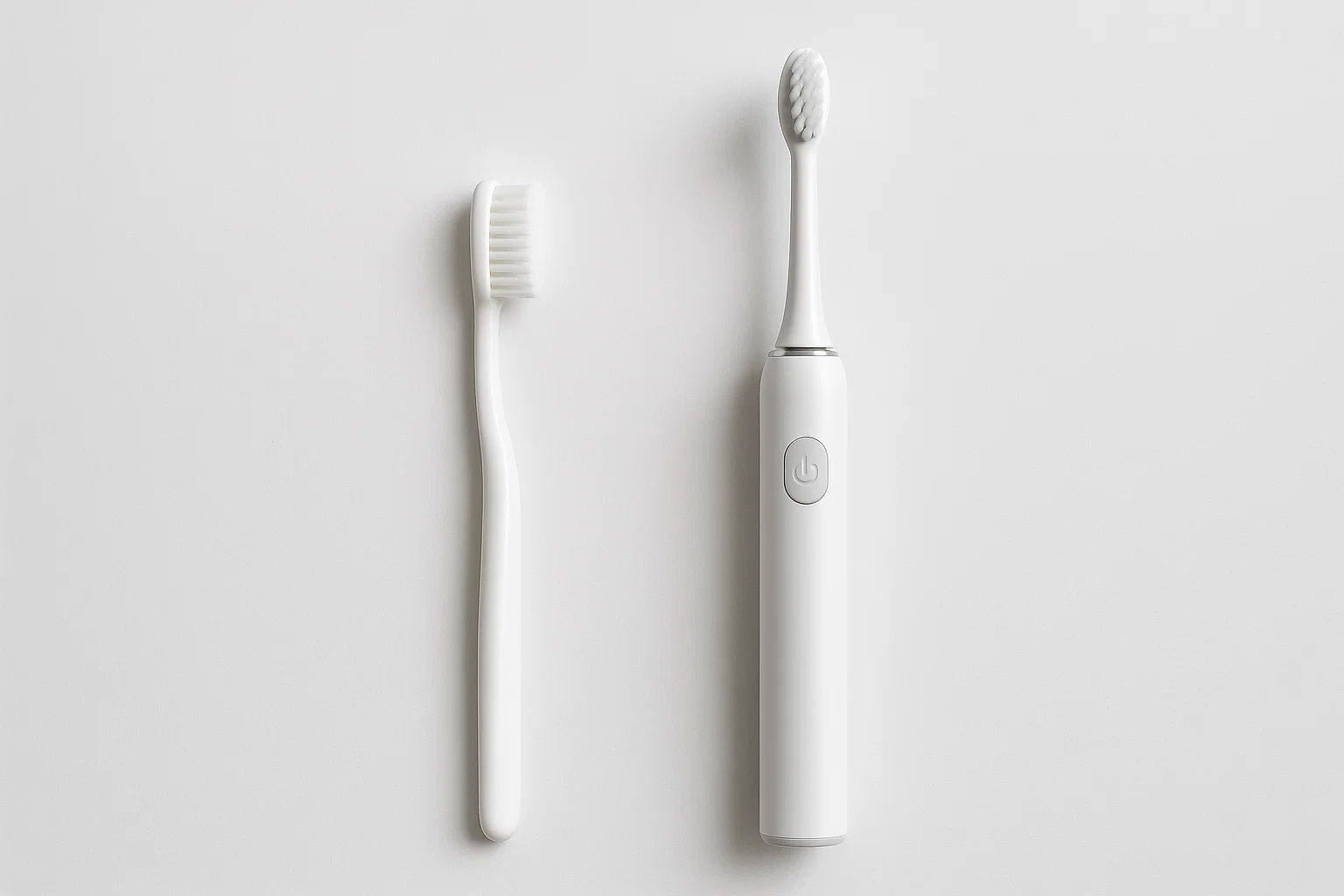
Manual vs Electric Toothbrush: The Whitening Basics
Whitening largely depends on how effectively stains and plaque are removed from the enamel surface. A manual vs electric toothbrush analysis shows:
- Manual toothbrushes rely entirely on the user’s brushing technique, pressure, and consistency. While they can remove surface stains, they often fail to reach interdental spaces or polish evenly.
- Electric toothbrushes utilize oscillation, vibration, or sonic micro-movements to break up stains more efficiently. This results in cleaner enamel surfaces, enhancing both natural brightness and the effectiveness of whitening toothpaste.
Studies on whitening performance show that electric toothbrushes are more effective than manual brushes. Within the same brushing time, they can reduce extrinsic stains by up to 30%.
Whitening Performance: Technology Makes the Difference
The whitening advantage of electric toothbrushes lies in engineering precision. Depending on design, brushes can deliver:
- Oscillating-rotating motion: Targets stain buildup with circular scrubbing.
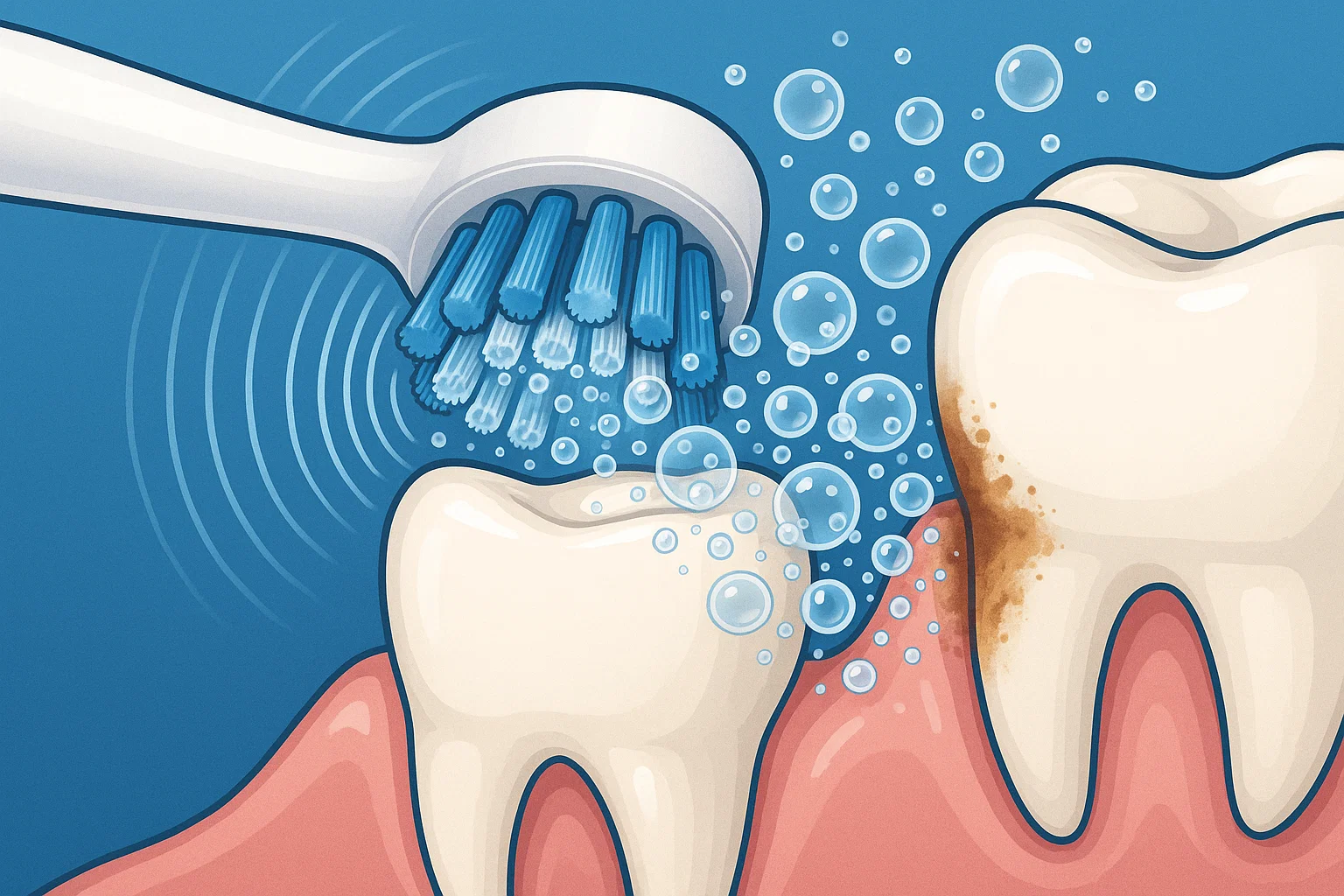
- Sonic vibration technology: Creates microbubbles that dislodge debris beyond bristle contact points.
- Ultrafine bristles (0.01 mm): Reach deeper into enamel grooves for polishing without enamel erosion.
For whitening, the consistency of motion is just as important as speed. Unlike manual brushes, electric models eliminate human error in pressure and angle, ensuring even cleaning. This not only supports whitening but also long-term enamel health.
👉 Learn more about our OEM electric toothbrush solutions
Consumer Demand for Whitening Solutions
In today’s market, whitening isn’t limited to aesthetic products like strips or bleaching kits. Consumers increasingly expect daily care items—especially toothbrushes—to provide visible brightening. Research indicates that over 60% of global toothbrush buyers list “whitening” among their top three purchase drivers.
From a manual vs electric toothbrush perspective, this preference gives electric models a clear advantage. Their measurable whitening results allow brands to market evidence-based benefits, increasing customer loyalty and repeat sales.
OEM Advantage: Building Whitening into Toothbrush Design
For oral-care brands, whitening performance should be engineered at the product level. OEM electric toothbrush manufacturing offers multiple technical pathways to achieve this:
- Customized brush heads: Whitening bristle layouts (angled, wave-shaped, or diamond-cut) for targeted stain removal.
- Motor design: Balancing oscillation and sonic vibration frequency to optimize whitening without gum irritation.
- Smart brushing modes: Whitening-specific settings that consumers can select for extra polishing power.
- Battery and durability: Longer usage cycles ensure consistent whitening over weeks and months.
Collaborating with an experienced OEM toothbrush manufacturer ensures compliance with ISO and CE standards. It also allows brands to integrate whitening-focused technologies tailored for different markets.

Market Trends: Why Electric Whitening Brushes Are Growing
Allied Market Research projects that the global electric toothbrush market will reach USD 5.2 billion by 2030. Whitening is driving growth as one of the fastest-expanding sub-segments. The growth is fueled by:
- Rising middle-class income and demand for premium oral-care products.
- Social media and influencer trends linking smiles with confidence and lifestyle.
- Professional endorsement—dentists increasingly recommend electric models for stain control.
In this context, electric whitening toothbrushes that are OEM-ready offer a clear advantage for oral-care brands. They provide a direct path to capturing market share.
Manual vs Electric Toothbrush: Final Verdict on Whitening
While manual brushes remain accessible and affordable, they cannot compete with the consistent whitening results delivered by electric toothbrushes. For businesses, this distinction is not just clinical but strategic. Offering whitening-focused electric models positions brands as innovators, builds trust, and opens higher profit margins.
For whitening effectiveness, the manual vs electric toothbrush debate is clear: electric toothbrushes are the superior choice.
👉 Interested in developing your own whitening toothbrush line? Explore our OEM services and take advantage of advanced design, compliance certifications, and scalable production.
For further reading on consumer whitening preferences and electric toothbrush efficiency, see American Dental Association’s research on powered brushes.