Understanding consumer taste preferences is essential for building a successful oral-care brand. In both the US and Middle East, Mouthwash Flavors influence not only purchase decisions but also repeat buying behavior. This article highlights the top five mouthwash flavor trends in the US and Middle East. It uses data-driven insights to support procurement managers, distributors, and brand strategists.
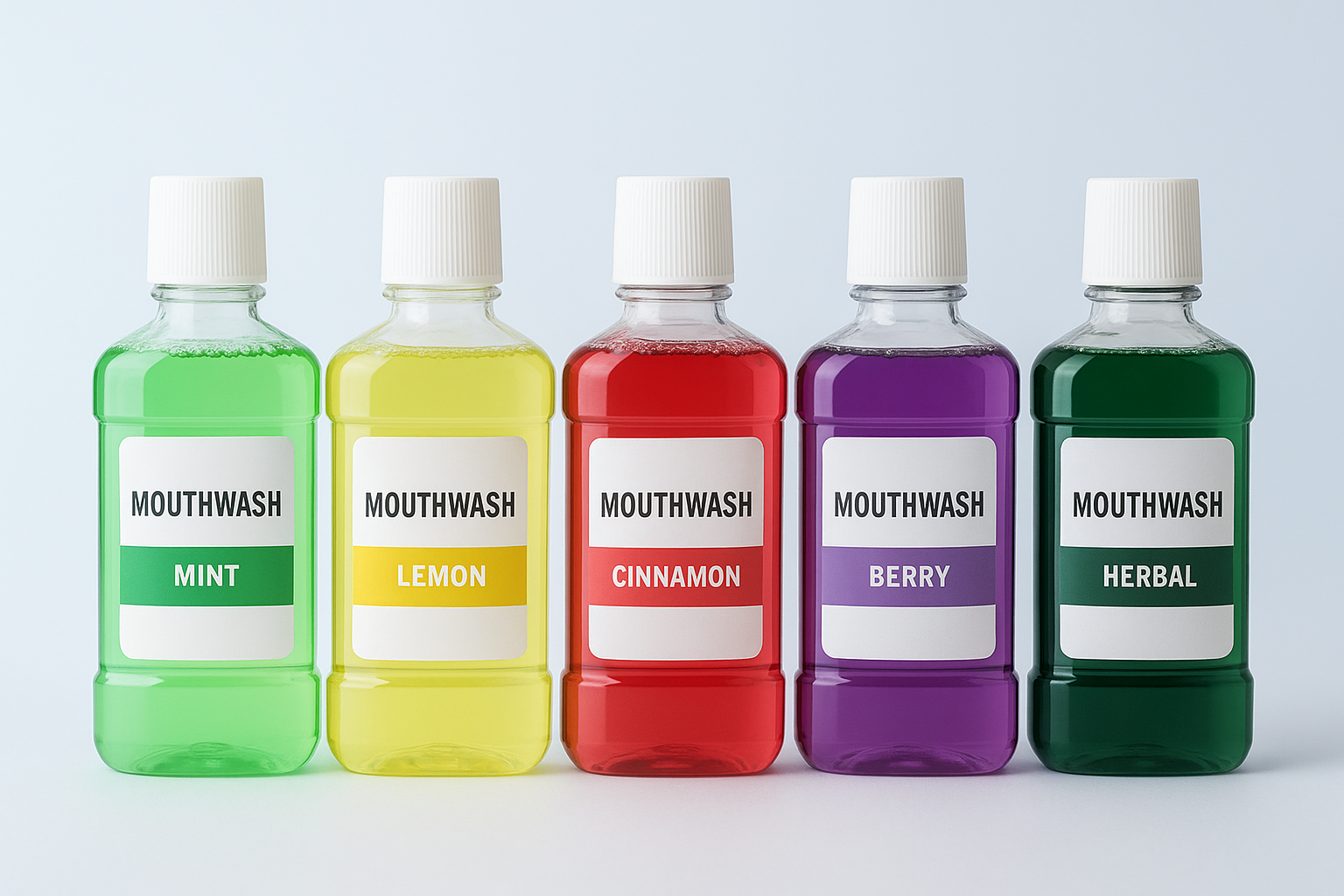
Why Mouthwash Flavors Matter in Brand Success
Mouthwash is no longer only for fresh breath or antibacterial action. Today, it is also a lifestyle product where taste plays a key role. A 2024 NielsenIQ survey shows that flavor is a key factor in mouthwash selection. More than 67% of US consumers and 72% of Middle Eastern shoppers ranked it as their top consideration. A flavor that resonates with cultural taste expectations can strengthen customer loyalty and improve shelf turnover.
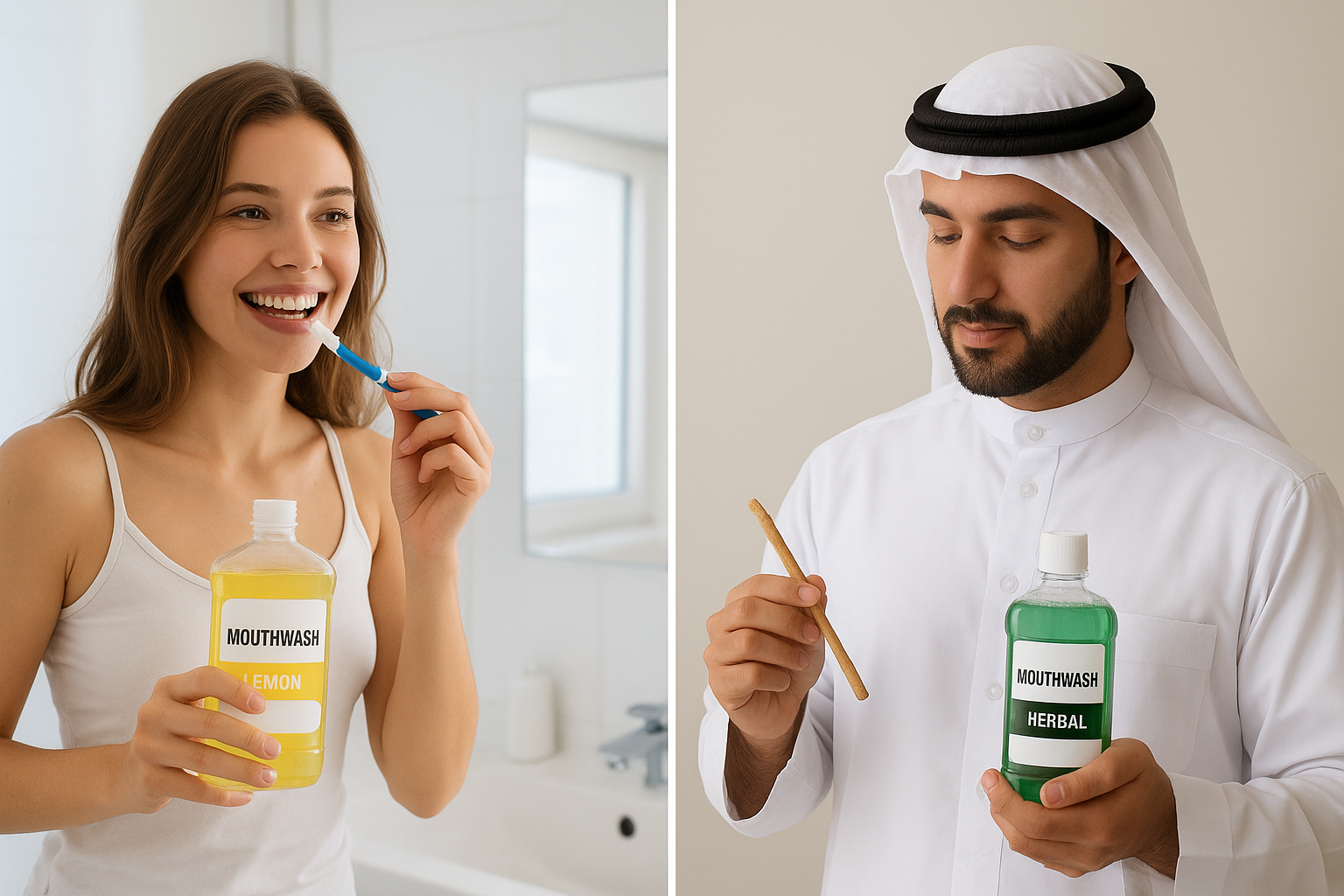
Top 5 Mouthwash Flavors Consumers Prefer
1. Mint Variants: The Global Standard in Mouthwash Flavors
Mint remains the most dominant flavor across both regions. In the US, peppermint and spearmint account for nearly 58% of mouthwash sales. Meanwhile, Middle Eastern consumers prefer intense mint blends, often combined with cooling agents like menthol.
- Why it works in the US: Americans associate mint freshness with confidence, oral cleanliness, and whitening effects.
- Why it works in the Middle East: Mint aligns with cultural expectations of strong, refreshing aftertaste, especially post-meal.
👉 Explore our OEM Mouthwash Manufacturing Services to learn how brands can customize mint intensity for different markets.
2. Herbal and Botanical Mouthwash Flavors for Natural Care
Herbal Mouthwash Flavors are steadily growing in popularity. In the US, chamomile and tea tree oil infusions are associated with natural health. Sage and miswak (Salvadora persica) play a long-standing role in Middle Eastern oral care. Their demand is now increasing by 20% annually.
- US Trend: Consumers in wellness-driven segments prefer plant-based and organic claims.
- Middle East Trend: Religious and cultural links make miswak-flavored rinses an attractive choice for halal-compliant oral care.
(Reference: Journal of Ethnopharmacology)
3. Citrus Fresh Mouthwash Flavors: Lemon, Orange, and Grapefruit
Citrus-based Mouthwash Flavors have carved a niche in both markets. US buyers—particularly Gen Z—enjoy fruit-forward freshness with less sting. In the Middle East, lemon-flavored rinses connect with traditional uses of citrus for purification and cleansing.
- Data Insight: US retail data shows citrus-flavored mouthwashes grew 13% in 2023.
- Branding Tip: Position citrus as “refreshing and energizing,” ideal for morning routines.
4. Cinnamon and Spiced Mouthwash Flavors Loved by Consumers
Spiced Mouthwash Flavors hold a unique position. In the US, cinnamon appeals to consumers seeking bold alternatives to mint. In the Middle East, warm spice flavors resonate culturally, with cinnamon and clove having strong associations with oral remedies.
- US Sales Snapshot: Cinnamon ranks within the top five flavored rinses, especially in holiday seasons.
- Middle East Growth: Clove-infused mouthwash is projected to grow at 9% CAGR through 2027.
5. Fruity Mouthwash Flavors: Berries and Exotic Blends
Flavor innovation is particularly visible in fruit-based rinses. In the US, strawberry and blueberry attract younger demographics. In the Middle East, pomegranate and date-inspired Mouthwash Flavors are emerging as premium niches.
- US Trend: Berry flavors pair well with whitening claims and are perceived as gentle.
- Middle East Trend: Exotic fruit flavors align with consumer curiosity and premium product positioning.
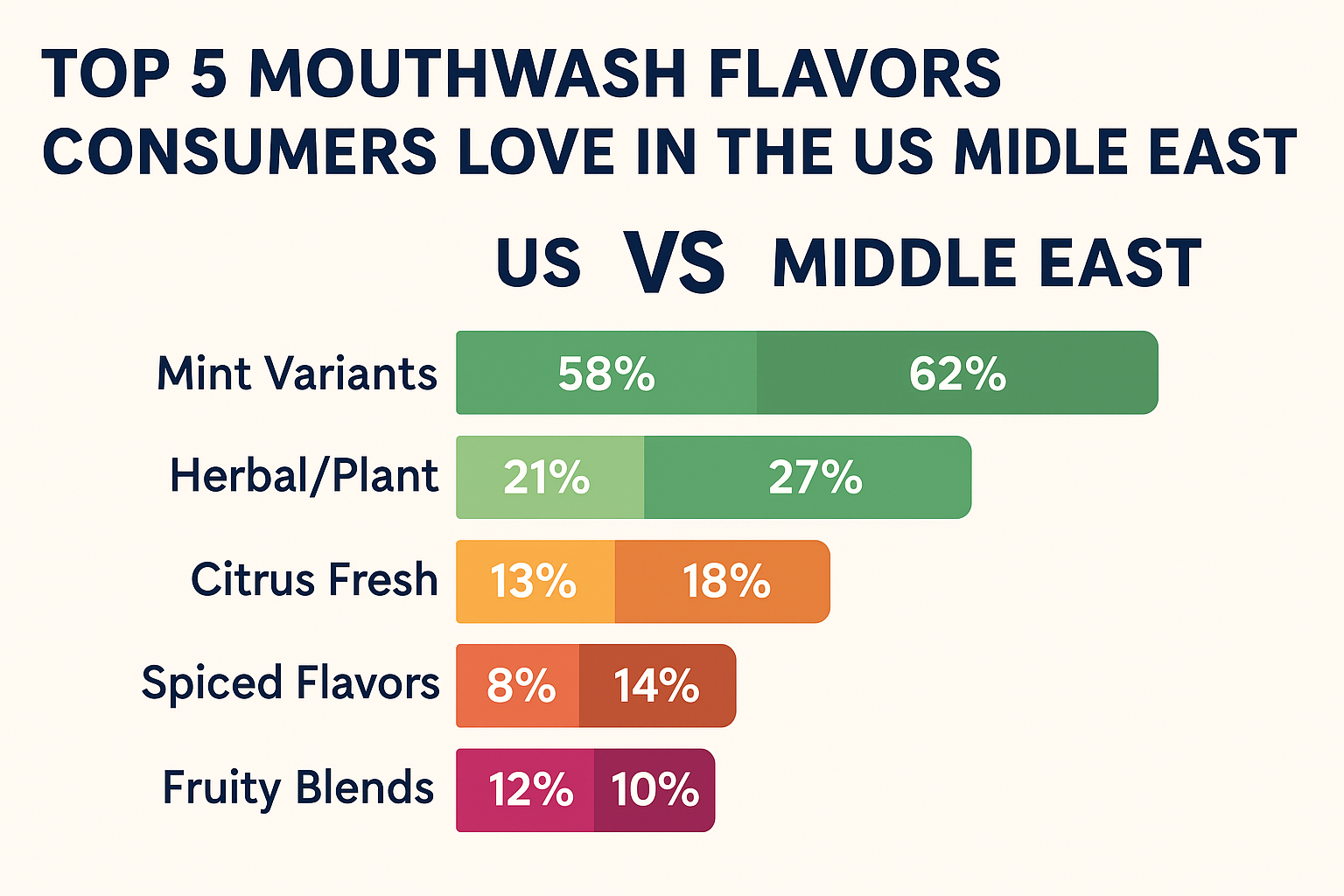
Data-Driven Comparison: US vs. Middle East
| Flavor Category | US Popularity (%) | Middle East Popularity (%) | CAGR (2023–2027) |
|---|---|---|---|
| Mint Variants | 58% | 62% | 7.1% |
| Herbal/Plant | 21% | 27% | 8.5% |
| Citrus Fresh | 13% | 18% | 6.9% |
| Spiced Flavors | 8% | 14% | 9.0% |
| Fruity Blends | 12% | 10% | 7.3% |
This table shows one key similarity: both regions prefer mint. The difference lies in niche flavors—herbal in the Middle East and fruity in the US.
Implications for Oral-Care Procurement
For procurement managers and brand builders, flavor choice is critical. A good match boosts shelf performance, while a poor one can hurt sales. Here are some strategic takeaways:
- Market Adaptation: Offer strong mint in Middle Eastern SKUs and fruit-citrus variants in US editions.
- Halal Compliance: When launching in the Middle East, focus on flavors like miswak or clove. Align them with cultural tastes and halal requirements.
- Innovation Pipeline: Experiment with dual-flavor blends, such as “mint + pomegranate,” to capture cross-market appeal.
👉 See how OralGos Mouthwash Solutions help brands tailor flavor profiles for regional preferences.
Final Thoughts: Flavor as a Differentiator
The oral care industry often highlights antibacterial and whitening claims. But mouthwash flavors have become the real differentiator for consumers.
Data shows that mint will remain the leading flavor worldwide. However, cultural differences in the US and Middle East open space for innovation. Brands that strategically adapt to these preferences will not only win shelf space but also build long-term loyalty.