
For brands aiming to enter larger retail networks, success often starts with the right manufacturing partner. Working with a certified factory is no longer optional—it is a strategic necessity. Factory certifications are crucial for brand success. They help brands enter retailers like Walmart, build credibility, reduce compliance risks, and support sustainable growth.
This article highlights why certifications matter, how they help brands scale, and why certified partnerships support long-term success.
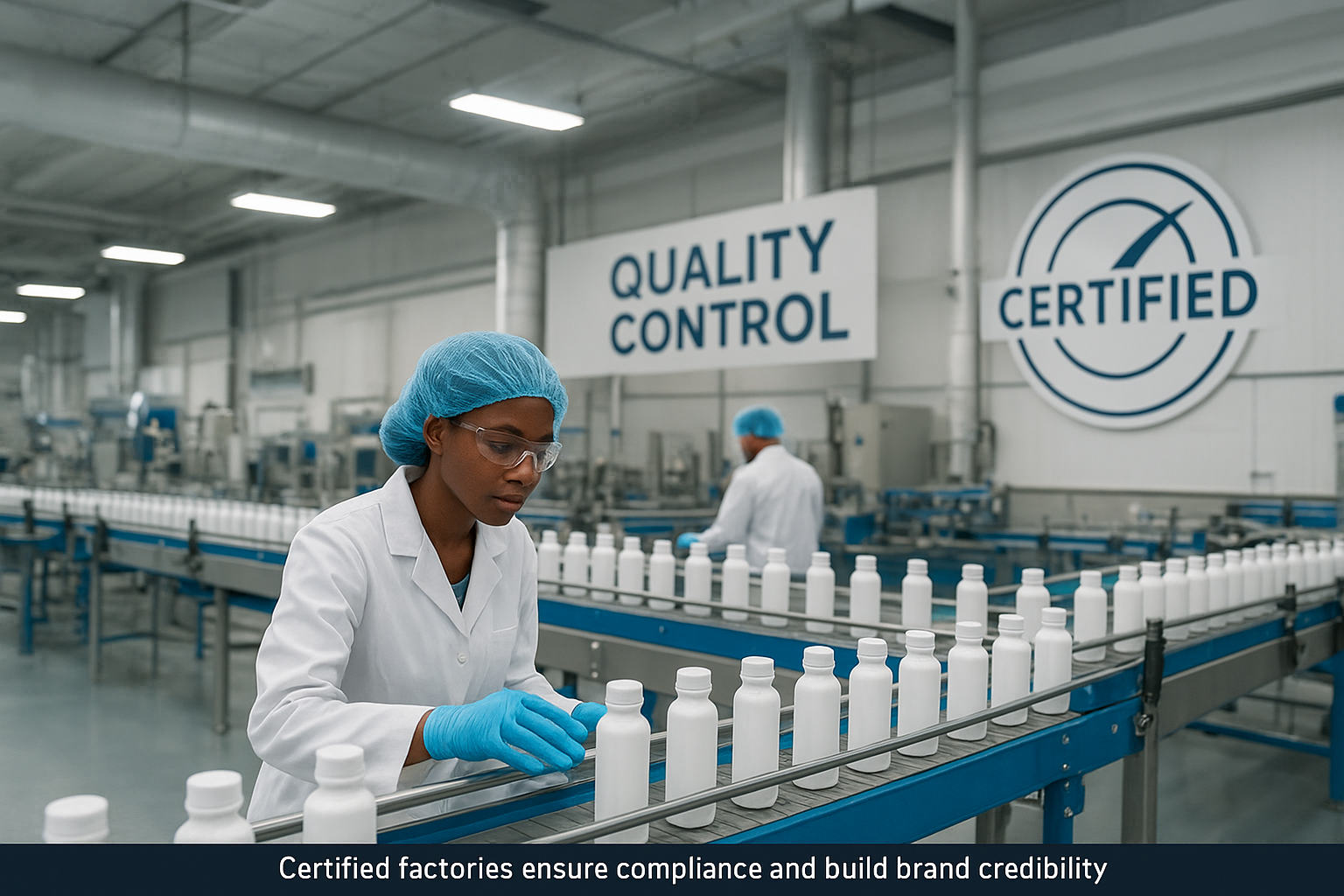
Certified Factory Standards: Your Ticket to Walmart and Global Retail
Major retailers like Walmart use strict supplier audits and certifications. These checks confirm whether a brand’s factory meets global standards for compliance, safety, and quality. Without this entry ticket, a brand cannot list its products with major retailers.
For growing consumer brands, a certified factory means more than compliance. It also serves as a validation signal to retailers and end customers. Certifications such as Walmart audit approval, BSCI, ISO 9001, and GMP confirm a factory’s reliability. They show that your manufacturing partner follows consistent quality systems, protects employee welfare, and maintains traceability in production.
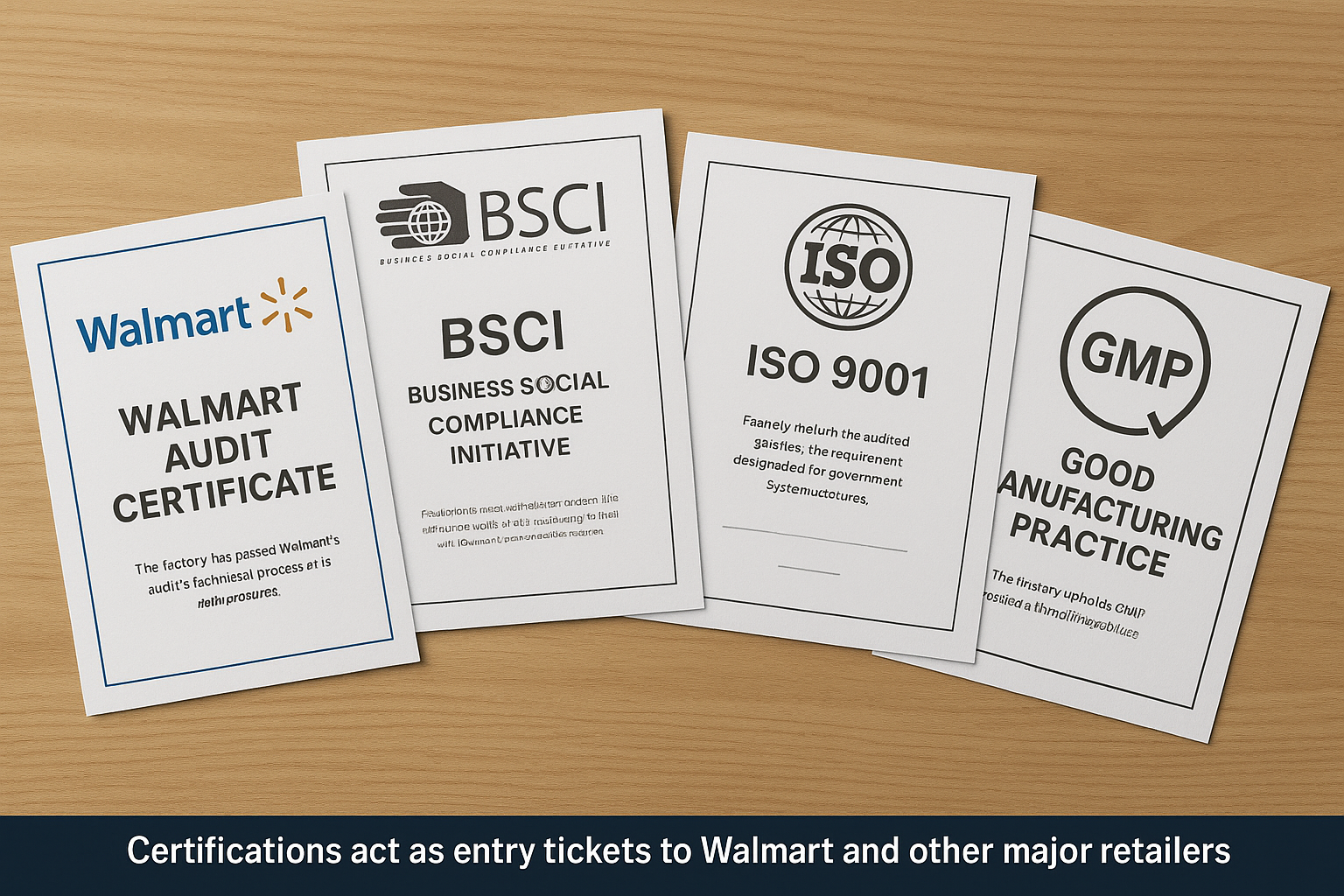
For brands that want to enter Walmart or global e-commerce platforms, certifications are more than documents. They are gateways to brand growth.
How a Certified Factory Builds Brand Credibility and Growth
A certified factory acts as a trust multiplier. Retailers, distributors, and consumers all look for signs that your brand is reliable and professional. When your supply chain is backed by verifiable certifications, it provides:
- Instant credibility with retailers: Walmart and other big-box chains require documented compliance. Certifications prove your readiness.
- Confidence for distributors: Supply chain partners are reassured that product quality will remain consistent batch after batch.
- Reassurance for consumers: Certifications often align with consumer values, such as ethical sourcing, eco-friendly packaging, and safety standards.
In an era where consumer trust is fragile, transparency through a certified factory can become a competitive advantage.
Certified Factory Audits: Reducing Compliance Risk for Brands
Scaling a brand is not only about growth; it is also about avoiding unnecessary risks. Compliance failures can damage reputation, lead to costly recalls, and even block entry into target markets.
Working with a certified factory mitigates these risks by ensuring:
- Regulatory alignment: Factories with ISO or Walmart certification already operate under standards accepted in multiple markets.
- Batch traceability: Certified facilities use documentation systems to track every step of production.
- Continuous improvement: Regular audits push factories to improve processes, reducing future risks for your brand.
By managing compliance proactively, your brand saves time, money, and energy. Instead of fixing problems, you can focus on driving growth.
Walmart Partnerships and Brand Growth Through Certified Factories
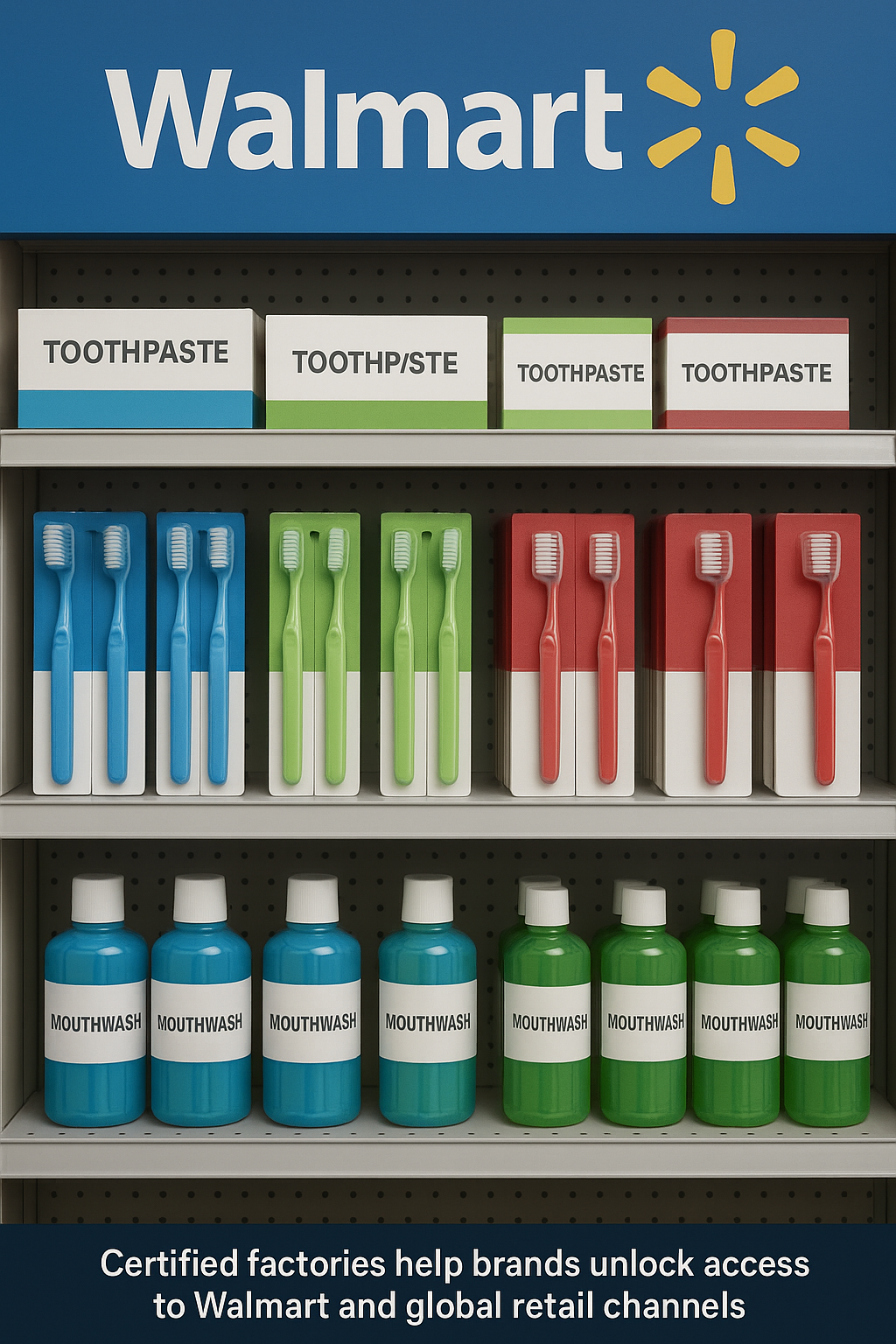
Once your brand is backed by a certified factory, the opportunity goes far beyond Walmart. Many other global retailers—Costco, Target, Carrefour, and online giants like Amazon—require similar levels of supplier validation.
In practice, this means that one certification can unlock multiple retail channels. Instead of renegotiating with every new buyer, your brand can present a unified compliance portfolio that accelerates approvals.
This multiplies the speed at which your brand grows into international markets. A certified factory becomes the scaling engine of your retail journey.
Certified Factory Strategy: Scaling Brand Growth with Confidence
From a brand owner’s perspective, certifications are not just about passing audits. They are an investment into a long-term brand growth strategy.
Here is how certified manufacturing connects directly to growth:
- Faster procurement cycles: Certified documents streamline approvals with buyers.
- Better positioning in negotiations: Brands with certification leverage can secure larger orders and stronger contracts.
- Higher valuation for partnerships: Investors and distributors view certified supply chains as lower risk.
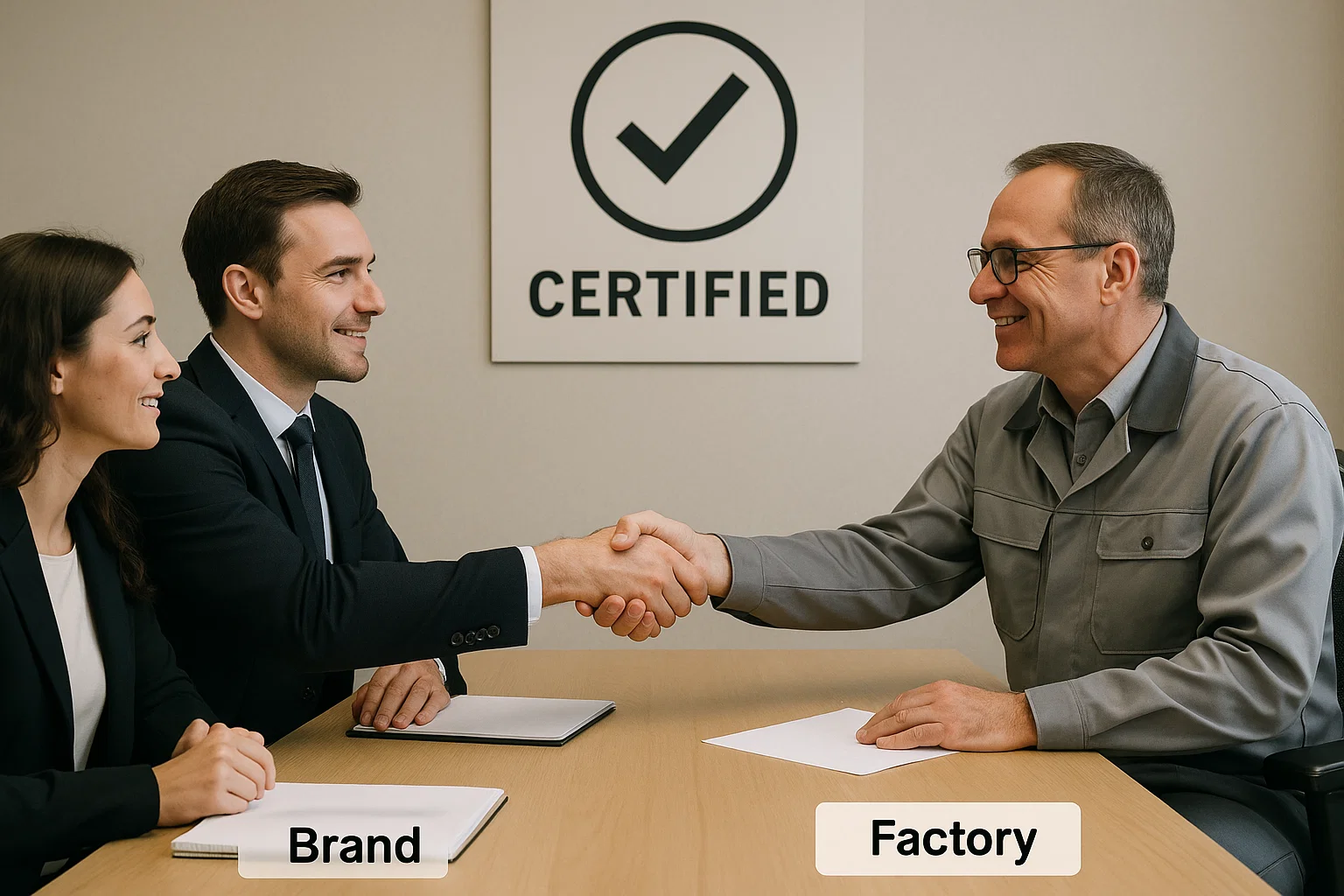
In other words, certifications are not only defensive tools—they are growth accelerators.
Resources on Certified Factory and Walmart Requirements
If you are evaluating your own supply chain, you can learn more in our Factory Certification resource page. It outlines the key audits, standards, and compliance systems that modern brands rely on.
For an overview of how our team supports scaling brands globally, visit our About Us page.
For more perspective, review external sources such as Walmart’s Responsible Sourcing guidelines. These resources explain what the retailer expects from its suppliers.
Conclusion: Certified Factories Drive Long-Term Brand Growth
For brand owners, manufacturing goes beyond making products. It builds credibility, opens retail doors, and supports confident scaling. Partnering with a certified factory keeps your brand compliant with Walmart and other retail giants. It also builds consumer trust and lowers risk exposure.
Most importantly, certifications set the stage for brand growth by accelerating approvals, supporting negotiations, and reassuring investors.
In today’s retail ecosystem, a certified factory is not an operational detail. It is the foundation of a winning brand strategy.