Driven by eco-conscious consumers, the oral care industry is entering a new era of sustainability in 2025. Sustainability is no longer a peripheral concern—it is now central to brand identity and market success. Among the most influential trends are sustainable packaging and operations conducted in a green factory setting. These practices not only reduce environmental impact but also strengthen brand loyalty and consumer trust.
Why Sustainable Packaging Matters in Oral Care
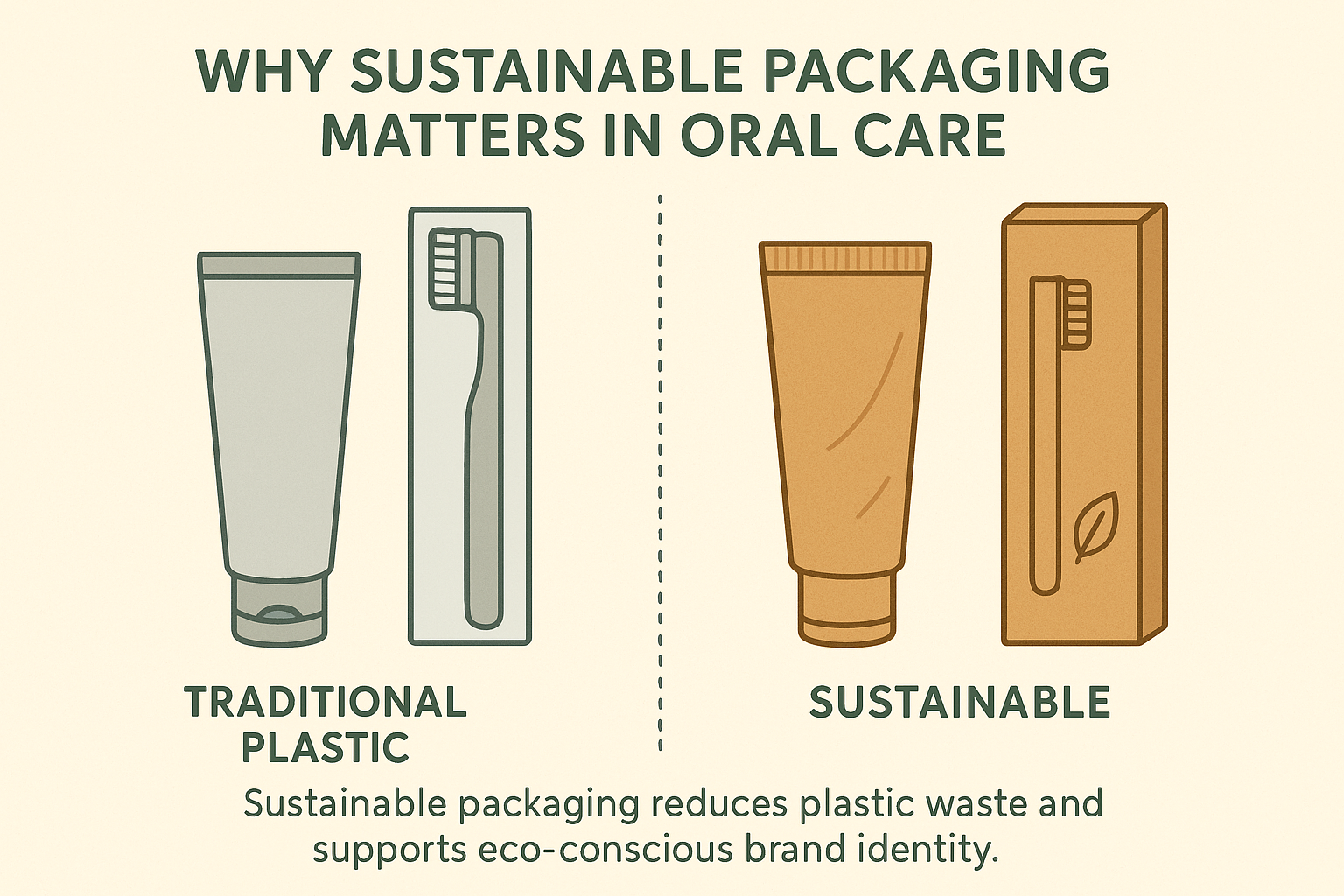
Consumers today are highly aware of the environmental consequences of plastic waste. Traditional packaging materials, especially single-use plastics, contribute significantly to pollution, making it imperative for oral care brands to adopt sustainable packaging solutions.
Sustainable packaging refers to materials and processes designed to minimize environmental impact across the product lifecycle—from production to disposal. Common approaches include:
- Recyclable and biodegradable materials: Paper-based tubes, compostable toothbrush handles, and post-consumer recycled plastics.
- Minimalist design: Reducing packaging layers and unnecessary materials.
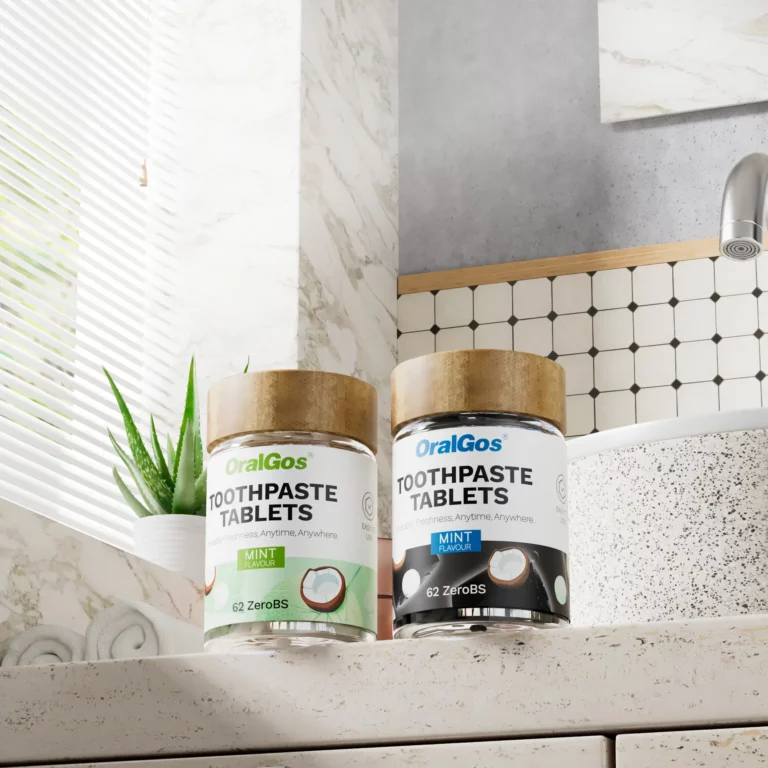
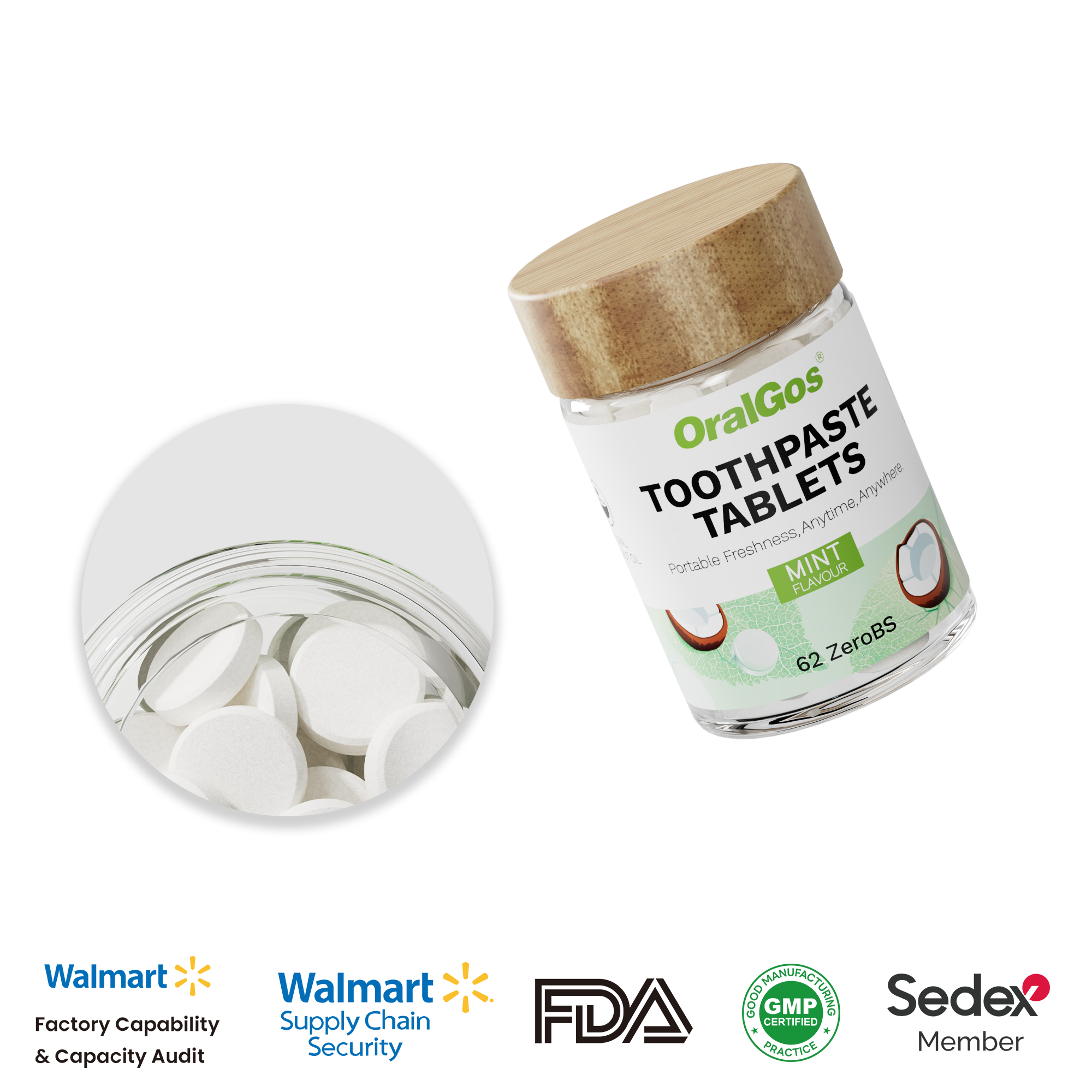
- Refillable and reusable solutions: Toothpaste tablets in reusable containers, or subscription models that encourage reuse.
A shift towards sustainable packaging allows brands to appeal to eco-conscious consumers and meet stricter environmental regulations. A 2024 global survey shows that more than 65% of consumers are willing to spend more on products with eco-friendly packaging. This trend gives oral care brands a strong reason to act now.
Brands interested in integrating eco-friendly solutions can explore comprehensive OEM services that incorporate sustainable packaging strategies here.
The Rise of Green Factory Innovation in Oral Care Manufacturing
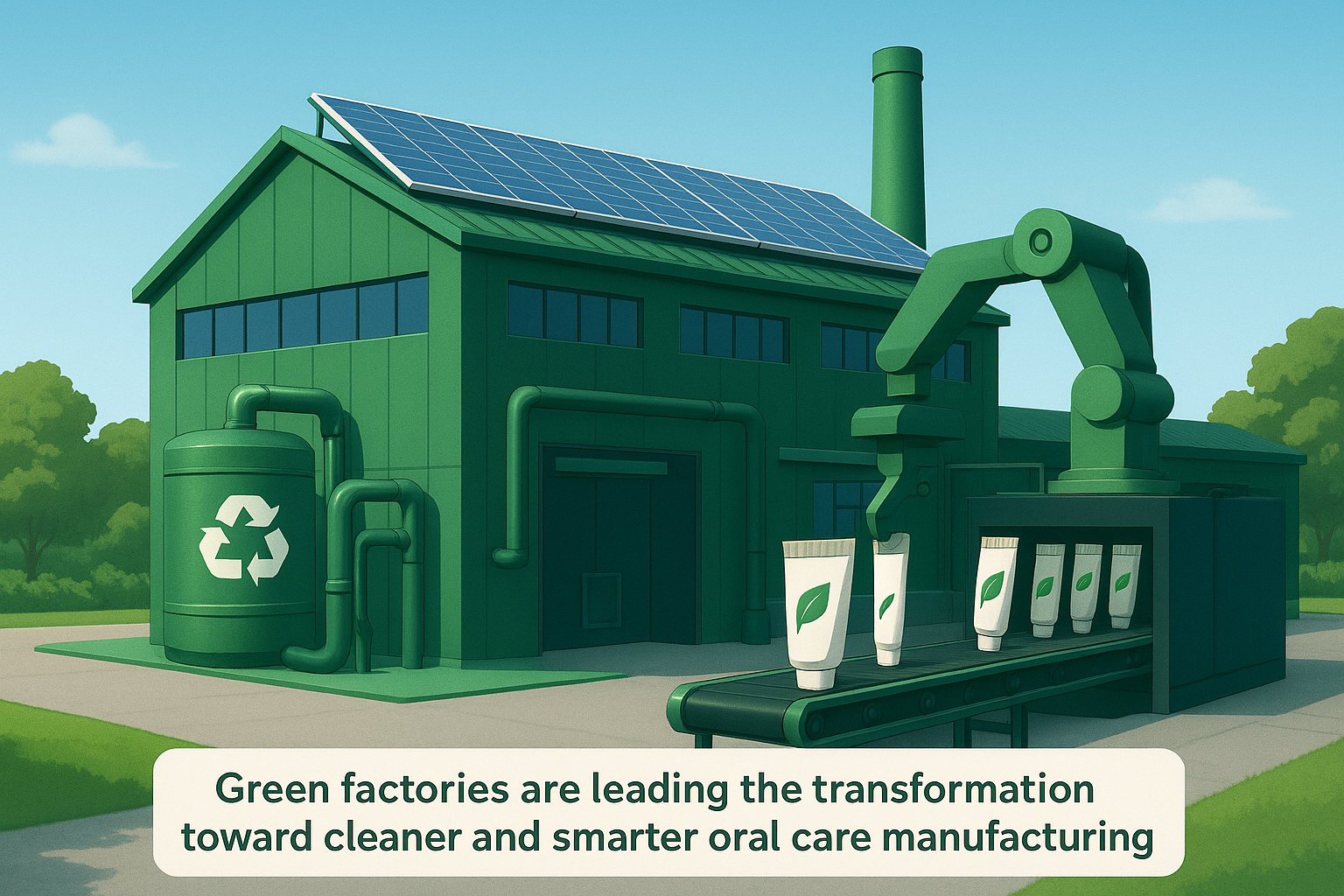
Packaging is only part of the story. The production environment plays a crucial role in achieving true sustainability. Enter the green factory: manufacturing facilities designed to reduce energy consumption, waste, and emissions while maximizing resource efficiency.
Key features of a green factory in oral care manufacturing include:
- Renewable energy sources: Solar, wind, or hydroelectric power to run production lines.
- Water and waste management systems: Closed-loop water systems and efficient wastewater treatment.
- Eco-friendly materials sourcing: Using certified sustainable raw materials for both products and packaging.
- Lean production techniques: Reducing material waste and energy use through optimized processes.
Adopting green factory principles not only minimizes environmental impact but also enhances brand reputation. Today’s consumers increasingly scrutinize brands’ environmental practices, making transparency about factory sustainability a significant marketing advantage.
For more insights into eco-conscious manufacturing, the Ellen MacArthur Foundation provides detailed reports on circular economy practices.
2025 Trends in Sustainable and Eco-Friendly Oral Care Packaging
Looking ahead, several specific trends are shaping sustainable packaging in oral care for 2025:
- Plant-Based and Biodegradable Packaging
Toothbrush handles and toothpaste tubes made from bamboo, cornstarch, or PLA (polylactic acid) are rapidly gaining popularity. These materials degrade naturally and reduce reliance on petroleum-based plastics.
2. Refill Systems and Bulk Options
Refill stations in retail stores and home-delivery kits allow consumers to reuse containers, significantly cutting down packaging waste.
3. Smart Packaging with Minimalist Design
Less is more in sustainable design. Brands are focusing on simple, recyclable packaging that communicates eco-values clearly without excess materials.
4. Integration of Branding with Sustainability
Companies are creatively using sustainable packaging to tell a story about their environmental commitment, turning packaging itself into a brand differentiator.
Brands that follow these trends reduce their environmental footprint and attract more eco-conscious buyers.
Benefits of Integrating Sustainable Packaging and Green Factories
Adopting sustainable packaging and operating a green factory provides tangible business benefits beyond environmental stewardship:
- Enhanced brand image: Consumers associate eco-conscious practices with ethical, modern brands.
- Regulatory compliance: Preparing for stricter environmental regulations reduces future risks.
- Cost efficiency: Energy-efficient processes, waste reduction, and recyclable materials can reduce long-term operational costs.
- Market differentiation: Brands that lead in sustainability stand out in competitive markets.
For example, companies that combine sustainable packaging with transparent green factory practices gain a strong advantage in the market. These efforts serve as a powerful selling point for B2B buyers and retail partners. They also align closely with global ESG (Environmental, Social, and Governance) trends.
Oral care companies looking to integrate sustainable practices into their packaging and production can explore full-service solutions here.
How Sustainable Packaging Meets Consumer Expectations and Brand Responsibility
Modern consumers expect more than just product quality—they demand accountability. Transparency regarding sustainable packaging and green factory practices builds trust. When brands share transparent data about energy use, sourcing, and recyclability, they build stronger connections with environmentally aware consumers.
Social media amplifies these expectations. Companies showcasing their sustainability efforts in visually engaging campaigns often see higher engagement rates and brand loyalty. Ultimately, sustainability becomes part of the brand story, rather than a compliance checkbox.
Challenges in Achieving Green Factory and Sustainable Packaging Goals
Transitioning to sustainable packaging and green factory operations is not without challenges:
- Cost implications: Some eco-materials and renewable energy solutions require upfront investment.
- Supply chain constraints: Sourcing sustainable raw materials consistently can be complex.
- Consumer education: Customers must understand how to properly dispose of or reuse eco-packaging.
Overcoming these obstacles requires strategic planning, industry partnerships, and innovative product design. Companies that successfully navigate these challenges gain a competitive edge.
Conclusion: A Sustainable Future for Oral Care
As the oral care industry evolves, sustainable packaging and green factory practices are no longer optional—they are essential. In 2025, brands that embrace these trends position themselves as responsible, forward-thinking, and consumer-aligned.
The shift toward eco-conscious design, production, and packaging reduces environmental impact while strengthening brand identity. It also helps build consumer trust and creates new market opportunities. By integrating sustainable packaging with green factory operations, oral care brands can achieve both ecological responsibility and business success.
Brands that want to integrate these practices effectively should explore OEM solutions designed around sustainability. This is a crucial step toward long-term success.