The toothbrush manufacturing process directly affects product quality, safety, and daily brushing performance. As a result, manufacturers must carefully control every production stage. From the very beginning, material selection and engineering decisions shape how a toothbrush performs over time. Therefore, brands, hotels, and retailers benefit from understanding how toothbrushes are made before selecting a long-term supplier.
At OralGos, toothbrush production is supported by Marbon’s advanced manufacturing facilities, which serve global markets across Europe, North America, and Asia.
Material Selection: The Starting Point of Toothbrush Manufacturing
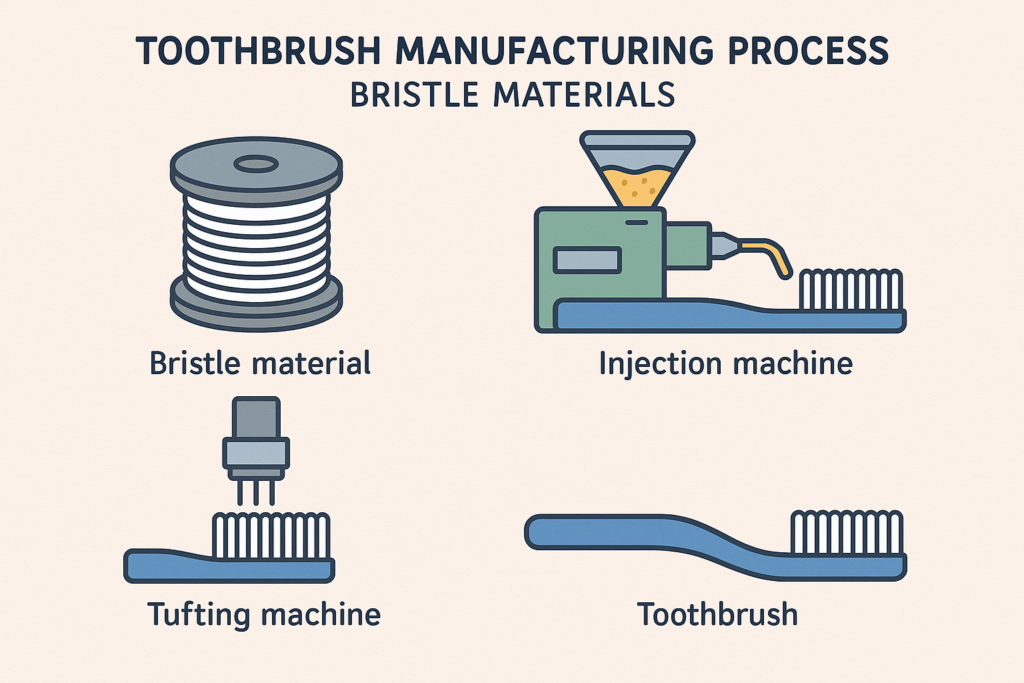
The toothbrush manufacturing process begins with material selection. At this stage, manufacturers choose bristle and handle materials based on durability, hygiene, and user comfort. In addition, premium toothbrushes often require higher-grade materials to meet international standards.
Common bristle materials include nylon (PA), PBT, and advanced tapered filaments. For example, DuPont™ nylon offers consistent flexibility, while PBT bristles provide improved moisture resistance. As a result, toothbrushes maintain their shape and effectiveness longer.
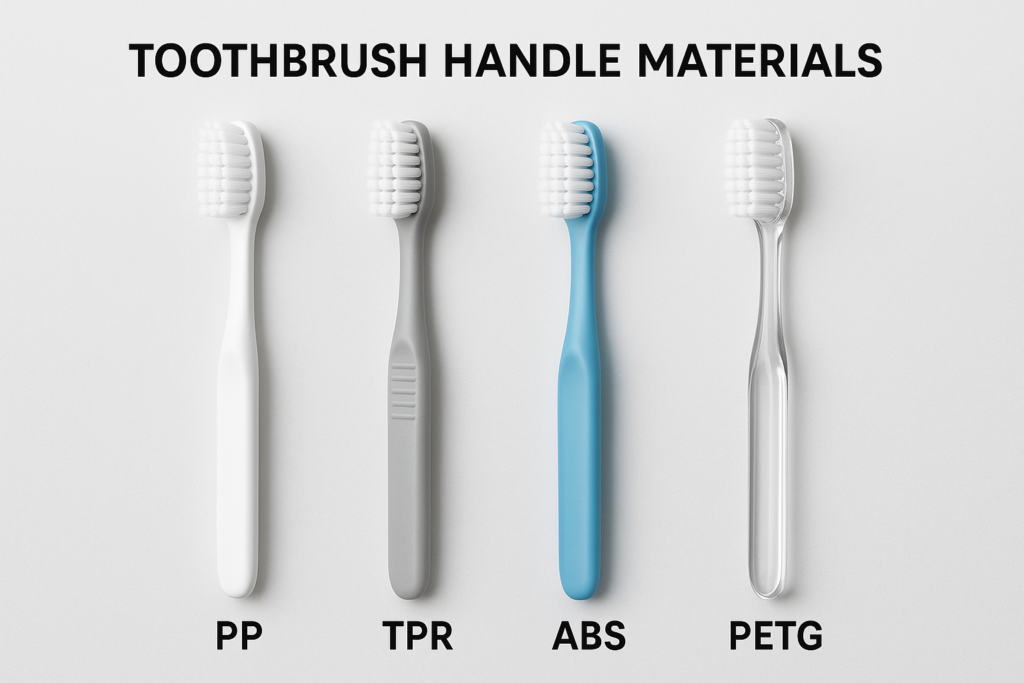
Handle materials also vary by market positioning:
| Handle Material | Key Characteristics | Typical Applications |
|---|---|---|
| PP | Lightweight and cost-efficient | Hotel and disposable toothbrushes |
| ABS | Strong and durable | Retail and daily-use toothbrushes |
| TPR | Soft-touch and anti-slip | Adult and kids toothbrushes |
| PETG | Transparent and recyclable | Premium and eco-focused designs |
Bristle Tufting and End-Rounding Technology
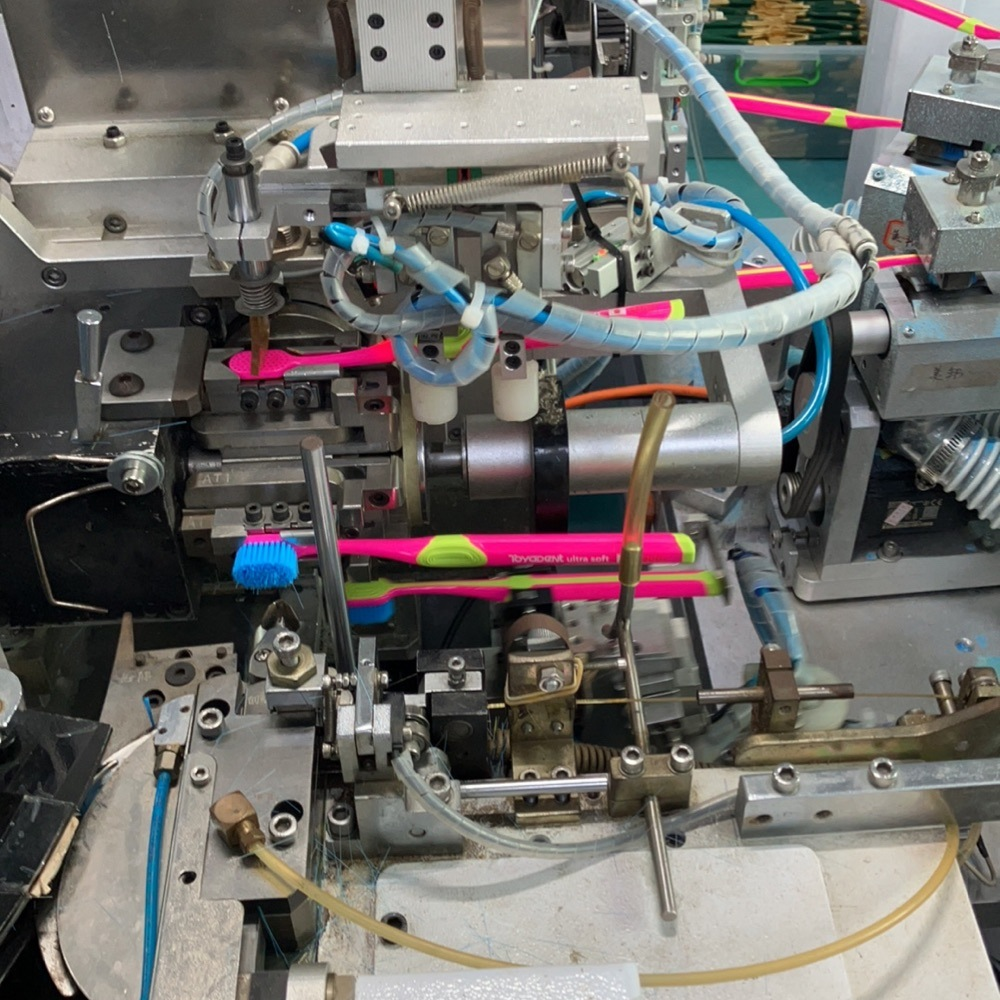
After material preparation, manufacturers move into the bristle tufting stage. At this point, automated machines insert bristles into the handle with precise spacing and depth. As a result, each toothbrush achieves uniform density and reliable brushing performance.
Manufacturers typically use anchor tufting for durability or anchor-free tufting for a cleaner, more hygienic finish. Moreover, factories polish and round each bristle tip to reduce gum irritation. This step plays a critical role in soft and extra-soft toothbrushes designed for sensitive users and children.
Handle Molding and Ergonomic Design
Handle molding follows bristle preparation in the toothbrush manufacturing process. During this stage, injection molding machines shape handles according to ergonomic and aesthetic requirements. For this reason, designers focus on grip balance, handle thickness, and brushing control.
Furthermore, ergonomic handles help users maintain correct brushing angles. This design consideration proves especially important for orthodontic users and individuals with limited hand mobility.
Assembly, Cleaning, and Quality Control
Once tufting and molding are complete, toothbrushes enter the assembly and inspection phase. At this stage, quality teams conduct pull-strength tests, visual inspections, and hygiene checks. As a result, manufacturers ensure that each toothbrush meets safety and durability requirements before packaging.
Marbon operates under internationally recognized compliance systems, including Walmart FCCA audits. Therefore, OralGos toothbrushes meet ethical manufacturing and quality control standards required by global retailers.
Packaging and Customization Options
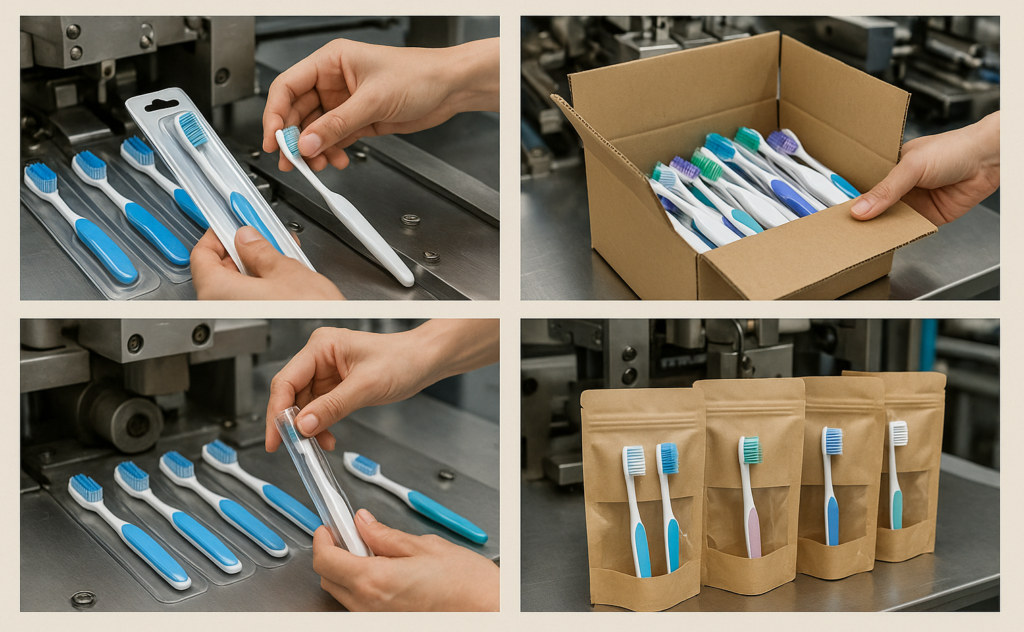
Packaging completes the toothbrush manufacturing process. At this final stage, brands determine how products appear on shelves and during transportation. For this reason, manufacturers offer multiple packaging solutions to match different distribution channels.
Common packaging formats include blister cards, paper boxes, plastic tubes, and travel cases. In addition, brands can customize packaging with logos, graphics, and multilingual labeling to support international sales.
Compliance, Standards, and Industry Guidelines
Reliable toothbrush manufacturing requires strict compliance with international regulations. Consequently, OralGos and Marbon follow ISO-based quality systems and material safety requirements for EU and US markets.
For professional guidance on toothbrush safety and oral care standards, refer to the American Dental Association (ADA):
https://www.ada.org
Why the Toothbrush Manufacturing Process Matters
Understanding the toothbrush manufacturing process helps brands make better sourcing decisions. For example, material transparency improves consumer trust, while consistent quality reduces complaints and returns. Therefore, manufacturers that invest in process control often achieve stronger long-term partnerships.
OralGos and Marbon: Trusted Manufacturing Expertise
With over 26 years of experience, OralGos collaborates closely with Marbon’s factories to produce high-quality toothbrushes for dental clinics, hotels, supermarkets, and e-commerce brands worldwide. In addition, we provide integrated oral care solutions, including toothpaste and floss.
Internal link suggestions:
https://oralgos.co.uk