Formula Innovation Driving the Next Wave of Mouthwash OEM
As the global oral care market matures, private label mouthwash is no longer about price competition alone. In 2025, brand differentiation increasingly begins with formulation. This shift is pushing mouthwash OEM manufacturers and brand owners to rethink ingredients, safety standards, and functional claims.
Mouthwash formulation trends show a clear shift. Consumers now want products that are effective for daily use without increasing long-term oral health risks. For brands working with a mouthwash OEM partner, understanding these trends early is no longer optional—it’s strategic.
This article explores three key private label mouthwash formula trends for 2025. It also offers practical insights for OEM buyers and oral care decision-makers.
Why Formula Innovation Matters in Mouthwash OEM Development
Private label oral care buyers today face a different market reality than five years ago. Regulators are tightening oversight, brands must be more transparent about ingredients, and consumers increasingly compare formulations instead of focusing only on flavor or packaging.
For a modern mouthwash OEM, formulation innovation serves three critical purposes:
- Supporting brand claims with compliant ingredients
- Aligning with regional safety and labeling standards
- Enabling long-term brand trust and repeat purchase
OEM buyers risk falling behind if they treat mouthwash as a “simple SKU.” Leading brands, however, position it as a functional oral health solution.
Herbal Mouthwash Formulas Are Moving from Niche to Mainstream
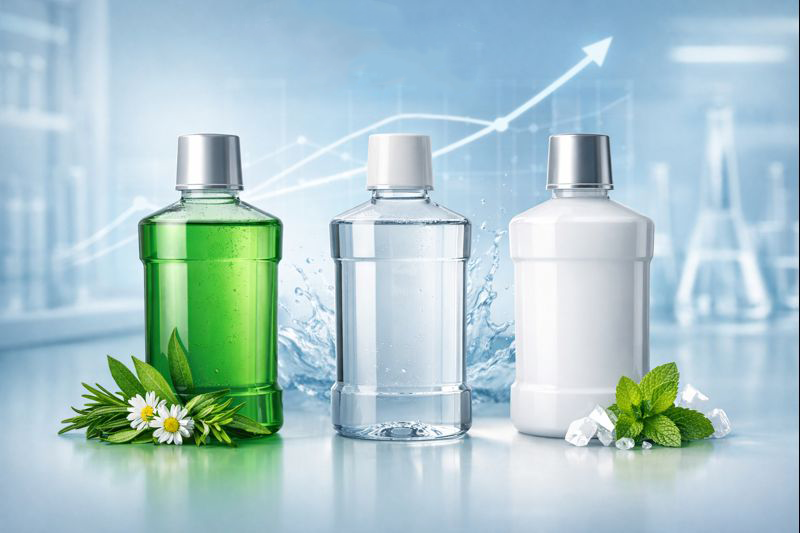
Herbal mouthwash is no longer limited to alternative health stores. In 2025, botanical-based formulas are becoming a core category in private label mouthwash portfolios.
Popular Herbal Ingredients in Mouthwash OEM Projects
Modern herbal formulations focus on clinically recognized plant extracts, including:
- Chamomile for gum soothing
- Green tea polyphenols for antioxidant protection
- Sage and thyme for antibacterial support
- Licorice root for plaque control
Today’s herbal mouthwash OEM designs combine botanical actives with proven oral-care ingredients. Unlike earlier “natural-only” formulas, this approach ensures both efficacy and consumer confidence.
Brands entering regulated markets must support their herbal claims with proper documentation. Experienced OEM partners can provide this support during formulation and compliance review.
Alcohol-Free Mouthwash Is Becoming the Default Option
Once positioned as a “gentle alternative,” alcohol-free mouthwash is quickly becoming the new standard in private label development.
Why Alcohol-Free Formulas Dominate Mouthwash OEM Demand
Consumer research consistently links alcohol-based mouthwash with:
- Oral dryness
- Mucosal irritation
- Long-term sensitivity concerns
As a result, mouthwash OEM buyers increasingly request formulas using non-alcohol antimicrobial systems, such as cetylpyridinium chloride (CPC), zinc compounds, or botanical antibacterials.
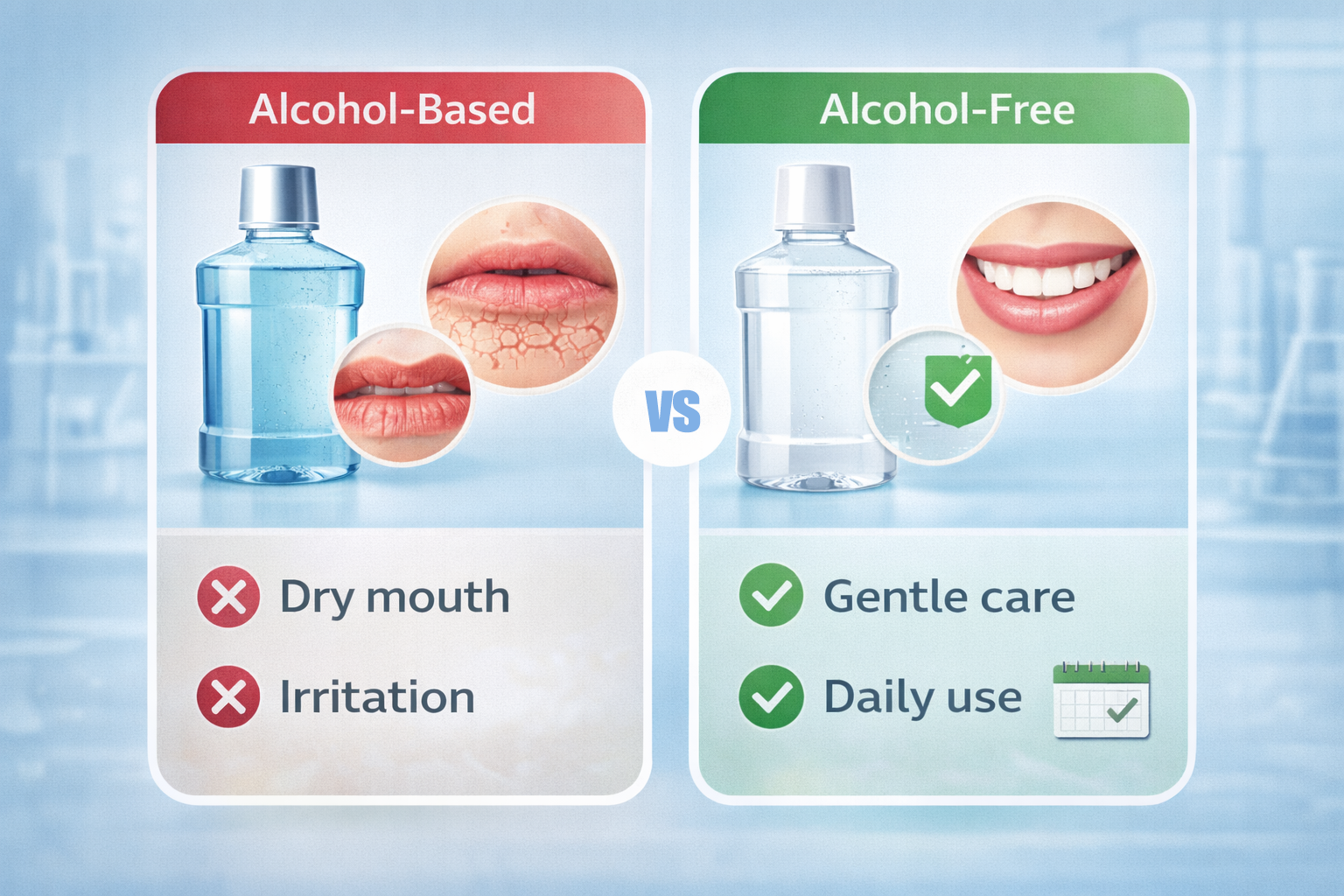
Alcohol-free systems also provide greater flexibility in flavor design. They are compatible with whitening and herbal actives, making them ideal for multi-functional private label mouthwash lines.
The World Health Organization (WHO) continues to emphasize preventive oral care and the importance of safe daily-use products. This guidance supports the move toward gentler mouthwash formulations.
Whitening Mouthwash Is Evolving Beyond Peroxide
Whitening remains one of the strongest consumer motivators, but 2025 marks a clear transition away from aggressive bleaching agents.
Gentle Whitening Systems in Modern Mouthwash OEM Formulas
Instead of hydrogen peroxide, many mouthwash OEM projects now focus on:
- Optical color-correction agents
- Low-abrasion stain-removal compounds
- Enamel-safe chelating systems
These approaches align with consumer demand for visible improvement without enamel damage, especially among long-term daily users.
For private label brands, whitening mouthwash performs best as part of a maintenance routine. This positioning improves consumer compliance and helps reduce regulatory risk.
How OEM Partners Enable Formula Customization at Scale
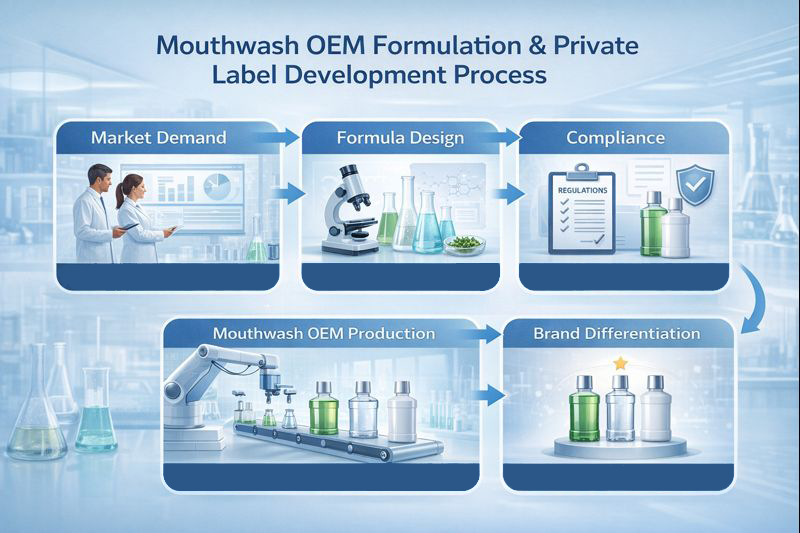
Trend adoption depends heavily on OEM capability. A qualified mouthwash OEM doesn’t just supply a formula—they guide brands through:
- Ingredient selection and claim validation
- Market-specific compliance requirements
- Stability testing and scalability planning
To support long-term growth, brands often work with OEM partners that use modular formulation systems. This approach makes it easier to combine herbal, alcohol-free, and whitening features without full reformulation.
For example, OEM service providers like OralGos support private label mouthwash development with flexible formulation frameworks and regulatory guidance.
What These Trends Mean for Private Label Brands in 2025
The key conclusion is clear: a formula-first approach has become a critical factor for success.
In 2025, successful private label mouthwash brands will:
- Treat herbal ingredients as functional, not decorative
- Default to alcohol-free systems unless there’s a clear reason not to
- Offer whitening benefits that protect enamel over time
For mouthwash OEM buyers, this means asking the right questions early in the development process. It also means choosing partners who understand both formulation science and market realities.
Final Thoughts: Formula Strategy Is the New Brand Strategy
Private label mouthwash is no longer a secondary SKU. As oral care consumers become more informed, formulation choices directly shape brand perception.
Following 2025’s key formulation trends helps brands protect long-term growth. It also reinforces compliance and consumer trust.
In the evolving mouthwash OEM market, success will favor brands with strong formulation expertise rather than aggressive promotion.