Launching an oral-care brand today is genuinely exciting. Demand keeps rising, innovation is constant, and global supply chains make market entry easier than ever. One key decision often shapes a new brand’s success from the start: whether to choose OEM or White-Label manufacturing.
Both models help startups enter the market quickly, but they differ in cost, ownership, flexibility, and long-term profitability. This guide breaks down each option and helps founders choose the model that fits their goals, budgets, and brand ambitions.
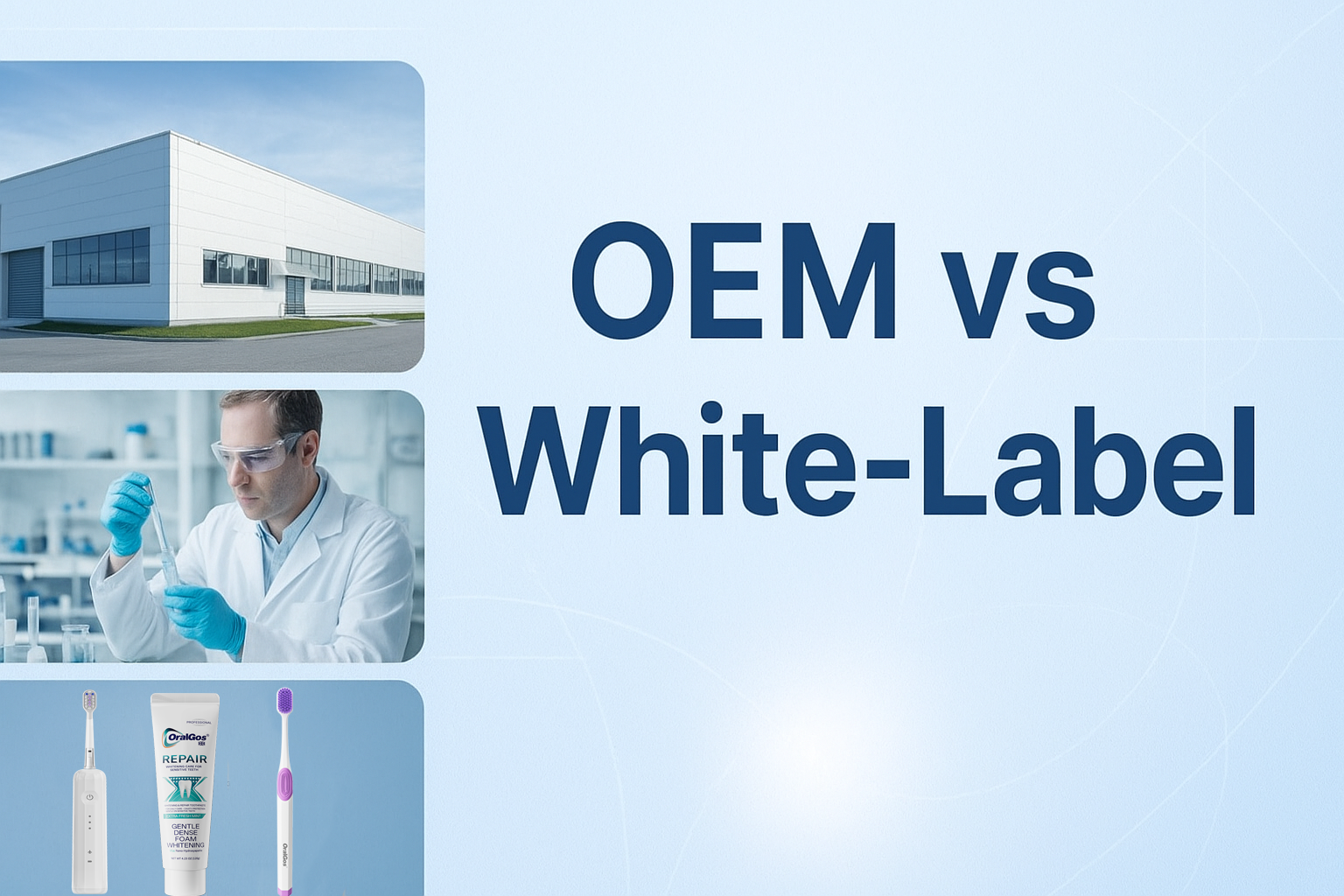
Understanding OEM vs White-Label in Oral-Care Manufacturing
When comparing OEM vs White-Label, the key distinction lies in customization and control.
What Does OEM Mean?
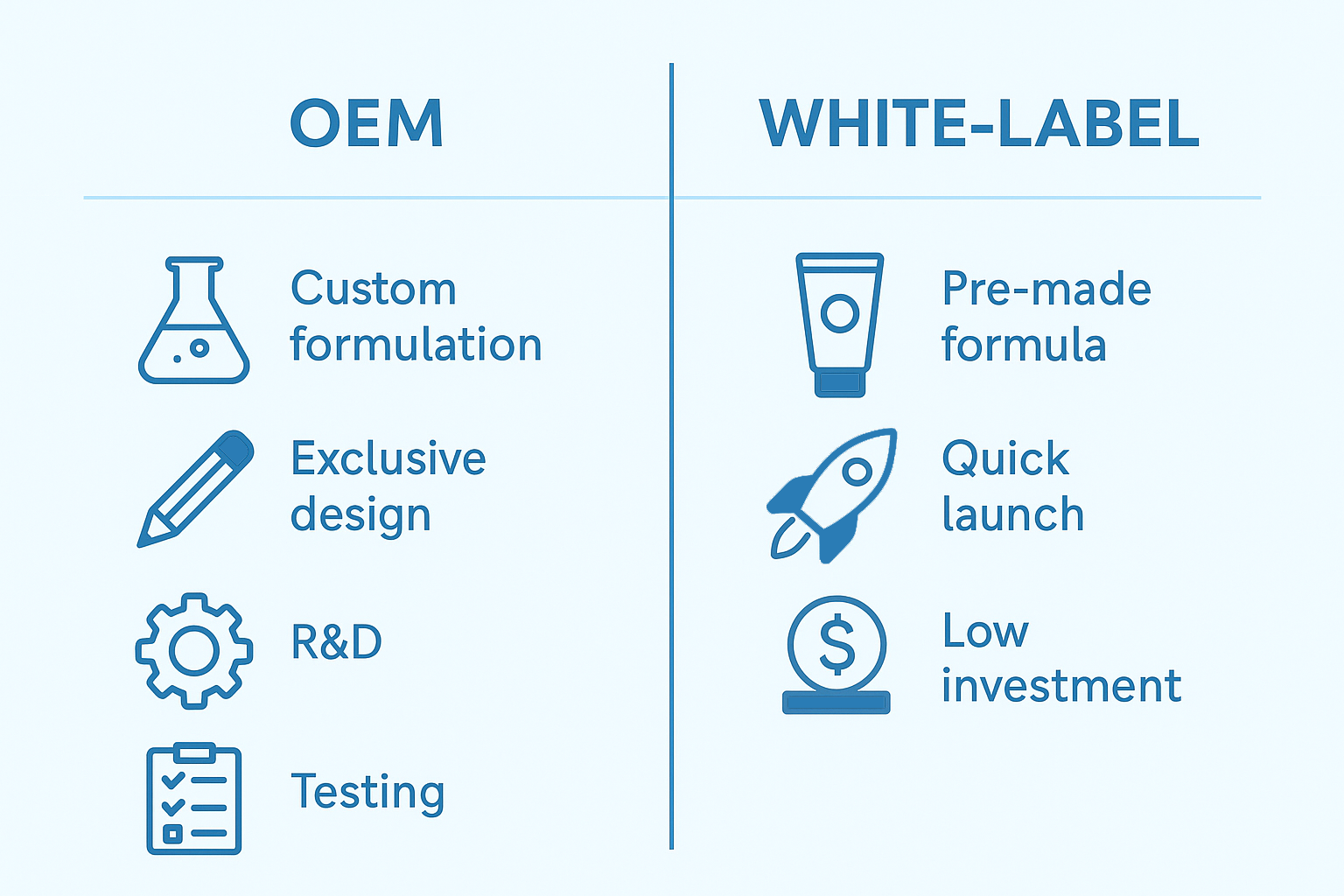
OEM (Original Equipment Manufacturer) allows you to develop a product uniquely for your brand, using your own formulations, design concepts, or functional specifications. In oral care, OEM may include:
- Custom toothpaste formulas
- Exclusive toothbrush designs
- Private clinical testing
- Proprietary packaging
This gives you a unique product that competitors can’t copy easily. For buyers seeking differentiation, OEM becomes a strong strategic investment.
What Is White-Label?
White-Label products come ready-made, allowing brands to apply their own labels and launch quickly. These are ideal for startups testing the market or operating on limited resources. Common examples include:
- Pre-formulated toothpaste such as whitening, sensitive, or charcoal versions
- Standard sonic toothbrush models
- Off-the-shelf packaging options
Brands can launch fast because formulations and tooling are already completed.
OEM vs White-Label Comparison: Investment, Risk, and Profit
Choosing between OEM and white-label is ultimately a business decision. Let’s break down the practical differences that matter most to new oral-care brands.
Upfront Costs
- OEM: Higher investment. Custom molds, formulation R&D, compliance documentation, and stability testing add to the initial budget.
- White-Label: White-Label products require only a minimal initial investment. You only pay for inventory and packaging.
Best for: Founders who want a low-risk market entry.
Time to Market
- OEM: Typically 60–120 days depending on product complexity.
- White-Label: With White-Label solutions, brands can frequently bring products to market in a timeframe of just 7 to 15 days.
For fast-moving consumer trends, white-label speeds up brand validation.
Branding Flexibility & Product Ownership
- OEM: OEM provides brands with full control over product design and formulation. Long-term brand equity grows because the market associates you with a product only you offer.
- White-Label: Limited customization. Your design and marketing differentiate you—not the formula.
If your strategy relies on innovation, OEM is the clear winner.
Profit Margins
This is one of the biggest considerations in the OEM vs White-Label debate.
- OEM: Margins increase over time because unique products support premium pricing and encourage customer loyalty.
- White-Label: White-Label products typically offer a lower potential profit margin. Competitors may sell identical items, making price competition stronger.
If long-term scalability matters more than short-term speed, OEM builds a healthier business model.
Which Model Is Better for Startup Oral-Care Brands?
The answer depends on your goals:
Consider White-Label manufacturing for brands aiming to:
- Fastest possible launch
- Low investment
- Simple portfolio (e.g., basic whitening toothpaste, standard sonic toothbrush)
- Market testing before committing substantial financial resources.
This works especially well for DTC brands and small distributors validating early traction.
Consider OEM manufacturing for brands looking to:
- Unique formulas or patented designs
- Premium pricing strategy
- Long-term brand positioning
- Exclusive rights in target markets
- Strong differentiation
- Better margins over time
OEM fits brands planning to scale on marketplaces, pharmacy channels, or global retail.
Real-World Insight: Why Many Growing Brands Switch from White-Label to OEM
Many brands start with white-label to learn customer behavior, then transition into OEM once demand stabilizes.
This step-by-step approach reduces early risk while ensuring long-term competitiveness. After all, major oral-care winners build unique value—whether through ingredients, brush technology, or child-safe designs.
Recommended Next Step for New Oral-Care Startups
When evaluating OEM vs White-Label, it is important to make an informed choice. Working with an experienced oral-care manufacturer gives you access to technical guidance, market insights, and compliance expertise.
A helpful starting point:
👉 Learn more about customized development through OralGos’s OEM services.
👉 For regulatory reference, new brands can review the FDA oral-care product guidance.
This combination of practical sourcing and regulatory understanding helps founders make confident, informed decisions.
Conclusion: The Smart Way to Choose Between OEM and White-Label
Both models can work brilliantly—but only when aligned with your brand’s vision.
- White-Label is the preferred choice for brands prioritizing speed and cost-efficiency.
- If you prioritize uniqueness and long-term margin growth: OEM is the better path.
The most successful oral-care startups understand their market and set clear goals. They then choose the manufacturing model that enhances both credibility and profitability.