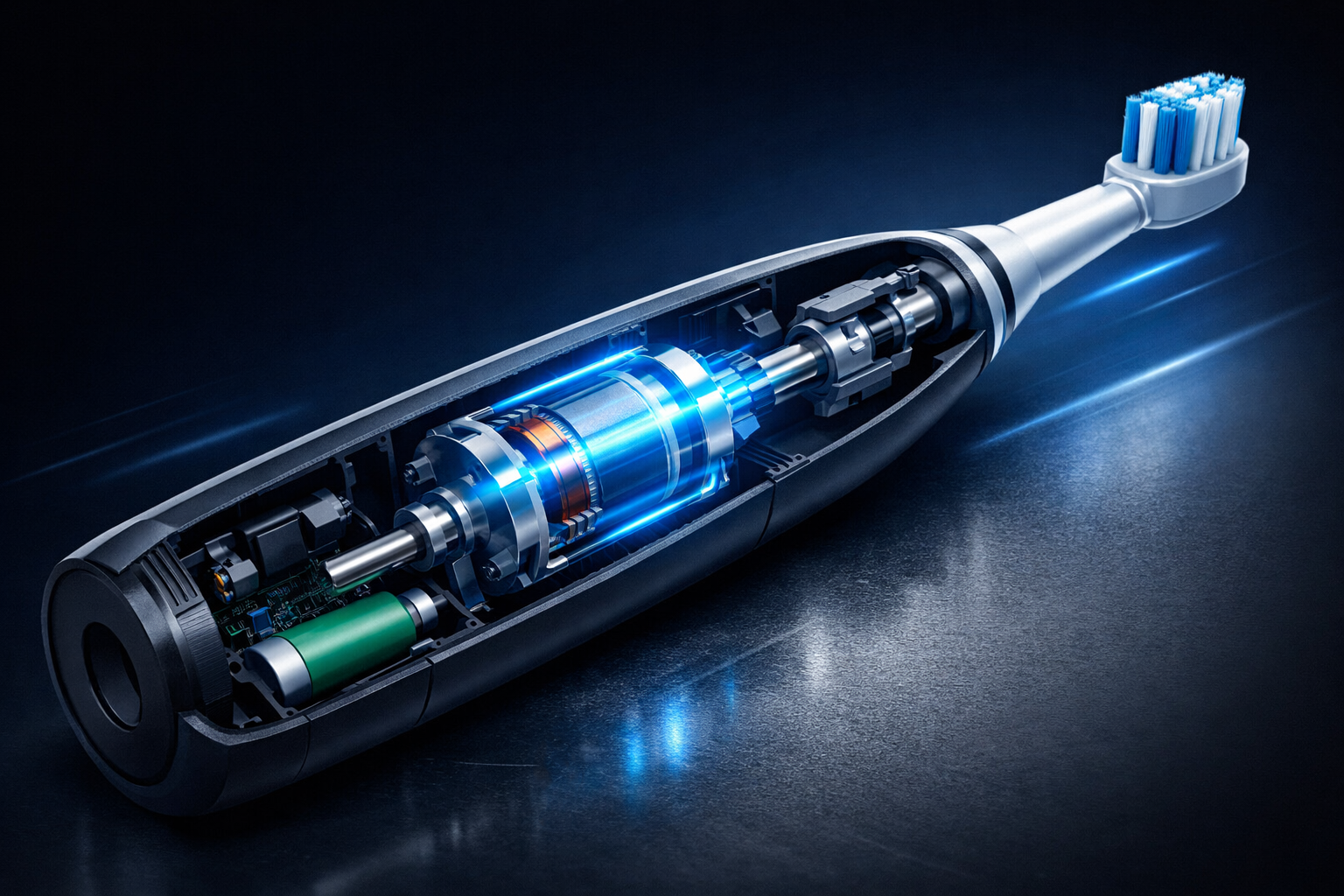
In electric toothbrush manufacturing, the motor is the mechanical heart, directly influencing brushing efficiency, user comfort, product lifespan, and overall brand reputation. For procurement managers, product developers, and oral-care brands, understanding electric toothbrush motor selection is critical to balancing performance, cost, and market expectations.
This article examines motor types, performance parameters, and sourcing considerations. It helps buyers make engineering-driven decisions instead of relying on marketing claims.
Why Electric Toothbrush Motor Selection Matters
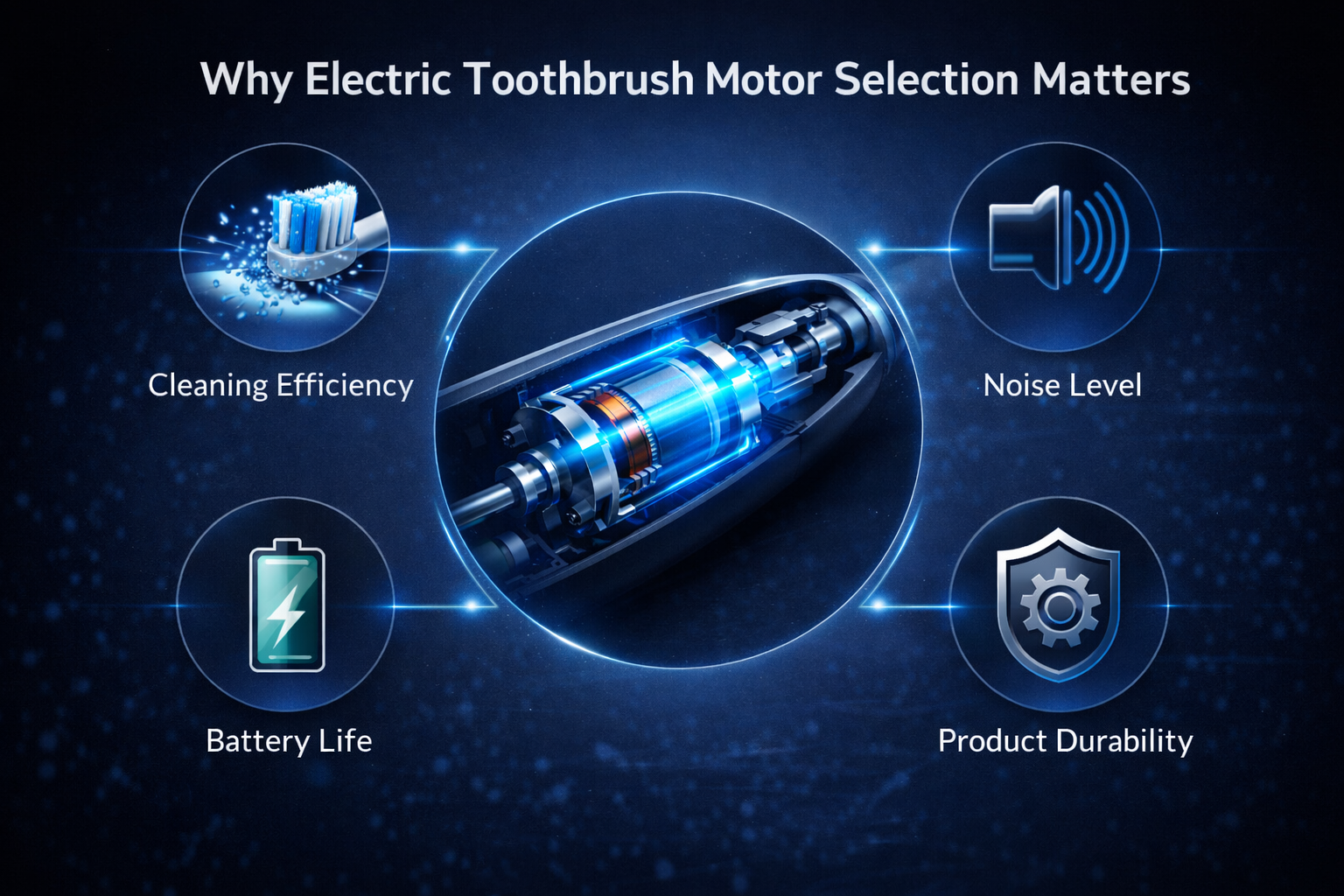
An electric toothbrush motor directly controls brush head movement, including vibration frequency, oscillation angle, and torque stability. These factors affect both plaque removal efficiency and gum comfort. Together, they play a key role in consumer satisfaction and repeat purchase rates.
From a manufacturing perspective, the wrong motor choice can lead to:
- Excessive noise or vibration
- Reduced battery life
- Premature mechanical failure
- Higher return and warranty rates
For buyers evaluating OEM partners, motor selection reveals how deeply a factory understands product engineering rather than simply assembling components.
Types of Electric Toothbrush Motors Used in Manufacturing
Brushed DC Motors
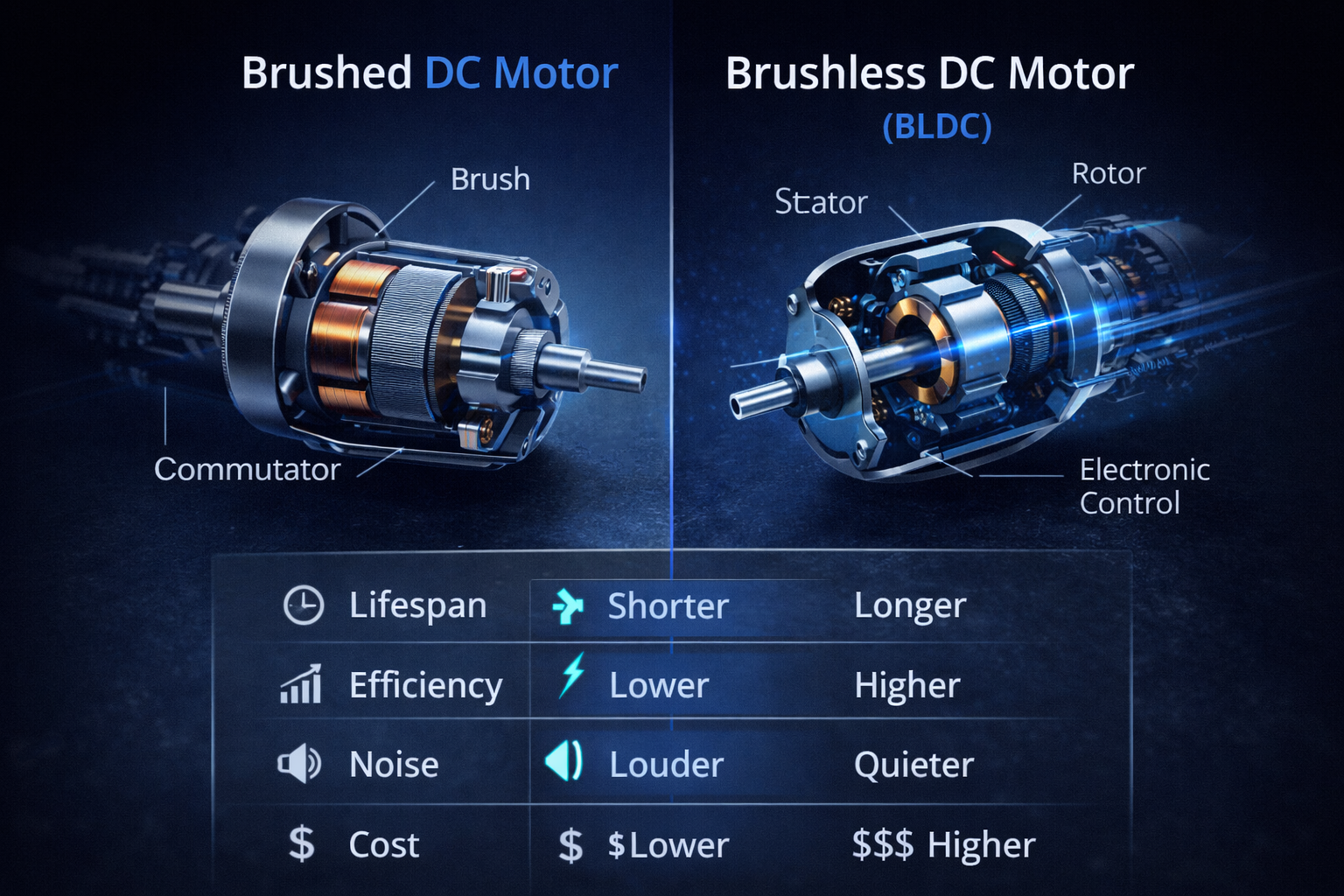
Brushed DC motors are commonly used in entry-level electric toothbrushes. They are cost-effective and easy to control, making them attractive for price-sensitive markets.
However, brushed motors have clear limitations:
- Higher friction and wear
- Shorter operational lifespan
- Less consistent torque output
They are typically suitable for basic sonic toothbrush models with limited speed modes.
Brushless DC Motors (BLDC)
Brushless DC motors represent the premium tier in electric toothbrush motor technology. By removing mechanical brushes, BLDC motors offer:
- Higher efficiency
- Lower noise levels
- Longer service life
- Better speed stability
For procurement teams, BLDC motors are ideal in mid- to high-end electric toothbrushes. Their superior durability and enhanced user experience make the higher BOM cost worthwhile.
Key Performance Parameters of an Electric Toothbrush Motor
Torque Stability and Load Response
Torque stability ensures consistent brush head movement even when pressure is applied during brushing. Motors with poor load response may slow down, reducing cleaning effectiveness and causing uneven vibration.
When evaluating an electric toothbrush motor, buyers should examine torque curves under simulated brushing loads. No-load RPM figures alone are not sufficient.
Vibration Frequency Control
Different markets favor different brushing sensations. Sonic toothbrushes typically operate between 24,000 and 40,000 strokes per minute. A well-designed motor maintains stable frequency without overheating or excessive power consumption.
This is where motor-driver integration matters as much as the motor itself.
Noise and Vibration Damping
Noise is often overlooked in early sourcing discussions but becomes a major complaint post-launch. Motor imbalance, bearing quality, and housing alignment all affect acoustic performance.
Premium manufacturers conduct NVH (Noise, Vibration, Harshness) testing as part of motor validation—a strong signal of engineering maturity.
Electric Toothbrush Motor and Battery System Compatibility
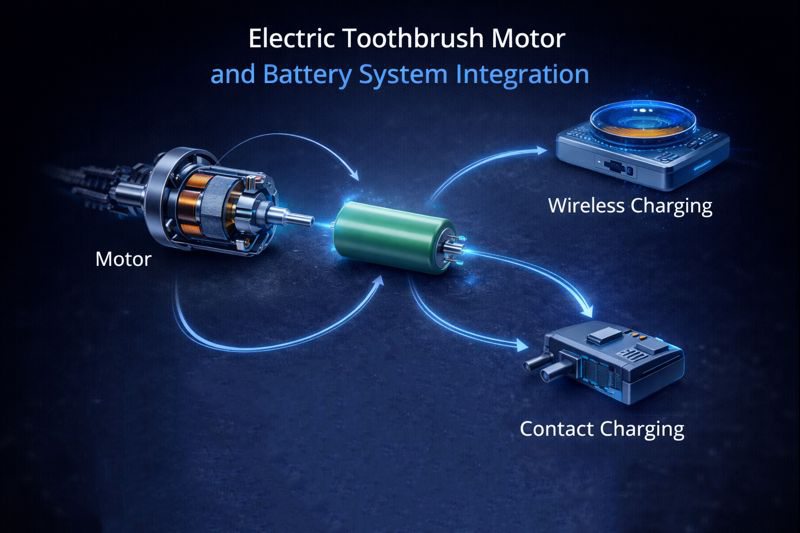
Motor selection cannot be isolated from battery design. A powerful motor paired with an undersized battery leads to poor runtime and faster battery degradation.
For example:
- High-speed motors demand higher discharge rates
- Wireless charging systems require efficient power management
- Waterproof sealing affects motor heat dissipation
OEM buyers should evaluate motor efficiency together with battery chemistry and charging architecture. Many established suppliers integrate these systems holistically across their electric toothbrush portfolio, such as those found in this electric toothbrush product category.
Electric Toothbrush Motor Manufacturing and Quality Control
Motor Sourcing Transparency
Reliable manufacturers can clearly state:
- Motor origin and supplier tier
- Incoming inspection standards
- Lifespan and endurance test protocols
Vague answers often indicate spot-market sourcing rather than long-term supplier relationships.
Assembly Precision and Alignment
Even the best electric toothbrush motor underperforms if assembly tolerances are loose. Misalignment increases noise, wear, and energy loss.
Buyers should ask about:
- Automated vs. manual motor installation
- Calibration steps during final assembly
- End-of-line functional testing
Electric Toothbrush Motor Compliance, Safety, and Global Standards
Motor-related failures often trigger safety risks such as overheating or short circuits. Compliance with IEC and ISO standards is essential, especially for products entering the EU or North American markets.
Industry references, such as IEC 60335 household appliance safety standards, offer useful benchmarks for motor safety. Technical guidance from the International Electrotechnical Commission further supports these evaluations.
Strategic Takeaways for Procurement Teams
Selecting the right electric toothbrush motor is not about choosing the highest RPM or lowest unit cost. It is about aligning motor performance with product positioning, battery design, quality expectations, and long-term brand value.
Smart procurement teams:
- Compare motor performance under real-use conditions
- Evaluate motor-battery-system integration
- Prioritize suppliers with testing transparency
- View motor selection as a strategic decision, not a line-item cost
In electric toothbrush manufacturing, the motor defines the product experience. Choosing wisely upstream prevents expensive corrections downstream—and that is where true procurement expertise shines.