Electric toothbrushes have become a standard part of daily oral care. Consumers and professional buyers are now paying closer attention to the technology behind their sleek exterior. Beyond brushing performance, battery safety and waterproof engineering have become critical factors that directly affect product reliability, regulatory compliance, and long-term brand reputation. For manufacturers and B2B buyers, understanding the design of a waterproof electric toothbrush is essential. Proper battery protection can make the difference between a trusted product and a costly recall.
Why Battery Safety Matters in Electric Toothbrush Design
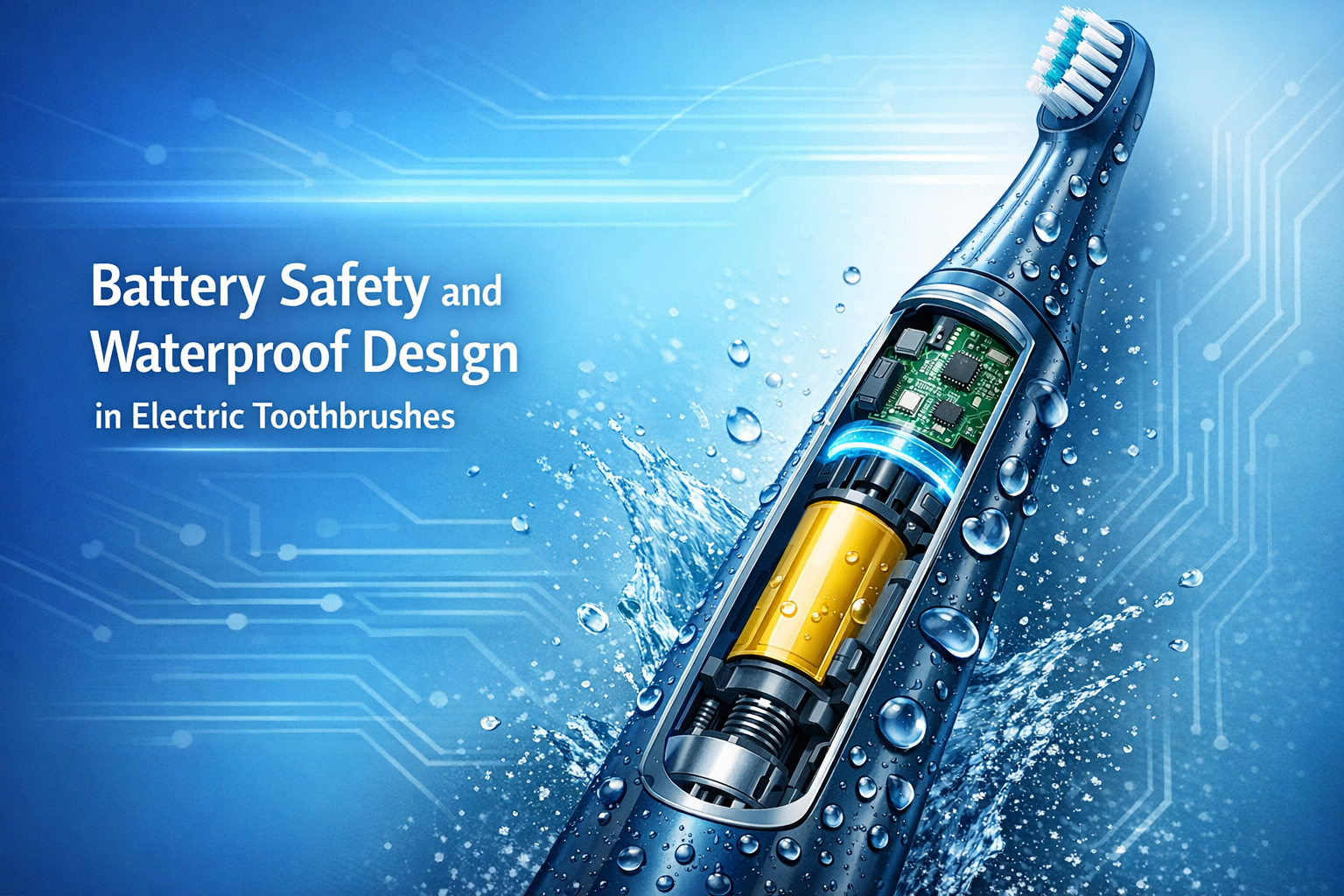
Electric toothbrushes rely on compact, high-density batteries that operate in a wet environment. This combination creates unique engineering challenges.
Common Battery Types Used
Most modern electric toothbrushes use:
- Lithium-ion (Li-ion) batteries for higher energy density
- Nickel-metal hydride (NiMH) batteries for cost-sensitive models
Each battery type requires precise control over charging, discharging, and thermal behavior.
Key Battery Safety Risks
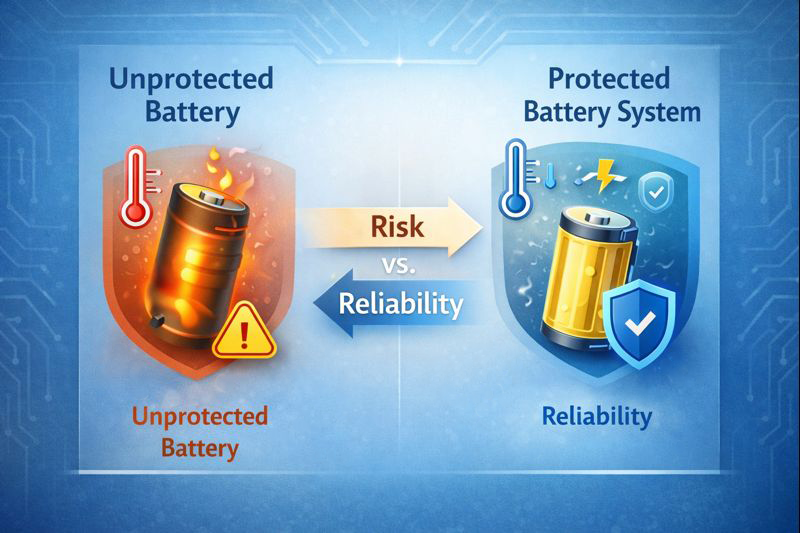
If battery safety is poorly managed, manufacturers may face:
- Overheating during charging
- Internal short circuits caused by moisture ingress
- Reduced battery lifespan
- In extreme cases, leakage or swelling
This is why battery protection circuits, insulation materials, and enclosure design are non-negotiable in a waterproof electric toothbrush.
Waterproof Electric Toothbrush Design: More Than Just a Rubber Seal
Waterproofing is not just about keeping water out. It also ensures electrical stability during daily exposure to moisture, toothpaste residue, and temperature changes.
Waterproof Electric Toothbrush Standards Explained
Most reputable products meet one of the following standards:
IPX7 vs. IPX8
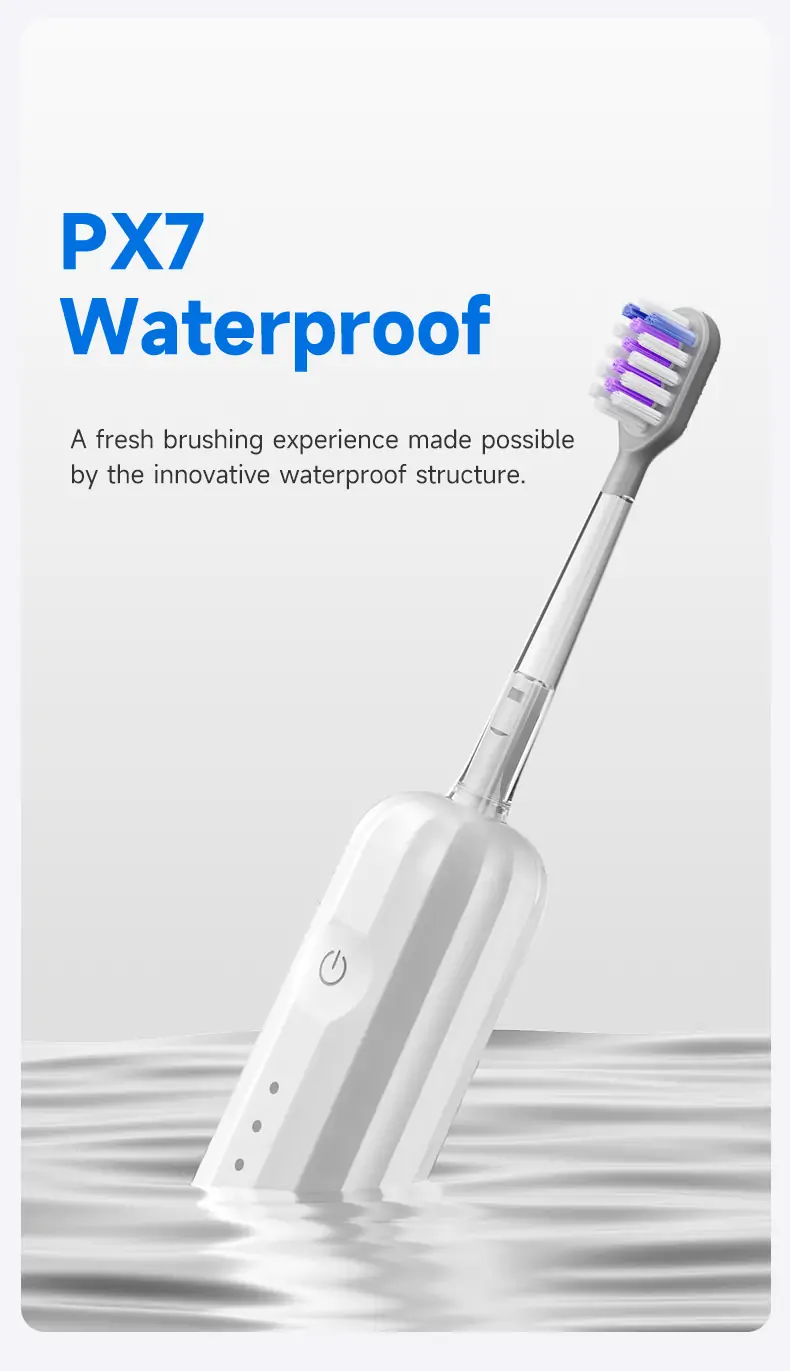
- IPX7: Can withstand immersion in water up to 1 meter for 30 minutes
- IPX8: Designed for continuous immersion beyond 1 meter
For a consumer-facing waterproof electric toothbrush, IPX7 is typically sufficient, while professional or premium models may target IPX8. You can learn more about IP ratings from the IEC (International Electrotechnical Commission), which defines global waterproof standards.
Internal Waterproof Structure Design
True waterproof protection happens inside the handle, not just on the surface.
Core Design Elements
A reliable waterproof electric toothbrush usually includes:
- Ultrasonic welding of plastic shells
- Multi-layer silicone gaskets around charging ports
- Resin or epoxy coating on PCB boards
- Isolated battery chambers
These measures ensure that even if moisture enters the outer shell, it never reaches sensitive electrical components.
Battery Protection Systems Inside a Waterproof Electric Toothbrush
Modern electric toothbrushes integrate multiple layers of battery protection.
Built-in Safety Mechanisms
Key systems include:
- Overcharge protection circuits
- Over-discharge cut-off
- Short-circuit prevention
- Temperature monitoring (NTC sensors)
These features work silently in the background, allowing users to charge their waterproof electric toothbrush overnight without safety concerns. Organizations such as UL Solutions widely document battery safety design principles. They also provide global certification guidance for batteries used in consumer electronics, including electric toothbrushes.
Charging Design for a Waterproof Electric Toothbrush
Charging is one of the most vulnerable moments for any electric toothbrush.
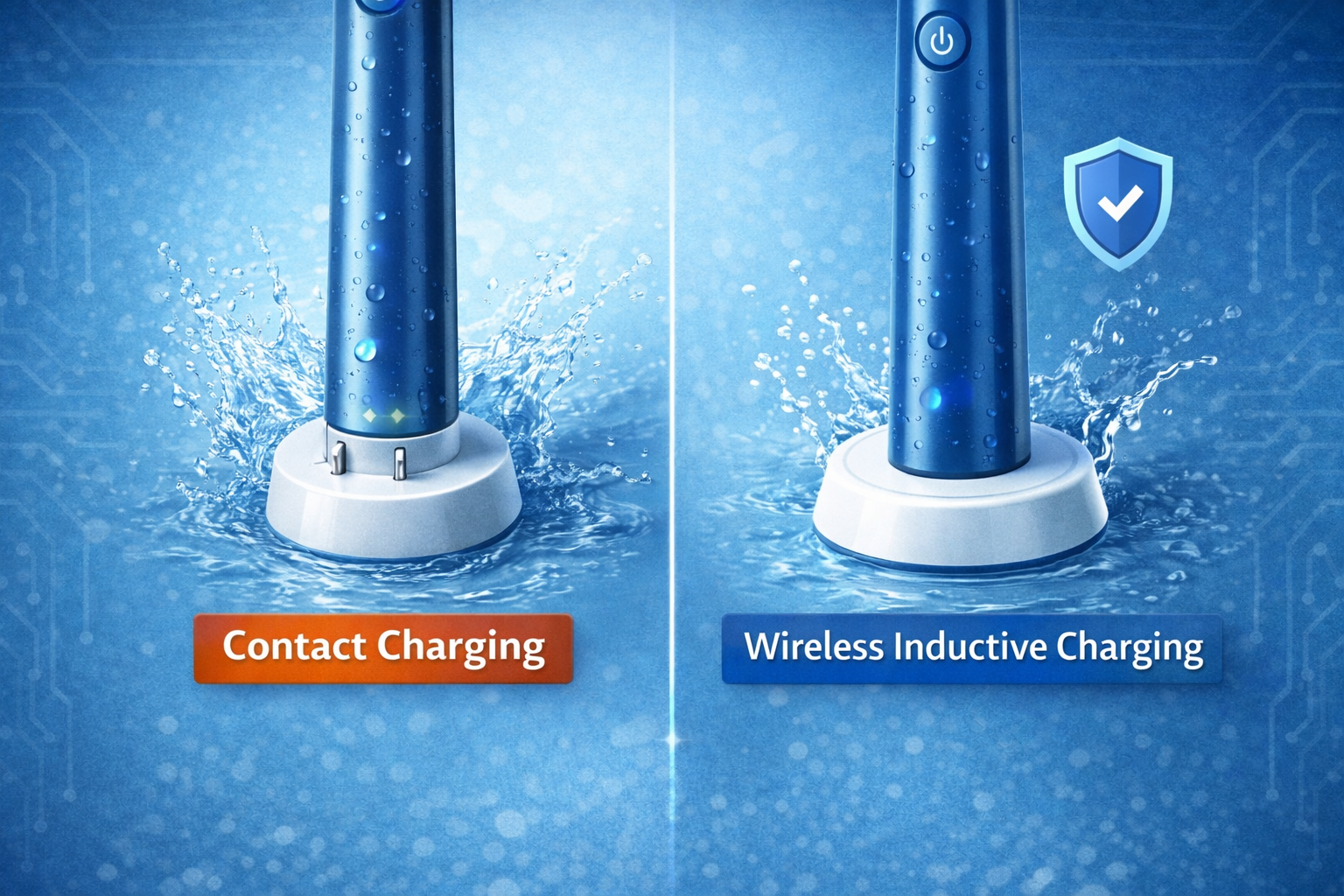
Contact Charging vs. Wireless Charging
- Contact charging requires corrosion-resistant metal pins
- Wireless inductive charging eliminates exposed electrical contacts
Inductive charging offers a clear advantage for waterproof design. Many premium electric toothbrush brands increasingly adopt inductive charging.
Manufacturing Quality Control for Waterproof Electric Toothbrushes
Battery safety and waterproof claims must be validated—not assumed.
Key Testing Procedures
Responsible manufacturers conduct:
- Immersion testing after thermal cycling
- Charging tests under high humidity
- Drop tests combined with waterproof validation
- Long-term battery aging simulations
These tests are often required to meet CE, FCC, or UKCA regulations before market entry.
Why Waterproof Battery Design Matters to OEM Buyers
For brand owners and distributors, battery safety issues rarely remain “factory problems.”
Poor waterproof design can lead to:
- Warranty claims
- Negative reviews
- Platform delisting
- Regulatory penalties
That’s why sourcing from experienced electric toothbrush manufacturers is essential.
If you’re evaluating multiple models, exploring a curated range of professionally engineered products can help.
👉 You can view a full selection of compliant electric toothbrush solutions here.
Future Trends in Waterproof Electric Toothbrush Technology
Looking ahead, technological innovation in electric toothbrush design continues at a rapid pace.
What’s Next?
- Solid-state batteries with lower leakage risk
- Fully sealed, port-free designs
- Smart charging algorithms to extend battery life
- Higher waterproof ratings without increasing handle size
As these technologies mature, waterproof electric toothbrushes are evolving. They are shifting from simple hygiene tools to sophisticated precision electronic devices.
Final Thoughts
Battery safety and waterproof design are no longer optional features—they are fundamental expectations. A well-designed waterproof electric toothbrush protects users, safeguards brand reputation, and ensures compliance across global markets.
For manufacturers and buyers who understand the engineering behind the product, quality becomes predictable rather than accidental. And in a competitive oral care market, that confidence is a serious advantage.