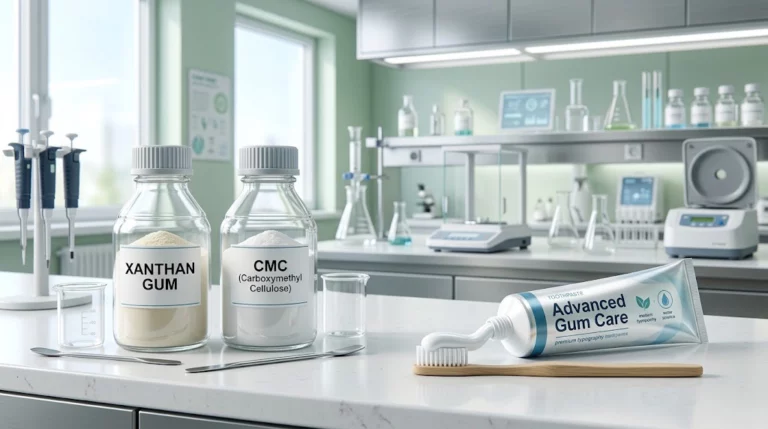
How often should a toothbrush be replaced?
Although the question appears simple, factories determine toothbrush replacement cycles through material testing, hygiene analysis, and simulated brushing conditions. Dentists typically give broad recommendations, whereas factories develop replacement guidelines using product testing data, bristle fatigue analysis, and hygiene performance studies.
This article addresses a simple question: how often should you replace a toothbrush? It also explains what factories recommend and why replacement timing matters.
Why Toothbrush Replacement Matters More Than You Think
A toothbrush is a mechanical cleaning tool. Over time, its performance declines—even if it still “looks fine.”
From factory testing and lab simulations, three main issues emerge when brushing tools are used beyond their intended lifespan:
- Bristle deformation reduces plaque removal efficiency
- Microbial buildup increases despite rinsing
- Loss of stiffness balance, leading to either ineffective cleaning or enamel stress
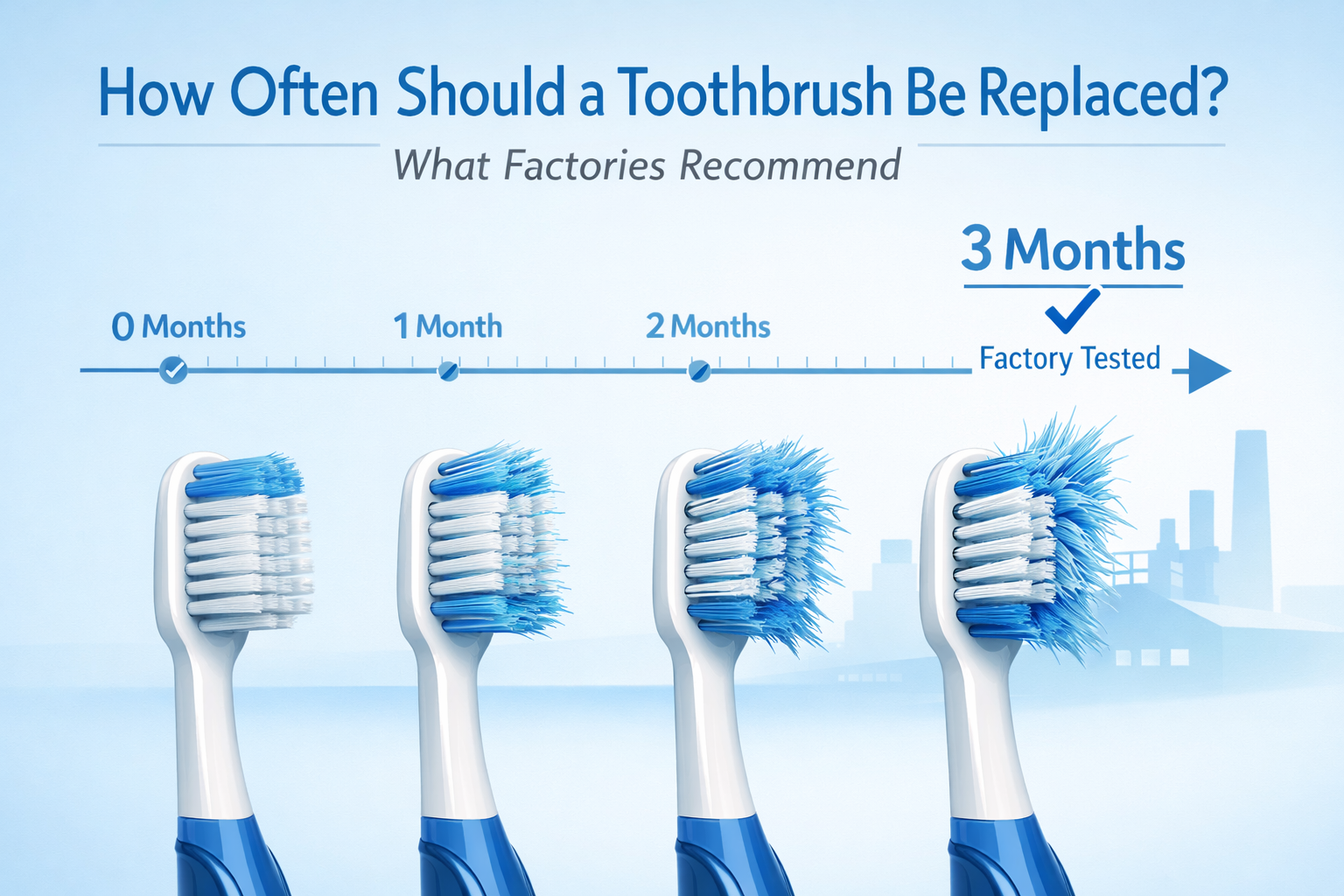
Once bristles splay outward, the brush can no longer reach interdental areas effectively. Factory tests show that worn bristles remove up to 30–40% less plaque than new ones under standardized conditions.
How often should you replace a toothbrush? Factory Standards Explained
The 3-Month Rule: Where It Comes From
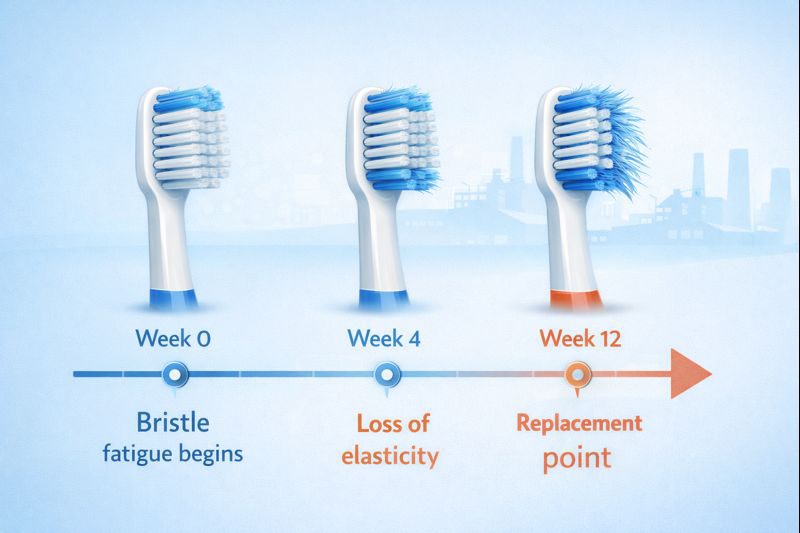
Most factories align with a 3-month replacement cycle for a standard brush used twice daily. This guideline is not arbitrary—it comes from:
- Simulated wear testing (simulating 90 days of brushing)
- Bristle recovery measurements
- Handle and neck fatigue analysis
After approximately 90 days, even high-quality nylon bristles show permanent bending that does not recover after drying.
Replacement Cycles Based on Usage Habits
Factories also recommend adjusting replacement frequency based on user behavior:
| Brushing Habit | Recommended Replacement |
|---|---|
| Twice daily, normal pressure | Every 3 months |
| Aggressive brushing | Every 6–8 weeks |
| Orthodontic use (braces) | Every 6–8 weeks |
| Post-illness (flu, infections) | Immediately after recovery |
From a production standpoint, brushing tools are engineered for optimal performance within a defined usage window, not indefinite use.
Toothbrush Type Matters: Manual vs. Electric
Manual Brush Replacement Cycles
A manual dental brush relies entirely on bristle integrity and user technique. Factories recommend replacing it:
- Every 3 months
- Earlier if bristles flare or discolor
- Replace it immediately if the brush falls on dirty surfaces
You can explore different manual brush designs and bristle configurations here.
Electric Brush Heads Need More Frequent Attention
For electric models, the handle may last years—but the brush head does not.
Factory testing shows that electric brush heads experience higher mechanical stress due to oscillation or vibration. As a result, manufacturers usually recommend replacement every 2–3 months.
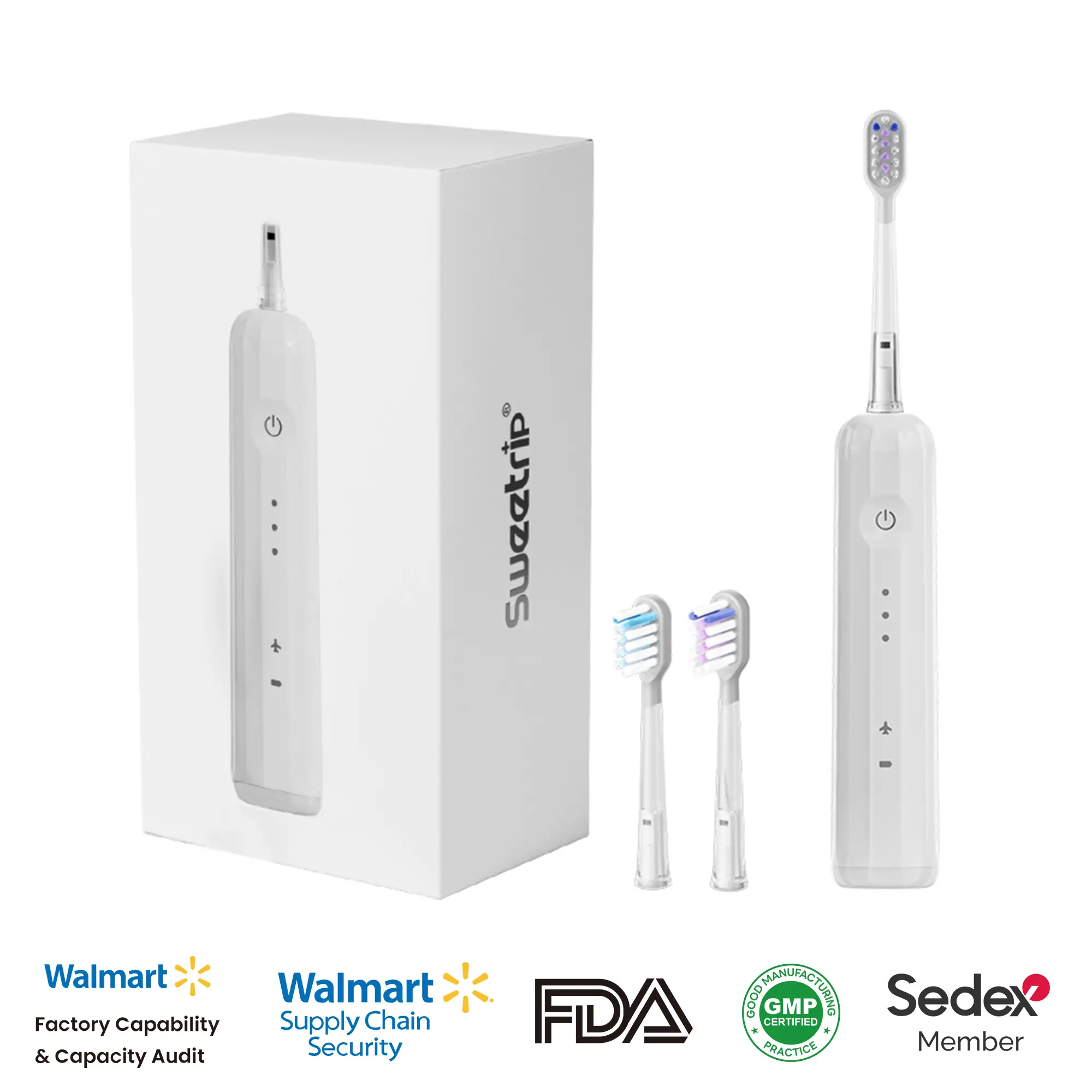
Different head designs and motion technologies can influence wear patterns. See typical electric brush formats here.
What Factories Look at When Setting Product Lifespan
Bristle Material Fatigue
Most modern brushes use rounded-end nylon filaments. Factories test:
- Flex recovery rate
- Tip rounding durability
- Water absorption over time
Once bristles lose flexibility, cleaning efficiency drops sharply.
Hygiene and Bacterial Retention
Factories also conduct microbial retention tests. Even with proper rinsing, worn bristles retain more moisture, creating an environment where bacteria can persist.
Both manufacturers and dental associations strongly recommend replacing a toothbrush after illness.
The American Dental Association recommends replacing toothbrushes every three to four months. Replace them sooner if the bristles fray.
Visual Signs Your Brush Needs Replacement
Factories advise consumers to replace a brush immediately if they notice:
- Bristles bending outward
- Uneven bristle height
- Color change at the base
- Reduced cleaning sensation
If your brush looks tired, it probably is.
Toothbrush Replacement: A Small Habit with Big Impact
Factories emphasize that timely toothbrush replacement is one of the simplest ways to maintain good oral hygiene. You don’t need to change your toothpaste, brushing method, or daily routine.
A fresh brush:
- Cleans more effectively
- Reduces plaque buildup
- Supports gum health
- Improves overall brushing comfort
In other words, the best design still depends on one thing: timely replacement.
Final Thoughts from the Factory Floor
So, how often should you replace a toothbrush?
Factories agree: every three months is the baseline, with adjustments based on usage, brushing force, and brush type.
Think of a toothbrush like a precision tool. When it’s new, it performs exactly as designed. When it’s worn, it quietly works against you.
Your smile—and your enamel—deserve better.