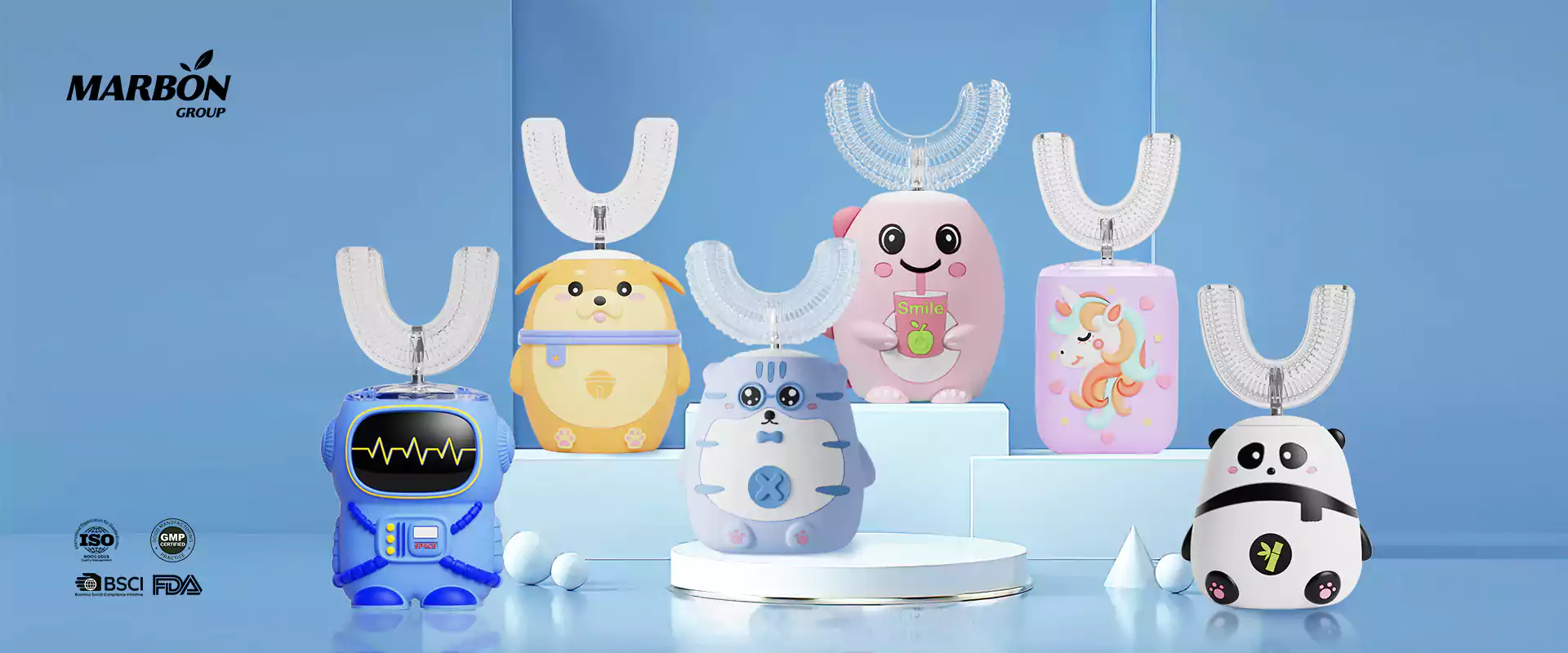
The rise of U-shaped toothbrushes has changed oral care. Their design follows the natural curve of the teeth and provides thorough cleaning. Brands that want to stand out can benefit from OEM U-shaped toothbrush production. It allows them to customize products to meet the specific needs of their consumers.
Understanding the manufacturing process is essential for creating a successful toothbrush. This includes everything from bristle types to handle ergonomics, ensuring the product is both effective and marketable.
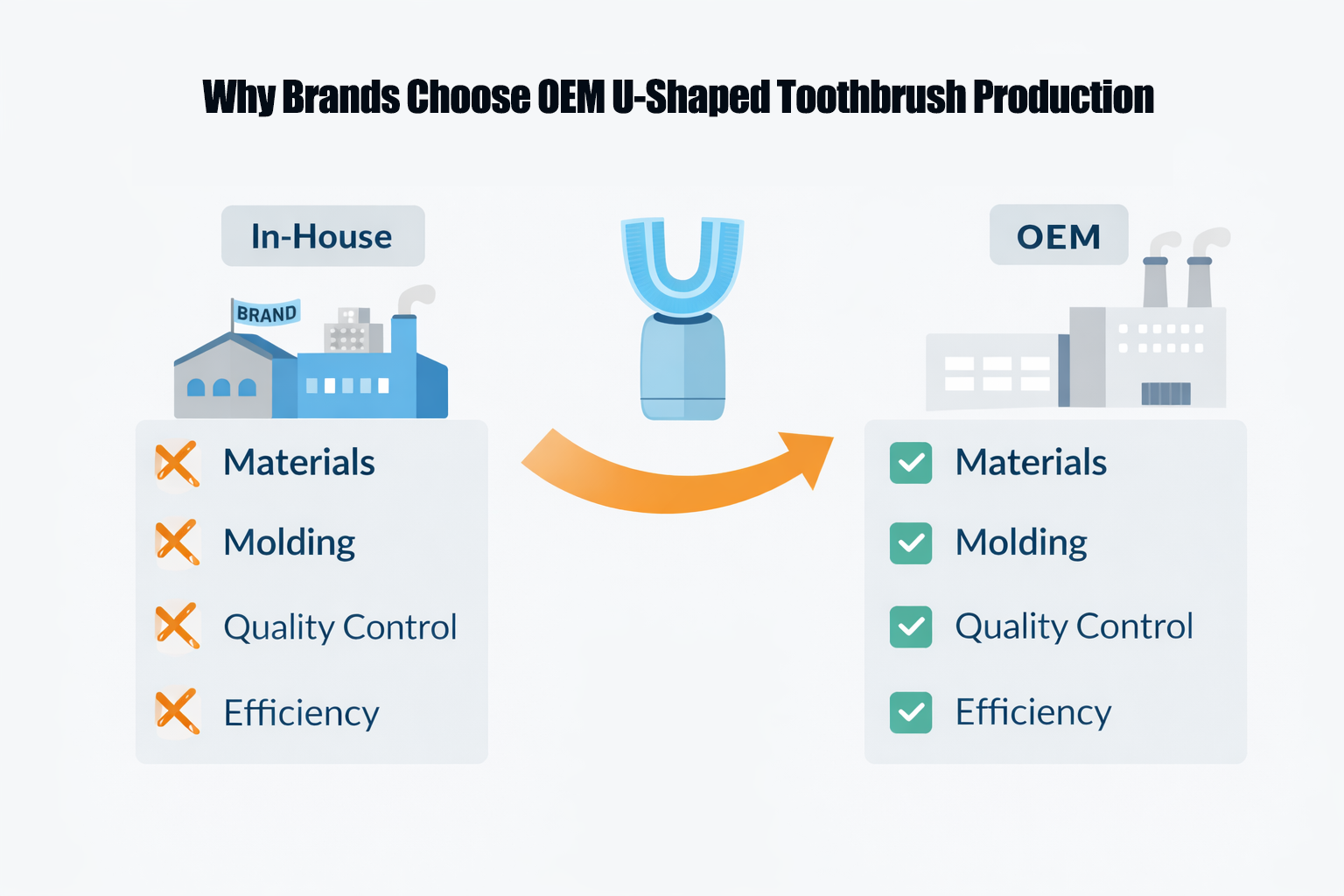
Why Brands Choose OEM U-Shaped Toothbrush Production
OEM production allows brands to focus on design and marketing while relying on experienced manufacturers for high-quality assembly. Brands that choose OEM U-shaped toothbrush production gain access to advanced materials, precision molding, and strict quality control. These benefits can be difficult to achieve with in-house production.
Brands can customize multiple aspects, including:
- Bristle configuration: Different consumers have varying sensitivity levels. Offering options like soft, ultra-soft, or multi-level bristles ensures optimal comfort while maintaining cleaning efficacy.
- Handle design: Ergonomic handles improve grip and usability. Features like non-slip textures, flexible necks, and compact heads can significantly enhance user experience.
- Color and branding: OEM manufacturers can incorporate brand colors, logos, or unique packaging to increase brand recognition.
These customizations allow brands to differentiate their products in a crowded market while maintaining manufacturing efficiency.
Technical and Regulatory Considerations in OEM U-Shaped Toothbrush Production
When exploring OEM U-shaped toothbrush production, brands need to consider both technical and regulatory factors. These factors help ensure product quality and safety.

Material Selection
The choice of materials affects both durability and hygiene. Manufacturers recommend high-quality medical-grade silicone or soft nylon bristles because they clean gently and effectively. Handle materials should be robust, heat-resistant, and safe for prolonged contact with water.
Bristle Design and Arrangement
The unique shape of U-shaped toothbrushes demands precise bristle placement. Properly aligned bristles can reach all tooth surfaces and gum lines, reducing plaque and improving oral health. Brands should collaborate with manufacturers to test bristle softness, density, and flexibility.
Quality Control and Safety
Reputable OEMs implement strict quality control measures, from injection molding inspections to bristle attachment tests. Brands must comply with international standards such as ISO 13485 or FDA requirements. This compliance helps ensure the toothbrush is safe for daily use. Brands should also consider endorsements from organizations like the American Dental Association to boost credibility.
Advantages of Customizing U-Shaped Toothbrushes through OEM Production
Customizing through OEM U-shaped toothbrush production provides several advantages:
- Brand differentiation: Unique designs, colors, and features set products apart in a competitive market.
- Consumer satisfaction: Tailored bristle types and ergonomic designs improve comfort and cleaning efficacy, leading to higher retention rates.
- Faster time-to-market: OEM partners often have established supply chains, reducing production delays.
Brands can expand their oral care lineup by working with trusted suppliers like OralGos U-shaped electric toothbrushes. These suppliers offer flexible customization options.
Final Thoughts
Brands that want to deliver a better oral care experience can benefit from OEM U-shaped toothbrush production. This approach combines innovation with efficient manufacturing. Customization covers everything from material selection and bristle configuration to ergonomic handles and visual design. This approach helps the final product meet consumer expectations while following strict safety standards.
Brands can work with reliable OEM manufacturers to launch U-shaped toothbrushes successfully. Endorsements from organizations such as the American Dental Association also help these products stand out in the market.
In conclusion, U-shaped toothbrushes are not just a trend—they represent a functional improvement in oral care. Brands that invest in thoughtful customization through OEM production can achieve stronger market differentiation. This approach also helps build long-term consumer loyalty.