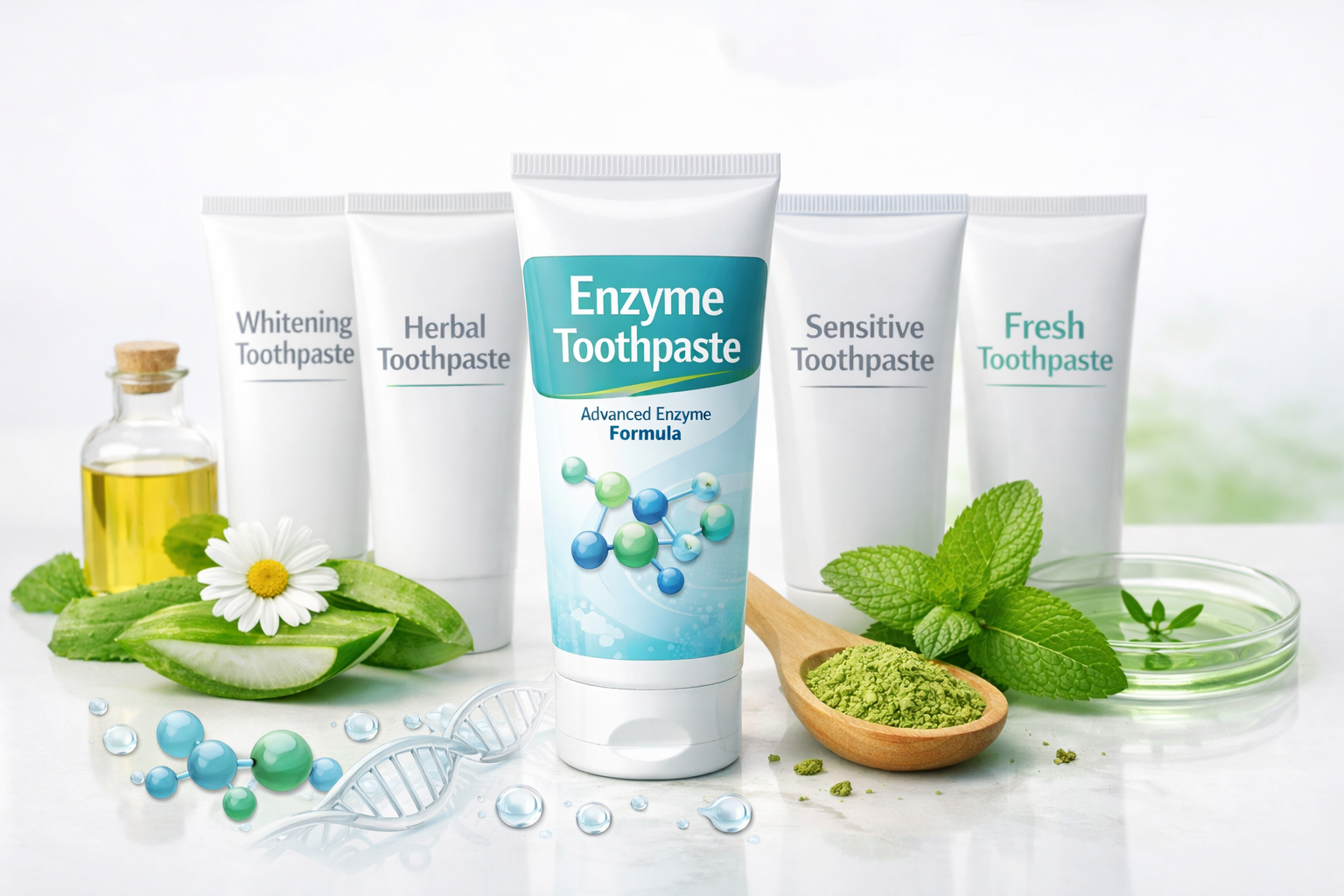
Good oral health requires more than just brushing; it also needs toothpaste that protects enamel, removes stains, and supports gum care. One innovative approach gaining traction in the oral-care industry is enzyme toothpaste. Traditional fluoride or abrasive whitening toothpastes rely on strong or abrasive chemical agents to clean teeth. Enzyme-based products, however, use natural enzymes to clean effectively while remaining gentle on enamel and gums.
What Is Enzyme Toothpaste?
Enzyme toothpaste contains naturally occurring enzymes, including amylase, lipase, and protease. These enzymes help break down complex compounds in the mouth. These enzymes target starches, fats, and proteins found in food debris and plaque. By breaking down these substances, they help reduce buildup that can cause cavities, tooth staining, and gum problems.
Unlike harsh chemical abrasives, enzyme toothpastes offer a milder yet effective way to maintain oral hygiene. They support the mouth’s natural defenses and help maintain healthy oral bacteria, all without causing irritation.
How Enzymes Improve Daily Oral Cleaning
The key mechanism behind enzyme toothpaste lies in its ability to catalyze the breakdown of plaque-forming compounds.
- Starch Breakdown: Amylase converts starch molecules from food into simpler sugars, which are easier to remove during brushing.
- Protein Removal: Protease targets protein-rich deposits on teeth and gums, reducing plaque buildup.
- Fat Degradation: Lipase helps dissolve fatty residues that often contribute to bacterial growth and bad breath.
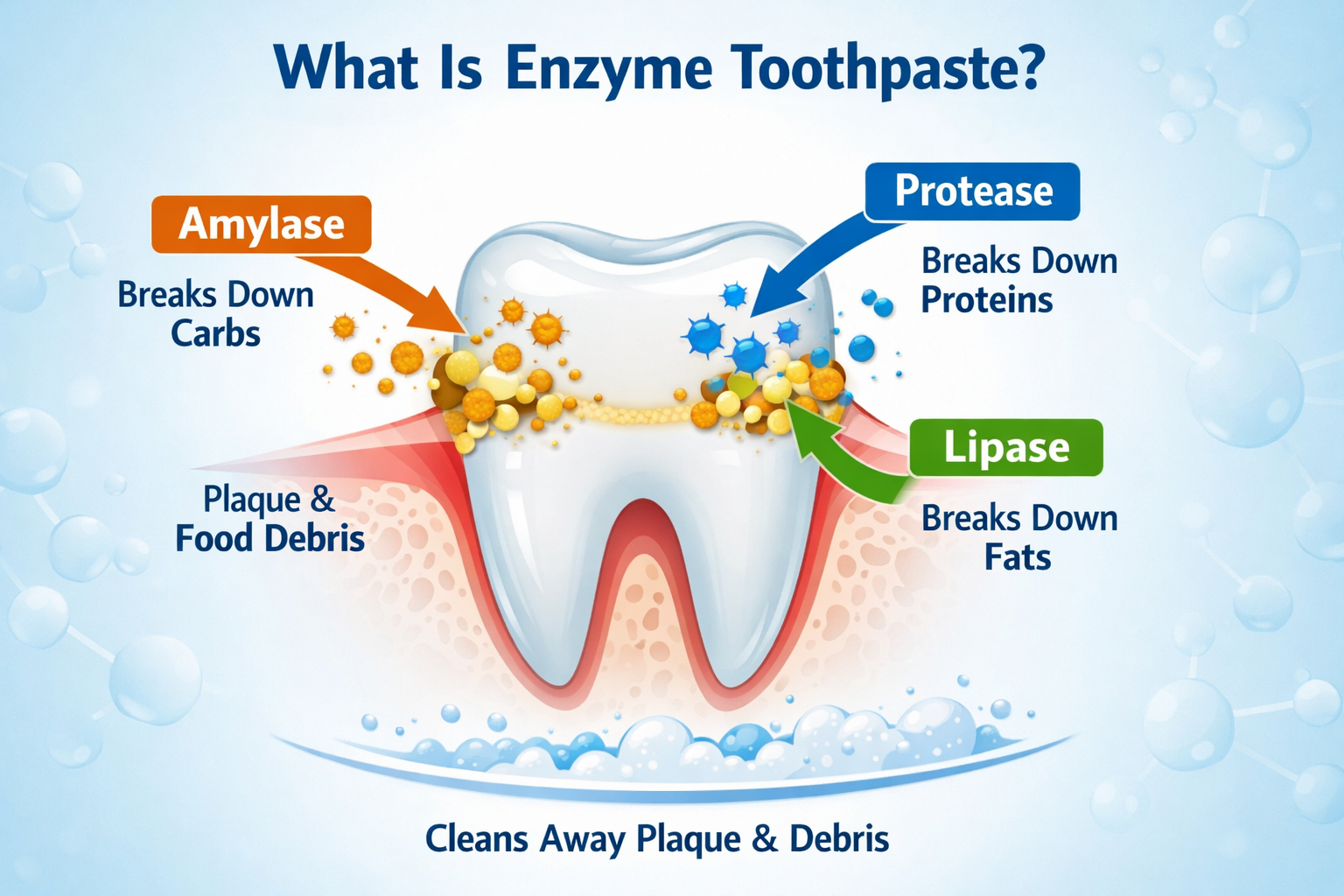
Enzyme toothpaste targets these three main components of plaque. This allows for a thorough cleaning without using strong abrasives or high levels of chemicals.
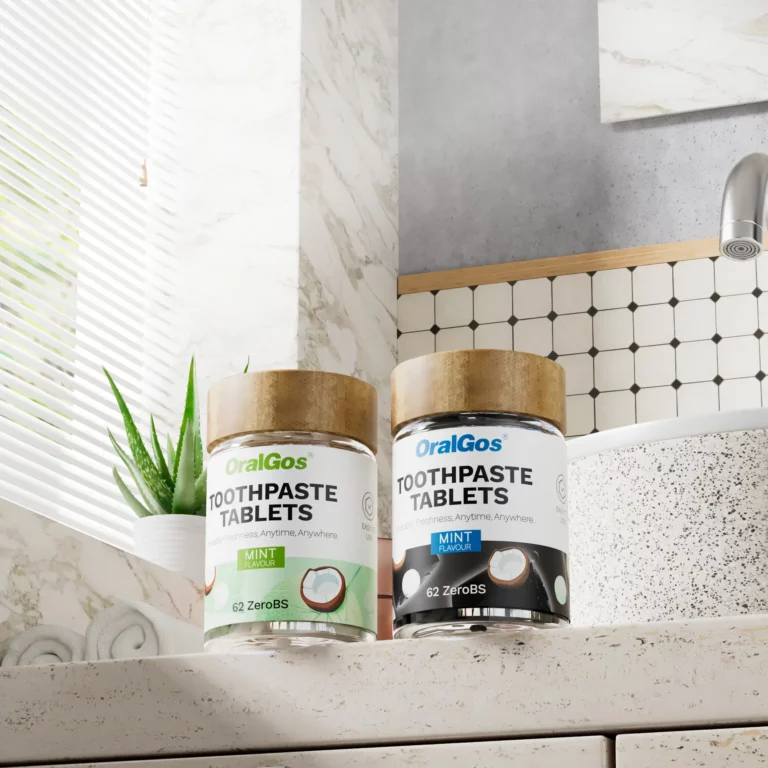
For those interested in different formulations, OralGos Toothpaste Collection offers a variety of options. Many enzyme-based products combine natural extracts to deliver extra oral care benefits.
Key Benefits for Modern Oral Care
Enzyme toothpaste offers several advantages over traditional formulations:
- Gentle Whitening: Enzyme-based formulations break down plaque and organic residues. This helps maintain the natural color of teeth without using harsh bleaching agents.
- Reduced Sensitivity: Its mild nature reduces enamel wear, making it suitable for people with sensitive teeth.
- Enhanced Breath Freshness: By targeting protein-rich bacterial deposits, enzyme toothpaste minimizes the compounds responsible for bad breath.
- Support for Healthy Oral Bacteria: Some chemical-based toothpastes can disturb the mouth’s natural bacteria. Enzyme-based formulations, however, help maintain a healthy balance.
Dental professionals increasingly recognize enzyme toothpastes as a complementary tool in preventive oral care. The American Dental Association provides guidelines supporting the inclusion of enzymatic components in brushing routines for patients seeking gentle, effective cleaning options.
How to Select the Right Toothpaste Formula
When selecting an enzyme-based toothpaste, consider factors such as age, sensitivity, and specific oral concerns. Many modern products combine enzymes with fluoride, herbal extracts, or xylitol for dual-action benefits.
For best results, brush twice a day using a pea-sized amount of enzyme toothpaste. Make sure to cover all tooth surfaces thoroughly. Complementing brushing with flossing or interdental cleaning further enhances plaque control and gum health.
Final Thoughts on Enzyme Toothpaste Technology
The rise of enzyme toothpaste reflects a broader trend toward natural, gentle, and research-backed oral care solutions. These toothpastes use enzymes to clean teeth effectively. They help reduce enamel wear and support a healthy balance of oral bacteria.
For a comprehensive selection of enzyme-based oral-care products, explore the OralGos Toothpaste Collection. Consult our dental experts to identify formulations best suited for your product lineup and customer needs.
In summary, enzyme toothpastes offer an innovative and effective solution for modern oral care. They provide gentle yet thorough cleaning while supporting long-term oral health.