
A sonic toothbrush has become one of the most widely recommended innovations in modern oral care. As people focus more on dental health and long-term gum protection, sonic technology is changing daily tooth cleaning. But what exactly is a sonic toothbrush, and why is it often considered more effective than traditional brushing methods?
This guide breaks down everything you need to know—from how it works to who should use it and how to choose the right one.

What Is a Sonic Toothbrush?
A sonic toothbrush is an electric toothbrush that uses high-frequency vibration technology to clean teeth and gums. Unlike manual brushing, which uses physical scrubbing, a sonic toothbrush makes rapid brush head movements. These movements often range from 20,000 to over 40,000 strokes per minute.
These vibrations create fluid movement in the mouth. This helps remove plaque from both direct bristle contact and hard-to-reach areas.
This device provides more than basic tooth cleaning. It creates a fluid cleaning effect that improves oral hygiene.
How Does a Sonic Toothbrush Work?
The effectiveness of this device comes from two key mechanisms: vibration frequency and fluid dynamics.
High-Frequency Vibration
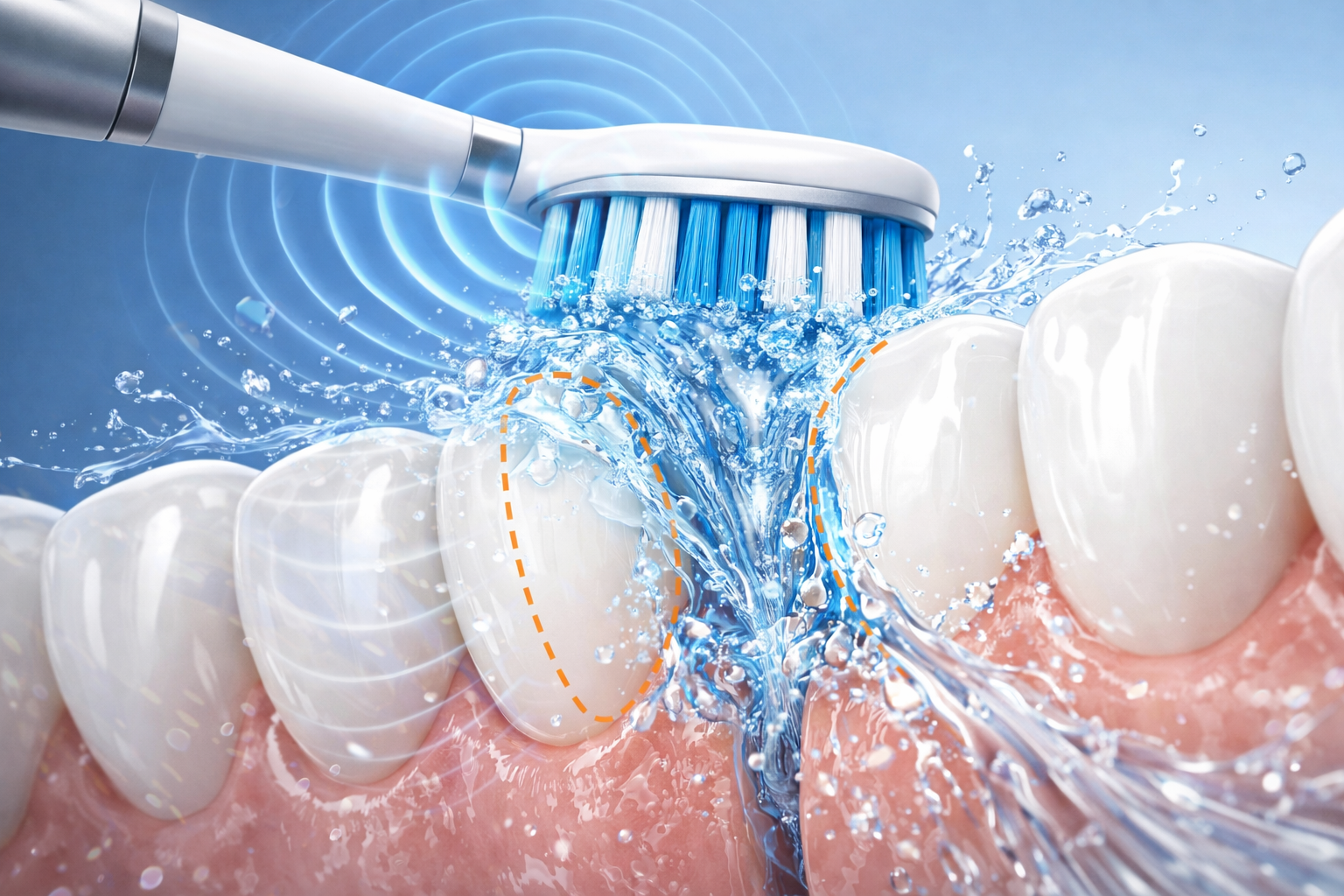
A sonic toothbrush operates at extremely high speeds. The brush head oscillates rapidly, producing sonic waves that travel through saliva and water in the mouth. These waves help dislodge plaque even in areas where bristles do not directly reach.
Fluid Dynamics Cleaning Effect
When the brush vibrates, it creates micro-bubbles and fluid motion around the teeth. This enhances cleaning efficiency by pushing debris away from the gum line and between teeth.
This is why many dental professionals describe sonic technology as a combination of mechanical brushing and fluid-powered cleaning.
Sonic Toothbrush vs Other Electric Toothbrush Types
Understanding the difference between a sonic toothbrush and other types is essential when choosing the right oral care tool.
Sonic vs Oscillating-Rotating Toothbrush
Oscillating toothbrushes use circular spinning motions to clean each tooth individually. While effective, they rely more on direct contact.
A sonic toothbrush, on the other hand, cleans multiple teeth at once through vibration and fluid movement. This makes it faster and often more comfortable for users with sensitive gums.
Sonic vs Manual Toothbrush
Manual toothbrushes depend entirely on user technique. Many people brush too hard or miss key areas.
A sonic toothbrush reduces user error by standardizing cleaning motion, ensuring consistent plaque removal regardless of brushing habits.
Benefits of Using a Sonic Toothbrush
The growing popularity of sonic toothbrushes is driven by several key benefits:
Better Plaque and Stain Removal
High-frequency vibrations help break down plaque more effectively than manual brushing. This also reduces surface stains caused by coffee, tea, and smoking.
Improved Gum Health
Gentle sonic motion stimulates gums without aggressive scrubbing, which may help reduce inflammation and bleeding over time.
Suitable for Sensitive Teeth
Because sonic toothbrushes rely less on pressure, they are often recommended for users with sensitive enamel or receding gums.
Whitening Support
A sonic toothbrush is not a bleaching tool. However, regular use can remove surface stains and improve the natural brightness of teeth.
Who Should Use a Sonic Toothbrush?
This device is suitable for a wide range of users:
People with Sensitive Teeth or Gums
The gentle vibration reduces irritation compared to manual brushing.
Orthodontic Patients
People with braces often benefit from sonic cleaning because it helps reach around brackets and wires.
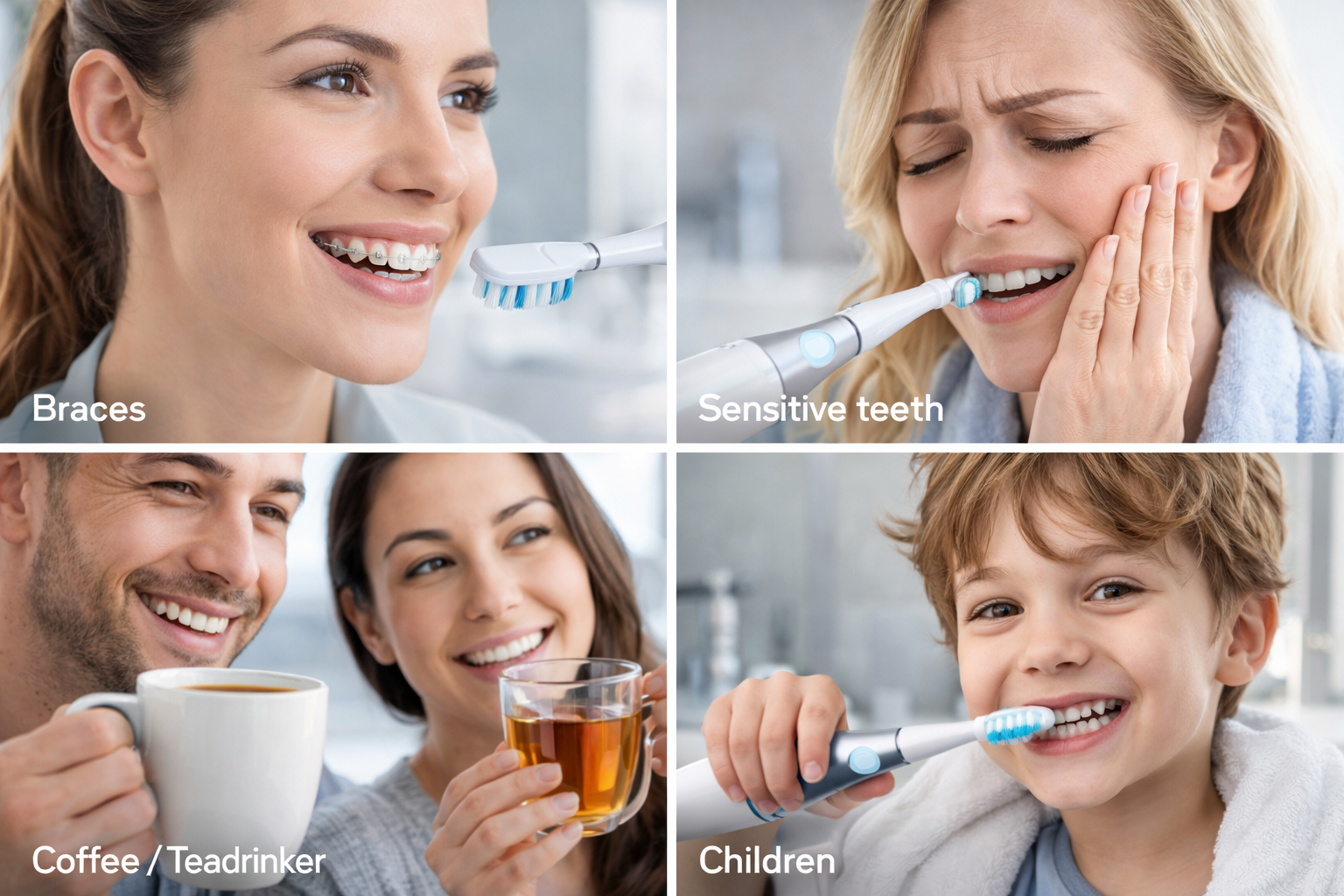
Children and Beginners
Many models offer soft modes that help build proper brushing habits.
Heavy Coffee or Tea Drinkers
Sonic technology helps reduce surface staining more effectively.
Are Sonic Toothbrushes Safe?
A common concern is whether high-frequency vibration can damage enamel or gums. In reality, a sonic toothbrush is safe when used correctly.
The main risk does not come from the device itself, but from improper brushing technique—especially applying too much pressure.
Dentists generally recommend letting the toothbrush do the work, gently guiding it across each tooth rather than scrubbing manually.


How to Choose the Best Sonic Toothbrush
Not all sonic toothbrushes are the same. When evaluating options, consider the following factors:
Bristle Design and Material
Soft, high-density bristles are ideal for both cleaning efficiency and gum protection.
Vibration Speed and Modes
Multiple cleaning modes (clean, sensitive, whitening) offer more flexibility.
Battery Life
Long battery life is essential for travel and daily convenience.
Waterproof Design
A high waterproof rating ensures durability and safety in wet environments.
Smart Features
Timers, pressure sensors, and app features can improve brushing habits.
Sonic Toothbrush for Different Needs
Different users require different solutions:
- For sensitive teeth: soft-mode sonic toothbrushes
- For whitening: high-frequency cleaning models
- For kids: low-intensity, gentle vibration brushes
- For travel: compact and long-battery designs
Choosing the right model depends on lifestyle and oral health needs.
Sonic Toothbrush Market Trends (2026 and Beyond)
The global oral care market continues to evolve, and sonic toothbrushes are at the center of this transformation.
Key trends include:
- Increasing demand for smart oral care devices
- Integration of AI-based brushing guidance
- Growth of eco-friendly and recyclable materials
- Expansion of OEM/ODM manufacturing for global brands
Many oral care brands now work with manufacturers to create customized sonic toothbrushes for different markets.
How Sonic Toothbrushes Are Manufactured (B2B Insight)
Behind every sonic toothbrush is a complex manufacturing process that combines precision engineering and quality control.
Motor and Sonic Technology Assembly
The core motor determines vibration frequency and performance stability.
Bristle Implantation
High-density bristles are implanted to ensure cleaning efficiency and durability.
Quality Control
Each unit undergoes waterproof testing, vibration calibration, and safety inspection.
OEM/ODM Product Design
Brands can customize design, color, vibration modes, and packaging for different market segments.
Sonic toothbrushes are both consumer products and valuable B2B opportunities in the oral care industry.
Frequently Asked Questions About Sonic Toothbrush
Is a sonic toothbrush better than a manual toothbrush?
Yes. It provides more consistent cleaning and reduces reliance on brushing technique.
How often should you replace the brush head?
Dentists recommend replacing the brush head every 2–3 months for optimal hygiene.
Can children use sonic toothbrushes?
Yes, but only with age-appropriate soft modes and supervision.
Do dentists recommend sonic toothbrushes?
Many dentists recommend them for improved plaque control and gum health.
How long should you brush?
Most models include a 2-minute timer, which aligns with dental guidelines.
Conclusion
A sonic toothbrush represents a major advancement in everyday oral care. It uses high-frequency vibration and fluid movement to clean teeth more deeply and efficiently than traditional brushing.
Sonic technology is becoming a global standard in oral care. It benefits both consumers and brands.