When we think about oral health, we usually focus on brushing away sugar to avoid cavities. However, a silent chemical battle happens in your mouth every day. pH levels entirely govern this battle. Understanding the pH scale is crucial for maintaining a healthy smile. When your mouth becomes too acidic, your teeth face a destructive process known as tooth enamel erosion. If left unchecked, this can lead to permanent damage, sensitivity, and costly dental work.
The Chemistry of Your Smile: Understanding pH Levels
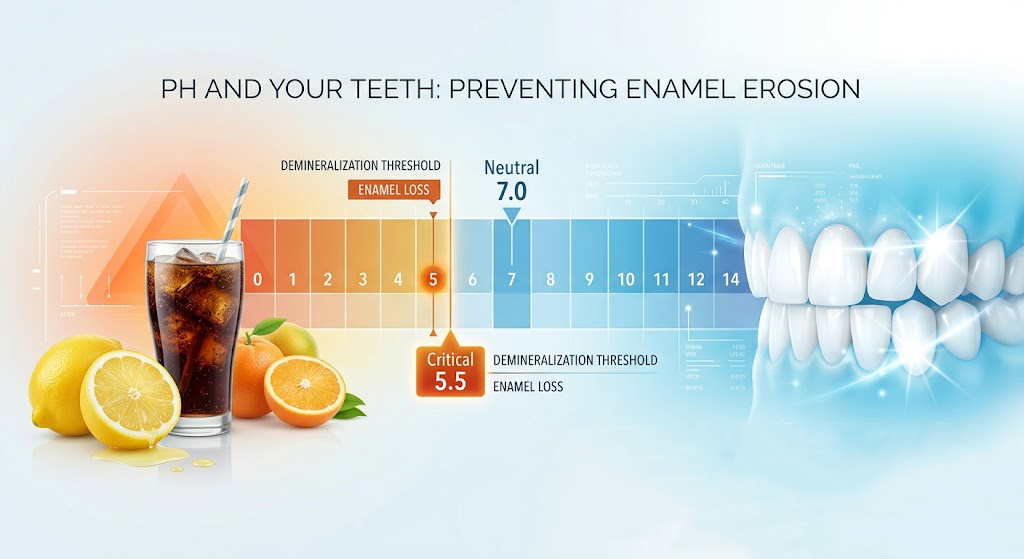
The pH scale measures how acidic or alkaline a substance is. It ranges from 0 (highly acidic) to 14 (highly alkaline), with 7 being neutral.
Pure water sits at a neutral 7. Your mouth, under normal and healthy conditions, maintains a slightly acidic to neutral pH of about 6.7 to 7.3. Your saliva acts as a natural buffer, constantly working to keep the pH within this safe zone.
However, the danger zone begins when the pH in your mouth drops below 5.5. This specific threshold is known as the “critical pH.” The hard minerals protecting your teeth begin to dissolve if your mouth stays acidic for too long. This process triggers acid erosion teeth.
How Acid Impacts Teeth: The Science Behind the Damage
Every time you eat or drink, the pH level in your mouth shifts. Acid attacks your teeth in two primary ways:
- Direct Acid Exposure: Certain items introduce acid directly to your teeth. Watch out for these acidic foods and beverages: citrus fruits, soda, wine, and sports drinks.
- Bacterial Acid Production: The harmful bacteria in your mouth feed on sugars from your diet. As they digest these sugars, they excrete acid as a byproduct, rapidly lowering your oral pH.
When the pH drops below the critical 5.5 mark, a process called demineralization occurs. The acid strips away essential minerals, like calcium and phosphate, from the outer layer of your teeth. Over time, this chronic exposure leads to severe acid erosion teeth, wearing away the structural integrity of your smile.
The Consequences of Tooth Enamel Erosion
Enamel is the hardest substance in the human body—even harder than bone. However, enamel has one major flaw: it cannot grow back. Unlike bone, enamel contains no living cells. Once acid destroys enamel, your body cannot replace it.
As tooth enamel erosion progresses, you may notice several troubling symptoms:
- Tooth Sensitivity: Thinner enamel exposes the underlying dentin. This exposure causes sharp pain when you eat hot, cold, or sweet foods.
- Yellowing Teeth: Your teeth may develop a noticeable yellow tint. This isn’t just surface staining; it is the yellow dentin showing through the thinned enamel.
- Rounded Teeth: Your teeth may lose their sharp, clean edges and appear rounded or sanded down.
- Cupping: Small dents or cups may develop on the chewing surfaces of your teeth.
The American Dental Association states that dietary habits are a primary cause of enamel wear. Therefore, daily habits are your first line of defense.
Prevention and Protection: Fighting Back Against Acid Wear
You cannot regrow lost enamel. However, you can stop tooth enamel erosion and strengthen your remaining teeth through remineralization. Here is how you can protect your teeth from acid damage:
1. Reconsider Your Diet to Prevent Enamel Wear
Limit your intake of highly acidic beverages like carbonated soft drinks, energy drinks, and citrus juices. When consuming acidic beverages, use a straw to minimize direct contact with your teeth. Afterward, rinse your mouth with plain water to help restore a neutral pH.
2. Never Brush Immediately to Avoid Accelerating Enamel Erosion
It sounds surprising, but brushing right after an acidic meal can worsen acid erosion teeth. Acid softens the enamel. If you brush immediately, you are physically scrubbing away the softened mineral layer. Wait at least 30 to 60 minutes for your saliva to naturally neutralize the acid and remineralize your teeth.
3. Upgrade Your Toolkit with Enamel-Protecting Tools
Mechanical cleaning is vital to remove the plaque bacteria that produce acid. Investing in high-quality tools makes a massive difference:
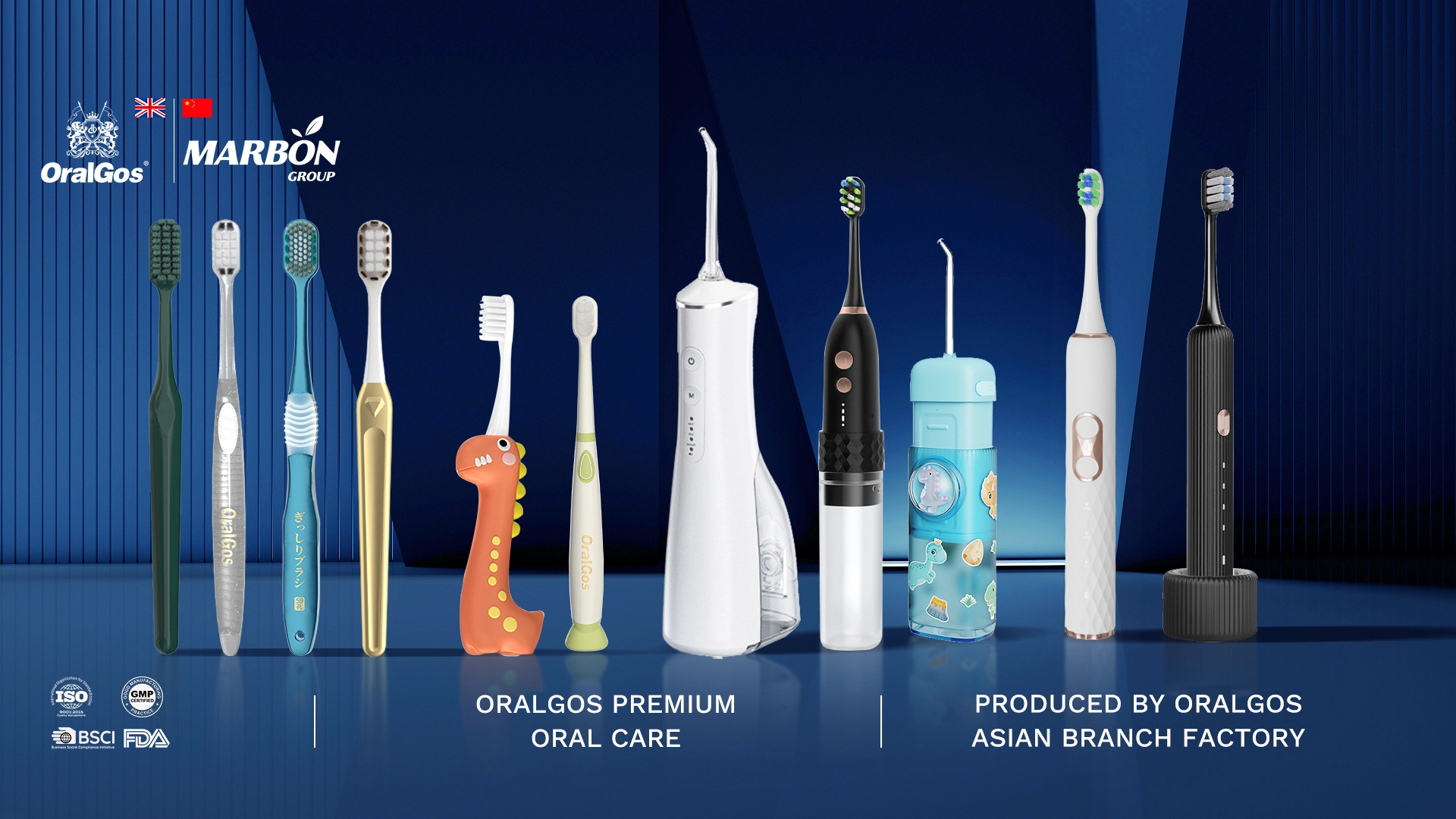
- Switch to an electric toothbrush to ensure a deep, gentle clean without scrubbing too hard on weakened enamel.
- If you prefer a traditional approach, ensure you are using a soft-bristled manual toothbrush to prevent abrasive wear.
- Pay close attention to the interdental spaces, where acid-producing bacteria heavily accumulate. A water flosser is highly effective at flushing out food particles and balancing your intraoral biofilm.
Conclusion: Stop Tooth Enamel Erosion for a Lifetime
Your teeth are under a constant tug-of-war between acid demineralization and salivary remineralization. Understanding oral pH levels helps you protect your smile. With this knowledge, you can make smarter dietary choices and adopt a defensive dental routine.
Maintain a neutral oral pH and give your saliva time to remineralize your teeth. By pairing these habits with the right oral care tools, you can prevent tooth enamel erosion for a lifetime.