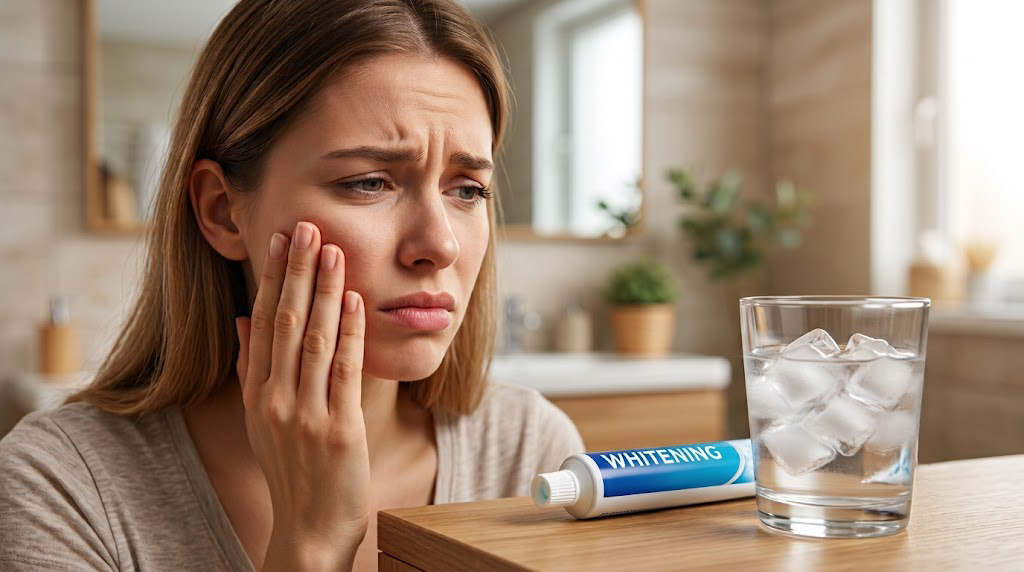
A bright, radiant smile radiates health, confidence, and youth. Because of this, millions of people incorporate whitening products into their daily oral hygiene routines. However, switching to a brightening formula often triggers sharp dental pain from iced coffee or hot soup. If you feel this pain, you may wonder if your whitening toothpaste makes sensitive teeth worse.
The short answer is yes—it absolutely can. These products excel at lifting surface stains from coffee, tea, and red wine. However, their whitening mechanism can sometimes compromise your enamel. To understand why your whitening toothpaste leaves sensitive teeth throbbing, it helps to look at what is happening beneath the surface of your smile.
Why Whitening Toothpaste Affects Sensitive Teeth
To brighten your smile, most over-the-counter toothpastes rely on two main ingredients. They use chemical bleaching agents like hydrogen peroxide, alongside mechanical abrasives. While these ingredients are highly effective at scrubbing away stubborn stains, they can be incredibly harsh on compromised smiles.
How High Abrasives Trigger Tooth Sensitivity
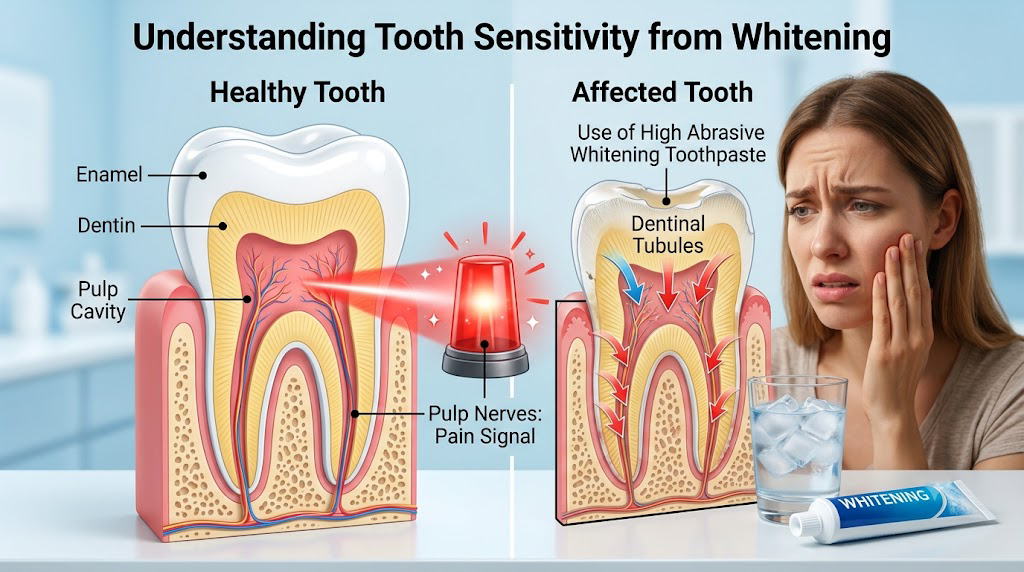
Every tooth is protected by a hard outer layer called enamel. Beneath the enamel lies dentin. This softer tissue contains thousands of microscopic pathways leading straight to the tooth’s nerve. When you use highly abrasive formulas, you risk gradually wearing down your enamel over time.
Once the enamel thins, these microscopic pathways—known as dentinal tubules—become exposed to the elements. Hot, cold, or acidic foods can easily contact these exposed areas. When they do, the stimuli travel straight to the nerve, causing a sharp jolt of pain.
The Impact of Chemical Bleaching on Delicate Enamel
In addition to physical abrasives, some whitening formulations use peroxide to break down deep stains. Professional treatments control peroxide levels safely. However, daily use of harsh toothpaste can irritate your gums and penetrate enamel, causing mild nerve inflammation. If your enamel is already weak, using a harsh whitening toothpaste on sensitive teeth will quickly make the pain worse.
How to Choose a Whitening Toothpaste Sensitive Teeth Can Handle
Fortunately, dealing with dental sensitivity does not mean you have to give up on a bright smile entirely. You simply need to shift your focus toward non-abrasive brightening methods and enamel remineralization. The American Dental Association recommends a balanced approach. Consumers should look for products that remove stains while protecting the tooth’s structure.
Look for Low-Abrasive Whitening Toothpaste Alternatives
When building your oral care routine, choose products that protect your enamel while brightening your smile. For daily maintenance, switching to a milder toothpaste gives your teeth the break they need to recover.
Utilize Optical Color-Correcting Technology for Sensitive Teeth
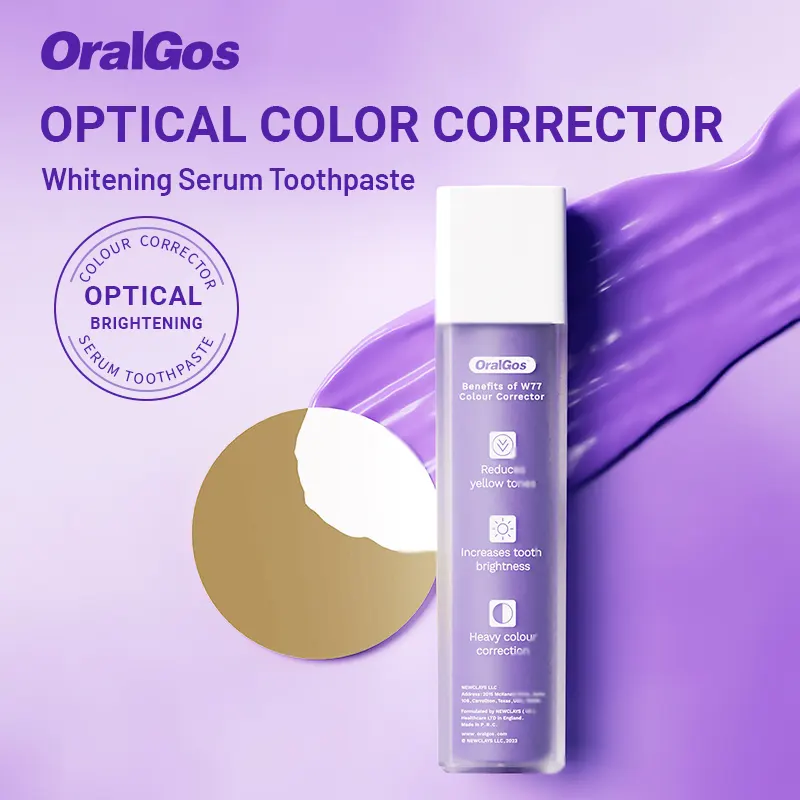
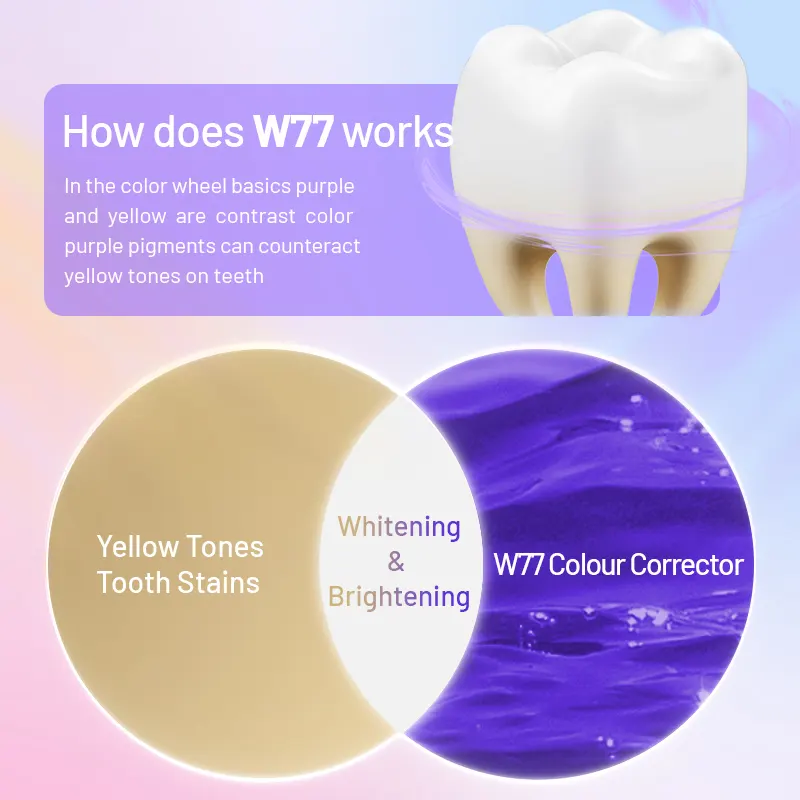
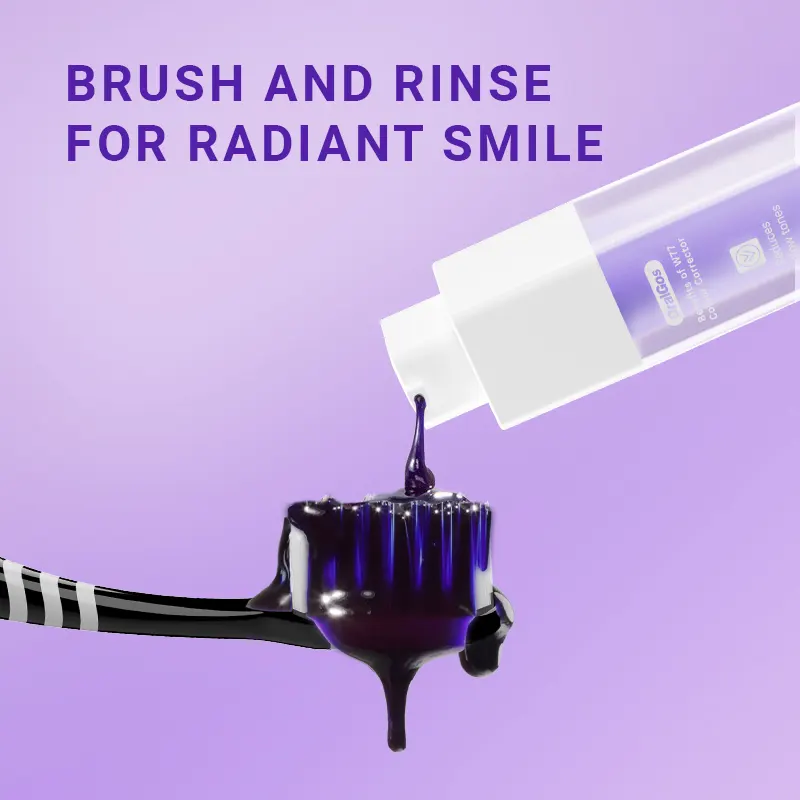
Modern dental science offers safer whitening alternatives based on color theory. This means you don’t have to scrub away enamel or use harsh peroxides. For instance, you can try a specialized post-brushing treatment like Oralgos Colour Corrector Toothpaste. It utilizes deep violet tones to neutralize yellow undertones on the tooth surface.
This method relies on optical color correction rather than harsh abrasives or chemical bleaching. As a result, it brightens your smile without triggering traditional whitening pain.
Best Practices and Daily Habits for Protecting Your Smile
Adopt the following daily habits and you will keep your teeth bright without compromising your comfort:
- Check the RDA Value: Look for toothpastes with a low Relative Dentin Abrasivity (RDA) score. Dental experts consider a score under 70 or 80 low abrasive and much safer for daily use.
- Use a Soft-Bristled Brush: Firm bristles combined with abrasive toothpaste act like sandpaper on your teeth. Always opt for a soft or ultra-soft toothbrush and apply gentle, circular pressure.
- Alternate Your Products: Do you love your traditional whitening toothpaste? Try alternating it with a sensitivity formula containing potassium nitrate or nano-hydroxyapatite to shield exposed nerves.
Choose your toothpaste ingredients wisely to achieve a radiant, confident smile that feels as good as it looks.