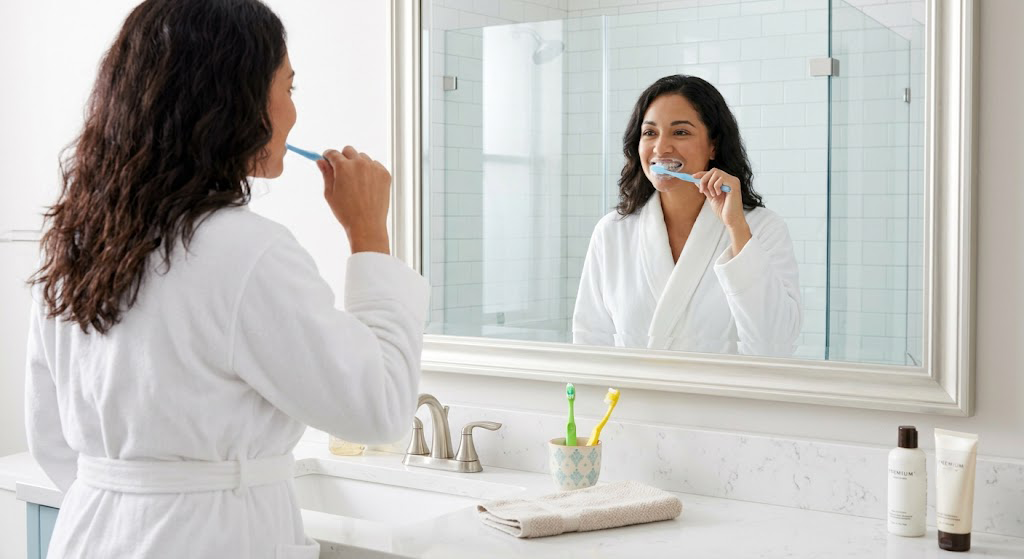
When you watch commercial advertisements for toothpaste, you usually see a generous, sleek ribbon of toothpaste slathered across the entire head of the toothbrush. It looks satisfying, clean, and refreshing. However, advertisement imagery is designed to sell more product—not to give you accurate dental advice.
In reality, using too much toothpaste is not only wasteful, but it can also pose subtle risks to your dental health. So, how much toothpaste to use each time you brush to maintain optimal oral hygiene? The answer depends largely on your age, but for most adults, it is far less than you might think.
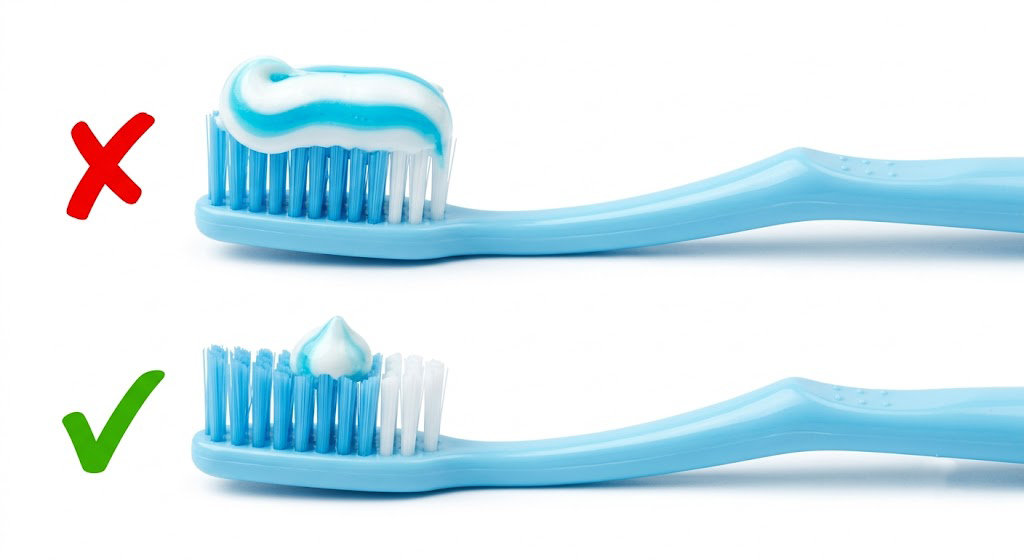
The Recommended Amount for Adults: The Pea-Sized Rule
For adults and children over the age of six, the gold standard recommendation is a pea-sized amount of fluoride toothpaste.
That is right—a small dollop no larger than a green pea is all you need to clean your teeth effectively. Toothpaste acts primarily as a mild abrasive to help loosen plaque and as a delivery mechanism for fluoride, which strengthens tooth enamel. The mechanical action of your toothbrush bristles doing the actual scrubbing is what removes most of the plaque and debris.
Loading your brush with a full strip of paste creates excessive foam. While a mouth full of suds might feel like a deeper clean, it often leads to spitting early and rushing through your brushing session. A pea-sized dab produces plenty of foam to coat your teeth evenly while allowing you to comfortably complete the dentist-recommended two minutes of brushing.
Understanding How Much Toothpaste to Use for Children
When it comes to infants, toddlers, and young children, understanding how much toothpaste to use is even more crucial. Young children tend to swallow toothpaste rather than spit it out, which can lead to overexposure to fluoride.
Here is the age-by-age breakdown recommended by the American Dental Association:
- Under 3 Years Old: Use a tiny smear or a dab the size of a single grain of rice. This provides the protective benefits of fluoride while keeping swallowed amounts safely minimal.
- Ages 3 to 6 Years: Transition to a small pea-sized amount. Parents should always supervise brushing to ensure children spit out the excess paste rather than swallowing it.
- Ages 6 and Older: Continue using a pea-sized amount, which remains the lifelong standard for adult dental care.
Note: Swallowing excessive amounts of fluoridated toothpaste during early childhood (while permanent teeth are still forming under the gums) can cause dental fluorosis. This cosmetic condition leads to faint white lines, streaks, or discoloration on the enamel of adult teeth.
Can You Ever Use Too Much Toothpaste?
Yes, you can. Beyond the risk of fluorosis in young children, using an excessive amount of toothpaste as an adult has its own downsides:
- Enamel Wear: Toothpaste contains gentle abrasives to help scrub away surface stains. Using too much toothpaste combined with aggressive brushing can wear down enamel and irritate delicate gum tissue over time.
- False Sense of Cleanliness: Excessive foaming tricks your brain into thinking your mouth is clean after only 30 or 40 seconds, encouraging you to stop brushing way too early.
- Product Waste: Overloading your brush simply wastes money. A standard tube of toothpaste should last an adult roughly two to three months when used correctly twice a day.


Tips for Getting the Most Out of Your Toothpaste
Knowing how much toothpaste to use is only half the battle; how you apply and brush matters just as much. Keep these best practices in mind for your daily routine:
- Press It into the Bristles: Instead of letting the pea-sized dollop sit loosely on top of the toothbrush bristles, press it gently down into the brush head. This prevents the paste from sliding off into the sink the moment you start brushing.
- Don’t Rinse Immediately: After brushing for two full minutes, spit out the excess foam, but try to avoid rinsing your mouth with water immediately. Leaving a thin residue of fluoride on your teeth gives your enamel extra time to remineralize and protect against decay.
- Choose the Right Formula: Different smiles have different needs. Whether you are targeting sensitivity, stain removal, or enamel repair, make sure to explore a variety of quality toothpaste options to find the formula that best fits your oral health goals.
Conclusion
It is easy to fall for marketing tricks that convince us “more is better,” but modern dentistry proves otherwise. Whether you are caring for a toddler’s milk teeth or maintaining your adult smile, a tiny smear or a simple pea-sized dot is all it takes to keep your teeth strong, bright, and healthy. Next time you head to the sink, skip the giant swirl—your teeth (and your wallet) will thank you!