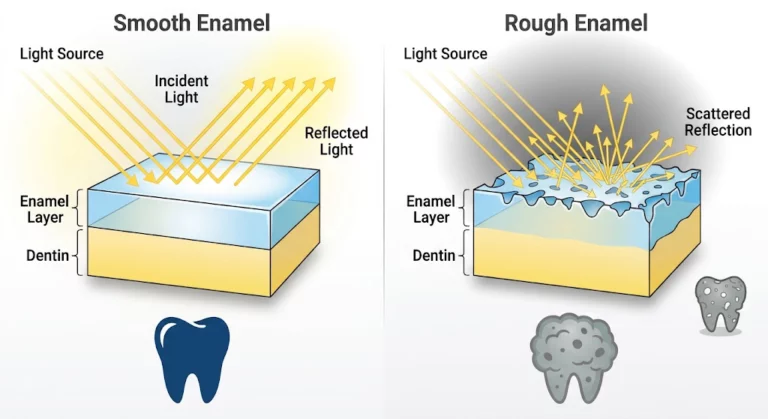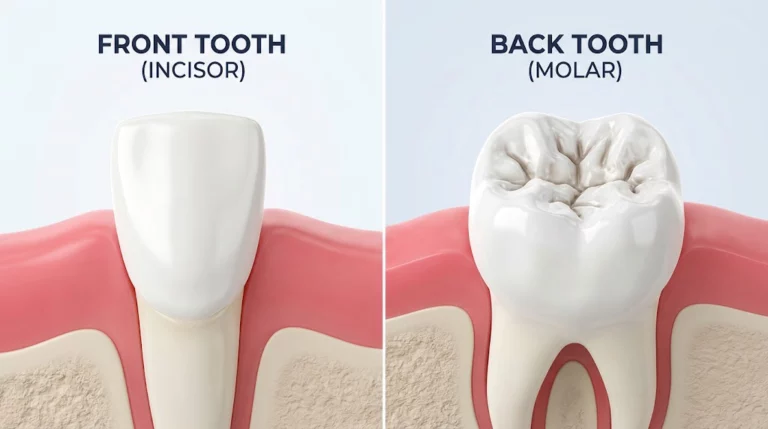
Choosing the right toothbrush involves looking closely at the bristle head architecture. Modern toothbrush bristles do more than basic cleaning. Their contoured shape determines how well they remove plaque from smooth enamel, deep grooves, and along the gumline. At the heart of this performance lies the arrangement and trimming of bristle bundles, known as toothbrush tufting profiles.
Knowing how flat, wave, and convex bristle shapes fit your teeth helps you pick the best toothbrush for daily plaque removal.
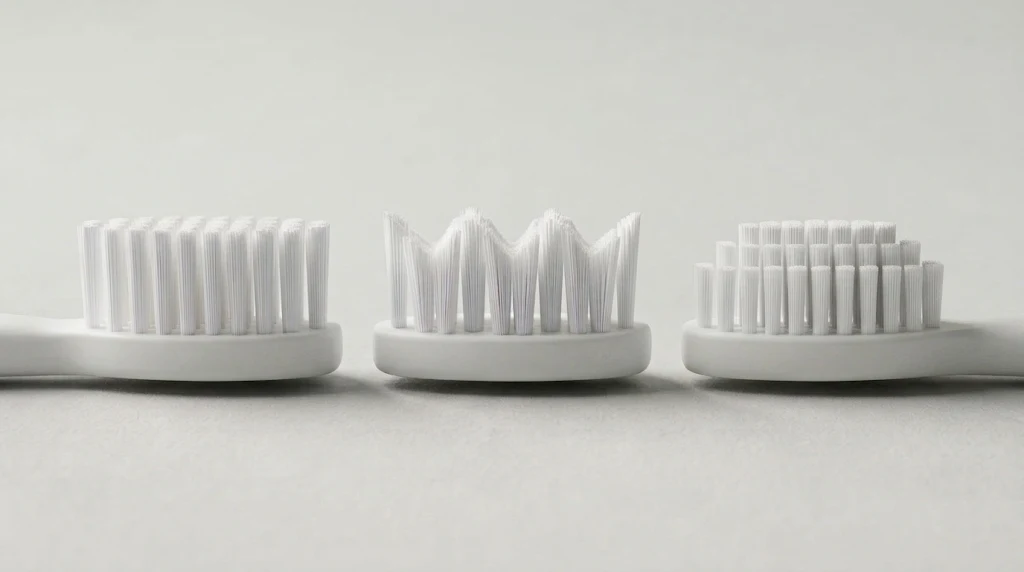
1. The Engineering Behind Toothbrush Tufting Profiles
A toothbrush head is not a monolithic surface. A brush head features dozens of individual bristle clusters. Manufacturers trim each cluster at specific heights and angles to shape an effective 3D cleaning surface.
The science of brushing relies on gentle contact, fluid movement, and multi-directional scrubbing. When you apply pressure, individual filaments flex. The shape of the overall profile determines:
- Surface contact distribution: How evenly pressure spreads across flat vs. rounded surfaces.
- Interdental penetration: How deeply outer filaments reach into the spaces between teeth (proximal spaces).
- Gingival margin conformity: How comfortably bristles sweep along the delicate trim of the gumline without causing tissue abrasion.
The American Dental Association recommends soft-bristled brushes with engineered trims. This design prevents enamel wear while removing maximum plaque.


2. Analyzing the Three Primary Toothbrush Tufting Profiles
Different tufting layouts solve specific cleaning challenges. Here is a breakdown of how the three primary profiles compare in everyday oral hygiene.
| Tufting Profile | Surface Geometry | Primary Clinical Advantage | Best Suited For |
| Flat-Trim | Uniform, single-height surface | Maximize smooth enamel friction | Standard cleaning, flat surfaces |
| Wave / Ripple | High-low peaks and valleys | Deep interdental & fissure reach | Mixed dentition, crowded teeth |
| Convex / Dome | Center-raised curve pattern | Gingival sulcus & subgingival care | Sensitive gums, recessions |
Flat-Trim Profile
The flat-trim design features uniform bristle lengths across the entire brush head, creating a flat plane.
- Mechanism: When placed at a 90-degree angle to the teeth, all bristles touch the outer and inner surfaces at the same time.
- Strengths: Excellent for sweeping clean open enamel faces and maintaining consistent contact force.
- Limitations: Flat brush heads cannot reach deep between teeth. Their outer bristles hit the tooth surface first, stopping inner bristles from cleaning tighter spaces.
Wave (Rippled) Profile
Wave profiles feature alternating high and low bristle clusters, mimicking a saw-tooth or sinusoidal pattern.
- Mechanism: Long bristle peaks flex into interdental gaps, while shorter valleys scrub the exposed tooth faces.
- Strengths: Provides superior reach into interdental spaces without requiring high bristle pressure. This makes wave profiles especially useful for individuals with irregular tooth alignment.
- Limitations: Improper brushing technique can cause long peaks to collapse flat against enamel, temporarily losing their targeted penetration benefit.
Convex (Dome-Trim) Profile
Convex or dome-trimmed profiles feature longer bristles down the center line and shorter bristles along the perimeter.
- Mechanism: By using the Bass technique at a 45-degree angle, the central dome slips easily into the gumline. This action clears plaque from pockets without poking delicate gums.
- Strengths: Gentle on delicate marginal gingiva while maintaining concentrated scrubbing along the center axis.
- Limitations: Reduces overall surface contact area on large molars compared to flat-trim heads.
3. How Multi-Level Innovations Advance Toothbrush Tufting Profiles
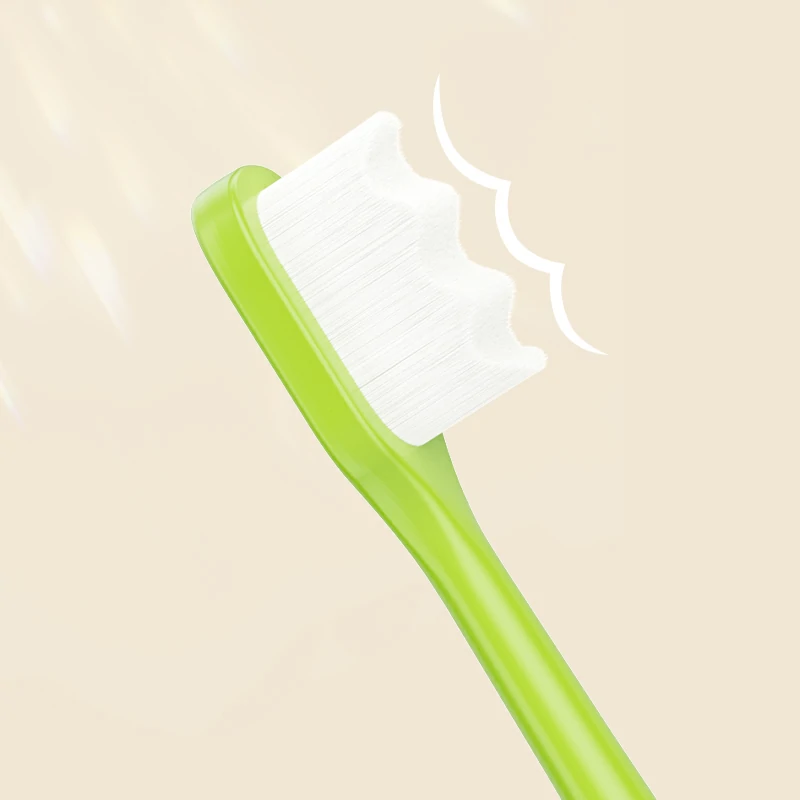
Traditional flat, wave, and convex designs handle basic cleaning well. However, modern manufacturers now combine these shapes to create multi-level bristle layouts.
Multi-level designs combine different bristle heights and softness. This allows a single brush stroke to clean multiple areas of your mouth at once. For example, outer soft bristles can protect the gumline while elevated center clusters remove stains from occlusal biting surfaces.
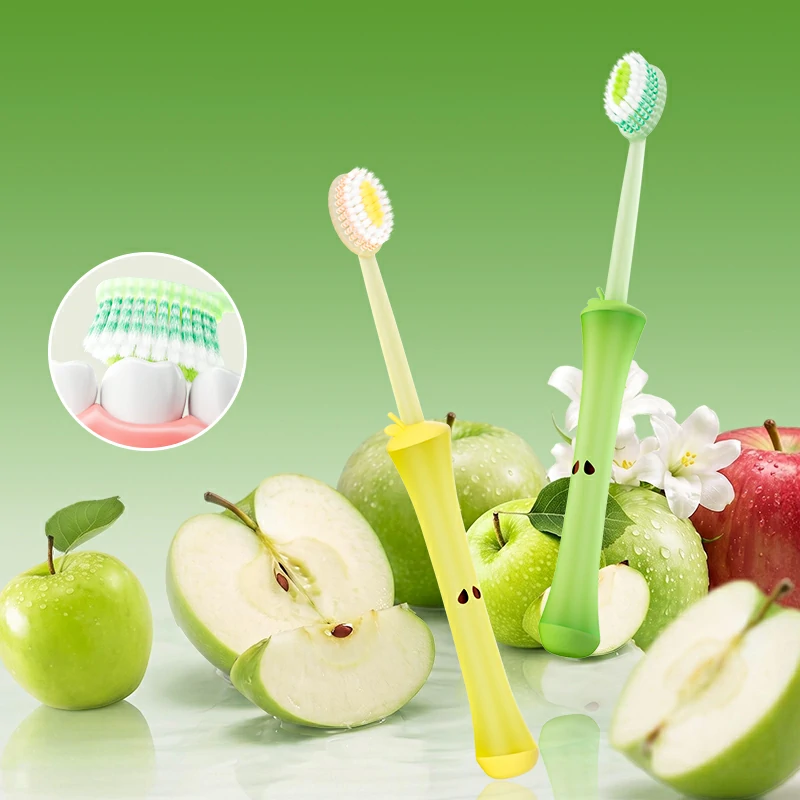
The Apple Core Triple-Level Soft Toothbrush shows how multi-height bristles work. This design reaches deep between teeth without hurting your gums.
  Wave Peak                Flat Zone                Convex Dome
 (Interdental)            (Enamel Face)            (Sulcus Sweep)
    ||  ||                   ||||||                   ||  ||
    ||  ||                   ||||||                 ||||  ||||
  ||||  ||||                 ||||||                ||||||||||||
 ===========              ============            ==============
4. Selecting the Ideal Manual Toothbrush Tufting Profiles
Selecting the right profile comes down to matching bristle geometry with individual oral health requirements:
- Orthodontic Braces or Crowded Teeth: Wave or V-shaped profile trims fit over brackets and reach around misaligned teeth.
- Gingival Recession or Sensitivity: Convex dome-trim profiles focus pressure away from fragile tissue borders.
- General Daily Maintenance: Multi-level soft bristles provide balanced coverage for both smooth enamel surfaces and interdental spaces.
Exploring a complete manual toothbrush collection helps you find the right brush. You can easily choose the ideal head shape, bristle softness, and tuft layout for your oral care needs.