Persistent bad breath, medically known as halitosis, affects millions of people worldwide. Cosmetic mints and quick-fix mouthwashes only offer temporary relief. True fresh breath requires targeting the root cause: volatile sulfur compounds (VSCs) produced by oral anaerobic bacteria. The best toothpaste for bad breath contains active ingredients that eliminate odor-producing bacteria instead of merely masking smells. Learning about key toothpaste ingredients for halitosis helps you move away from quick fixes. Instead, you can focus on long-lasting oral health solutions. Below is a breakdown of proven formulas that fight breath malodor at its source.
Active Toothpaste Ingredients for Halitosis: What Actually Works?
Not all dental formulas perform equally well when managing chronic odor. The most effective toothpaste ingredients for halitosis utilize antibacterial, neutralizing, or remineralizing mechanisms.
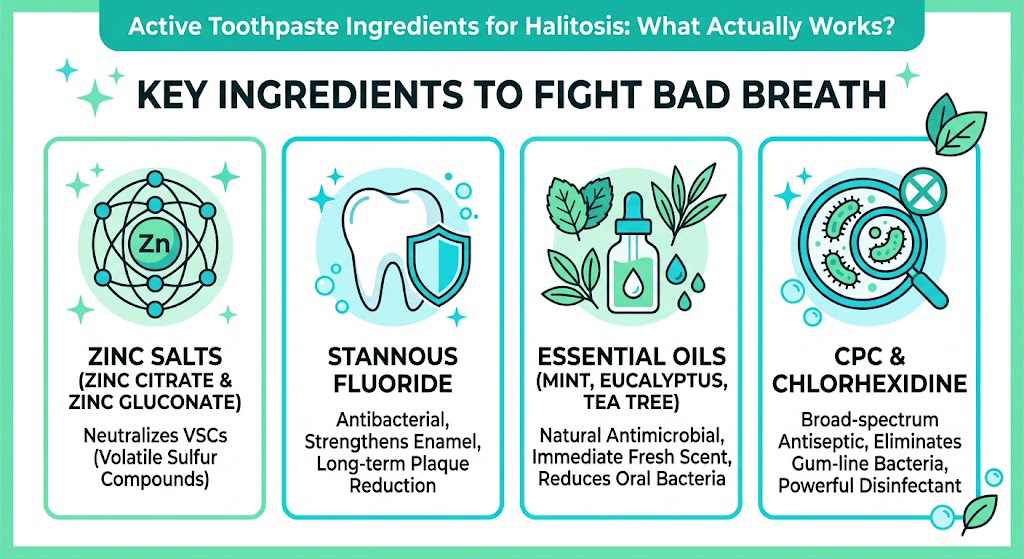
1. Zinc Salts: Top Anti-Halitosis Toothpaste Ingredients
These active compounds rank among the most celebrated toothpaste ingredients for halitosis. When active, free ions bind directly to volatile sulfur compounds and turn them into odorless byproducts. This process neutralizes key odor causes like hydrogen sulfide and methyl mercaptan. Additionally, zinc exhibits mild antimicrobial properties that restrict the growth of VSC-producing anaerobic bacteria.
2. Stannous Fluoride for Bacterial Bad Breath Control
Unlike standard sodium fluoride, stannous fluoride delivers dual action. It protects tooth enamel while serving as a potent antibacterial agent. Stannous fluoride stops bad breath before it forms by cutting bacterial buildup along the gums and tongue.
3. Essential Oils & Plant Extracts in Fresh Breath Formulas
Natural extracts like tea tree oil, eucalyptus, and peppermint oil provide natural antibacterial effects alongside a fresh scent. When paired with active neutralizing agents, essential oils help clear out stubborn microbes lodged in dental plaque.
4. CPC & Chlorhexidine: Antibacterial Ingredients for Halitosis
While more commonly found in therapeutic rinses, CPC and chlorhexidine derivatives are increasingly formulated into high-performance pastes. These broad-spectrum antiseptics inhibit bacterial cell walls, lowering overall oral microbial counts.
How to Choose the Best Toothpaste for Bad Breath
The best toothpaste for bad breath depends on your specific oral health needs. Factors like lifestyle, dry mouth, or gingivitis all play a role in your choice.
| Key Feature | Target Oral Benefit | Recommended Active Ingredients |
| VSC Neutralization | Immediate gas neutralization | Zinc Citrate, Zinc Gluconate |
| Bacterial Control | Long-term plaque & microbe reduction | Stannous Fluoride, CPC |
| Enamel Protection | Cavity prevention & remineralization | Fluoride, Nano-Hydroxyapatite |
| Dry Mouth Support | Saliva stimulation & moisture retention | Xylitol, Enzymatic Formulations |
When shopping for daily oral care, review targeted options like Oralgos Toothpaste Formulations. Choose balanced formulas designed for everyday protection and long-lasting freshness.
Key Causes of Halitosis and How Active Ingredients Help
Understanding why breath malodor occurs makes ingredient selection far clearer:
- Anaerobic Microbes on the Tongue: According to the American Dental Association, hundreds of bacteria types feed on food leftover in the mouth. These bacteria break down particles and release smelly sulfur gases. Formulations containing zinc or antimicrobial agents neutralize these metabolic leftovers.
- Dry Mouth (Xerostomia): Saliva naturally washes away lingering particles and keeps bacterial counts in check. Toothpastes enriched with hydration-boosting ingredients like xylitol prevent oral dryness and keep the mouth balanced.
- Plaque and Early Gum Disease: Bacterial plaque buildup around the gumline produces constant odors. Using stannous fluoride or targeted antiseptics disrupts plaque biofilm and maintains healthy gums.
Daily Steps for Maximum Breath Freshness
Using the best toothpaste for bad breath is most effective when combined with a consistent, multi-step oral care routine:
- Brush Twice Daily: Spend a full two minutes cleaning all tooth surfaces with an appropriate anti-halitosis paste.
- Clean the Tongue: Bacterial biofilms concentrate heavily on the back of the tongue. Gently scrape or brush the tongue daily to remove trapped odor sources.
- Floss Daily: Interdental cleaning removes hidden debris and plaque that standard toothbrush bristles cannot reach.
- Maintain Adequate Hydration: Drink plenty of water throughout the day to support healthy saliva flow.
Selecting effective toothpaste ingredients for halitosis transforms your daily brushing habit from simple cosmetic upkeep into targeted, protective care. Look for active formulas that neutralize sulfur compounds and combat bacterial growth for consistent breath confidence.