Many people wonder: is toothpaste foam necessary for cleaning, or is it just an extra feature? While brushing creates a dense lather that feels refreshing, active ingredients do the actual cleaning. Understanding why toothpaste foams helps you choose the right oral care routine for your enamel and gums.
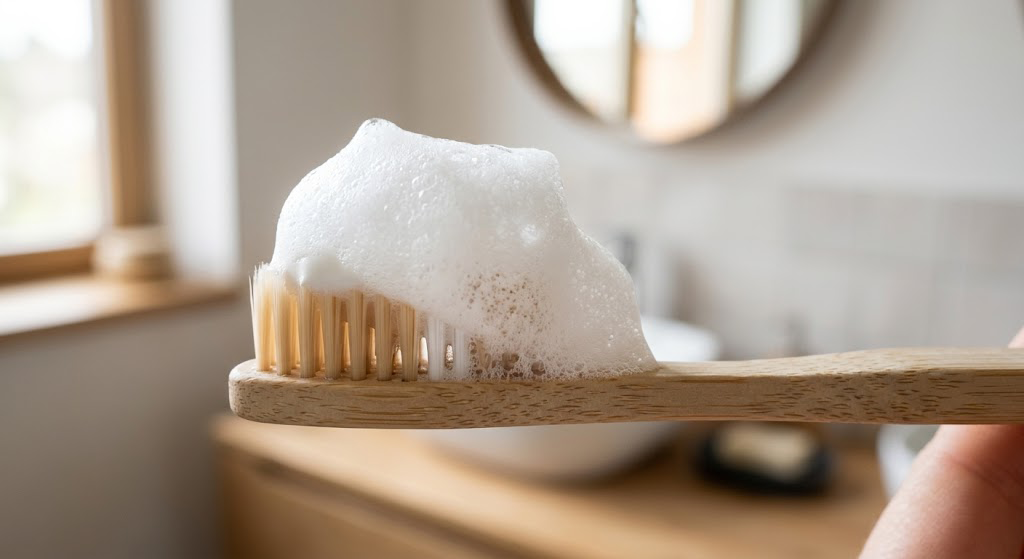
What Makes Toothpaste Foam? The Role of Surfactants
The satisfying foam created during brushing isn’t magic—it’s chemistry. Toothpaste manufacturers formulate products using specialized compound ingredients known as surfactants (surface-active agents).
The most common surfactant used in conventional oral care is Sodium Lauryl Sulfate (SLS). Surfactants lower the surface tension of water, allowing the paste to spread effortlessly across your oral cavity. Your toothbrush combines these agents with air and water during brushing. This action rapidly creates a dense, frothy lather.
Beyond texture, surfactants perform two primary practical functions during your brushing routine:
- Debris Distribution: Foam carries away loosened plaque and debris, allowing you to rinse them out smoothly.
- Hard-to-Reach Coverage: Surfactants help carry active ingredients into tight spaces between your teeth. This includes protective agents that strengthen enamel.
Is Toothpaste Foam Necessary for Cleaning Your Teeth?
In short, foaming action is not essential to clean your teeth. A rich lather creates a fresh feeling, but is toothpaste foam necessary for cleaning plaque away? Dental science confirms that foaming action is not essential for plaque removal.
Plaque removal relies almost entirely on two key mechanisms:
- Mechanical Friction: The physical sweeping motion of your toothbrush bristles breaking up sticky bacterial biofilms.
- Active Ingredients: Active ingredients protect your teeth in different ways. Fluoride and nano-hydroxyapatite strengthen enamel, while mild abrasives remove surface stains.
Foam is primarily a sensory benefit rather than a cleaning requirement. Non-foaming toothpastes clean teeth just as effectively as traditional pastes. Options like toothpaste tablets or low-SLS gels provide a thorough clean without rich lather. Discover the best formula for your daily routine in our oral care toothpaste collection.
Key Reasons to Consider Low-Foaming or SLS-Free Toothpaste
Foam is safe for most people. However, strong surfactants like SLS can trigger discomfort for sensitive mouths:
- Mouth Ulcers (Canker Sores): Studies supported by the American Dental Association show that SLS can irritate delicate cheek and gum linings. This irritation can make canker sores more frequent or painful.
- Dry Mouth (Xerostomia): High concentrations of foaming agents can strip natural moisture, aggravating chronic dry mouth symptoms.
- Tissue Sensitivity: Do you experience stinging or peeling skin inside your mouth? Switching to a mild, SLS-free toothpaste often brings fast relief.
Finding the Right Balance for Your Oral Routine
Once you know foam is unnecessary, you can focus on what truly matters: active ingredients and proper brushing technique.
Traditional foaming toothpaste remains a fantastic choice if you love rich lather and experience no mouth irritation. However, if you suffer from frequent mouth ulcers or sensitive tissues, try switching your toothpaste. A low-foaming or SLS-free option cleans just as thoroughly without causing irritation.
Foam amount does not matter. Simply use soft-bristled toothbrushes and brush for two minutes twice daily for optimal oral health.