The global oral care industry is rapidly evolving, driven by consumer demand for innovation, compliance, and eco-friendly solutions. If your brand is entering or growing in the oral care market, it’s crucial to know how OEM and ODM manufacturing models differ. Choosing the right model affects how you develop your products. It also impacts how your brand grows over time.
This article looks at the differences between OEM and ODM in oral care manufacturing. It discusses their benefits and how to choose the best option for your business strategy.
What Does OEM Mean in Oral Care Manufacturing?
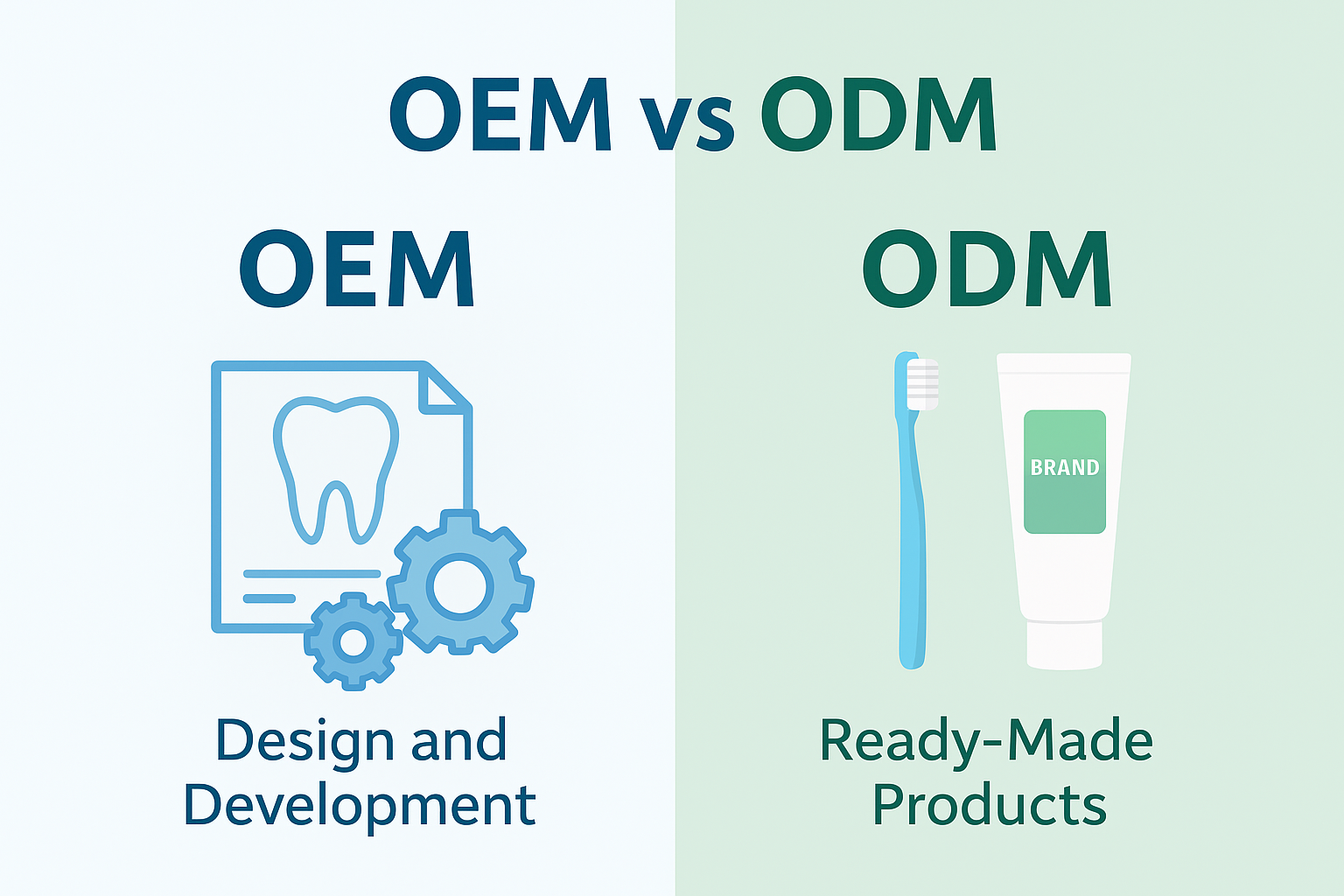
OEM (Original Equipment Manufacturer) refers to a process where the factory produces products according to your specifications. As the brand owner, you give guidelines for product design, formula, or packaging. The OEM partner then makes the products based on these instructions.
In OEM oral care manufacturing, you have more control over the product idea. This helps ensure it shows your unique brand identity. For example:
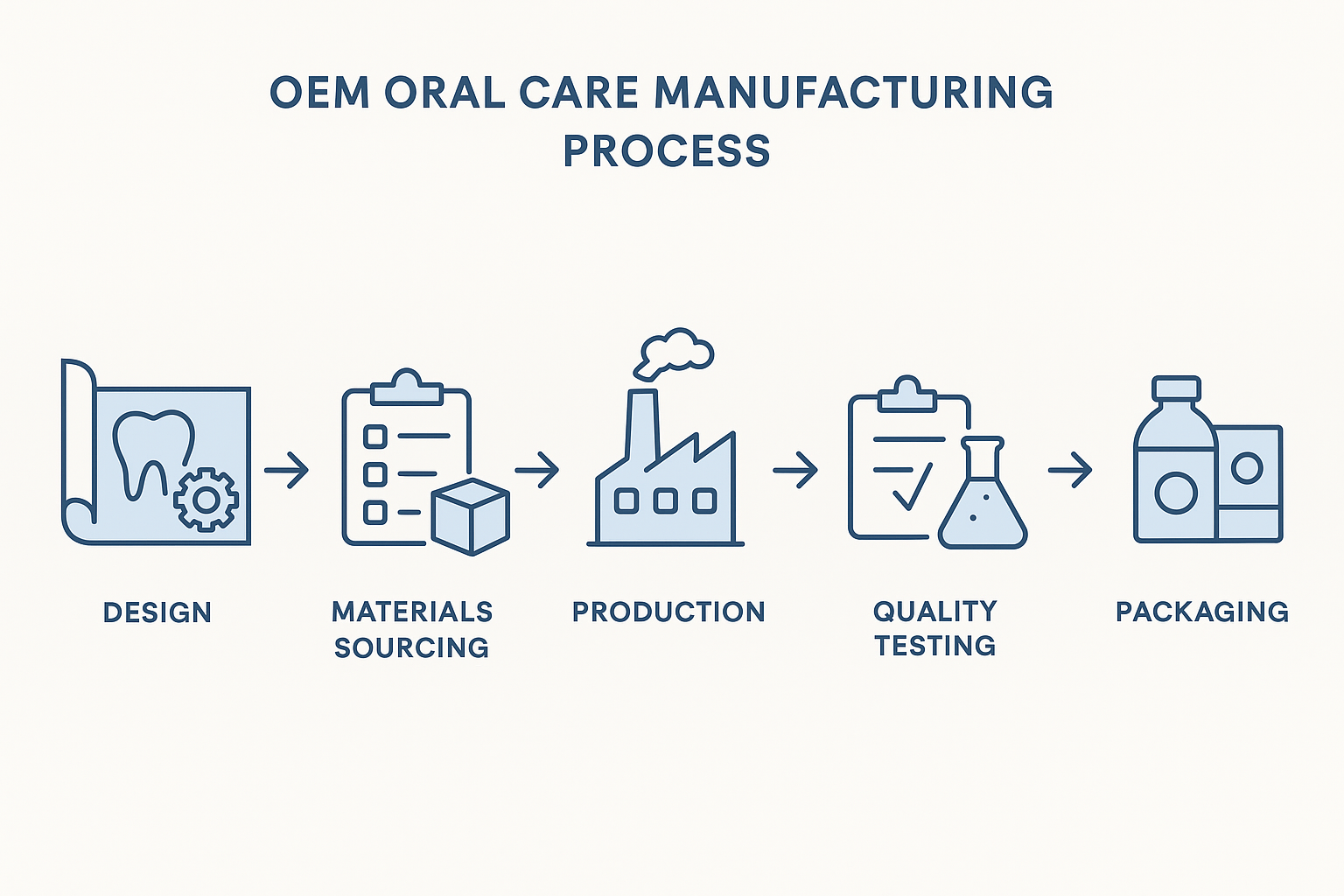
- A toothpaste company might supply its formula while the OEM factory handles large-scale production.
- A toothbrush brand may offer a specific handle design or bristle type. The factory then makes the toothbrush based on that design.
Advantages of OEM in Oral Care
- High Customization: You maintain creative control over design, formula, and packaging.
- Brand Differentiation: Unique products strengthen your competitive position.
- Intellectual Property Protection: Your formulations and designs remain proprietary.
However, OEM requires more initial investment in product development, testing, and regulatory compliance.
What Does ODM Mean in Oral Care Manufacturing?
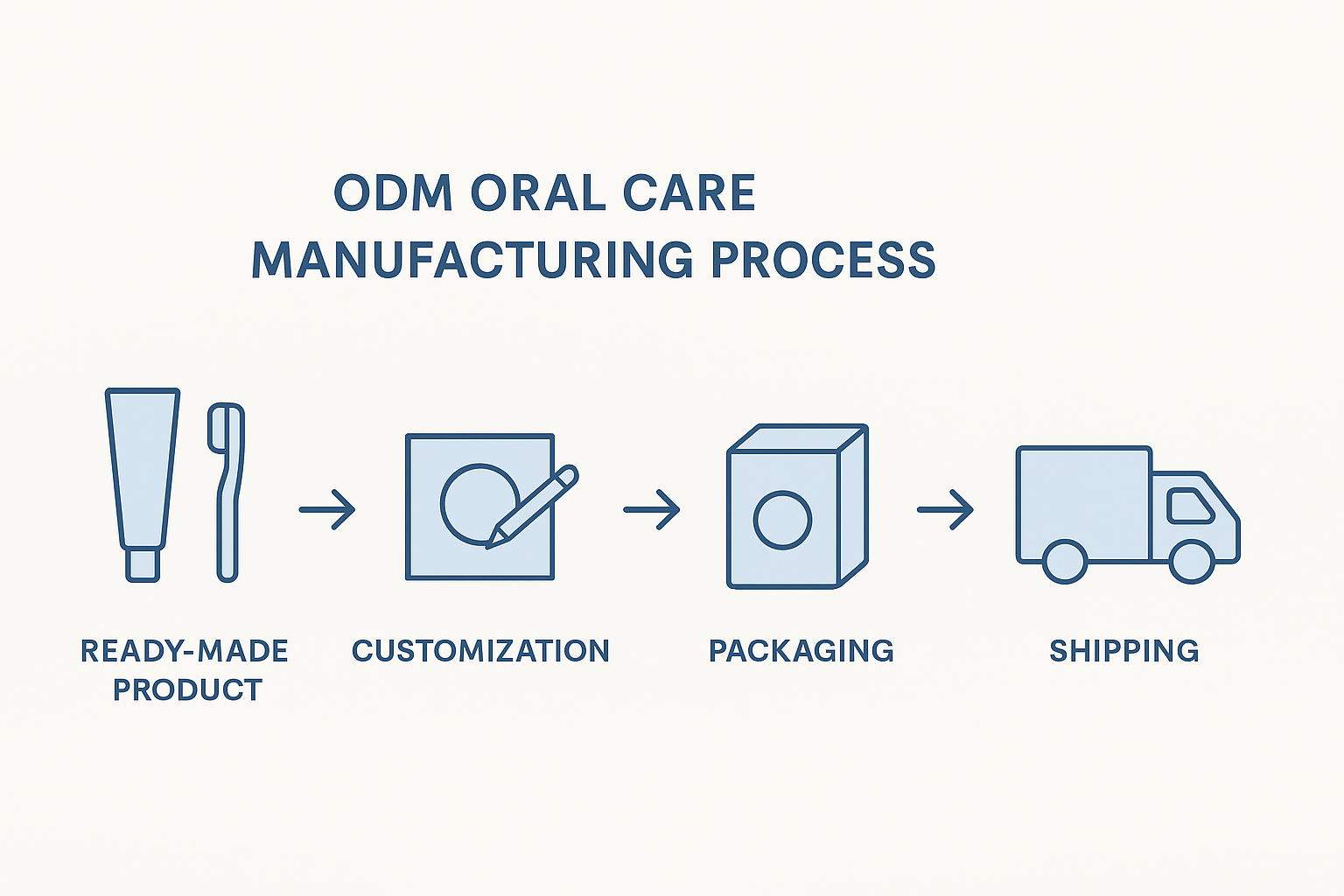
ODM (Original Design Manufacturer) is different. The manufacturer offers ready-made product designs or formulas. Your brand can customize these with logos, packaging, or small changes. Essentially, ODM allows brands to launch products faster with fewer development resources.
In ODM oral care manufacturing, the factory already has standardized toothbrushes, toothpaste formulas, or mouthwash solutions. You can select from these options and brand them as your own.
Advantages of ODM in Oral Care
- Speed to Market: Ready-made solutions reduce lead time.
- Lower Costs: Less investment in R&D and testing.
- Risk Mitigation: Proven formulas and designs reduce development risks.
The trade-off reduces differentiation because competitors can access similar ODM solutions.
OEM vs ODM in Oral Care: Key Differences
| Feature | OEM (Original Equipment Manufacturer) | ODM (Original Design Manufacturer) |
|---|---|---|
| Product Design | Provided by brand | Provided by factory |
| Customization | High | Moderate |
| Cost | Higher upfront | Lower upfront |
| Lead Time | Longer | Shorter |
| Brand Uniqueness | Strong | Limited |
| IP Protection | Strong | Limited |
Understanding these differences helps oral care brands align their manufacturing approach with business goals.
When Should You Choose OEM in Oral Care Manufacturing?
OEM is ideal for established oral care brands or ambitious startups that:
- Want full control over product design and formulation.
- Plan to build strong differentiation in a crowded market.
- Have the resources to invest in R&D and compliance testing.
For example, a premium whitening toothpaste brand might select OEM manufacturing to develop a proprietary formula with unique whitening ingredients that competitors cannot replicate.
When Should You Choose ODM in Oral Care Manufacturing?
ODM suits companies that:
- Need a quick market entry with minimal R&D costs.
- Target private-label or entry-level product lines.
- Want to test consumer response before investing in OEM development.
For example, a supermarket chain may choose ODM to quickly fill shelves with reliable and affordable toothbrushes.
OEM and ODM in Oral Care: Finding the Right Balance
In practice, many oral care brands combine both OEM and ODM strategies. For their flagship products, they may use OEM to ensure uniqueness. For secondary product lines or promotional items, they might rely on ODM solutions.
This hybrid approach allows brands to balance speed, cost, and innovation while capturing multiple market segments.
Compliance and Quality Considerations
Regardless of whether you choose OEM or ODM in oral care manufacturing, compliance and quality assurance are non-negotiable. Reputable factories will:
- Follow ISO 13485 and ISO 9001 quality standards.
- Meet regulatory requirements in target markets (FDA, CE, EAC, Halal).
- Provide transparent documentation for materials and safety testing.
Brands should partner with factories that not only produce but also support long-term quality improvement and risk mitigation.
Choosing the Right Partner for OEM or ODM Oral Care Manufacturing
Your manufacturing partner is as critical as your business model. When evaluating potential partners, consider:
- Manufacturing Capacity – Can the factory handle your volume and growth projections?
- R&D Capabilities – Does the factory assist in formula or design innovation?
- Compliance & Certifications – Do they meet international standards?
- Supply Chain Advantage – Can they source sustainable packaging and eco-friendly materials?
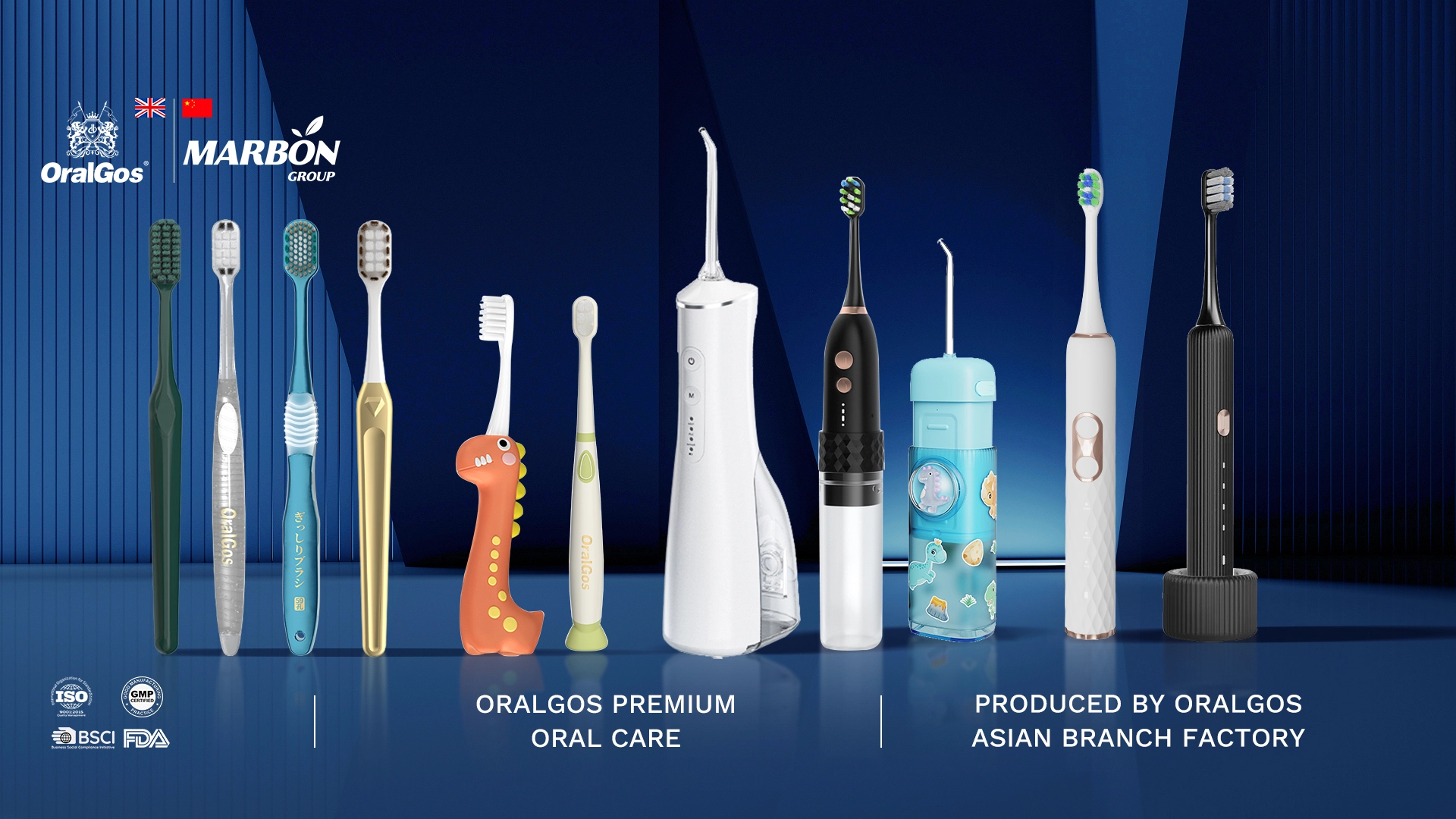
A trusted partner like OralGos OEM Service provides both OEM and ODM oral care solutions. They ensure your brand grows with confidence.
Taking the Next Step
If you are unsure whether OEM or ODM oral care manufacturing is best for your brand, talk to an expert.
Contact OralGos to explore tailored OEM and ODM strategies that align with your vision. OralGos helps oral care brands around the world. We support them in making products that meet market needs and follow rules.
Conclusion
The choice between OEM and ODM in oral care manufacturing depends on your brand’s stage, resources, and growth goals. OEM provides uniqueness and exclusivity but needs a larger investment. ODM offers speed and cost savings but has less uniqueness.
The smartest brands carefully evaluate their goals and choose the model—or combination—that maximizes market impact. With the right partner, your oral care brand can successfully navigate both OEM and ODM pathways to build sustainable growth.