
Today, growing a brand takes more than creative design or marketing. It starts with trust in your supply chain. A certified factory does more than manufacture products, it enables scalable, compliant, and sustainable growth for your brand.
In China’s OEM industry, certified manufacturing facilities provide a reliable foundation built on structure and discipline. This consistency allows brands to grow more quickly while maintaining safety and compliance.
The following insights explain why certified factories have become essential for brands seeking confident growth in the global market.
1. Certified Factories Ensure Quality Consistency — the Foundation of Brand Reputation
Quality is the lifeblood of any brand. A certified factory adheres to globally recognized standards like ISO 9001, guaranteeing unified production processes, testing methods, and quality controls. This means that every batch—regardless of scale or production line—meets the same quality threshold.
Such standardization eliminates inconsistencies that often plague non-certified OEM suppliers. As your volume increases, consistency becomes the deciding factor between steady growth and costly recalls.
Furthermore, certified manufacturers undergo process and system audits, which identify potential risks in raw materials, production steps, or inspection protocols. These audits lead to preventive actions, reducing the chance of large-scale quality incidents.
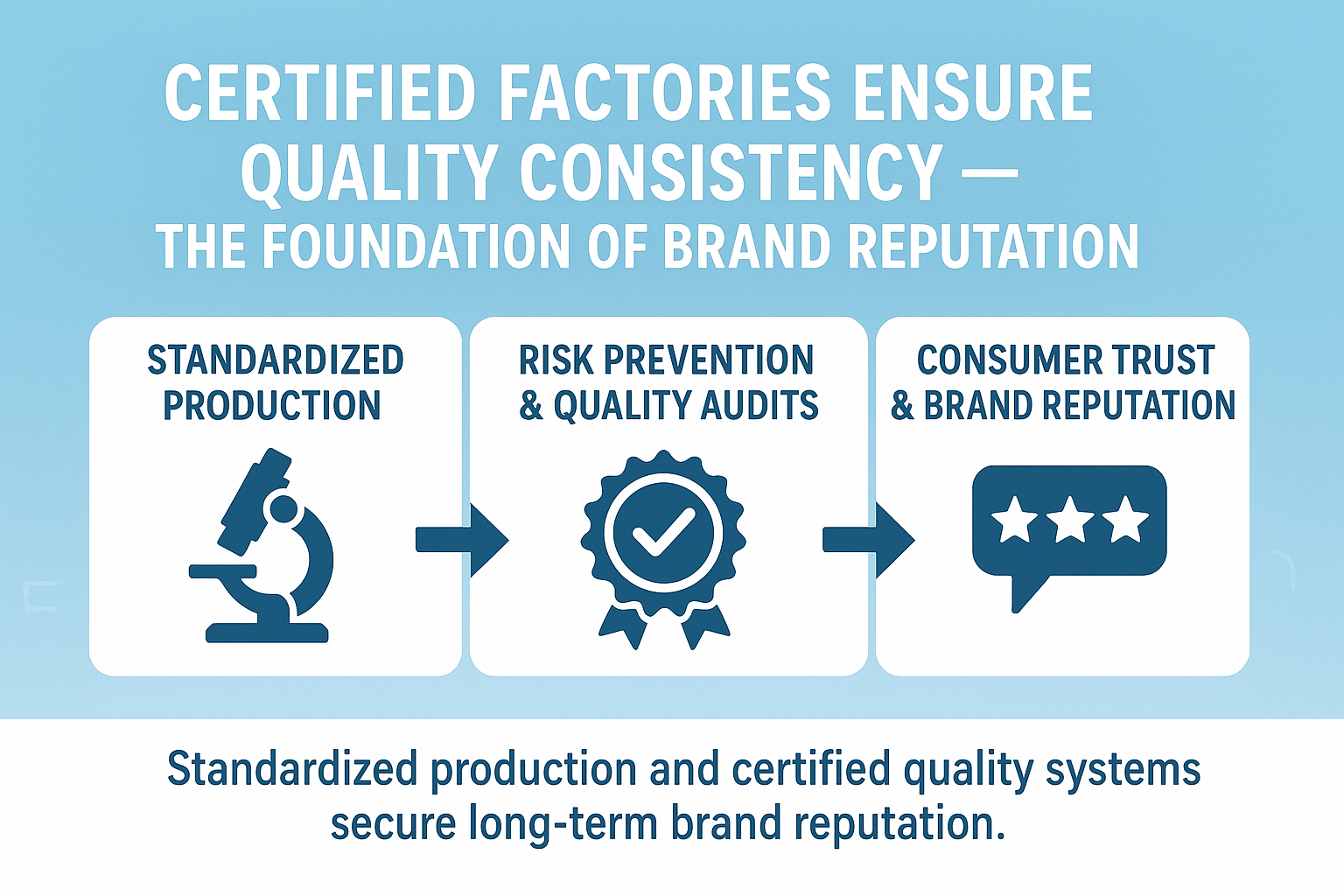
By highlighting that your products are made in a certified facility, you inspire greater confidence and trust among customers. Displaying this fact in your marketing materials or product packaging reinforces reliability and trust—both vital to brand loyalty.
👉 Explore OralGos’s certified manufacturing and product lines here:
2. How OEM China Certified Factories Enable Scalable Capacity and Reliable Supply
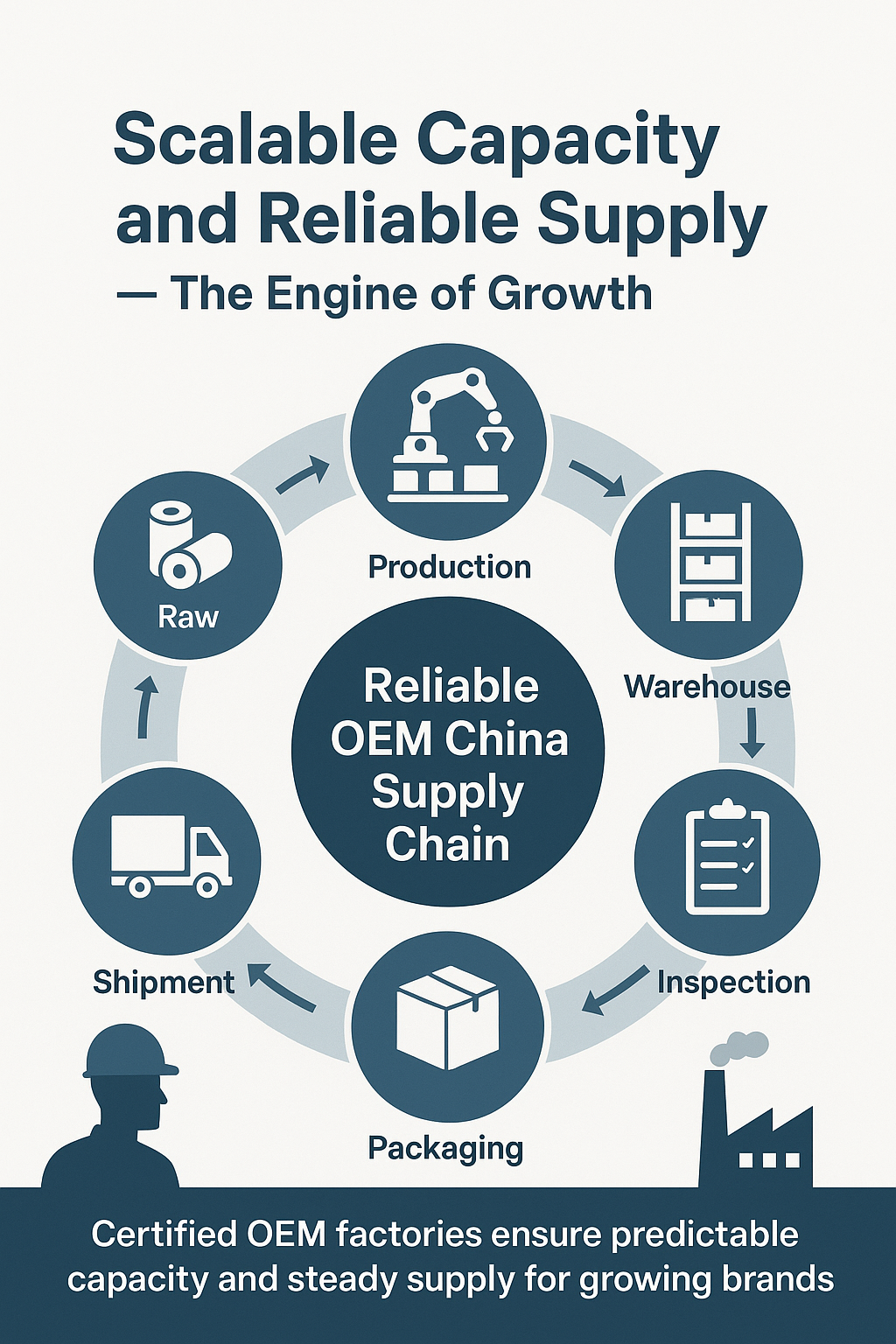
One of the biggest challenges during brand expansion is ensuring that production keeps pace with rising demand. A certified factory in OEM China offers both predictable capacity and flexible scaling.
Certified facilities usually operate under structured production management systems and preventive maintenance plans. This allows brands to forecast production capacity with greater accuracy and plan their sales targets more confidently. It also helps prevent supply shortages that could harm their reputation.
Certified manufacturers actively strengthen supply chain resilience, covering everything from raw material sourcing to supplier evaluation. This stability ensures uninterrupted production even in volatile global conditions, such as raw material price fluctuations or logistic delays.
In fast-moving markets, certified factories also excel at agile manufacturing. Their advanced scheduling and quick line-change capabilities help brands adapt swiftly to seasonal promotions or new product launches.
3. Certified Factory Compliance and Risk Control in OEM China
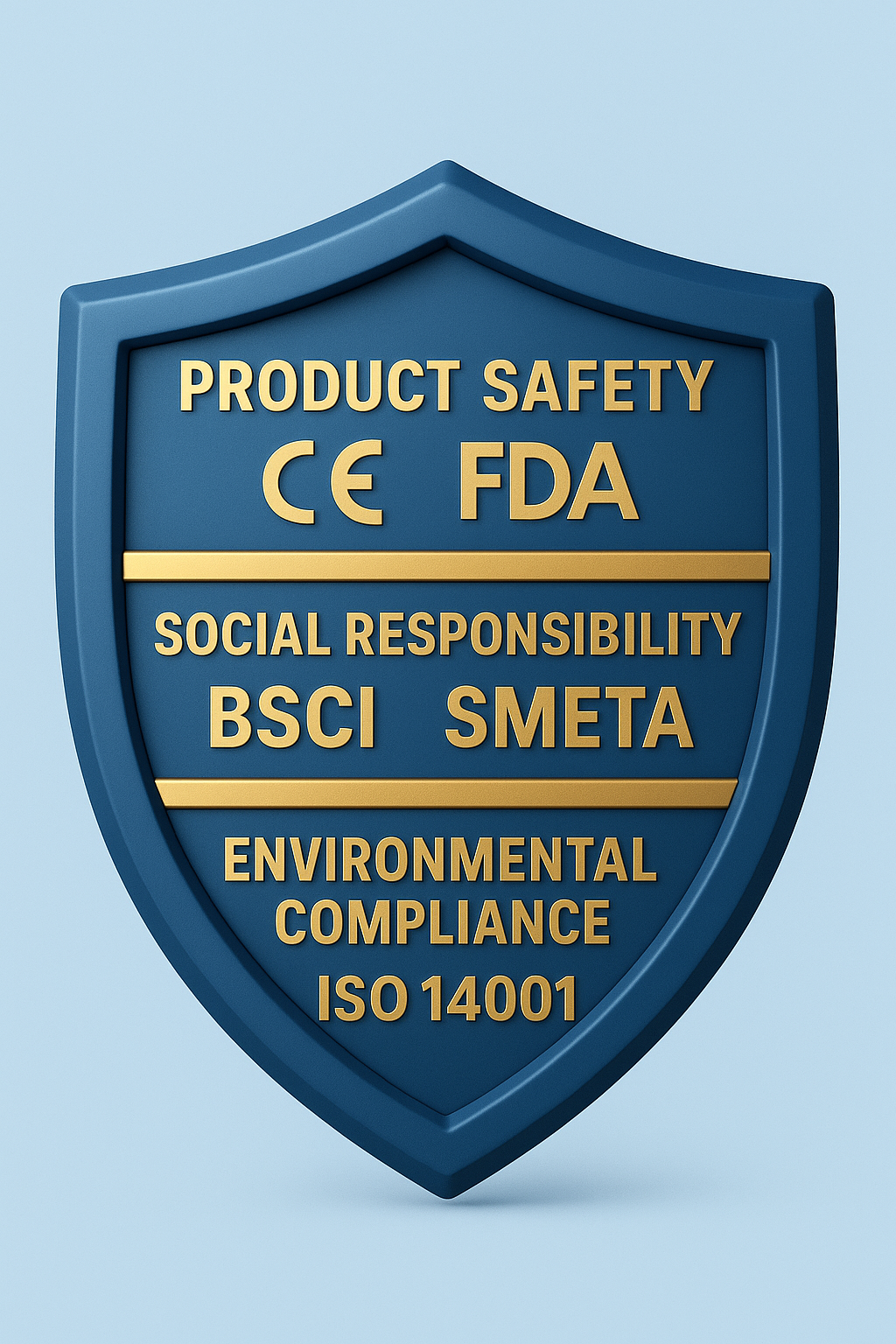
Regulatory compliance is no longer optional; it’s a brand’s first line of defense against crisis. A certified factory ensures adherence to international standards for product safety, labor practices, and environmental sustainability.
- Product Safety: Compliance with certifications like CE, FDA, or CPSC guarantees market readiness.
- Social Responsibility: Audits under frameworks like BSCI, SMETA, or SA8000 prevent labor violations such as forced or underage labor.
- Environmental Standards: Certifications like ISO 14001 reduce environmental risks, aligning with global ESG initiatives.
Beyond product-level checks, certification audits evaluate a factory’s entire operational system, revealing hidden management or ethical risks before they affect your brand.
In case of supplier misconduct or factory incidents, brands that partner with certified facilities demonstrate due diligence, significantly reducing reputational damage and legal exposure.
4. How a Certified Factory in OEM China Improves Efficiency and Cost Optimization
Certified factories don’t just produce better—they produce smarter. By enforcing lean manufacturing principles and standardized workflows (such as 5S and continuous improvement systems), these facilities minimize waste, increase productivity, and improve yield.
This directly translates into cost competitiveness without sacrificing quality. Over time, brands benefit from lower defect rates, shorter lead times, and higher ROI.
Strong partnerships between brands and certified OEM factories in China often create powerful synergies. These include joint R&D, process innovation, and shared material sourcing. These collaborations lead to new technologies, better margins, and more innovative product pipelines.
Additionally, certification reduces redundant brand audits. Trusting accredited certification results allows companies to focus resources on innovation rather than repeated inspections across suppliers.
5. Market Access and Brand Value — Certified Factories as Growth Catalysts
As brands scale into new regions and retail channels, certifications become a passport to entry. Global retailers and online platforms like Walmart, Amazon, and Target only work with factories that hold the required certifications.
Without these credentials, even the best-designed products can’t reach their intended markets. Partnering with a certified OEM China factory ensures that your products meet such access requirements from the start.
Moreover, certifications make it easier for brands to enter international markets. They ensure that products meet major regional standards: FDA for the U.S., CE for the EU, and CQC for China.
From a branding perspective, products manufactured in certified facilities project a premium image. Consumers associate certification with safety, transparency, and ethical responsibility—key attributes that justify higher pricing and stronger customer loyalty.
Certified factories stand out in safety-focused and sustainable industries like oral care, baby care, and health devices. They help brands earn trust and achieve steady growth.
Conclusion: Certified Factories — The Trust Infrastructure for Sustainable Expansion
A certified factory is far more than a compliance badge—it’s the foundation of scalable success. It safeguards your brand reputation, ensures consistent quality, stabilizes supply, and unlocks new market opportunities.
In OEM China, where production capabilities are vast but varied, certification distinguishes reliable partners from risky ones. When you work with a certified manufacturing partner, your brand gains stronger operational control. More importantly, it builds the strategic confidence needed for global growth.
Today’s market is more demanding than ever—consumers are selective, regulations are strict, and competition is fierce. That’s why investing in certified factories is not just an operational decision but a strategic necessity.
👉 Learn how OralGos supports global brands with certified OEM solutions.