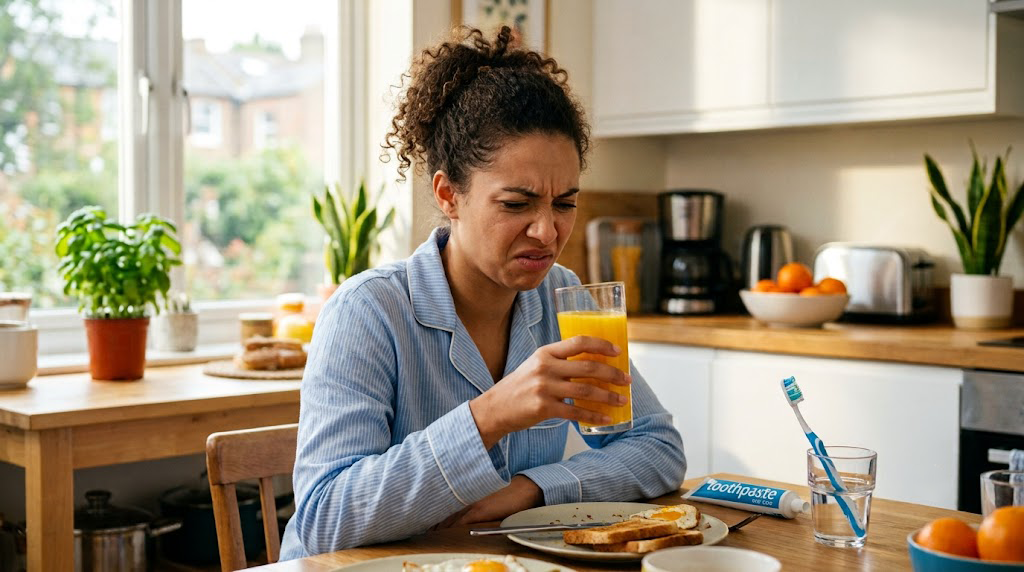
We have all experienced it: you wake up, thoroughly brush your teeth, step into the kitchen feeling fresh, and take a big sip of cold water or fresh orange juice. Immediately, your taste buds revolt. That crisp morning water tastes metallic or flat, and the orange juice delivers a shockingly bitter, unpleasant punch.
So, what transforms a refreshing beverage into something that tastes like a chemical experiment gone wrong? The answer lies in the subtle science of your taste buds and a specific ingredient found in most commercial toothpastes.
The Chemistry Behind the Bitter Aftertaste
To understand why does orange juice taste bad after brushing, we have to look closely at how our tongue perceives flavors. Human taste buds detect five basic taste profiles: sweet, salty, sour, bitter, and umami (savory). Under normal conditions, your mouth maintains a delicate balance between these tastes. However, brushing introduces compounds that temporarily alter this equilibrium.
The primary culprit behind this morning surprise is a surfactant called Sodium Lauryl Sulfate (SLS).
What is Sodium Lauryl Sulfate (SLS)?
Sodium Lauryl Sulfate is a common foaming agent added to personal care products, including soaps, shampoos, and toothpastes. In toothpaste, SLS serves two main functions:
- It creates a rich lather that helps distribute active ingredients like fluoride across your teeth.
- It helps dissolve and lift away food particles and debris during brushing.
While SLS makes your mouth feel clean through its foaming action, it also interacts directly with the microscopic receptors on your tongue in two very distinct ways.
How Toothpaste Hijacks Your Taste Receptors
When you brush with an SLS-containing formula, the surfactant alters your perception of flavor through a double-edged mechanism:
1. It Suppresses Your Sweet Receptors
SLS temporarily binds to and numbs the sweet receptors on your tongue. When you drink orange juice shortly after brushing, your mouth cannot register the natural sugars (fructose) present in the juice. Without the sweet profile to balance out the drink’s natural acidity, the citrus flavor becomes harsh and overwhelming.
2. It Destroys Phospholipids (The Bitterness Blockers)
Your mouth naturally produces fatty molecules called phospholipids. These compounds act as a shield, preventing your bitter receptors from overreacting to mild bitterness. SLS breaks down these protective phospholipids.
When those protective lipids are gone, your bitter receptors become hyper-sensitive. The citric acid and ascorbic acid in orange juice—or even the trace minerals in plain tap water—trigger a heightened bitter response.
Combining suppressed sweet receptors with hyper-sensitive bitter receptors is the exact reason why does orange juice taste bad after brushing your teeth!
[Toothpaste with SLS]
         │
         ├──► Numbs Sweet Receptors ──► Hides Natural Sugars
         │
         └──► Breaks Down Phospholipids ──► Heightens Bitter Sensitivity
                                                  │
                                                  ▼
                                     [Bitter, Metallic Taste]
Why Water Tastes Weird Too
You might expect orange juice to clash due to its acidity, but why does plain water taste so off after brushing?
Water itself does not contain strong flavor compounds, but it relies on your mouth’s baseline environment to taste neutral. When SLS strips away phospholipids and leaves residual sweetness blockers behind, even the minor mineral content in drinking water (such as calcium, magnesium, or sodium) interacts unnaturally with your exposed taste buds. This creates a flat, slightly metallic, or chemically altered flavor profile until your saliva naturally restores balance.
How to Avoid the Bitter Morning Shock
If you want to enjoy your morning beverage without the bitter surprise, you don’t have to compromise your oral hygiene. Here are a few simple ways to keep your breakfast tasting great:
1. Switch Up Your Daily Brushing Tools
If SLS sensitivity causes persistent taste disruption, consider adjusting your oral care routine. Exploring an SLS-free option in a quality toothpaste collection can eliminate the foam-induced taste bud numbing entirely without sacrificing cleaning efficiency.
Pairing gentler formulas with a high-performance manual toothbrush or an advanced electric toothbrush ensures your teeth remain thoroughly clean and free of plaque while protecting your delicate oral tissues.
2. Change the Order of Your Morning Routine
According to guidelines from the American Dental Association, maintaining a consistent brushing schedule is vital for long-term enamel protection and decay prevention. However, timing matters:
- Drink First, Brush Second: Enjoy your water, coffee, or orange juice before you brush your teeth.
- Wait Before Brushing: If you consume acidic drinks like orange juice first, wait about 20 to 30 minutes before brushing. This allows your saliva to neutralize the acids so you don’t inadvertently wear down softened enamel.
- Rinse with Plain Water: If you must brush first, rinse your mouth thoroughly with lukewarm water and wait at least 15 to 20 minutes before taking your first sip of juice. This gives your saliva time to wash away residual SLS and rebuild your natural phospholipid barrier.
Final Thoughts
The bizarre, bitter sensation after morning brushing is simply a temporary chemical reaction between SLS and your tongue’s taste receptors. By understanding why does orange juice taste bad after brushing, you can make small tweaks to your routine—whether that means adjusting your breakfast timing or switching to specialized oral care products—so you can enjoy a fresh mouth and a delicious breakfast every morning.