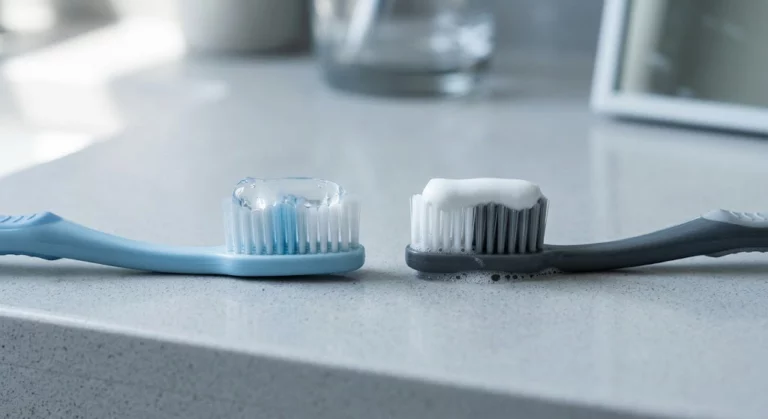
When choosing the right tool for daily oral hygiene, many individuals wonder about the difference between soft vs hard toothbrush bristles. While a firm bristle might feel like it cleans deeper, dental professionals generally advise against overly abrasive bristles. Your tooth enamel—the hard outer layer protecting your teeth—is highly resilient, but it is not indestructible.
Selecting between hard and soft bristles is more than a personal preference; it directly impacts enamel protection, gum health, and long-term oral safety. Paired with toothpaste, your choice of toothbrush bristle hardness dictates how much physical friction is exerted on your teeth every single day.
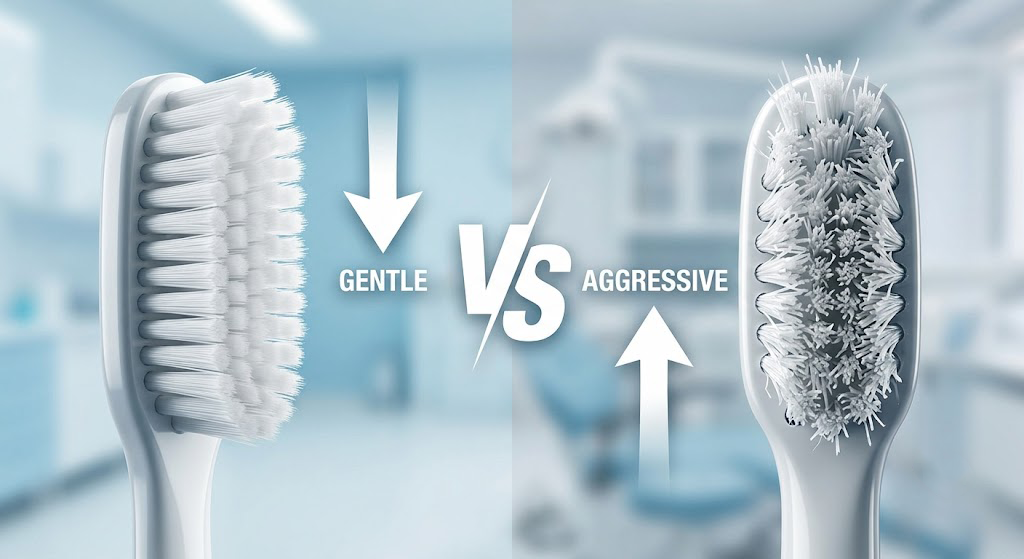
The RDA Scale: Soft vs Hard Toothbrush Bristles Compared
To truly understand how brushing affects tooth structure, one must look at the Relative Dentin Abrasivity (RDA) scale. Developed by dental organizations and standardized internationally, the RDA scale measures the abrasive potential of toothpastes on dentin—the sensitive material beneath your enamel.
According to guidelines established by the American Dental Association, products with an RDA score below 250 are considered safe for a lifetime of daily use.
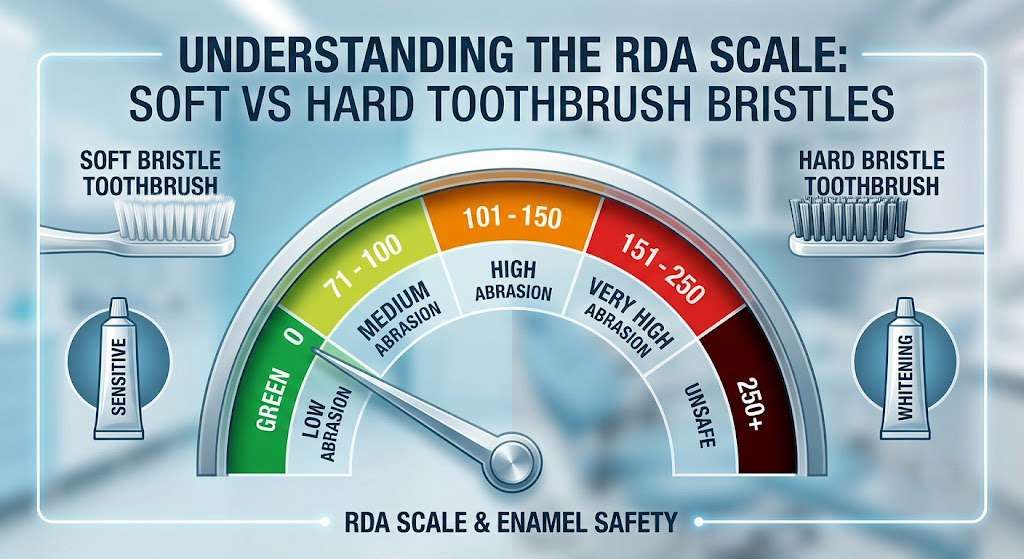
| RDA Range | Classification | Safety & Clinical Impact |
| 0 – 70 | Low Abrasiveness | Ideal for sensitive teeth, exposed roots, or thin enamel. |
| 71 – 100 | Medium Abrasiveness | Standard daily protection; safe for healthy teeth. |
| 101 – 150 | High Abrasiveness | Common in whitening pastes; requires gentle technique. |
| 151 – 250 | Very High Abrasiveness | Maximum allowed limit by standard organizations. |
| > 250 | Unsafe | Potential for accelerated enamel wear and dentin damage. |
How Soft vs Hard Toothbrush Bristles Interact with RDA
While the RDA scale strictly measures toothpaste abrasiveness, the bristle stiffness acts as a multiplier. When you pair high-RDA toothpaste with hard bristles, the friction increases exponentially.
- Hard Bristles: Can scratch tooth enamel over time when combined with abrasive pastes. They flex less, concentrating mechanical force onto smaller surface areas.
- Soft Bristles: Bend easily, distributing force evenly across tooth surfaces and gum lines. They allow the microscopic abrasive particles in toothpaste to clean efficiently without causing excessive friction.
Enamel Safety: Why Soft Toothbrush Bristles Outperform Hard Bristles
When comparing soft vs hard toothbrush bristles, enamel safety remains the primary medical concern. Enamel does not contain living cells, meaning once it wears away from mechanical friction or acid erosion, the body cannot regenerate it.
Risks of Hard Toothbrush Bristles on Tooth Enamel
- Gingival Recession: Hard bristles can wear away soft gum tissue, exposing sensitive tooth roots.
- Enamel Erosion & Abrasion: Aggressive brushing with hard bristles creates V-shaped notches near the gum line, known as cervical abrasions.
- Increased Sensitivity: As enamel thins and dentin is exposed, hot, cold, and sweet foods can trigger sharp nerve pain.
Benefits of Soft Toothbrush Bristles for Daily Cleaning
- Gentle on delicate gum tissue while effectively removing biofilm and plaque.
- Able to reach slightly under the gumline and between teeth without scratching enamel.
- Complies with modern dental standards for safe, non-traumatic daily cleaning.

Electric vs Manual Options for Soft vs Hard Bristles
Whether you prefer a traditional approach or modern technology, keeping your bristles soft is key to protecting your enamel.
If you prefer classic control, exploring high-quality options within a manual toothbrush collection allows you to select soft or extra-soft filaments tailored to your brushing pressure.
For those who want integrated pressure sensors and automated micro-vibrations, choosing a device from an advanced electric toothbrush collection ensures you achieve thorough plaque removal without pushing too hard against your teeth. Modern electric toothbrushes are specifically calibrated to be used with soft brush heads to maximize cleaning efficiency while prioritizing enamel safety.
Best Practices for Protecting Your Enamel
To maintain optimal oral health and preserve your enamel, consider these clinical recommendations:
- Use Soft or Extra-Soft Bristles: Avoid medium or hard bristles unless specifically directed by a dental specialist for short-term clinical reasons.
- Adopt the Gentle Circular Technique: Hold your toothbrush at a 45-degree angle toward the gumline and use light, circular motions rather than aggressive back-and-forth scrubbing.
- Check Toothpaste RDA: Choose toothpastes with low-to-medium RDA values, especially if you experience tooth sensitivity.
- Replace Brush Heads Regularly: Swap out your manual toothbrush or electric brush head every 3 to 4 months, or sooner if the bristles become frayed. Frayed bristles lose their rounded ends and can become abrasive.
Understanding how soft vs hard toothbrush bristles interact with the RDA scale helps you make smarter daily choices. By selecting the right combination, you can protect your enamel and keep your smile healthy for years to come.