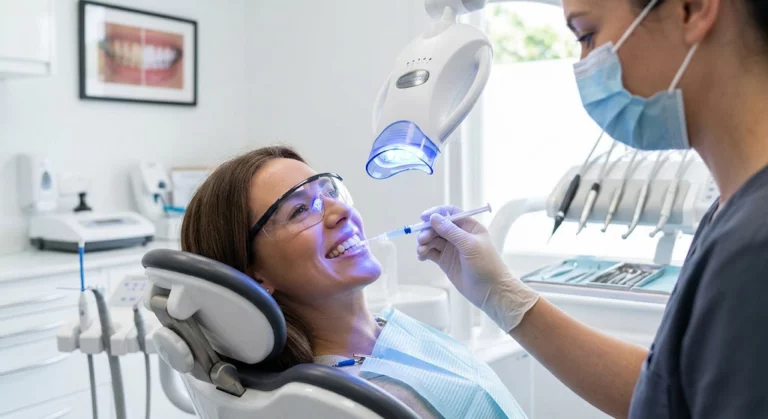
A bright, radiant smile is one of the most sought-after cosmetic goals today. From over-the-counter whitening strips to professional in-office bleaching, millions of people enhance their smiles each year. However, a common question often holds people back from achieving their dream smile: does teeth whitening damage enamel?
Tooth enamel is the hard, protective outer layer of your teeth. Because enamel cannot naturally regenerate once lost, protecting its structural integrity is essential. In this article, we break down the science behind teeth whitening. You’ll learn how it affects your enamel and how to keep your smile safe.
How Bleaching Agents Affect Tooth Enamel
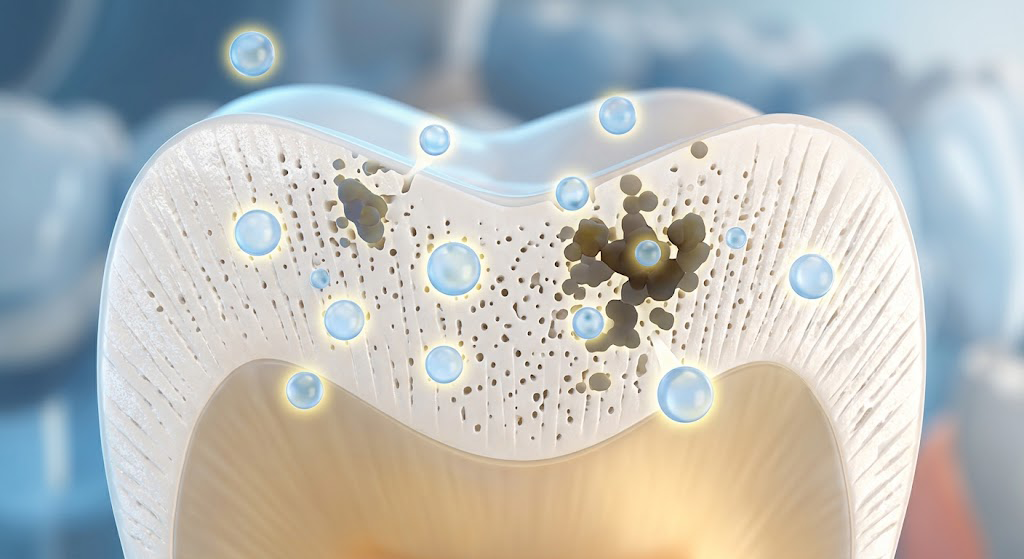
To understand how whitening affects enamel, let’s look at what happens at a microscopic level.
Most cosmetic whitening products rely on active bleaching agents such as hydrogen peroxide or carbamide peroxide. They pass through the porous enamel to break down tough stains caused by coffee, tea, wine, and food.
When peroxide hits stain particles, it breaks them down through oxidation. This lifts surface stains without stripping away your natural tooth enamel.
Does Teeth Whitening Damage Enamel? The Science Explained
When used correctly and as directed, teeth whitening does not damage enamel. Major dental authorities like the American Dental Association (ADA) confirm that peroxide-based whitening is safe for teeth. The chemical reaction specifically targets organic pigments rather than eroding the mineral enamel layer.
However, risks arise when people misuse, overuse, or buy whitening products from untrusted brands. Using strong whitening gels too often can weaken your teeth. It can cause temporary surface roughness and soften your enamel. Fortunately, natural minerals in your saliva gradually restore and remineralize the enamel following standard treatments.
Temporary Sensitivity vs. Permanent Whitening Damage
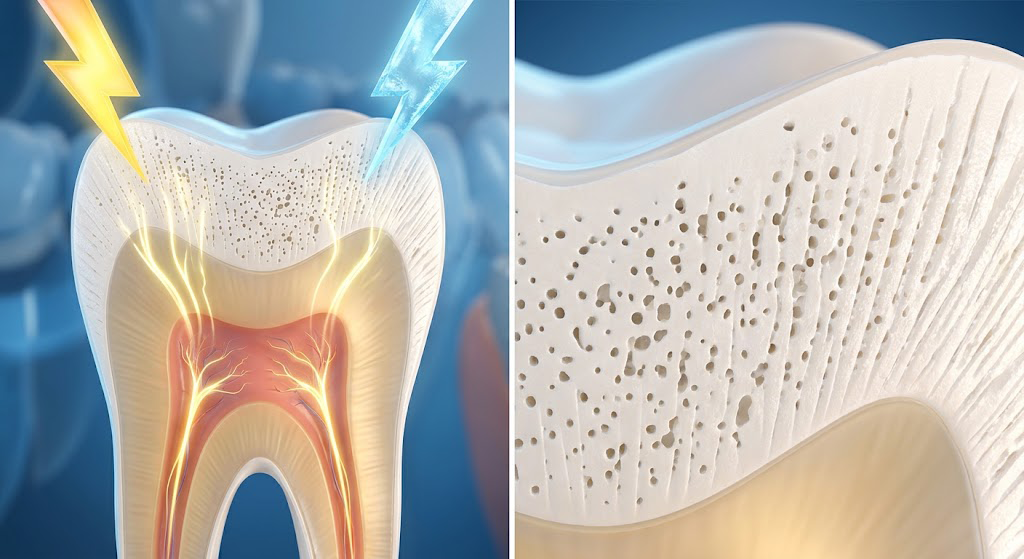
Distinguishing between temporary sensitivity and permanent enamel loss is crucial. During or after a whitening session, peroxide molecules temporarily open tiny dentinal tubules within the enamel layer. This lets hot or cold drinks reach the inner nerve directly. As a result, you might feel brief tooth sensitivity.
This sensitivity usually subsides within 24 to 48 hours as the tooth rehydrates. This is a temporary side effect, not proof that whitening permanently damages your enamel.
Why Overuse of Bleaching Increases Enamel Erosion
While controlled whitening is safe, extreme frequency or excessive gel application can cause harm. Overbleaching can lead to:
- Increased Enamel Porosity: Excessive exposure to high peroxide concentrations can make enamel temporarily more porous and prone to rapid restaining.
- Gum Irritation: Bleaching gel overflowing onto soft tissue can cause chemical burns or gingival inflammation.
- Translucent Teeth: Overuse can wear away the outer opacity of enamel, exposing the naturally yellowish dentin layer underneath.
Safe Alternatives to Whiten Teeth Without Enamel Harm
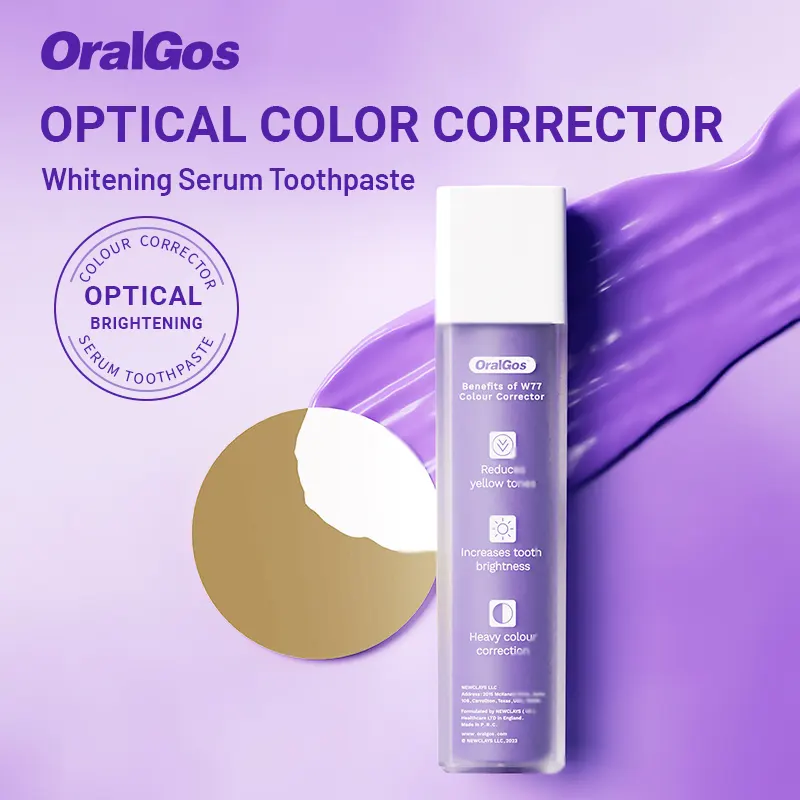
Do you have sensitive teeth or prefer to avoid strong peroxides? Gentle, non-peroxide color-correcting products offer a great alternative. Color correcting uses color theory instead of harsh chemicals. It relies on purple pigments to cancel out yellow tones on your teeth.
Using gentle products like the Oralgos Colour Corrector Toothpaste helps fight daily stains. It brightens your smile without exposing your enamel to harsh bleaching agents.
Essential Tips to Protect Your Enamel While Whitening
To enjoy a brighter smile without compromising your oral health, follow these dentist-recommended guidelines:
- Consult Your Dentist First: Address existing cavities, worn enamel, or gum disease before starting any whitening treatment.
- Follow Instructions Carefully: Never leave bleaching trays or strips on longer than recommended.
- Use Soothing Toothpastes: Toothpastes containing potassium nitrate or nano-hydroxyapatite help soothe nerve endings and reinforce enamel mineral density.
- Follow the White Diet: Avoid acidic drinks and dark foods for 48 hours after treatment. This gives your enamel pores time to close back up.
So, does teeth whitening damage enamel? The answer is no—provided you follow proper protocols, avoid overuse, and choose safe, high-quality products. By balancing effective whitening methods with gentle daily care, you can achieve a luminous, healthy smile safely.