Brushing twice a day is widely considered the ultimate pillar of personal hygiene. Yet, even the most diligent brushers often skip a crucial daily ritual: flossing. Busy daily routines often lead individuals to skip their flossing habit. Understanding what happens if you don’t floss reveals why interdental cleaning is essential for long-term oral health. Neglecting interdental cleaning is more than a minor oversight in your daily routine. It allows food debris and bacteria to accumulate in tight spaces that toothbrush bristles cannot reach.
Over time, this buildup triggers a silent cascade of oral health issues that extend far beyond your gumline. Understanding these hidden dangers can help you protect your smile before minor plaque turns into costly dental procedures.
What Happens If You Don’t Floss: Plaque Accumulation and Bad Breath
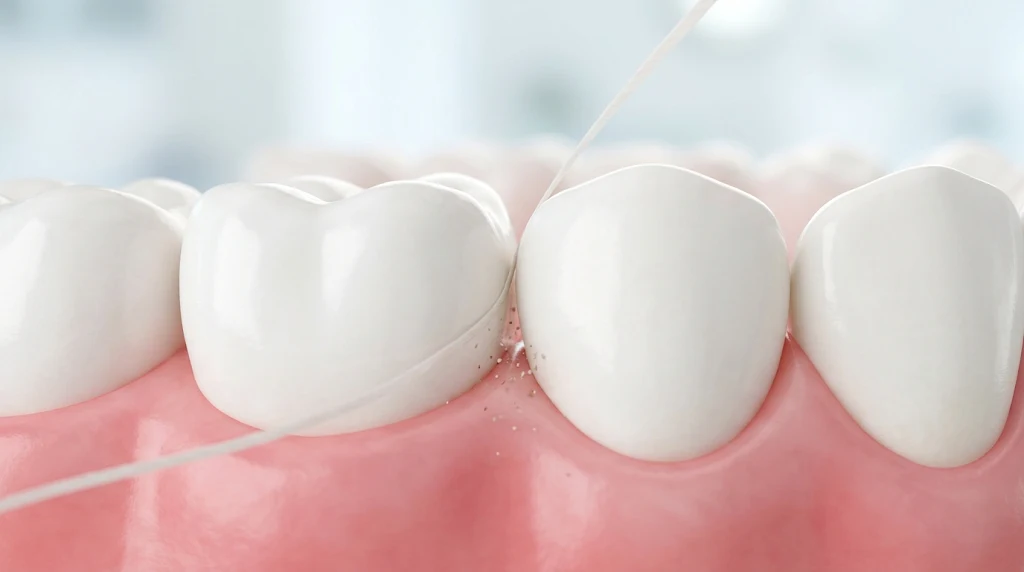
Every time you eat, food debris mixes with your saliva. This process forms a sticky, colorless film known as dental plaque. A toothbrush effectively cleans the front, back, and chewing surfaces of your teeth. However, it cannot reach the tight spaces where teeth touch.
Without daily cleaning, plaque begins to harden within 24 to 72 hours. It soon turns into a hard deposit called tartar. Regular brushing and flossing cannot remove tartar; only professional dental scaling clears it away.
Furthermore, the trapped food particles and multiplying bacteria break down inside these warm, dark spaces, producing volatile sulfur compounds. These gases are the primary cause of persistent bad breath, known as halitosis. This odor often lingers even after thorough brushing and mouthwash use.
From Gingivitis to Advanced Gum Disease
The most immediate danger of skipping interdental cleaning lies in the health of your gums. When plaque accumulates near the gumline, your immune system reacts to the bacterial toxins by triggering inflammation. Dental professionals call this early, reversible stage of gum disease gingivitis.
- Warning Signs: If your gums look red, feel tender, or bleed when you finally brush or floss, gingivitis is likely present.
- Progression: Without treatment, gingivitis advances into periodontitis. In this severe infection, bacteria destroy the soft tissue and jawbone supporting your teeth.
- Long-Term Damage: As bone and tissue recede, teeth can loosen, shift, or eventually require extraction.
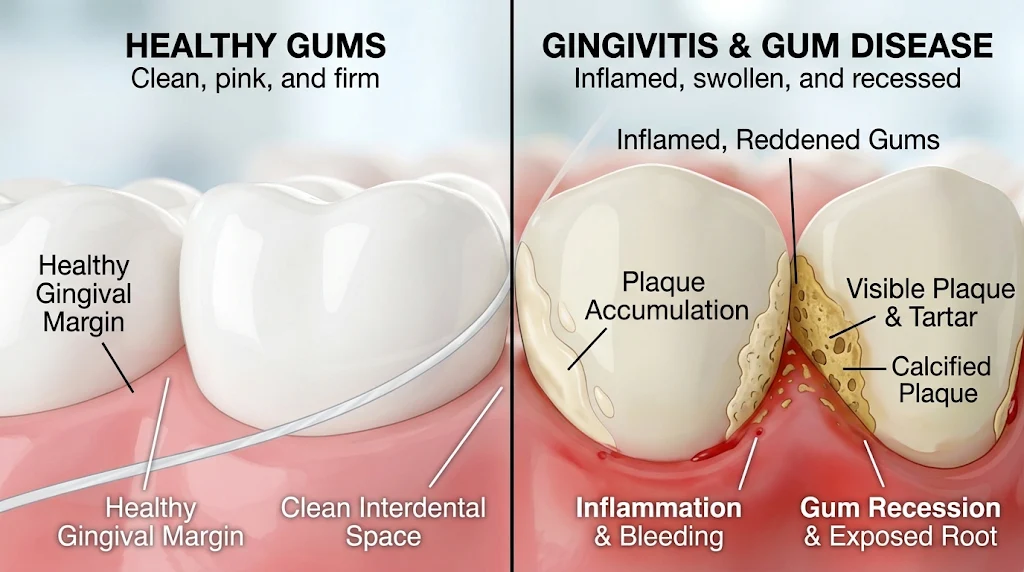
Daily interdental cleaning is essential for optimal gum health. In fact, the American Dental Association emphasizes that cleaning between teeth is just as important as brushing.
The Connection Between Oral Health and Systemic Wellness
The consequences of ignoring interdental hygiene do not stop inside your mouth. Your oral cavity serves as a direct gateway to the rest of your body. Untreated plaque and tartar cause chronic gum inflammation. As a result, bacteria and inflammatory proteins can enter your bloodstream through bleeding gums.
Medical and dental researchers have established strong links between severe periodontal disease and systemic health conditions, including:
- Heart Disease: Studies link chronic oral inflammation to a higher risk of arterial plaque buildup, heart attacks, and strokes.
- Diabetes Complications: Gum disease can negatively impact blood sugar control, making diabetes harder to manage.
- Lung Infections: Inhaling oral bacteria into the lungs can heighten the risk of pneumonia and bronchitis.
What Happens When You Don’t Floss: Building a Daily Routine
Knowing what happens if you don’t floss is the first step toward transforming your dental routine. Traditional string floss works well, but it can be hard to maneuver around tight teeth or dental bridges. Fortunately, modern tools make daily cleaning much easier. Many people achieve thorough plaque removal by adding a convenient water flosser to their daily routine.
Spending just two minutes a day cleaning between your teeth protects your gums, breath, and long-term health.